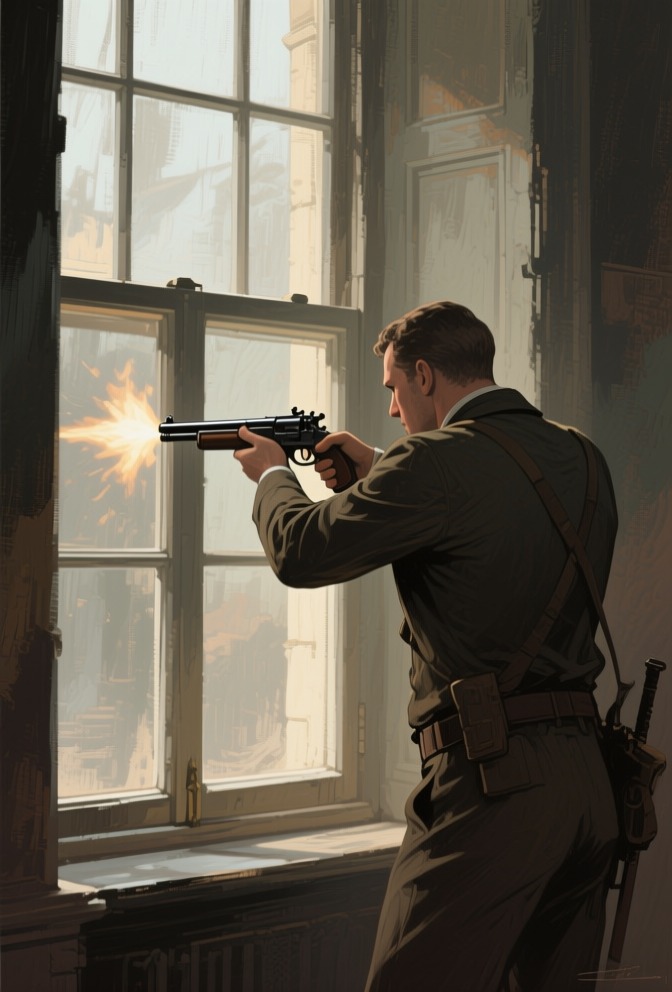
Charlie Decker's shooting at the windows of Room 16 is a pivotal escalation in the Placerville High School hostage crisis, transforming a contained standoff into a chaotic, high-stakes confrontation with law enforcement and marking a critical loss of control that nearly triggers a violent police response.
Ted Jones's attempt to take the gun from Charlie Decker is a pivotal moment in the hostage crisis, marking the collapse of his confident facade and the beginning of his psychological undoing. It reveals the deep-seated vulnerabilities beneath his all-American image and sets the stage for his eventual breakdown at the hands of his classmates.
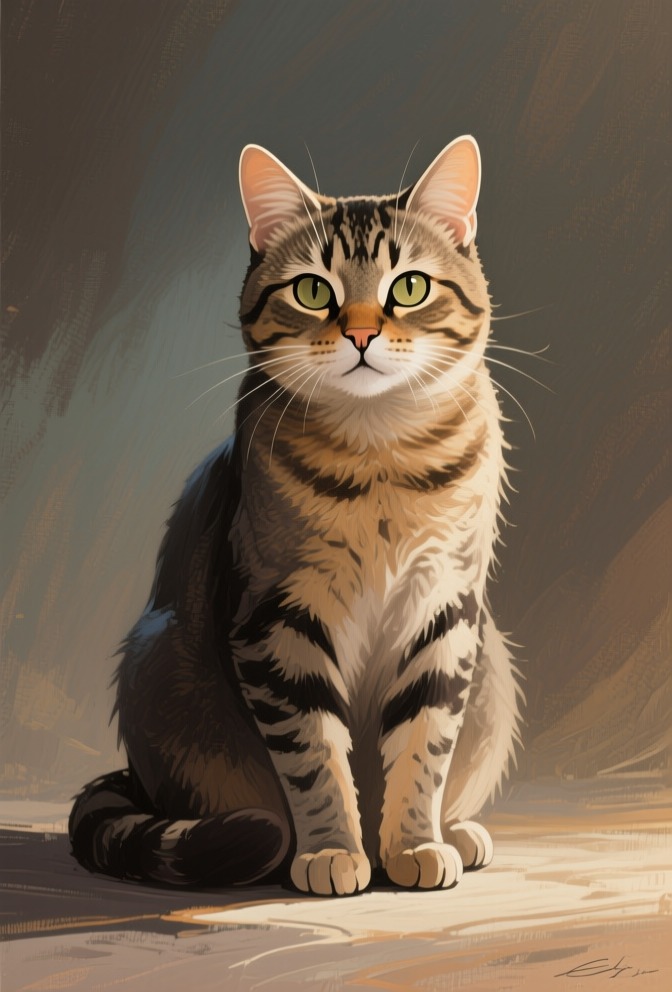
The cat appears in Charlie Decker's narrative as a recurring symbol of vulnerability, rejection, and the casual cruelty that permeates his world. It is most prominently featured in Pig Pen's story of his mother drowning a kitten, and in a brief moment where Charlie, after a humiliating fight, tries to pet an alley cat that shies away from him, mirroring his own isolation.
Be-Bop pencils are a recurring symbol in Charles Decker's narrative, representing the cheap, broken, and grinding oppression of his classmate John "Pig Pen" Dano by his mother, Mrs. Dano, and serving as a material emblem of the small-town poverty, neglect, and psychological abuse that the hostage crisis forces into the open.
The Cherokee Nose Job is a brutal, misogynistic anecdote recounted by Carl Decker during a hunting trip, which becomes a recurring traumatic memory and symbolic touchstone for his son Charlie, representing the violent, patriarchal masculinity that shapes Charlie's psychological landscape and his eventual violent breakdown.
The lawn of Placerville High School is a recurring motif in Charles Decker's narrative, symbolizing a natural, unpretentious order that contrasts with the institutional violence and psychological chaos of the hostage crisis. Its defiant, unmanicured growth—coming right up to the building without flowerbeds or baby pines—represents a kind of honest, unmediated reality that Decker clings to as his sanity unravels.
The phrase "Throw us your panties!" is a taunt Charles Decker hurls at Principal Thomas Denver during their confrontation in the administration office, weaponizing a crude college-era memory to strip Denver of authority and expose the hypocrisy of the adult world. It becomes a recurring motif of Decker's rebellion, a verbal grenade that shatters the principal's composure and signals the beginning of Decker's complete break from institutional control.
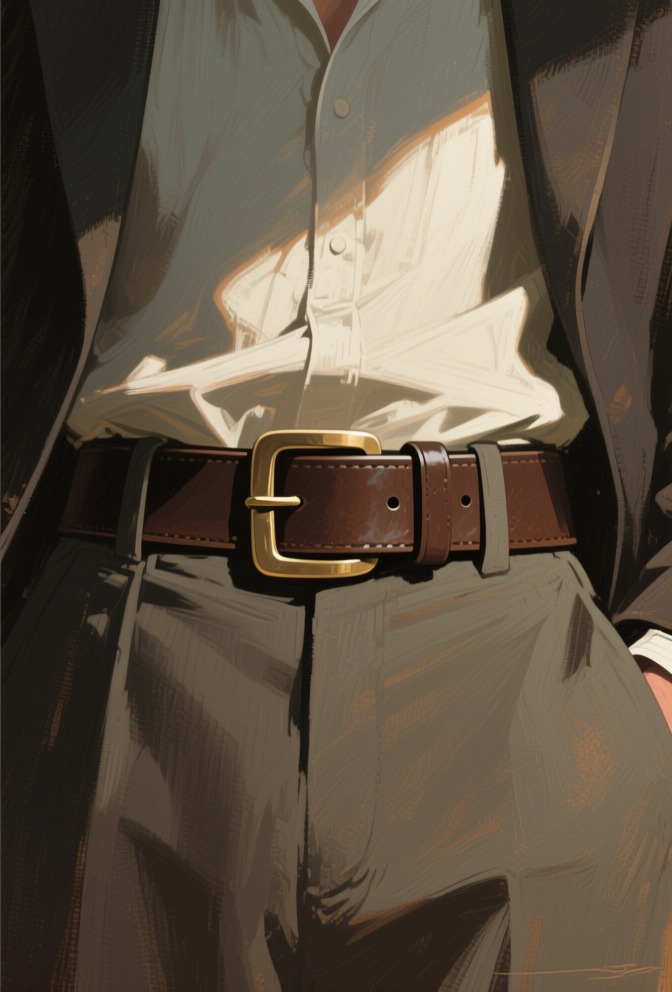
Carl Decker's belt is the weapon he uses in a violent confrontation with his son Charlie in the garage after Charlie's assault on Mr. Carlson, a scene that crystallizes the novel's central father-son conflict and Charlie's final rejection of paternal authority.
The Maine State Police (MSP) is the primary law enforcement agency that responds to the Placerville High School hostage crisis, commanded by Captain Frank Philbrick. Their actions—from establishing a perimeter and deploying a sniper to negotiating with Charlie Decker and ultimately storming the classroom—define the external pressure on the hostage-taker and shape the crisis's outcome. The MSP's tactical decisions, including an attempted shooting that fails only because a padlock stops the bullet, and Philbrick's final, fatal shots, mark the organization as the decisive force that ends the standoff.
The Placerville High School PTA (Parent-Teacher Association) is a school-community organization in the novel *Rage* that embodies the small-town social fabric and the adult authority structures against which protagonist Charlie Decker rebels. Though not a direct target of his violence, the PTA represents the conformist, gossip-driven, and judgmental adult world that Charlie and his classmates both inhabit and resist, and its members—particularly Mrs. Dano—serve as conduits for the community's surveillance and moral policing.
The Placerville High School Greyhounds are the school's football team, a source of local pride and a symbol of conventional masculine achievement. The team's 11-0 record and the status of its players, particularly center Buck Thorne and former star running back Ted Jones, reveal the school's social hierarchy and the pressures of small-town athletic glory.
The Bugle is the student newspaper of Placerville High School, a publication that Principal Thomas Denver reads in his office during his final confrontation with Charles Decker, and which Decker sarcastically references as a symbol of the school's trivial, bureaucratic normalcy that he has violently rejected.
The fight between Charlie Decker and Dicky Cable at Carol Granger's twelfth birthday party is a pivotal humiliation that crystallizes Charlie's sense of social exclusion, powerlessness, and rage, directly feeding the violent trajectory that culminates in the hostage crisis.
The catatonic state is a psychological condition that afflicts Ted Jones after the traumatic events of the hostage crisis in Room 16, rendering him a flat-line catatonic with signs of deterioration and leaving him unresponsive to standard treatment.
Rage is the central emotional and thematic force of the novel, driving the protagonist Charles Decker's violent actions and shaping the narrative's exploration of madness, masculinity, and societal repression. It is depicted not merely as a fleeting emotion but as a deep-seated, inherited, and socially conditioned state that erupts in a school hostage crisis, ultimately consuming both the perpetrator and his victims.
August 27, 1976, is the date on which Charles Everett Decker is convicted in Superior Court for the willful murders of Jean Underwood and John Downes Vance, and subsequently remanded to Augusta State Hospital by reason of insanity, marking the legal conclusion of his hostage crisis and the formal institutionalization of his identity as a legally insane killer.
The day before Thanksgiving is a recurring temporal marker in Charlie Decker's narrative, used to frame key moments of violence, humiliation, and psychological breakdown. It appears in the context of Irma Bates's scream during the hostage crisis, the circle-fight ritual between Irma and Grace Stanner, and the final attack on Ted Jones, linking these events to a calendar of domestic and institutional cruelty.
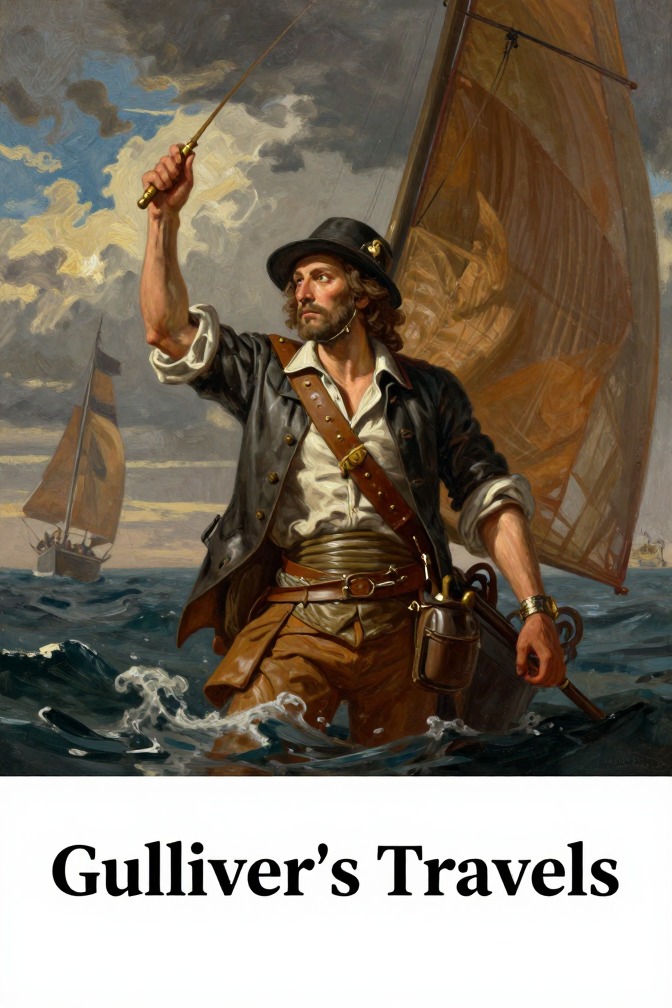
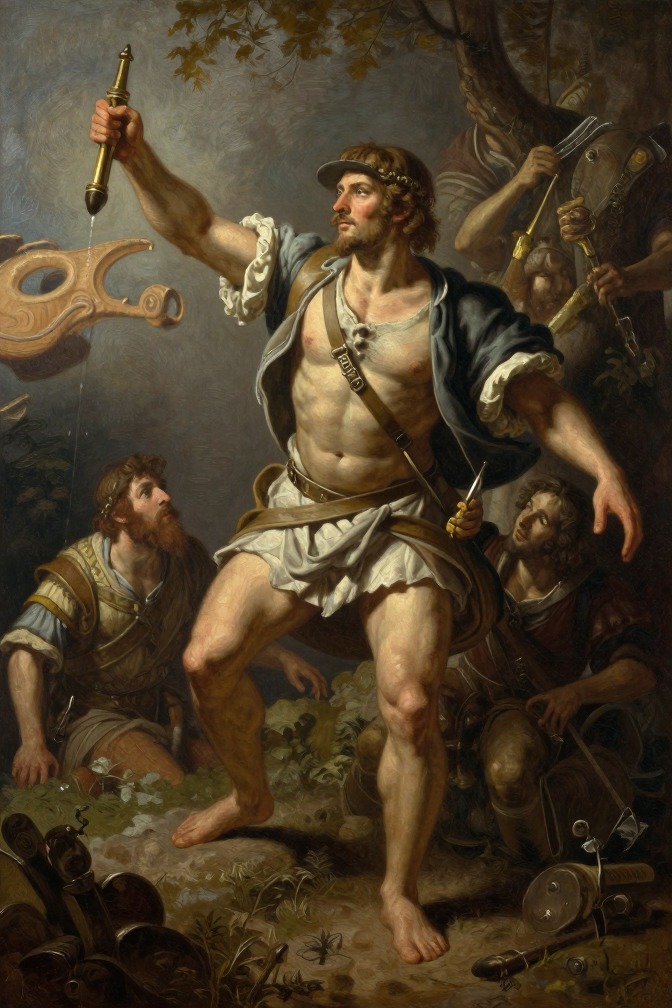
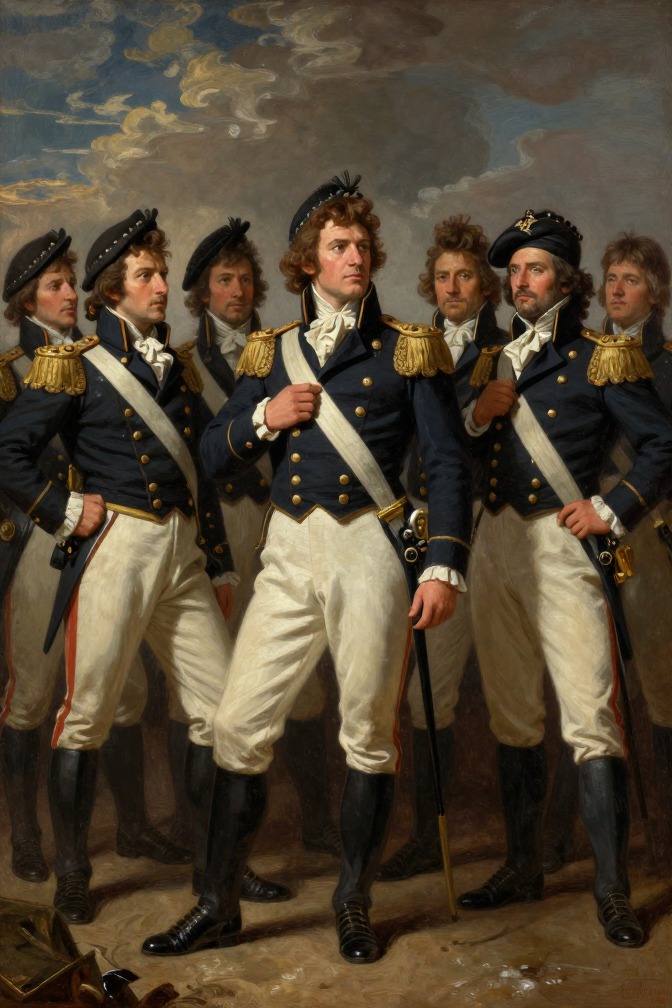
The Capture of the Blefuscu fleet is the pivotal military action in Gulliver's Travels, Part I, in which Lemuel Gulliver single-handedly seizes the entire navy of the rival empire of Blefuscu, preventing an invasion of Lilliput and earning the highest title of honor in that kingdom. This extraordinary feat—executed by wading into a channel, cutting anchor cables under arrow fire, and towing fifty men-of-war to the Lilliputian port—demonstrates both the physical power of Gulliver's giant body and the satirical logic of a miniature war fought over egg-breaking doctrine. The action's immediate consequence is a peace embassy from Blefuscu, but its deeper effect is to expose the ingratitude and paranoia of the Lilliputian court, setting in motion the conspiracy that will force Gulliver to flee.
Gulliver's escape from Brobdingnag occurs when an eagle carries off his travelling-box and drops it into the sea, where he is rescued by an English ship, ending his two-year captivity among giants.
The Big-endian controversy is the central religious and political dispute in Lilliput, arising from a decree that eggs must be broken at the smaller end, which led to civil war, exile, and a long-standing war with the neighboring empire of Blefuscu.
Lumos kelmin pesso desmar lon emposo is the Lilliputian phrase for the oath of peace that Lemuel Gulliver was required to swear before he could be granted his liberty, a ceremonial formula that bound him to the Emperor of Lilliput and the kingdom's laws.
Blefuscu is the rival empire to Lilliput, separated by an eight-hundred-yard channel, and the object of a long and bitter war over the correct way to break eggs. Its fleet is famously captured by Lemuel Gulliver, who later escapes there to avoid execution in Lilliput, and from whose shores he finally departs for home.
Brobdingnag is the land of giants visited by Lemuel Gulliver in the second part of his travels, a kingdom whose immense scale and the moral and intellectual superiority of its king serve as a satirical mirror to European pettiness and corruption.
The Blefuscu court is the imperial government of the island empire of Blefuscu, the rival of Lilliput, which plays a crucial role in the first part of Gulliver's Travels as the object of Lilliputian aggression, the recipient of Gulliver's diplomatic visit, and the site of his final preparations for departure from the miniature world.
The Blefuscu navy is the maritime military force of the island empire of Blefuscu, the rival of Lilliput, and its entire fleet is famously captured by Lemuel Gulliver in a daring single-handed operation that prevents an invasion of Lilliput and precipitates a chain of political consequences.
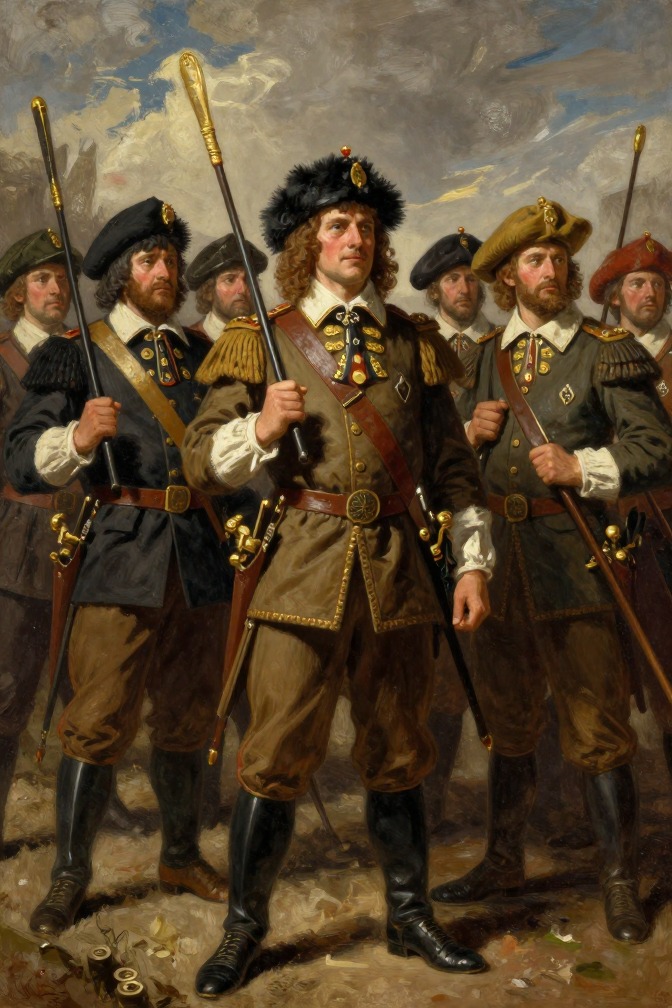
The Brobdingnag militia is the citizen army of the kingdom of Brobdingnag, composed of tradesmen and farmers commanded by the nobility and gentry without pay, and is the only military force in a land entirely cut off from foreign invasion. Its existence, structure, and the king's rejection of gunpowder weaponry reveal the kingdom's political philosophy: that military power must be rooted in civic duty and moral restraint, not in professional standing armies or technological terror.
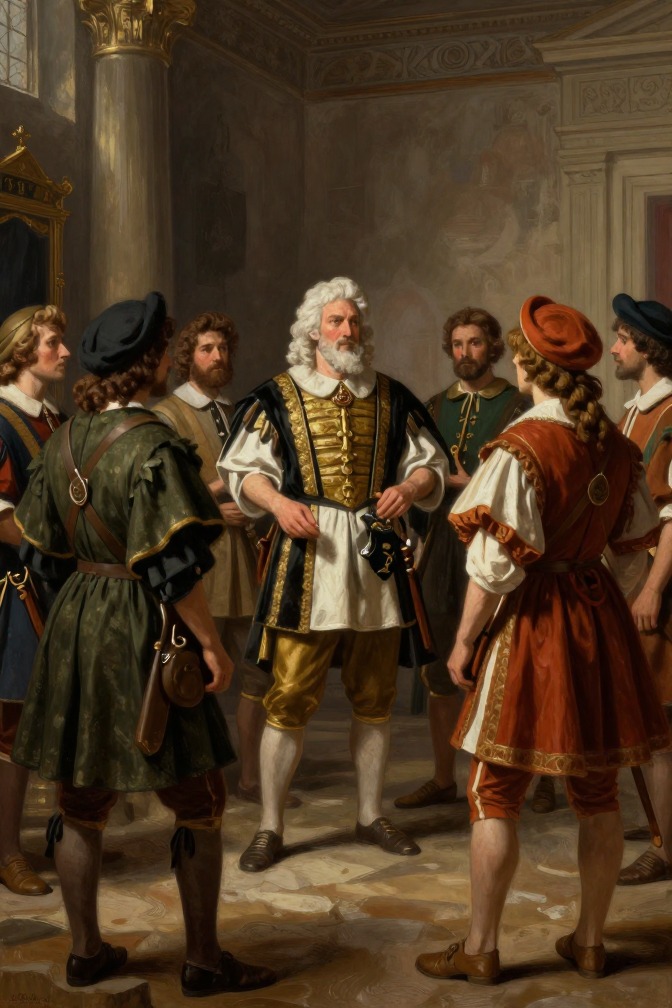
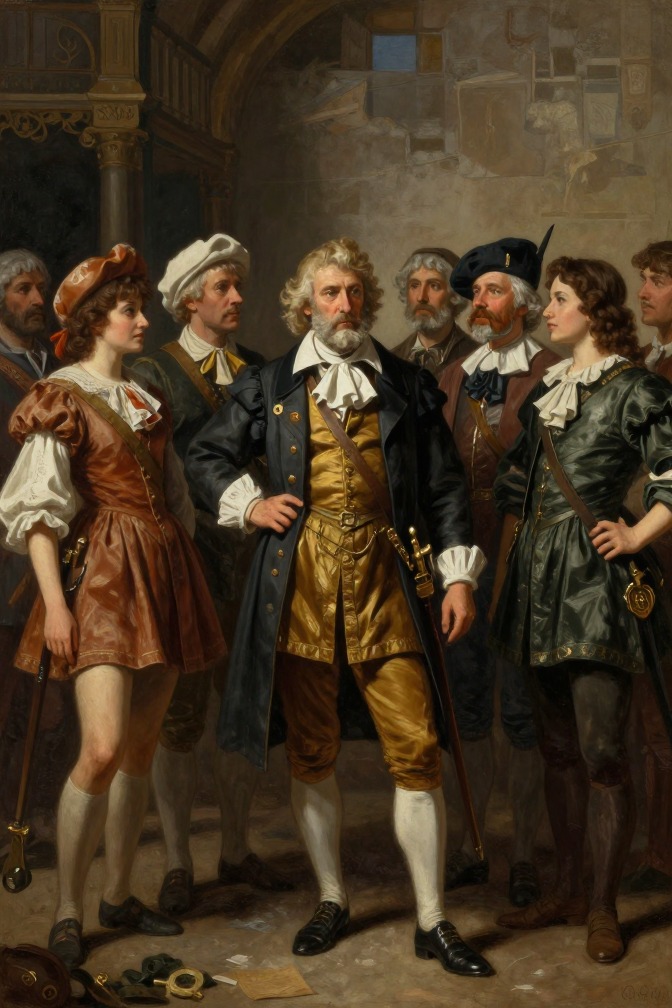
The Lilliputian court is the central political institution of the diminutive empire of Lilliput, a miniature monarchy whose elaborate rituals, factional conflicts, and legal codes serve as a sustained satirical mirror of early eighteenth-century European—particularly English—court life. Governed by an emperor whose authority is expressed through a blend of absolute decree and theatrical ceremony, the court is defined by its violent internal divisions (the High-Heel and Low-Heel factions), its obsessive war with the neighboring empire of Blefuscu over the proper way to break eggs, and its peculiar systems of reward and punishment, including the notorious practice of appointing ministers through rope-dancing contests. Through the eyes of the giant visitor Lemuel Gulliver, the court's combination of petty vanity, ruthless ambition, and elaborate legalism is exposed as both absurd and dangerous, culminating in a conspiracy to blind and starve him after his greatest services to the empire.
The Slamecksan, or Low-Heels, are one of the two bitterly opposed political factions in Lilliput, distinguished by the low heels of their shoes and representing the party in power under the Emperor of Lilliput, who has determined to use only low heels in the administration of the government.
The Tramecksan, or High-Heels, are one of the two bitterly opposed political factions in Lilliput, distinguished by the height of their shoe heels and representing the ancient constitution against the low-heeled Slamecksan party favored by the emperor.
The Big-endians and Little-endians are the two irreconcilable religious-political factions in Lilliput, whose conflict over the proper end at which to break an egg satirizes the absurdity of the European religious wars and the trivial origins of devastating political schisms.