The Vampire License is a legal instrument within the Treaty between Light and Darkness that permits registered vampires to hunt and feed on designated human victims, transforming the act of killing into a bureaucratically sanctioned transaction and exposing the moral compromise at the heart of the Others' world order.
A Dark One is an Other who has chosen the side of Darkness, drawing power from human suffering and acting primarily for personal gain, yet bound by the Great Treaty to coexist with the forces of Light under the watch of the Day Watch.
The Inferno vortex is a catastrophic magical phenomenon in Sergei Lukyanenko's *The Night Watch*, a black curse vortex that, if it erupts, threatens to destroy Moscow and kill millions. It is the central crisis of the first story, forcing Anton Gorodetsky to confront the limits of his power, the nature of the Treaty between Light and Darkness, and his own moral choices.
The Russian Revolution is a recurring historical reference point in the Night Watch series, used by the characters to reflect on the Light Magicians' failed attempts to reshape human society through grand ideological projects. It serves as a cautionary example of how well-intentioned magical interventions into human history can spiral into catastrophe, and it frames the ethical debates about the Watches' role in guiding humanity.
World War II is a major historical conflict referenced in Sergei Lukyanenko's *The Night Watch* as a period of intense magical activity, during which the Light Magician Olga was deployed to shield the enemies of her own country from curses, a service she believes should earn her pardon.
The discovery of a coin bearing the image of a saint in a Nagasaki citizen's house in July 1644 triggered a brutal crackdown, leading to the arrest, torture, and execution of a family, with the apostate priest Sebastian Rodrigues present as a witness and his pleas for mercy ignored.
Kichijiro's betrayal of Sebastian Rodrigues is the pivotal act that ends the priest's underground mission and delivers him into the hands of the Japanese authorities, setting in motion the final crisis of faith that leads to Rodrigues' apostasy.
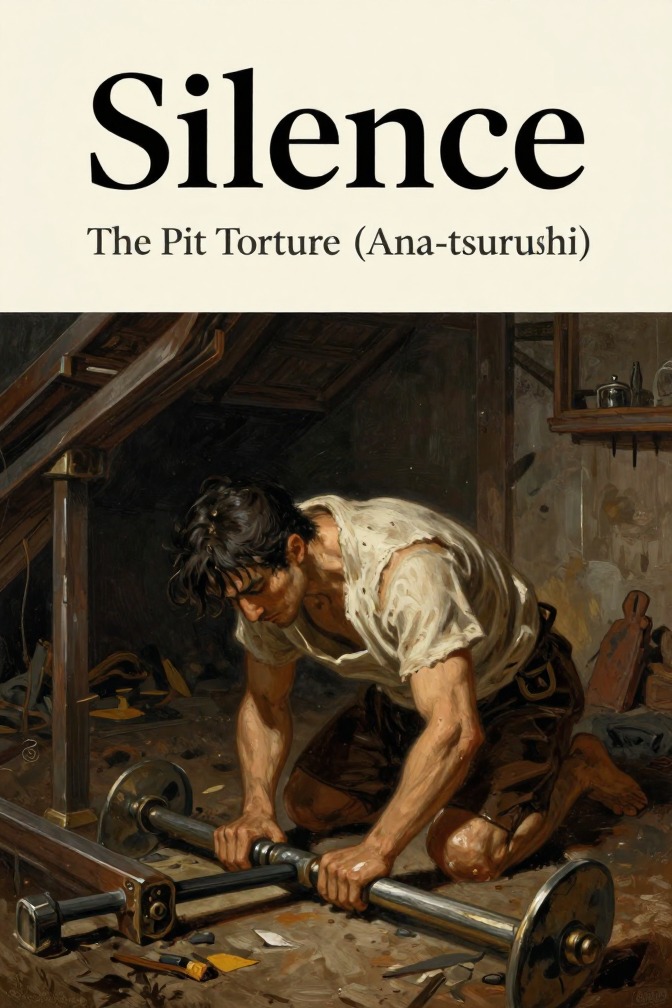
The Pit Torture (Ana-tsurushi) is the most feared and effective method of inducing apostasy during the Tokugawa persecution of Christians in Japan, a slow, agonizing suspension that breaks the body and spirit through prolonged suffering and the silence of God.
Inoue, the Lord of Chikugo, is the chief architect of the persecution of Christians in Shusaku Endo's *Silence*, a former Christian convert who uses psychological cunning rather than brute force to break the will of missionaries and believers, ultimately defeating Sebastian Rodrigues by forcing him to confront the suffering his faith causes others.
Monica is a Japanese Christian peasant woman who, after being captured and imprisoned alongside Sebastian Rodrigues, embodies the quiet, unassuming faith of the rural converts. Her simple hope for a paradise without taxation and her final, brutal drowning at the hands of the authorities serve as a stark testament to the human cost of the persecution and the profound gap between the missionaries' theological ideals and the lived reality of their flock.
Sen is a minor character in Shusaku Endo's Silence, the niece of the Christian widow Omatsu in the village of Tomogi. She appears in a few brief scenes that illustrate the daily life, poverty, and quiet faith of the Japanese crypto-Christians, and her presence underscores the novel's theme that faith is sustained not only by heroic martyrs but by ordinary, anonymous believers who perform small acts of kindness and witness.
In Shusaku Endo's *Silence*, the concept of "the weak" is a central theological and human category that challenges the heroic ideal of martyrdom. Through characters like Kichijiro and the apostate priests, the novel argues that weakness is not a moral failure but a fundamental condition of human existence, and that true love and mercy are revealed precisely in the acceptance of those who cannot be strong.
Paradise is the central eschatological hope in Shusaku Endo's Silence, functioning as the promised reward for Christian martyrs and the ultimate consolation for the oppressed Japanese peasants, yet its meaning is profoundly challenged by the silence of God and the brutal realities of persecution.
The pit torture (ana-tsurushi) is the most feared and effective method of inducing apostasy employed by the Tokugawa Shogunate against Christians in 17th-century Japan, a technique that physically breaks the body while psychologically exploiting the victim's compassion for fellow sufferers, ultimately leading to the apostasy of both Christovao Ferreira and Sebastian Rodrigues.
The fumie image is a copper or bronze plaque bearing the face of Christ or the Virgin Mary, used by the Tokugawa Shogunate as a test of apostasy during the persecution of Christians in Japan. Forced to trample on the sacred image, Christians were compelled to publicly renounce their faith, and the act became a central symbol of the conflict between religious conviction and state power, as well as the psychological and spiritual anguish of the persecuted.
Laudate Eum is a Latin phrase meaning 'Praise Him,' carved into the wall of a dark prison cell by the apostate priest Christovao Ferreira during his own imprisonment, and later discovered by Sebastian Rodrigues as a haunting testament to faith, despair, and the limits of praise under torture.
The children's song 'O lantern, bye-bye-bye' is a recurring motif in Shusaku Endo's novel Silence, sung by children during the Urabon (Bon Festival) in Nagasaki. Its plaintive melody and lyrics about the withering of a hand that throws a stone at a lantern echo the novel's central themes of suffering, silence, and the persistence of faith amidst persecution.
The silence of God is the central theological and existential crisis in Shusaku Endo's novel Silence, representing the perceived absence of divine response to the suffering of Japanese Christians and missionaries during the Tokugawa persecution. This silence becomes the primary source of doubt and anguish for the protagonist, Sebastian Rodrigues, and ultimately shapes his understanding of faith, love, and the nature of Christ.
The phrase "What thou dost, do quickly" (John 13:27) is a recurring biblical quotation in Shusaku Endo's Silence, used by Sebastian Rodrigues to frame his relationship with the betrayer Kichijiro and to meditate on the nature of Judas's role in the Passion. The phrase becomes a central motif for the novel's exploration of betrayal, weakness, and the silence of God, as Rodrigues struggles to reconcile Christ's command with his own inability to forgive or understand the betrayer's actions.
Amakusa is a region in Kyushu, Japan, that served as a significant site for Christian missionary activity and the formation of a local clergy during the early Christian century, and later became a center of crypto-Christian survival after the Tokugawa persecution.
Arima is a location in Kyushu, Japan, that served as a major center for Jesuit missionary activity during the Christian century, hosting a seminary and witnessing large-scale conversions before the Tokugawa persecution eradicated its Christian community.
Dozaki is a village on the Goto Islands where Sebastian Rodrigues ministered to hidden Christians, and it exemplifies the tension between Western Christianity and Japanese culture that Shusaku Endo explores in Silence.
Goto is an island group off the coast of Kyushu, Japan, where Sebastian Rodrigues secretly travels to minister to hidden Christians after his arrival in the country. It becomes a site of intense pastoral activity and initial hope, but also of eventual betrayal and the revelation of the deep, transformative nature of Japanese Christian faith.
Hirado is a port town in Japan that serves as a key location in the novel, representing both the historical promise of Christian mission and the eventual failure of Christianity to take root in the Japanese 'swamp.' It is the site where Garrpe is sent after the priests separate, and where Inoue travels on business, and it is used by Inoue in a parable to illustrate Japan's rejection of foreign influence.
Ikitsuki is an island off the coast of Kyushu, Japan, that serves as a key location in Shusaku Endo's Silence, representing both a refuge for hidden Christians and a site of intense persecution. It is where Sebastian Rodrigues ministers to a fervent but isolated community, and where the novel's themes of faith, cultural adaptation, and the 'swamp of Japan' are most starkly dramatized.
Kobinatacho is the Edo district where Inoue arranges for Sebastian Rodrigues to live after his apostasy, a house that once belonged to Inoue himself, symbolizing Rodrigues' final absorption into Japanese society and his permanent separation from his former life as a missionary.
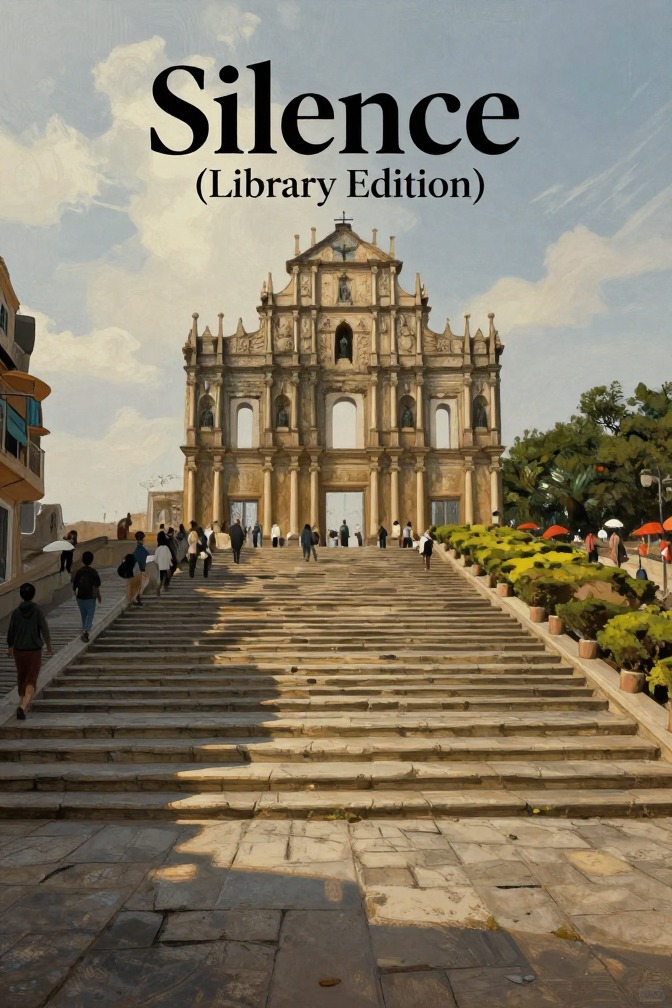
Macao is the Portuguese colonial port city in southern China that serves as the final staging ground for Sebastian Rodrigues and Francisco Garrpe before their secret mission to Japan, and it functions throughout the novel as a symbol of the institutional Church's distance from the brutal realities of the Japanese mission field.
The Mountain Villa is the Edo-period Christian Residence where Sebastian Rodrigues, under the Japanese name Okada San'emon, spent the final decades of his life after his apostasy, serving as a site of confinement, surveillance, and forced literary labor that embodied the Tokugawa shogunate's systematic suppression of Christianity.
Muryoin Temple is the Buddhist temple in Koishikawa, Edo, where the remains of the apostate priest Sebastian Rodrigues—known in Japan as Okada San'emon—were cremated and interred after his death in 1680, marking the final disposal of a body that the Tokugawa authorities had kept under surveillance for thirty years.
The Prison of Suzuda in Omura was a notorious detention facility used by the Tokugawa Shogunate to hold captured Christian missionaries and believers during the persecution of Christianity in Japan. It was a place of extreme physical and psychological suffering, where prisoners were subjected to harsh conditions, torture, and the relentless pressure to apostatize. The prison symbolizes the brutal effectiveness of the state's campaign to eradicate Christianity and the profound crisis of faith it induced in its victims, most notably the missionary Sebastian Rodrigues, who was held there before his own apostasy.