The note from Jud Crandall, left for Louis Creed on the morning after they buried Church in the Micmac burying ground, is a crucial document that reveals Jud's awareness of the supernatural power of the place, his desire to keep its secrets hidden from outsiders, and his implicit understanding that what they did may have consequences. It serves as a bridge between the seemingly simple act of burying a pet and the dark, escalating horror that will consume the Creed family.
The Orinco truck is a recurring industrial vehicle in Stephen King's Pet Sematary, serving as the primary instrument of death for both the Creed family cat, Church, and later for Louis and Rachel Creed's son, Gage. Its repeated, seemingly random appearances on Route 15 in Ludlow, Maine, transform it from a mundane piece of chemical-fertilizer transport into a symbol of the arbitrary, violent power of the road and, ultimately, of the malevolent influence of the Micmac burying ground that seems to orchestrate tragedy.
The rope is a practical tool that Louis Creed uses during the exhumation of his son Gage's body from Pleasantview Cemetery, serving as a critical instrument in his desperate plan to carry the corpse to the Micmac burying ground for resurrection.
The sapphire necklace is a Christmas gift Louis Creed gives his wife Rachel in 1983, a rare and expensive token of love that momentarily lifts the shadow of the family's recent grief and the unsettling changes in their resurrected cat Church.
The sled is a simple but emotionally charged object in Pet Sematary, serving as a tangible link between the living and the dead. It is the vehicle of a cherished memory—Ellie pulling Gage on it—and becomes a physical symbol of the grief that fractures the Creed family after Gage's death.
The Star Wars sneakers are a pair of Gage Creed's shoes that become a recurring symbol of his violent death, appearing in Louis Creed's traumatic flashbacks and in the physical evidence of the accident.
The Thanksgiving tablecloth is a white lawn cloth that Norma Crandall uses for a festive dinner shortly before her death, and which Louis Creed later uses to cover her husband Jud's corpse after the resurrected Gage murders him, marking the transition from domestic comfort to horror.
Delta Airlines is the commercial airline that transports the Creed family between Maine and Chicago, and also carries the body of Victor Pascow back to his parents in New Jersey. Its flights and ticketing become a crucial logistical element in Louis Creed's plan to send his wife and daughter away so he can exhume and rebury his son Gage in the Micmac burying ground.
The Micmac Indian tribe is the indigenous people whose ancestral lands include the area of Ludlow, Maine, where the novel's central events unfold. Their ancient burial ground, located beyond the Pet Sematary, possesses a powerful and dangerous supernatural force that can resurrect the dead, a secret known to a few local residents and central to the novel's horror.
Orinco is a chemical fertilizer company whose trucks repeatedly traverse Route 15 in Ludlow, Maine, serving as a recurring symbol of the industrial threat that kills pets and, ultimately, Gage Creed.
The State of Maine, as a governmental entity, plays a crucial role in the novel as the legal and political backdrop against which the supernatural events of the Micmac burying ground unfold, its laws and courts entangled with the ancient, contested land that holds the power of resurrection.
Louis and Ellie's father-daughter relationship is a central emotional anchor in Pet Sematary, defined by Louis's deep love, his efforts to guide her through the realities of death, and the ultimate, tragic failure of that guidance as his own grief and the supernatural power of the Micmac burying ground consume him.
Victor Pascow, a University of Maine student who dies in the infirmary on Louis Creed's first day of work, establishes a supernatural connection with Louis that transcends death. Pascow's dying words and subsequent ghostly visitations serve as a direct warning about the forbidden power of the Micmac burying ground beyond the Pet Sematary, a warning Louis ultimately fails to heed.
Irwin Goldman and Louis Creed's antagonistic relationship is a central source of tension in the novel, rooted in class prejudice, a failed bribe, and mutual contempt that erupts into violence at their son's funeral, ultimately reflecting the novel's themes of grief, guilt, and the impossibility of reconciliation.
Louis and Rachel Creed's marriage is the emotional core of Pet Sematary, a relationship tested by grief, trauma, and the supernatural. Their bond, initially strong and loving, is strained by Rachel's deep-seated fear of death stemming from her sister Zelda's agonizing demise, and by Louis's secret, desperate actions following the death of their son, Gage. The marriage ultimately shatters under the weight of these forces, culminating in tragedy.
The friendship between Louis Creed and Jud Crandall is the emotional and narrative engine of Stephen King's *Pet Sematary*, a bond that begins as a neighborly welcome and deepens into a surrogate father-son relationship, ultimately becoming the conduit through which the novel's central tragedy unfolds. Jud, an eighty-three-year-old lifelong resident of Ludlow, recognizes in the younger doctor a man in need of guidance and roots, while Louis, who lost his own father at age three, finds in Jud the paternal figure he never had. This trust leads Jud to share the secret of the Micmac burying ground beyond the Pet Sematary, a decision that, driven by the place's malevolent influence, sets in motion the resurrection of Louis's son Gage and the destruction of both families.
Rachel and Zelda's sisterly relationship is the traumatic core of Rachel Creed's lifelong phobia of death, a wound inflicted when she was eight years old and left alone to witness her older sister's agonizing death from spinal meningitis. The memory of Zelda's twisted body, her hateful eyes, and the guilt of feeling relief at her death shapes Rachel's desperate refusal to confront mortality, driving her bitter argument with Louis over Ellie's encounter with the Pet Sematary and her inability to attend funerals. This buried trauma, which Rachel finally confesses to Louis on the night before Norma Crandall's funeral, explains the otherwise inexplicable intensity of her reactions and provides the psychological key to her character.
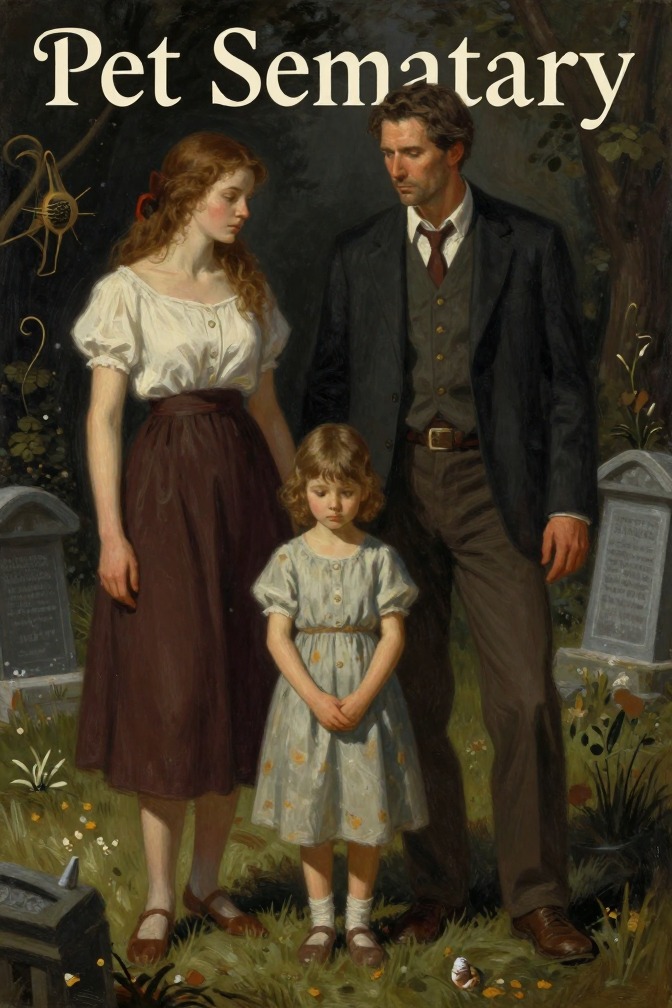
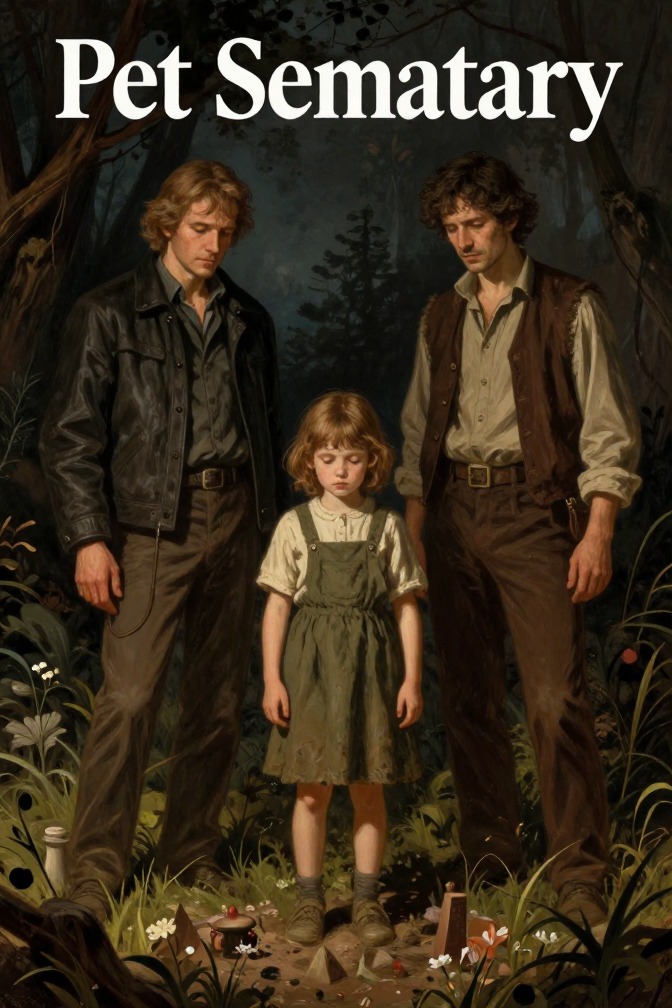
The Creed family's relationship with the Pet Sematary begins as a curious discovery on their first day in Ludlow and deepens into a fatal entanglement that drives the novel's central tragedy. What starts as a child's introduction to death through a pet cemetery becomes a conduit for the family's grief, culminating in Louis Creed's desperate, forbidden attempt to reverse his son's death by using the more powerful Micmac burying ground beyond it.
The Creed family's supernatural connection to the Micmac burying ground is the central, corrupting force of the novel, transforming a place of supposed comfort into a conduit for a malevolent power that preys on grief and ultimately destroys the family. This ancient burial site, located beyond the children's Pet Sematary, possesses the ability to return the dead to life, but the resurrection is always a perversion, leaving the returned being fundamentally wrong and often dangerous. The connection is forged through a series of escalating tragedies—the death of the family cat, Church, and later the death of the son, Gage—each of which draws Louis Creed deeper into the site's dark influence, culminating in the complete annihilation of his family and his own sanity.
Don't look down is a recurring rule in Pet Sematary that governs safe passage across the deadfall barrier and through Little God Swamp. It is first articulated by Jud Crandall during the night journey to the Micmac burying ground and later internalized by Louis Creed, who finds that obeying the rule allows him to cross treacherous terrain without injury, while violating it leads to falls and near-disaster. The rule functions as both a practical survival instruction and a metaphor for the psychological refusal to confront the horror of what lies beneath.
Jud Crandall's warning to Ellie Creed during the family's first walk to the Pet Sematary establishes a foundational rule of the novel: the woods beyond the path are dangerous, and straying from the path can lead to being lost. This seemingly simple caution, delivered with the weight of local knowledge, foreshadows the deeper, more sinister prohibitions that govern the land beyond the pet cemetery and the terrible consequences of ignoring them.
Keep shut on the subject is the unwritten rule of silence that governs all knowledge of the Micmac burying ground beyond the Pet Sematary. The rule demands that those who know the secret—who have used the place to bring a dead animal or person back—never speak of it to outsiders, never explain what they have done, and never reveal the location or the method. It is a rule of shame, of superstition, and of self-protection, enforced not by any authority but by the shared understanding that the power of the place is a dangerous secret that must be contained.
The rule "Never run in the road" is a desperate, life-saving command shouted by Rachel Creed to her son Gage after Louis Creed tackles him to safety just before an Orinco truck would have killed him. It crystallizes the family's terrifying confrontation with the lethal danger of Route 15, a road that has already killed the cat Church and that Jud Crandall warned about on the family's first day in Ludlow. The rule is the direct, visceral expression of the Creed family's struggle to protect their children from the road's constant threat, and its utterance marks the moment when a near-tragedy is averted through sheer physical intervention.
This rule, articulated by Jud Crandall to Louis Creed, encapsulates the novel's central warning against probing the forbidden knowledge of the Micmac burying ground. It functions as a moral and narrative boundary, marking the point where legitimate grief transforms into a dangerous, transgressive curiosity that the story punishes absolutely.
The barrier was not made to be broken is a central rule of the Micmac burying ground, delivered as a warning by the ghost of Victor Pascow to Louis Creed. It forbids crossing the deadfall that separates the Pet Sematary from the deeper woods where the ancient burial ground lies, and violating it unleashes catastrophic consequences.
1942 is the year Timmy Baterman, a young man from Ludlow, left to fight in World War II; his death in Italy the following year and his father's subsequent attempt to resurrect him using the Micmac burying ground form the central cautionary tale that Jud Crandall recounts to Louis Creed in an effort to dissuade him from attempting the same with his son Gage.
1943 is the year in which Timmy Baterman, a young soldier from Ludlow, is killed in action in Italy and, after his father Bill Baterman exhumes and reburies him in the Micmac burying ground beyond the Pet Sematary, returns as a malevolent, knowing entity that terrorizes the town before being killed again in a fire that also claims his father.
1951 is the year Jud Crandall and his wife Norma purchased burial plots in Mount Hope Cemetery in Bangor, Maine, a decision that later shaped the logistics of Norma's funeral and burial after her death in early 1984.
April 14, 1965, is the day Zelda Goldman, Rachel Creed's older sister, died of spinal meningitis in the back bedroom of the Goldman family home in Lake Forest, Illinois. Rachel, then eight years old, was left alone with Zelda when their parents went out for a brief visit during the Passover season. The event is the foundational trauma of Rachel's life, shaping her lifelong phobia of death, her inability to attend funerals, and her fierce, irrational protectiveness toward her own children. It is the secret wound that drives her bitter argument with Louis over Ellie's encounter with the Pet Sematary and that resurfaces in nightmares after Gage's death.
July 30, 1943, is the date on which Jud Crandall, along with three other Ludlow men, confronted Bill Baterman and his resurrected son Timmy at the Baterman home, an event that crystallized the horror of the Micmac burying ground's power and became the central cautionary tale Jud later told Louis Creed.