The Creed kitchen is the domestic heart of the Creed household in Ludlow, Maine, where the family's most intimate and volatile moments unfold. It is the site of Louis and Rachel's bitter argument about death and the Pet Sematary, the place where Louis confronts the resurrected Church's unsettling presence, and the room where Ellie matter-of-factly declares that Norma Crandall will die anyway. More than a functional space for meals, the kitchen becomes a stage for the family's fractured grief, their unspoken secrets, and the creeping horror that originates in the woods beyond their home.
Brewer is a small city in Maine, located across the Penobscot River from Bangor, that serves as a site of mundane errands and practical preparations in the novel, including Louis Creed's purchase of grave-robbing tools at a hardware store.
Boston is a major city in New England that serves as a critical transit hub in the novel, where Rachel Creed's attempt to return home to Ludlow is thwarted when she misses her connecting flight, forcing her to drive through the night and setting the stage for the final tragedy.
Heaven is a contested and ambiguous concept in Pet Sematary, serving as a site of theological debate, personal faith, and ironic contrast to the novel's central horror of unnatural resurrection. The narrative repeatedly invokes heaven—through scripture, characters' beliefs, and the absence of any divine intervention—to underscore the story's bleak materialism: the only afterlife the book depicts is a monstrous return to the same flawed world.
The Creed living room is the central domestic space of the Creed family home in Ludlow, Maine, where the family gathers for meals, conversation, and quiet evenings. It is the site of key emotional confrontations, including Louis and Rachel's argument about death and the Pet Sematary, and later becomes a space of eerie stillness and dread after Gage's death, where Louis sits alone playing solitaire, awaiting the return of his resurrected wife.
Providence, Rhode Island, is the city where Louis Creed travels in October 1984 to present a paper at the New England Conference on College and University Medicine, a professional milestone that marks his growing confidence in his new role as director of the University of Maine infirmary and his psychological distance from the traumatic death of Victor Pascow.
Fargo is a city in North Dakota mentioned in the novel as a destination in a macabre anecdote about a corpse misrouted during air transport, illustrating the absurd and grotesque failures that can occur in the handling of the dead.
The Mayan civilization is referenced in Pet Sematary as a parallel to the Micmac Indian tribe, both of whose ancient, powerful practices and monumental constructions are now forgotten or mysterious. The comparison serves to underscore the profound, unknowable nature of the Micmac burying ground and its power over death, framing it as a site of lost, primal knowledge rather than a simple haunted location.
Des Moines is a city in Iowa that appears in the novel as a destination in a macabre anecdote told by a pathology clerk, illustrating the absurd and grotesque failures that can occur in the transportation of human remains.
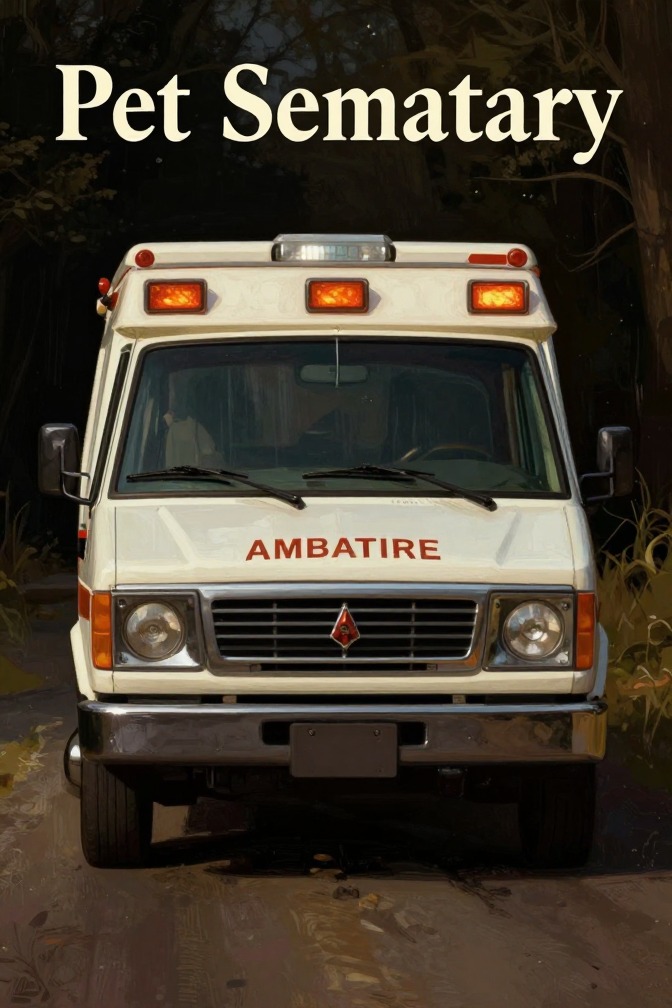
The ambulance at the University of Maine's Student Medical Center is a critical piece of infrastructure that fails at a crucial moment, symbolizing the inadequacy of institutional systems in the face of sudden, catastrophic death and foreshadowing the novel's central theme of helplessness against mortality.
Ben-Gay is a topical analgesic that Louis Creed applies to his swollen knee after his night of grave-robbing and carrying his son's body to the Micmac burying ground, a mundane object that underscores the physical toll of his supernatural errand.
Cat food is a mundane household object that becomes a tool of deliberate, cold-blooded euthanasia in the aftermath of the novel's horrors, used by Louis Creed to lure and kill the resurrected Church with a morphine overdose.
Gage Creed's coffin is the rosewood Eternal Rest model, selected by his father Louis at the Brookings-Smith Mortuary. It becomes the object of Louis's grave-robbing when he exhumes his son's body to carry it to the Micmac burying ground, and later the site of a violent confrontation during the funeral visitation.
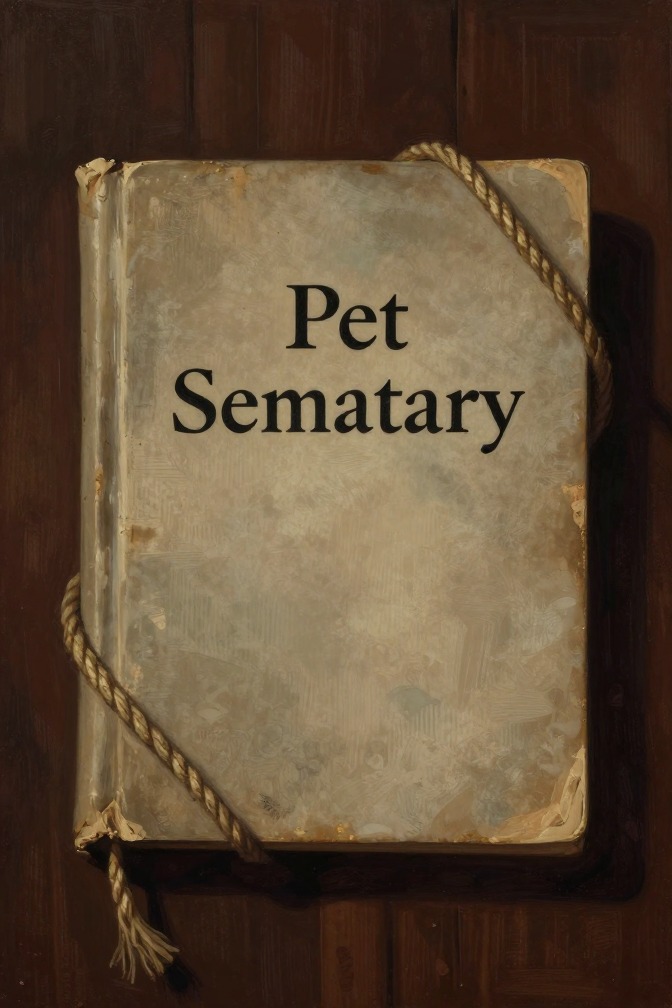
The condolence book at Gage Creed's funeral is a blank, imitation-leather volume in which mourners are asked to sign their names and addresses, a custom Louis Creed finds absurd and meaningless in the face of his son's death.
The crib is a recurring domestic object in the Creed household, serving as the primary sleeping place for Gage Creed. It is the site of intimate father-son moments, a symbol of the child's vulnerability, and a focal point for Louis Creed's premonitions of horror and his later grief.
The grave liner is a concrete box, open at the top, used to contain a coffin within a grave. In Pet Sematary, its simple, unsealed design becomes a crucial plot device, as Louis Creed's choice of a grave liner over a sealed vault makes it physically possible for him to later disinter his son's body.
The hard stretcher is a piece of medical equipment used at the University of Maine at Orono's Student Medical Center for patients with spinal or neck injuries. It appears during the chaotic aftermath of Victor Pascow's fatal accident, where its deployment by inexperienced candy-stripers underscores the infirmary's unpreparedness for such a catastrophic event and becomes a symbol of the institutional and emotional disarray that marks Louis Creed's first day on the job.
The Hefty bag is the green plastic garbage bag Louis Creed uses to transport the body of his daughter's cat, Church, after the animal is killed on Route 15. It becomes a key object in the novel's exploration of death, denial, and the physical reality of what is buried and what returns.
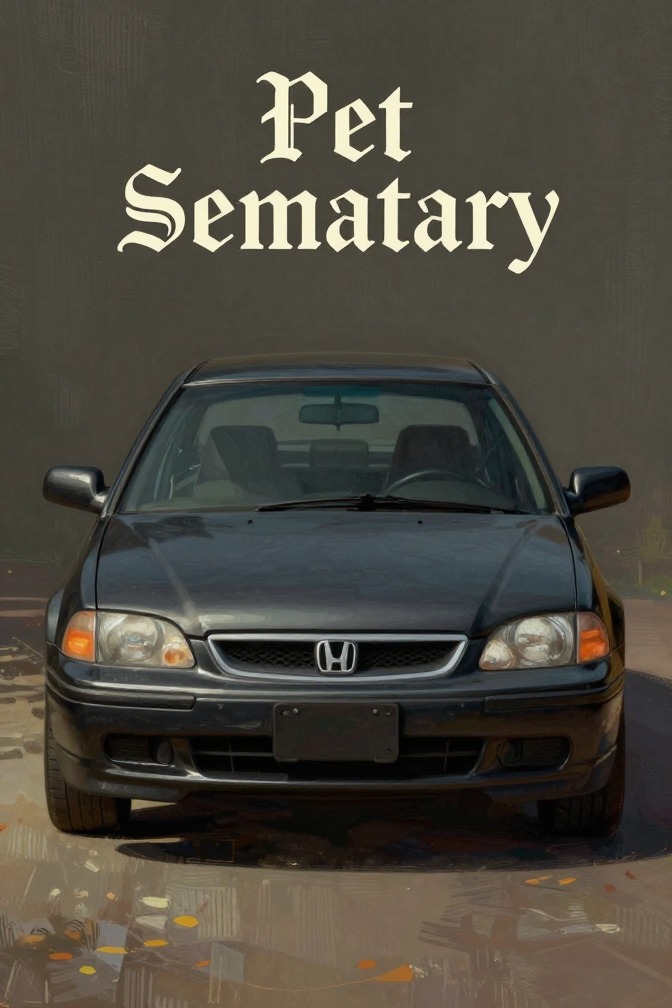
The Honda Civic is the Creed family's second car, a compact vehicle that Louis Creed uses for his daily commute to the University of Maine and, crucially, for the nocturnal grave-robbing expedition in which he exhumes his son Gage's body and transports it to the Micmac burying ground.
The keys to the Creed family's new house in Ludlow, Maine, are a recurring object that marks the transition from chaos to belonging, from outsider to insider, and from the rational world to the supernatural. They first appear as a source of frustration on moving day, then as a symbol of welcome and trust when Jud Crandall offers his own set, and finally as a tool of self-destruction when Louis Creed uses them to lock his family out of their home and into a nightmare.
Marbles are small, colorful glass spheres that serve as children's toys in the Creed household. They become a recurring symbol of childhood danger and parental anxiety, first when Louis discovers one of Ellie's marbles in Gage's diaper—a near-choking incident—and later when Louis warns Ellie to keep them away from her brother, a warning that proves tragically prophetic as Gage's death is ultimately caused not by a marble but by the road Jud Crandall had warned about from the start.
Louis Creed's medical bag is a black doctor's bag that serves as a crucial object throughout the novel, symbolizing his professional identity as a physician and his ultimate failure to protect his family from death. It contains the tools of his trade—syringes, morphine, and a scalpel—which he initially uses for legitimate medical purposes but later repurposes for grave-robbing, euthanasia, and self-defense. The bag's contents become instruments of both healing and destruction, reflecting Louis's descent from rational doctor to desperate father who defies the natural order.
Louis Creed's model cars are a recurring motif that reveals his psychological state, his need for control, and his retreat into a world of meticulous order in the face of life's chaos and mortality.
The Model Porsche is a plastic model kit that Louis Creed assembles in his study during the winter break of his first year in Ludlow, Maine. It represents his hobby of building detailed scale models, a pastime that provides him with a sense of control and order in the face of the growing supernatural chaos surrounding his family. The model's presence in the narrative underscores Louis's retreat into a manageable, miniature world as a coping mechanism against the encroaching horror of the Micmac burying ground.
The note from Jud Crandall, left for Louis Creed on the morning after they buried Church in the Micmac burying ground, is a crucial document that reveals Jud's awareness of the supernatural power of the place, his desire to keep its secrets hidden from outsiders, and his implicit understanding that what they did may have consequences. It serves as a bridge between the seemingly simple act of burying a pet and the dark, escalating horror that will consume the Creed family.
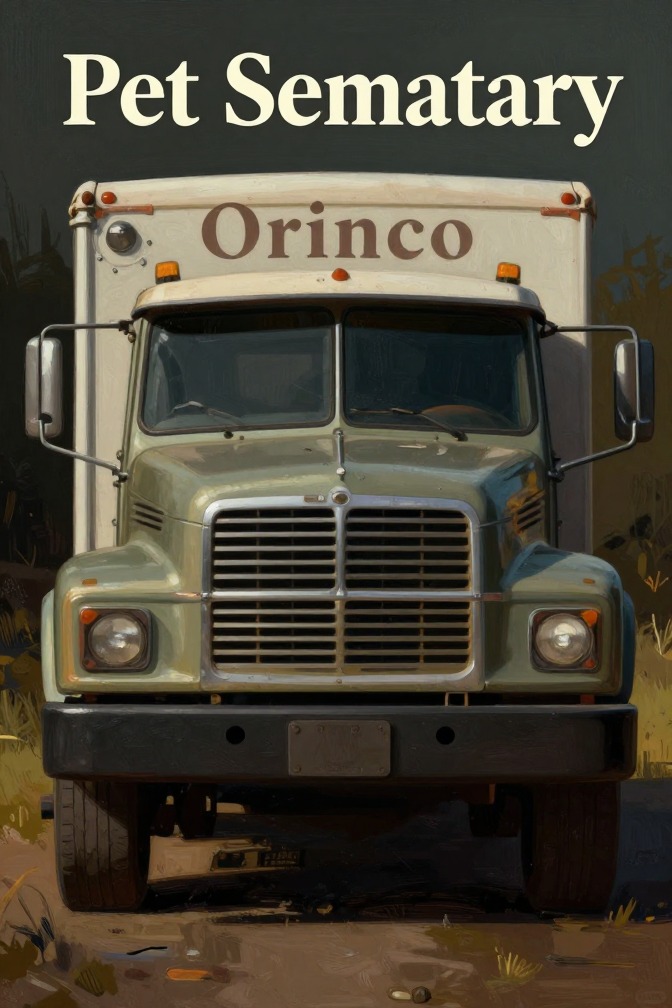
The Orinco truck is a recurring industrial vehicle in Stephen King's Pet Sematary, serving as the primary instrument of death for both the Creed family cat, Church, and later for Louis and Rachel Creed's son, Gage. Its repeated, seemingly random appearances on Route 15 in Ludlow, Maine, transform it from a mundane piece of chemical-fertilizer transport into a symbol of the arbitrary, violent power of the road and, ultimately, of the malevolent influence of the Micmac burying ground that seems to orchestrate tragedy.
The payloader is a piece of heavy machinery that appears at Gage Creed's funeral, symbolizing the mechanical, indifferent force that will seal his grave and representing the novel's confrontation with the mundane reality of death.
The rope is a practical tool that Louis Creed uses during the exhumation of his son Gage's body from Pleasantview Cemetery, serving as a critical instrument in his desperate plan to carry the corpse to the Micmac burying ground for resurrection.
The sapphire necklace is a Christmas gift Louis Creed gives his wife Rachel in 1983, a rare and expensive token of love that momentarily lifts the shadow of the family's recent grief and the unsettling changes in their resurrected cat Church.
The sled is a simple but emotionally charged object in Pet Sematary, serving as a tangible link between the living and the dead. It is the vehicle of a cherished memory—Ellie pulling Gage on it—and becomes a physical symbol of the grief that fractures the Creed family after Gage's death.