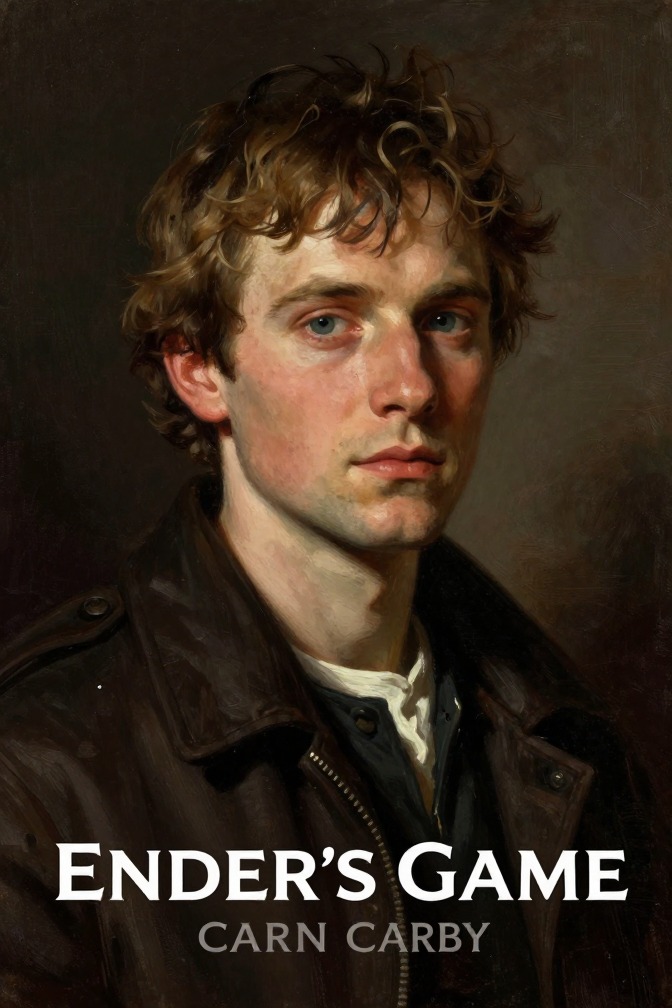
Carn Carby is a minor but significant character in Orson Scott Card's Ender's Game, serving as the commander of Rabbit Army and later as a foil to Ender Wiggin. His brief appearances highlight themes of honor, sportsmanship, and the moral complexities of the Battle School's competitive environment. Carby's graciousness in defeat and his recognition of Ender's genius underscore the contrast between the ideal of fair play and the ruthless pragmatism of the military establishment.
Shen is a minor but recurring character in Ender's Game, a Launchy in Ender Wiggin's original launch group who becomes one of his earliest friends and a loyal participant in his unofficial practice sessions. Though not a leader, Shen's loyalty and humor help Ender build a support network during his early days at Battle School, and he later serves as a squadron leader under Ender's command in the final battles against the buggers.
Box Hill is the site of a disastrous picnic in Jane Austen's *Emma*, where the protagonist's thoughtless mockery of Miss Bates provokes a stern rebuke from Mr. Knightley, precipitating Emma's moral awakening and the novel's decisive turn toward self-knowledge.
The alphabet box is a small wooden box of letters used by Emma Woodhouse and Frank Churchill during a quiet evening at Hartfield, which becomes the vehicle for a covert flirtation and a pointed reference to Mr. Dixon, exposing the secret understanding between Frank Churchill and Jane Fairfax.
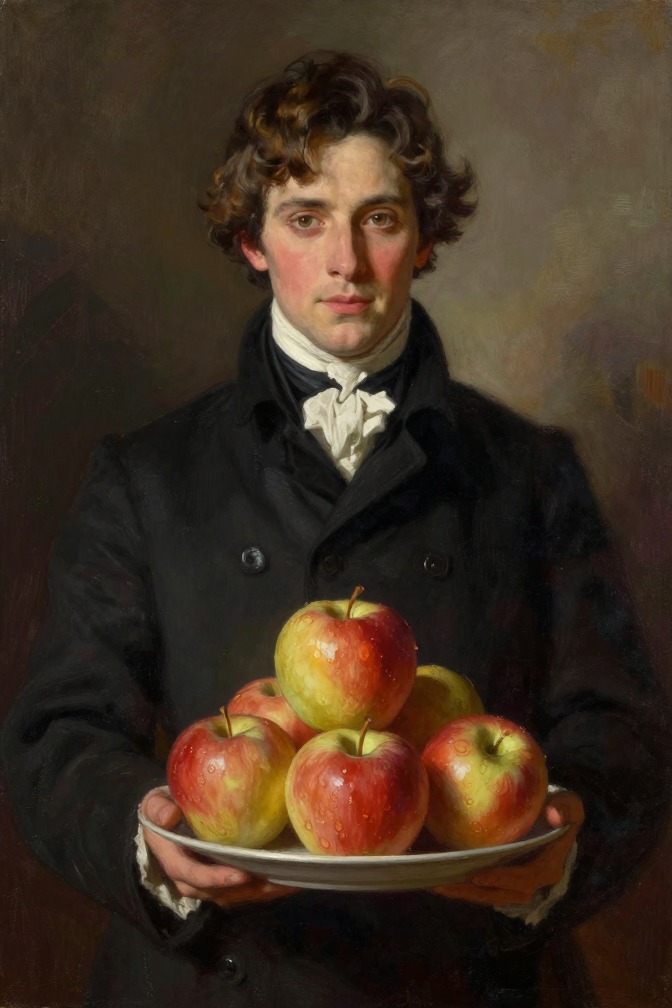
The apples from Mr. Knightley's Donwell Abbey orchard are a recurring object in Emma, symbolizing his generous, unostentatious kindness and the quiet, dependable abundance of his estate. They appear most prominently in a comic and touching episode where Mr. Knightley, learning that the Bates family has nearly exhausted his annual gift of apples, sends a bushel of his entire remaining store, an act that deeply moves Miss Bates and reveals the depth of his thoughtful, unassuming benevolence.
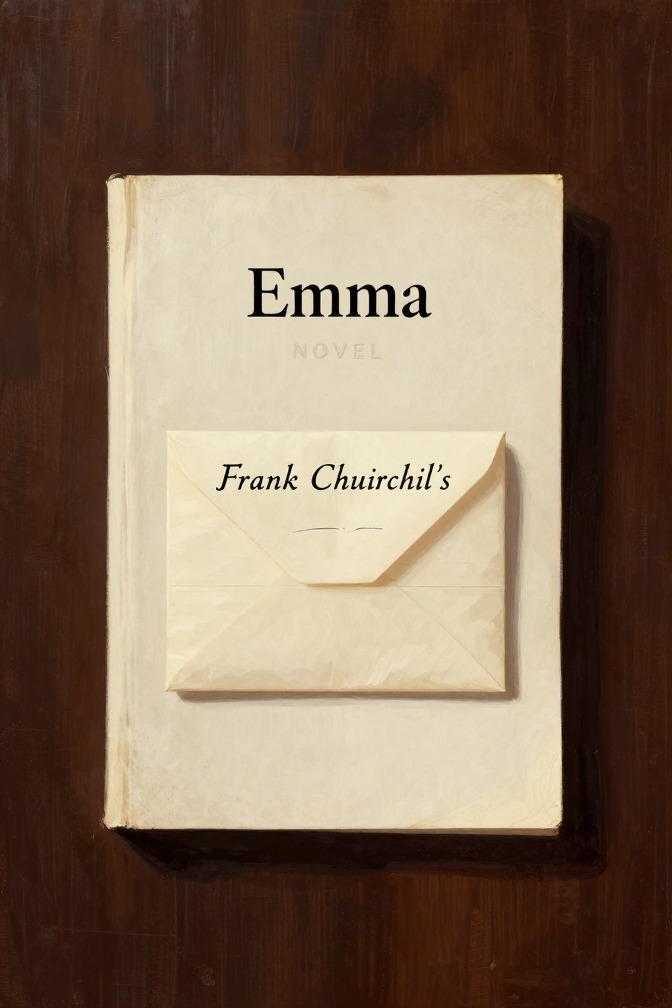
Frank Churchill's letter to Mrs. Weston, written from Windsor in July, is a long, self-exculpatory epistle that confesses his secret engagement to Jane Fairfax, explains his deceptive behavior at Highbury, and seeks forgiveness from those he has misled.
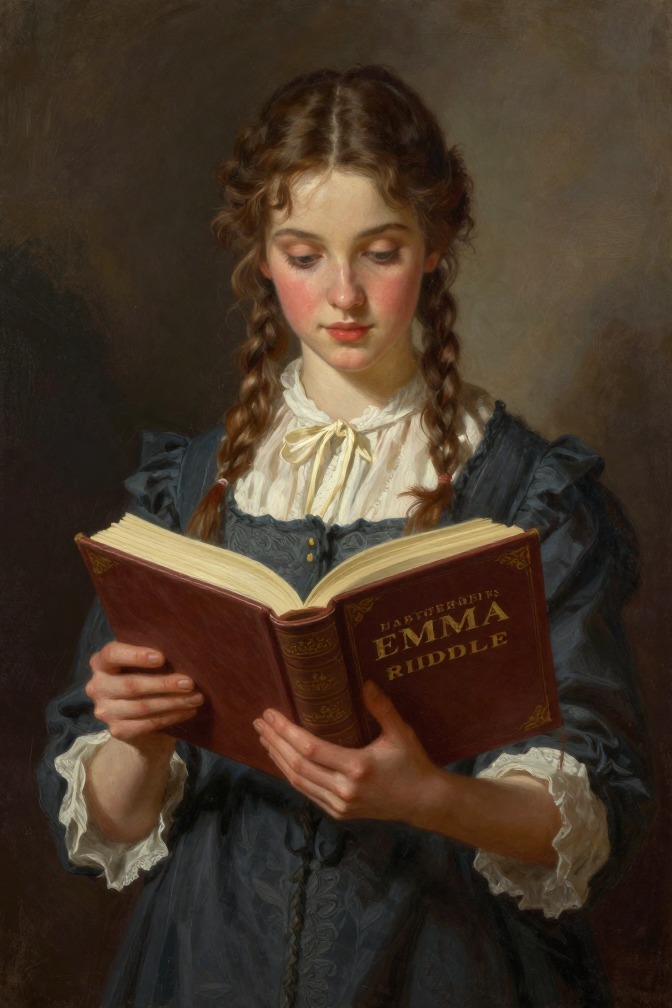
Harriet Smith's riddle book is a thin quarto of hot-pressed paper, ornamented with ciphers and trophies, in which Harriet collects and transcribes riddles of every sort. It becomes a vehicle for Emma Woodhouse's matchmaking schemes, as she uses it to encourage Mr. Elton's supposed courtship of Harriet, and later a site of embarrassment and self-reproach when her plans unravel.
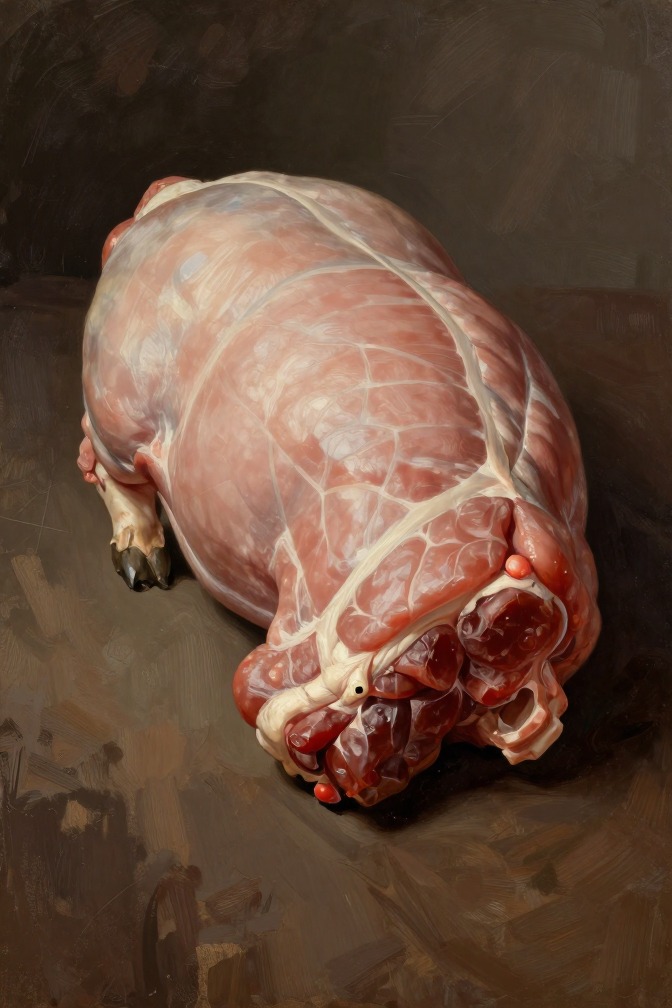
The hind-quarter of pork sent by Mr. Woodhouse and Emma to Mrs. Bates and Miss Bates is a concrete emblem of the Woodhouses' social position, their style of benevolent patronage, and the intricate web of gift-exchange, gratitude, and class obligation that structures daily life in Highbury.
Miss Bates's spectacles are a small but significant object in Emma, whose broken rivet and subsequent repair by Frank Churchill during his visit to the Bates household serve as a catalyst for social interaction, a demonstration of his obliging nature, and a subtle emblem of the care and attention that circulate within Highbury's web of relationships.
The pianoforte that arrives mysteriously at the Bateses' house in Highbury becomes a central object of suspicion, gossip, and emotional revelation, serving as a tangible symbol of the secret engagement between Frank Churchill and Jane Fairfax and exposing the hidden currents of love, jealousy, and deception that run beneath the surface of the community.
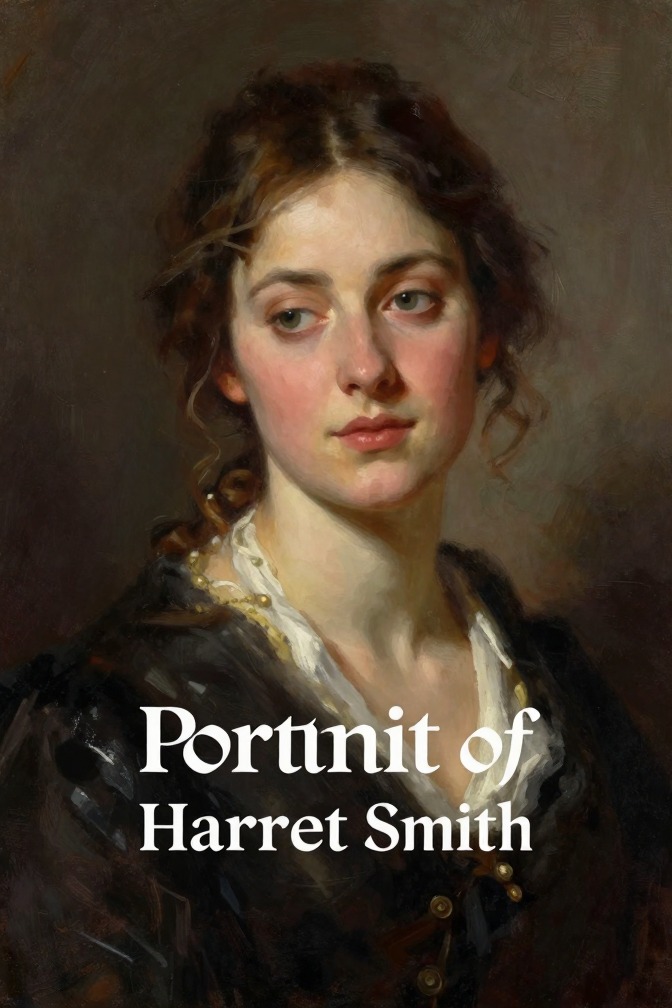
The Portrait of Harriet Smith is a watercolour drawing executed by Emma Woodhouse during the early phase of her friendship with Harriet, intended as a token of their intimacy and as a vehicle for Emma's matchmaking designs upon Mr. Elton. The portrait becomes a material emblem of Emma's self-deception, her manipulation of Harriet's affections, and the social ambitions that drive her schemes, and its fate—framed, displayed, and ultimately rendered a symbol of mistaken hopes—mirrors the trajectory of Emma's own errors.
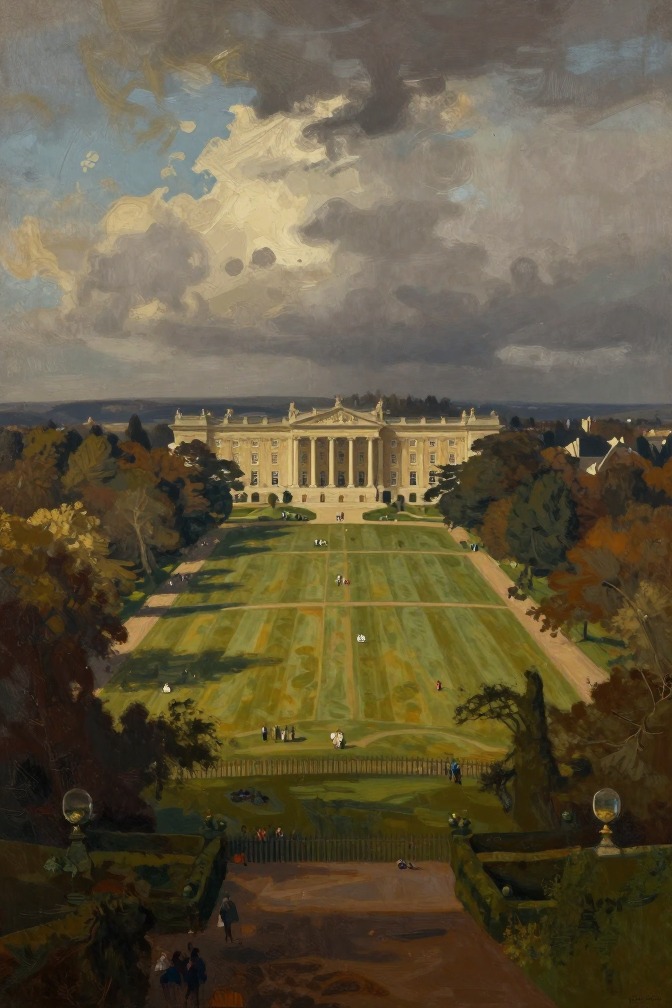
The strawberries at Donwell Abbey are the centerpiece of a summer party hosted by Mr. Knightley, an event that brings together the novel's main characters for a day of social maneuvering, personal revelations, and quiet tensions, ultimately serving as a key setting for the resolution of several romantic and social conflicts.
The Umbrellas from Farmer Mitchell are a minor but symbolically charged object in Emma, appearing in Emma Woodhouse's account of how she first conceived the match between Mr. Weston and Miss Taylor, and later serving as a touchstone for her self-deception about matchmaking and her eventual recognition of her own errors.
Harriet Smith and Robert Martin's relationship is a central romantic thread in Emma, tracing a trajectory from an initial proposal and refusal—engineered by Emma Woodhouse's interference—through a period of separation and Harriet's misguided attachments, to a final, happy union that restores Harriet to her proper social sphere and confirms Robert Martin's steadfast worth.
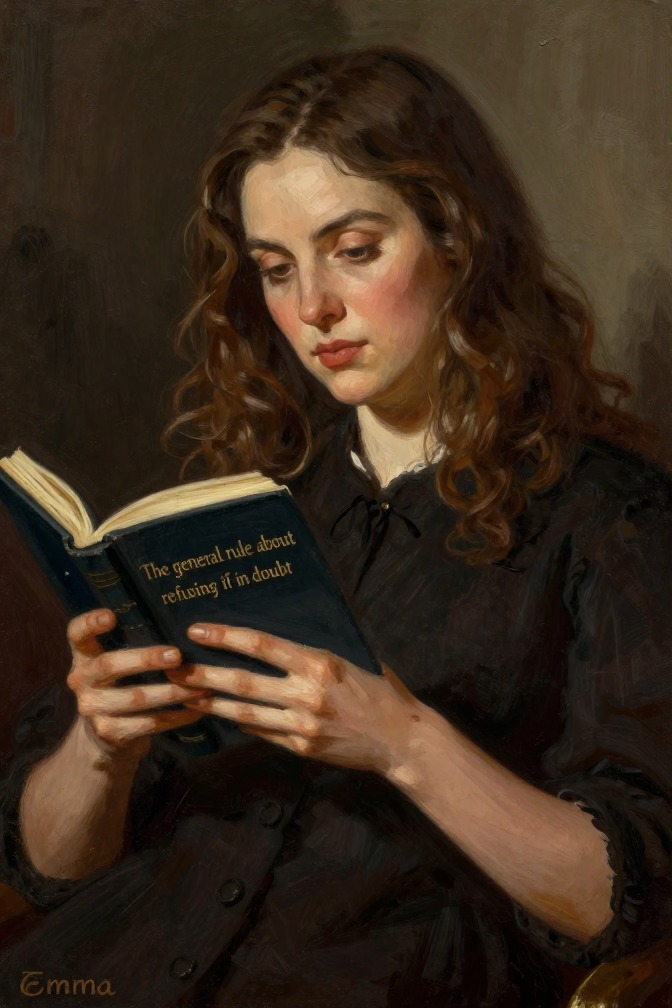
The general rule about refusing a man if in doubt is a principle Emma Woodhouse articulates to Harriet Smith as a guide for handling Robert Martin's marriage proposal, and it becomes a key instrument of Emma's matchmaking interference and self-deception.
Harriet Smith's illegitimacy is a central social fact in Emma, shaping her ambiguous position in Highbury society and driving Emma Woodhouse's misguided matchmaking schemes. The mystery of her parentage—she is the natural daughter of somebody, placed at Mrs. Goddard's school by unknown hands—remains unresolved until the novel's final pages, when she is revealed to be the daughter of a respectable tradesman. This revelation retroactively exposes the vanity and class prejudice that led Emma to inflate Harriet's prospects, while also vindicating Mr. Knightley's insistence that Harriet's true station was never above that of a farmer's wife.
A fortnight is a recurring temporal unit in Emma that structures the rhythm of anticipation, disappointment, and resolution across the novel's major plot movements.
The sixteen-year period of Miss Taylor's presence in the Woodhouse household, from Emma's early childhood to her marriage as Mrs. Weston, is the foundational relationship of the novel, shaping Emma's character, providing her with a surrogate mother and intimate friend, and creating the emotional void that drives the plot's initial conflicts.
The Great Gretna Pie-Eat is the climactic event of Gordon Lachance's story "The Revenge of Lard Ass Hogan," a fictional tale he tells his friends during their hike. It is a grotesque and carnivalesque public contest in which the bullied fat boy, Lard Ass Hogan, deliberately triggers a chain-reaction vomiting spree by secretly drinking castor oil before the competition, achieving a spectacular, humiliating revenge on the entire town.
Vern Tessio is a twelve-year-old boy from Castle Rock, Maine, and one of the four friends who set out to find the body of a missing boy, Ray Brower. His discovery of the body's location, overheard while digging for buried pennies under his porch, sets the entire journey in motion. Vern is portrayed as the most naive and fearful of the group, obsessed with a jar of pennies he buried years earlier, and his later life ends tragically in a housefire.
Virginia is the stepmother of Chico (Edward May) in the embedded story "Stud City," a figure whose calm, predatory presence drives the family's psychological disintegration and is directly implicated in the death of Chico's brother Johnny.
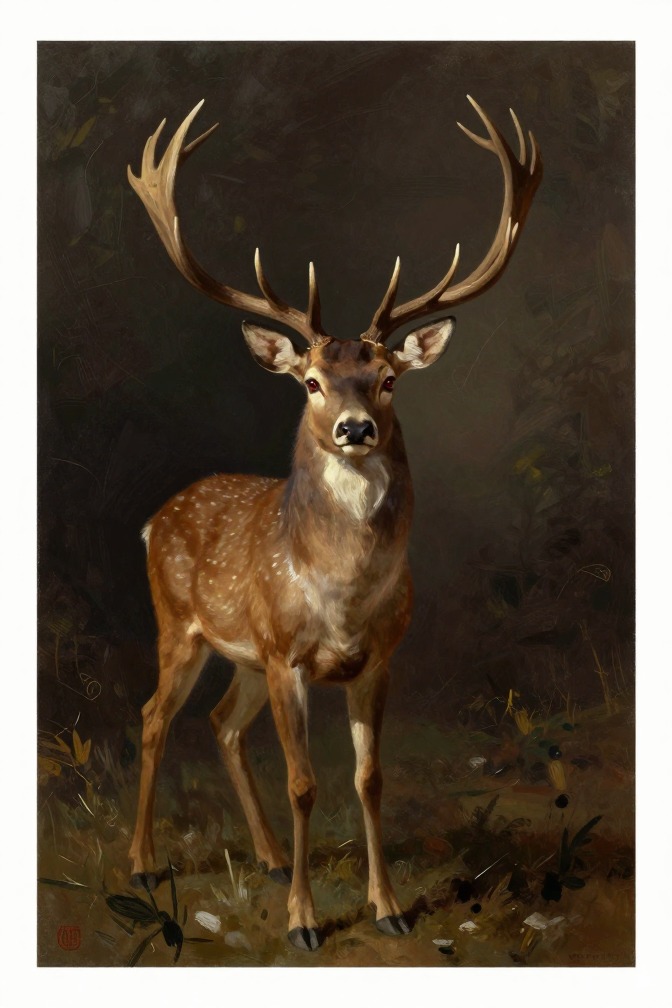
The deer appears to Gordon Lachance at dawn on the second day of the boys' journey to find Ray Brower's body, offering a moment of pure, wordless grace that becomes a lifelong touchstone of peace and clarity amid trauma.
After a two-day hike along the GS&WM railroad tracks, Gordon Lachance, Chris Chambers, Teddy Duchamp, and Vern Tessio discover the body of Ray Brower, a missing boy their own age, in a boggy washout near the Back Harlow Road, an event that forces them to confront mortality, adult violence, and the limits of their childhood adventure.
Goocher is a local superstition among the boys of Castle Rock, Maine, in which flipping four tails on a coin toss is considered a portent of very bad luck, a belief that surfaces at a critical moment during their journey to find the body of Ray Brower and later echoes in the story's aftermath.
This expression, spoken by the adult narrator Gordon Lachance, encapsulates the central theme of the novella: the irreplaceable, formative nature of childhood friendship. It is a direct, heartfelt declaration that the bond he shared with his friends at age twelve—Chris Chambers, Teddy Duchamp, and Vern Tessio—was unique and never replicated in his later life. The line serves as a poignant epitaph for the lost innocence of that summer and for the friends who did not survive into adulthood.
Suck my fat one is the defiant insult Gordon Lachance hurls at Ace Merrill during the climactic confrontation over Ray Brower's body, a line that instantly escalates a tense standoff into a physical threat and becomes a badge of the boys' refusal to back down.
The beach at Normandy is a recurring phrase in the novel, used by Teddy Duchamp to frame his father Norman Duchamp's violent, traumatized actions as heroic military service, and by Teddy himself to justify his own reckless, death-defying behavior. The phrase functions as a narrative prosthesis that transforms a history of domestic abuse and mental illness into a legend of courage, revealing how Teddy's identity is built on a story that both honors and obscures the truth.
Central Maine General Hospital (CMG) is the primary medical facility serving Castle Rock and the surrounding region in Stephen King's "The Body." It appears as the site of emergency treatment for Teddy Duchamp after his father's abuse, for Chris Chambers after his brother's beating, and for Gordon Lachance after Ace Merrill's assault, and it is the hospital where Chris later dies after being stabbed. The hospital functions as a recurring landmark of physical trauma and failed rescue, marking the boundary between the boys' rural world and institutional authority.
Johnny's Dodge is a broken-down, up-on-blocks car that serves as the central symbol of loss, stalled ambition, and unresolved grief in the embedded story "Stud City" and in the memories of its narrator, Gordon Lachance. More than a vehicle, it is the material remnant of Johnny, the brother killed in a racing accident, and the object around which Chico's (and Gordon's) feelings of guilt, resentment, and the impossibility of escape coalesce.
The United States Air Force appears in the narrative as a symbol of Teddy Duchamp's thwarted ambition and the final rejection of his dreams of military service, marking a pivotal moment in his decline.