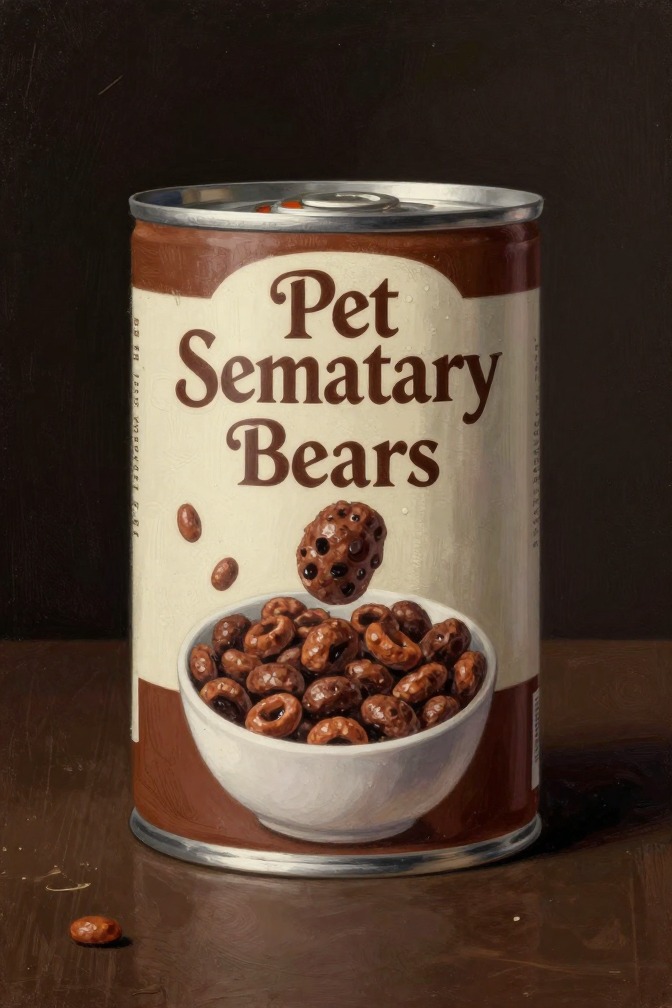
Cocoa Bears cereal is a breakfast food that Gage Creed eats regularly, and it becomes a symbol of his lost presence and the family's grief after his death.
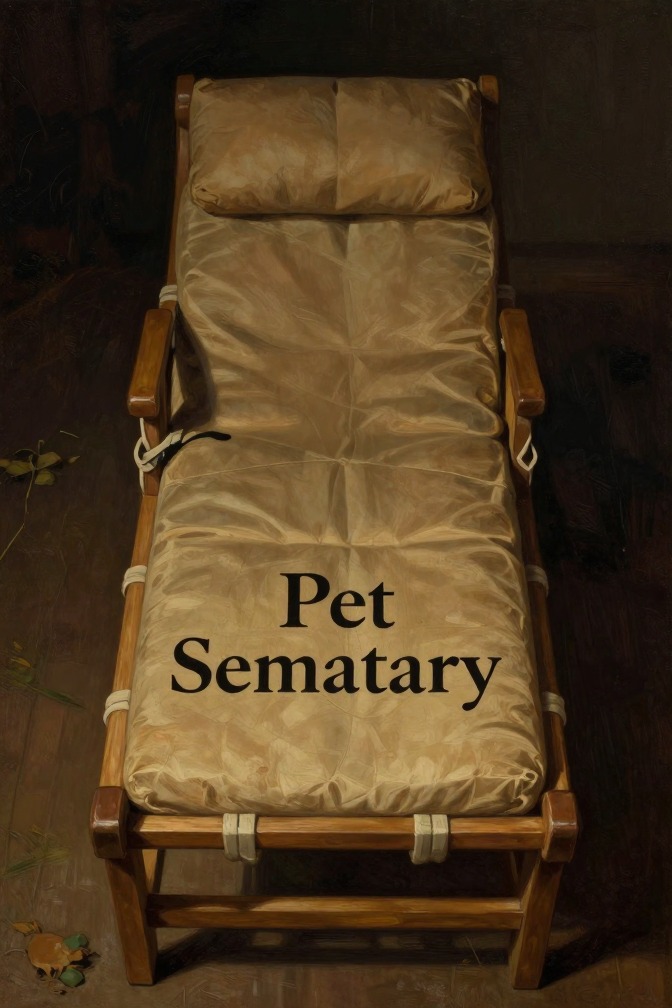
The hard stretcher is a piece of medical equipment used at the University of Maine at Orono's Student Medical Center for patients with spinal or neck injuries. It appears during the chaotic aftermath of Victor Pascow's fatal accident, where its deployment by inexperienced candy-stripers underscores the infirmary's unpreparedness for such a catastrophic event and becomes a symbol of the institutional and emotional disarray that marks Louis Creed's first day on the job.
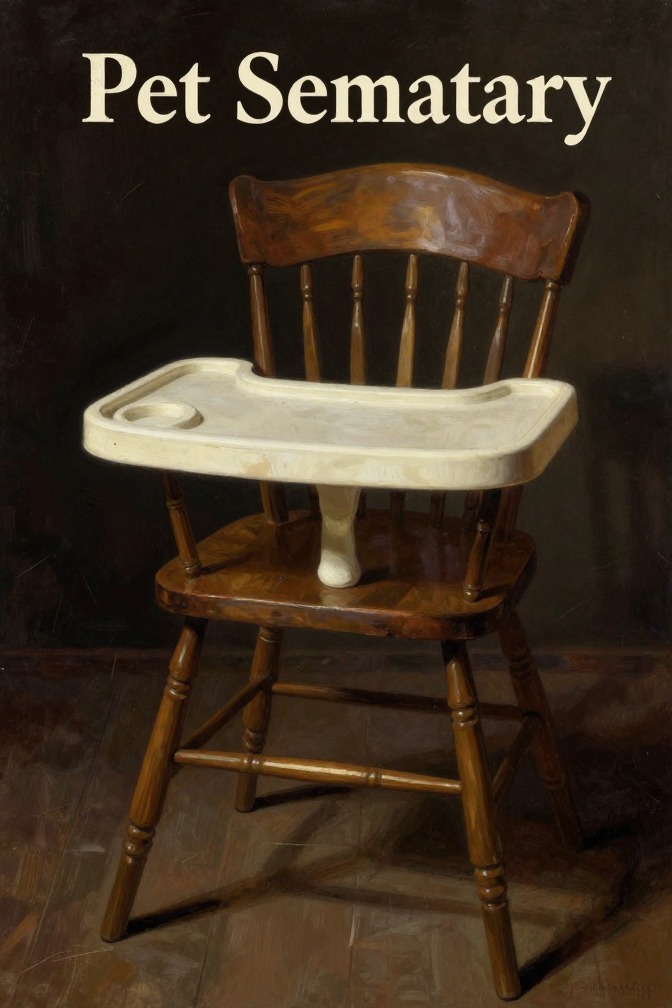
The high chair is a mundane domestic object in the Creed household that becomes a site of Gage's chaotic, messy vitality and, after his death, a poignant symbol of the irreplaceable, ordinary life that has been lost.
The Polaroid picture of Ellie pulling Gage on her sled is a central object in the novel, serving as a tangible anchor for Ellie's grief and her desperate attempt to keep her brother's memory alive after his death. It becomes a symbol of the family's shattered happiness and the impossibility of returning to a state of innocence, contrasting sharply with the unnatural resurrection that Louis later attempts.
Ellie Creed's Schwinn bicycle, a small red bike with training wheels, appears in the Creed garage as a mundane object that becomes a marker of domestic life and, after Gage's death, a painful reminder of the children's vanished world.
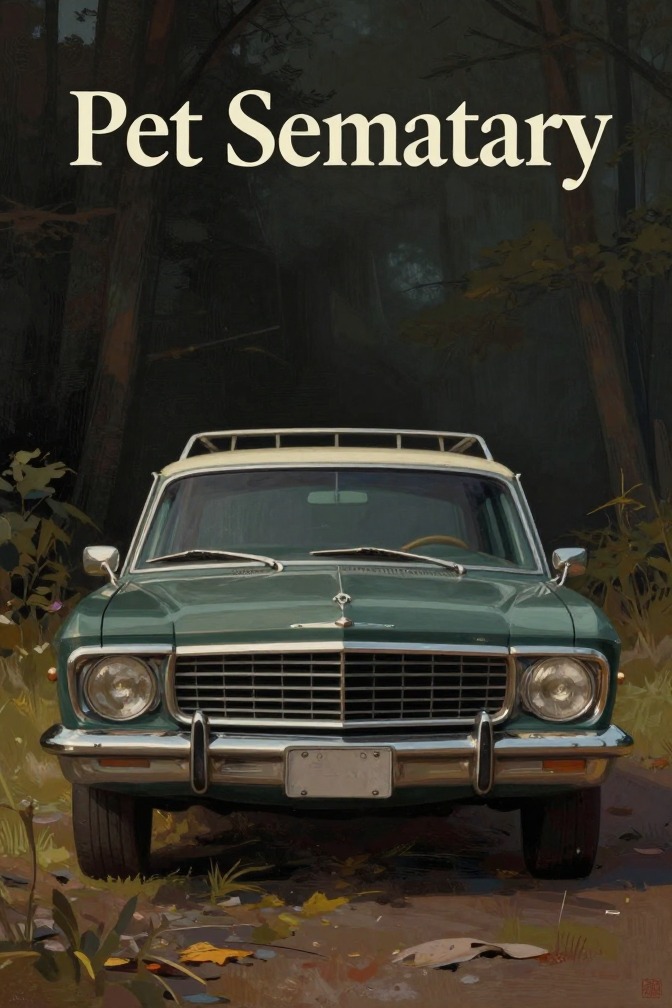
The Creed family station wagon is the vehicle that carries the family and their belongings from Chicago to their new home in Ludlow, Maine, at the novel's opening. It is a large blue Ford wagon that later becomes a silent witness to the family's disintegration, sitting unused in the garage as Louis's obsession with the Micmac burying ground consumes him. Its presence marks the boundary between the ordinary world of domestic life and the escalating horror that follows Gage's death.
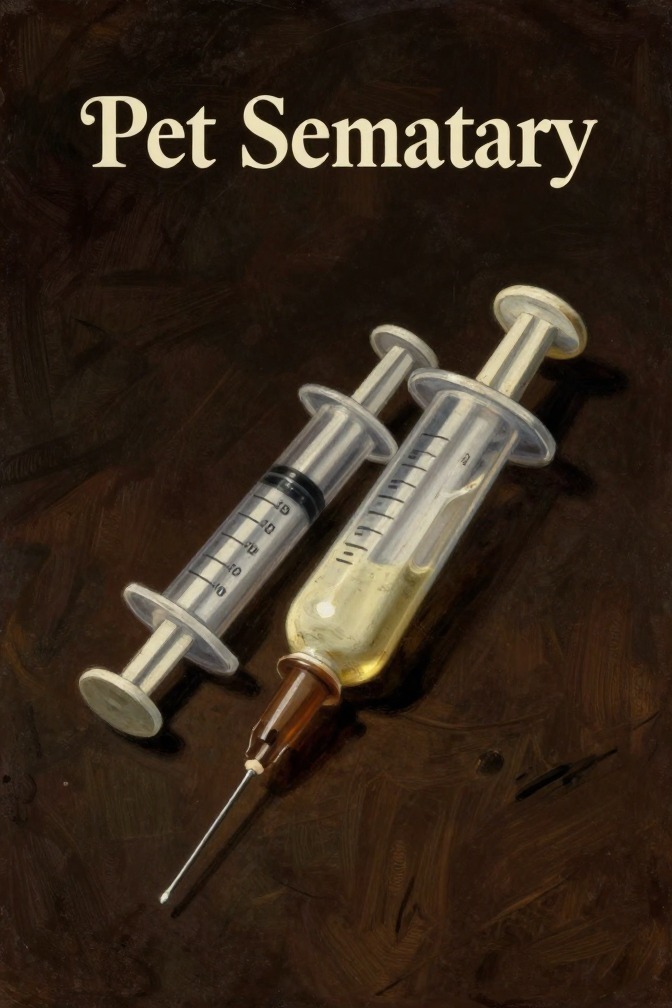
Syringes and morphine are the medical instruments Louis Creed uses to kill the resurrected Church and, later, the resurrected Gage, marking the point where his medical training is turned against the undead beings his own actions have created.
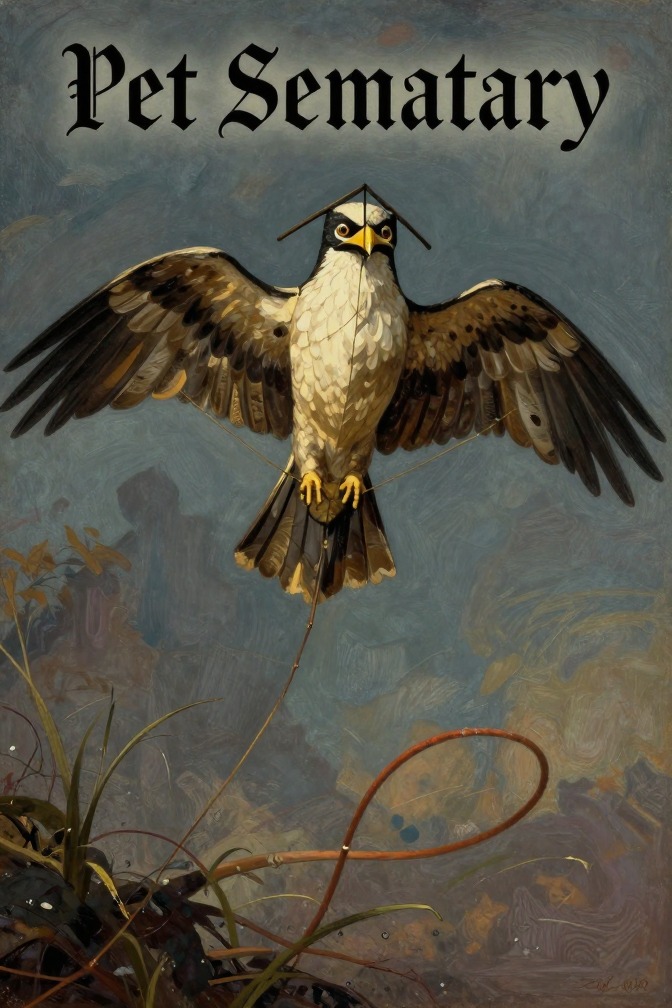
The Vulture kite is a large, black plastic kite shaped like a vulture, purchased by Louis Creed on a whim in mid-February 1984. It becomes the centerpiece of the last truly happy day of his life—March 24, 1984—when he flies it with his son Gage in Mrs. Vinton's field, a moment of pure, uncomplicated joy that stands in stark contrast to the tragedy that follows.
Bangor MedCu is the emergency medical service that responds to the most critical incidents in the novel, transporting Norma Crandall after her heart attack and serving as the destination for Victor Pascow, though its ambulance is unavailable on the day of his fatal accident, underscoring the theme of death's implacable timing.
The Federal government appears in Pet Sematary as a distant, bureaucratic entity whose involvement with the Micmac land claims and the Timmy Baterman affair underscores the novel's theme of official power being helpless—or indifferent—before local, ancient forces. It is invoked primarily through the unresolved legal battle over the Micmac tribe's claim to nearly eight thousand acres in Ludlow, and through the War Department's investigation into reports that a dead soldier, Timmy Baterman, was walking the roads of his hometown. In both cases, the government's rational, paper-driven procedures prove utterly inadequate against the supernatural reality of the Micmac burying ground, highlighting the gulf between institutional authority and the dark, secret power of the land.
Orinco is a chemical fertilizer company whose trucks repeatedly traverse Route 15 in Ludlow, Maine, serving as a recurring symbol of the industrial threat that kills pets and, ultimately, Gage Creed.
The U.S. War Department is the federal executive department that, during World War II, managed the nation's military forces and the logistics of returning fallen soldiers' bodies to their families. In Stephen King's *Pet Sematary*, the War Department appears as a distant but consequential bureaucratic force, its procedures and records becoming entangled with the supernatural horror that overtakes the town of Ludlow, Maine, when a father attempts to resurrect his son from a cursed Micmac burial ground.
Louis Creed's relationship with Church, his daughter Ellie's cat, evolves from casual ownership to a fraught bond of guilt, revulsion, and responsibility after Church is killed on Route 15 and then resurrected through the Micmac burying ground. The cat's return transforms Louis's understanding of death and the supernatural, binding him to a secret that ultimately drives the novel's tragedy.
Louis and Gage's father-son relationship is the emotional core of Stephen King's *Pet Sematary*, a bond so profound that its rupture drives Louis to defy the laws of nature and morality. Louis's love for Gage is immediate, fierce, and protective, but it is also the catalyst for his descent into madness, as his inability to accept his son's death leads him to resurrect Gage through the dark power of the Micmac burying ground, with catastrophic consequences.
The Creed family's supernatural connection to the Micmac burying ground is the central, corrupting force of the novel, transforming a place of supposed comfort into a conduit for a malevolent power that preys on grief and ultimately destroys the family. This ancient burial site, located beyond the children's Pet Sematary, possesses the ability to return the dead to life, but the resurrection is always a perversion, leaving the returned being fundamentally wrong and often dangerous. The connection is forged through a series of escalating tragedies—the death of the family cat, Church, and later the death of the son, Gage—each of which draws Louis Creed deeper into the site's dark influence, culminating in the complete annihilation of his family and his own sanity.
Don't go beyond is a central rule in Pet Sematary, first articulated by the ghost of Victor Pascow to Louis Creed in a dream. It warns against crossing the deadfall barrier that separates the Pet Sematary from the deeper Micmac burying ground, a place of ancient, dangerous power that can resurrect the dead but at a terrible cost. The rule is repeatedly violated, leading to the catastrophic returns of Church, Gage, and finally Rachel, each return more monstrous than the last, and ultimately to the destruction of Louis's family and his own sanity.
Jud Crandall's warning to Ellie Creed during the family's first walk to the Pet Sematary establishes a foundational rule of the novel: the woods beyond the path are dangerous, and straying from the path can lead to being lost. This seemingly simple caution, delivered with the weight of local knowledge, foreshadows the deeper, more sinister prohibitions that govern the land beyond the pet cemetery and the terrible consequences of ignoring them.
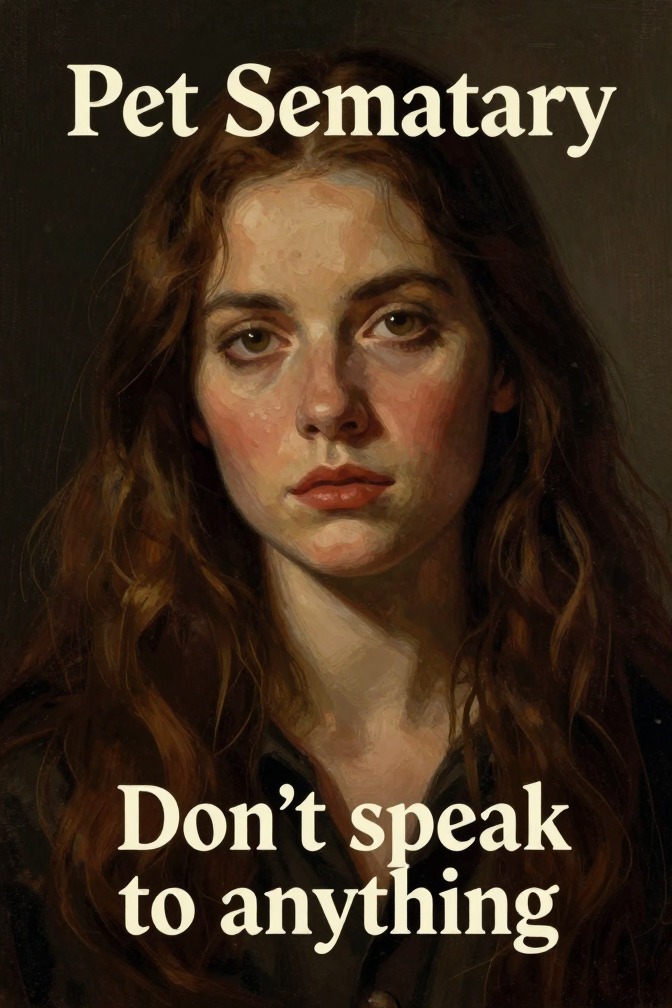
In the Pet Sematary, Jud Crandall warns Louis Creed never to speak to anything he might encounter in the woods beyond the deadfall, especially in the area of Little God Swamp. This rule is a survival directive rooted in the dangerous, sentient power of the Micmac burying ground, where the barrier between the living and the dead is thin and malevolent spirits may mimic voices to lure the unwary.
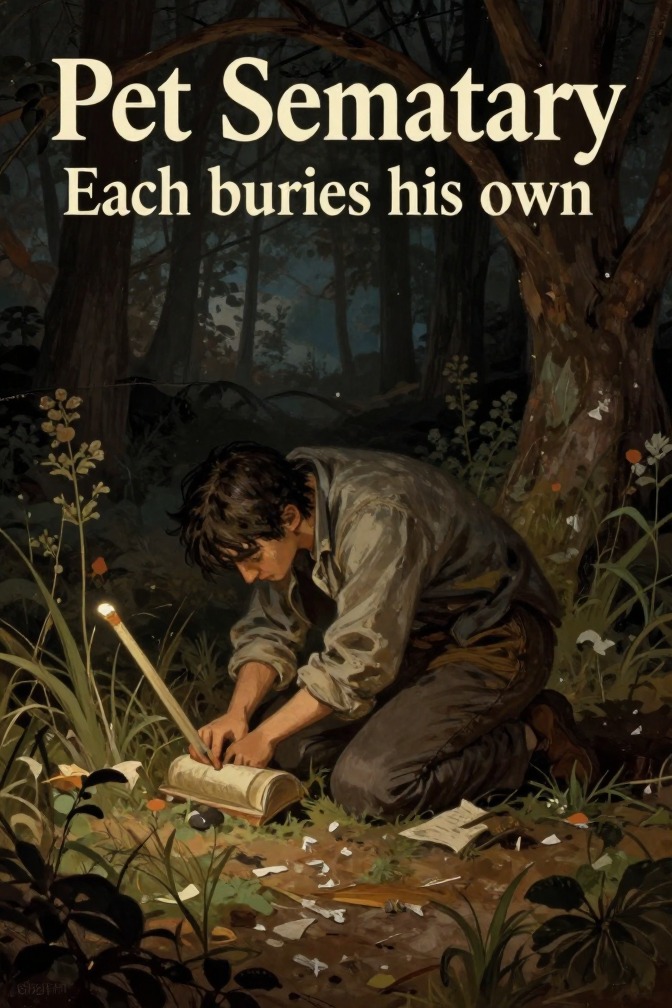
Each buries his own is the central ritual rule of the Micmac burying ground beyond the Pet Sematary, a prohibition that the person who has lost a loved one must personally perform the burial of the dead. Jud Crandall first articulates this rule to Louis Creed on the night they carry Church's body to the ancient Indian burial ground, and it governs every subsequent act of resurrection in the novel, binding the burier to the buried in a relationship that is both intimate and dangerous.
Resurrection in Stephen King's Pet Sematary is the central supernatural phenomenon that drives the novel's plot and thematic horror. It is the process by which the dead—first the family cat Church, then the toddler Gage Creed, and finally Rachel Creed—are brought back to life after being buried in the ancient Micmac burying ground beyond the Pet Sematary. The novel systematically reveals that this resurrection is not a miracle but a perversion: the returned beings are physically and spiritually diminished, often malevolent, and the act of resurrecting them is a corrupting, addictive force that destroys the living who attempt it.
1914 is the year Jud Crandall's dog Spot died of old age, the first animal Jud buried in the Pet Sematary, marking the beginning of his lifelong connection to the burial ground and its secrets.
1934 is the year referenced by Jud Crandall as the last time anyone local was lost in the North Ludlow Woods, a detail he shares during the Creed family's first walk to the Pet Sematary.
1965 is the year of Zelda Goldman's agonizing death from spinal meningitis, a traumatic event that shapes Rachel Creed's lifelong phobia of death and illness, and that reverberates through the Creed family's own tragedy nearly two decades later.
1973 is a year referenced in the narrative of *Pet Sematary*, primarily as the year the Ryder children's pet raccoon was killed by an Orinco truck on Route 15 in Ludlow, an event that illustrates the road's long history of claiming animal lives and the enduring grief it causes children.
Christmas in the Creed household is a moment of fragile domestic peace, marked by the family's first holiday in their new Ludlow home. The celebration is shadowed by the lingering strangeness of Church, the cat who returned from the dead, and by Louis's growing awareness that the Micmac burying ground's power has not finished with him. The evening's warmth—Santa's boot-print trick, Rachel's sapphire necklace, the children's joy—is undercut by Church's predatory gifts and the cold, watchful presence of the resurrected animal, making this Christmas a turning point where love and horror begin to coexist.
The final week of classes at the University of Maine at Orono is a period of intense, chaotic activity for Louis Creed and the infirmary staff, marked by a surge in student illness and a grotesque, near-fatal accident that gruesomely echoes the death of Victor Pascow, underscoring the relentless pressure and absurdity of Louis's professional life in the wake of personal tragedy.
Indian summer is a brief period of warm, hazy weather that occurs in late autumn, and in Stephen King's Pet Sematary it marks the fleeting, deceptive calm before the novel's horrors intensify. It arrives after the first hard frosts, bringing a temporary return of summer-like heat that seems to suspend the natural order, but it is immediately followed by a cold, driving rain that strips the leaves and ushers in the true winter. The season's transience and its ironic contrast with the coming darkness make it a potent symbol of the fragile, illusory peace that the Creed family experiences before their world collapses.
January 23 marks the resumption of classes at the University of Maine after the semester break, a date that brings a serious flu outbreak to the campus and plunges Louis Creed back into the demanding routine of his work at the Student Medical Center, providing a temporary but welcome distraction from the lingering unease surrounding Church's strange return and the unresolved tensions in his household.
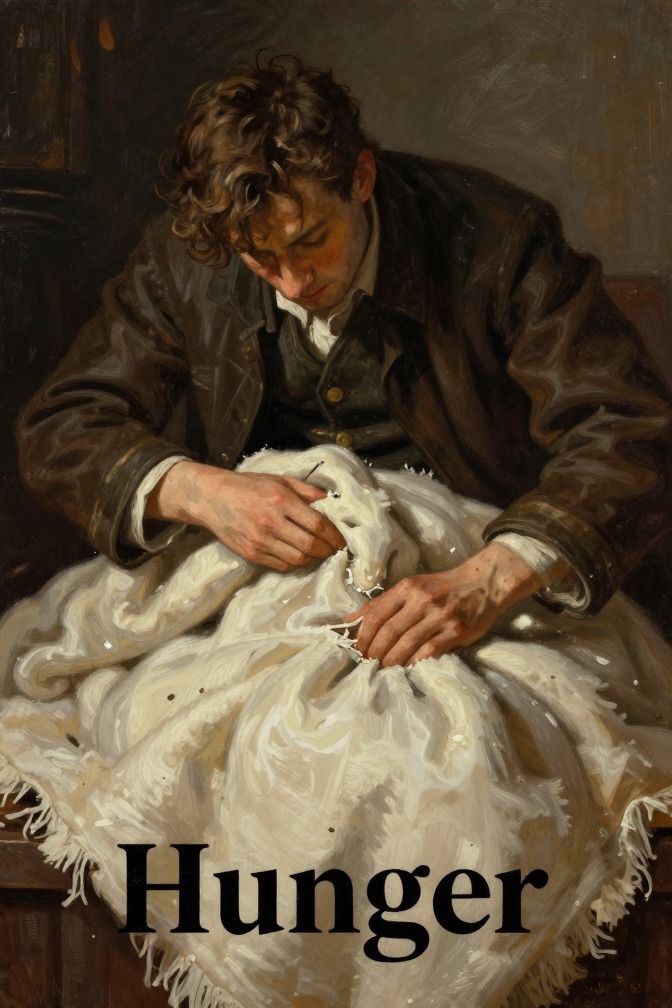
The Attempt to Pawn Blanket is a pivotal action in Part II of Knut Hamsun's *Hunger*, in which the starving narrator, desperate after a day of failed appeals, resolves to pawn Hans Pauli's blanket—the only bedding he has—only to be rejected by the pawnbroker and then overcome by shame, ultimately returning the blanket and reaffirming his commitment to honor.
The Confess to Shopkeeper is a pivotal action in Part III of Knut Hamsun's *Hunger*, in which the starving narrator, after stealing five shillings from a provision shop, returns to the shop to confess his crime, only to find the shopkeeper's boy too fearful to act, leading to a bizarre and morally ambiguous confrontation that deepens the narrator's self-loathing.