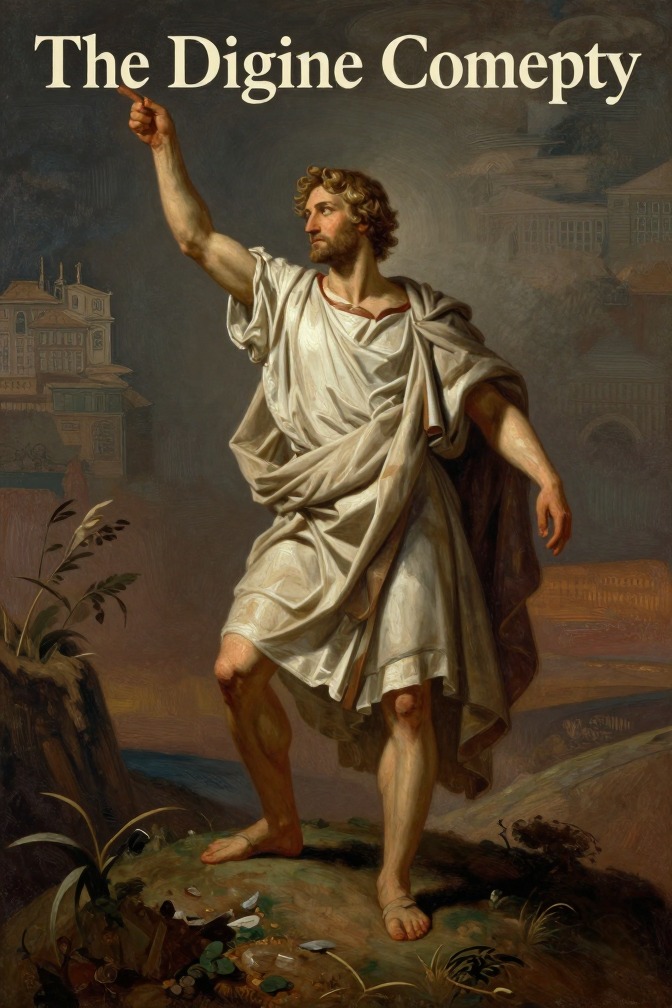
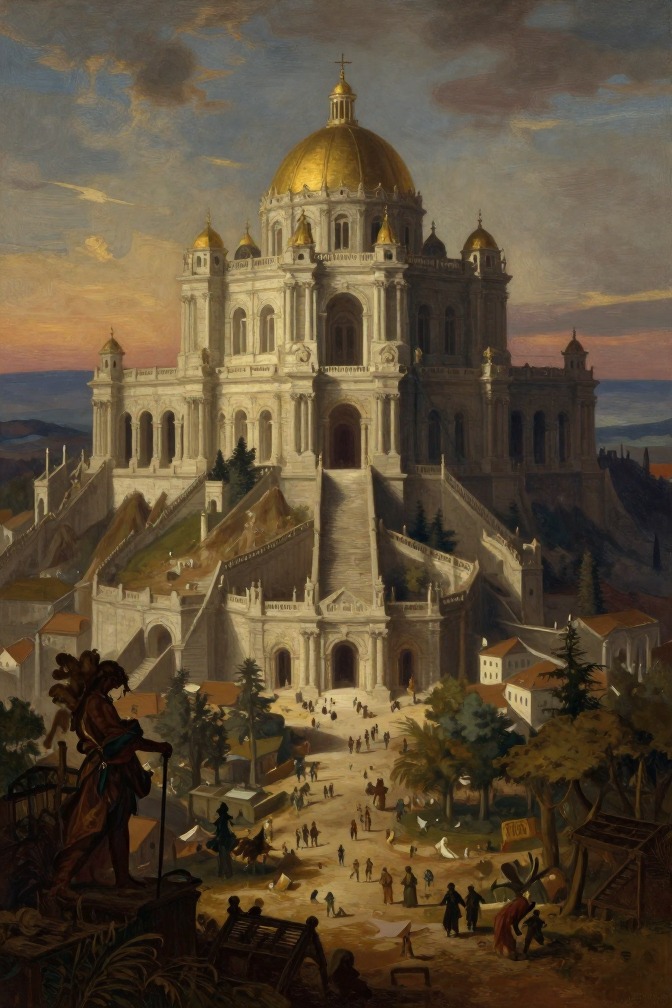
Dante's Attempt to Climb the Hill is the opening action of the Divine Comedy, in which the protagonist, lost in a dark forest, tries to ascend a sunlit mountain but is driven back by three beasts, precipitating his journey through the afterlife.
Aruns is a soothsayer from Etruscan Luni, punished in the Fourth Bolgia of Malebolge for the sin of attempting to foresee the future, his body twisted backward as a contrapasso for his forward-looking presumption.
Barbariccia is the leader of the Malebranche, the demonic squadron that guards the Fifth Bolgia of Malebolge in Dante's Inferno, where barrators are punished in boiling pitch. He orchestrates the devils' escort of Dante and Virgil across the broken bridge, commands his troop with a grotesque trumpet signal, and later intervenes to prevent the demons from attacking the pilgrims, embodying a disciplined yet monstrous authority within the infernal bureaucracy.
Brunetto Latini, a Florentine scholar and statesman whom Dante revered as a teacher, appears in the Seventh Circle of Hell among the sodomites, where he walks on the burning sand under a rain of fire. Their encounter is one of the most poignant in the Inferno, blending intellectual gratitude with the horror of damnation, and Latini's prophecy of Dante's exile shapes the poet's understanding of his own fate.
Brutus is one of the three arch-sinners whom Dante and Virgil encounter in the lowest pit of Hell, the Judecca, where he is eternally chewed by Lucifer in the central mouth of the three-faced emperor of the dolorous kingdom, condemned for his betrayal of Julius Caesar.
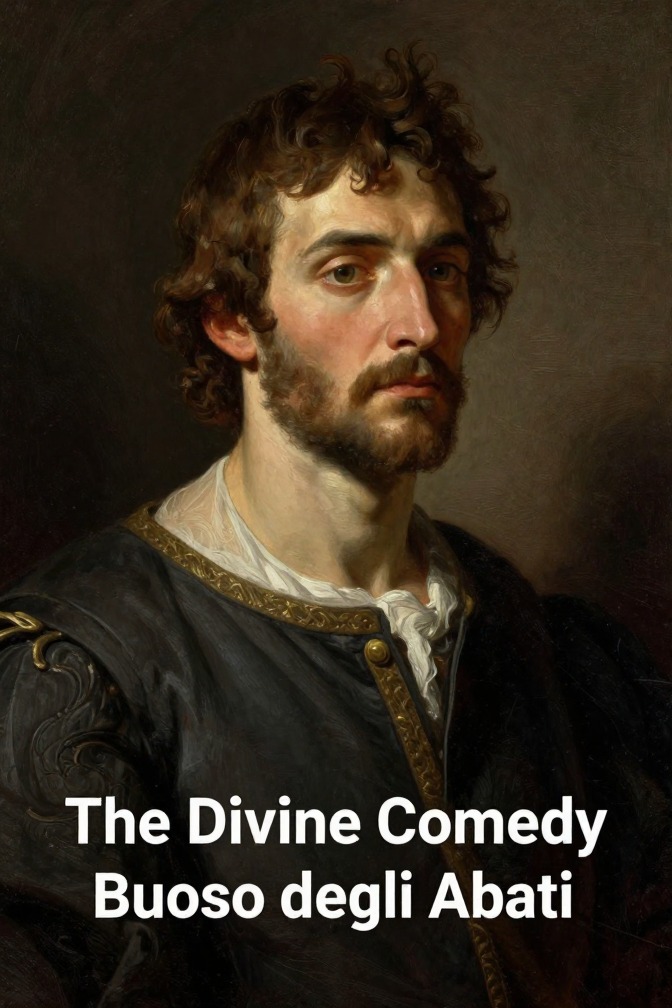
Buoso degli Abati is a minor but memorable figure in Dante Alighieri's Inferno, appearing in the seventh Bolgia of the Eighth Circle, where thieves are punished. He is one of five Florentine thieves whom Dante encounters in Canto XXV, and his role is defined by a grotesque metamorphosis: he is transformed into a serpent and then back into human form, embodying the contrapasso of the fraudulent. His presence underscores the poet's condemnation of Florentine corruption and the theme of identity dissolution through sin.
Caiaphas, the high priest who counseled the Pharisees to sacrifice one man for the people, is punished in the Sixth Bolgia of Malebolge among the Hypocrites, crucified to the ground with three stakes and forced to bear the weight of every passing soul.
Calcabrina is one of the Malebranche, the twelve demons who guard the Fifth Bolgia of Malebolge in Dante's Inferno, where barrators are punished by being submerged in boiling pitch. He is notable for his role in the chaotic and violent quarrel among the devils that follows the escape of the sinner Ciampolo, a scene that underscores the demons' own capacity for discord and their ultimate failure as guardians.
Cerberus is the monstrous three-headed dog who guards the Third Circle of Hell, where the gluttonous are punished. As a hybrid beast with red eyes, a black and greasy beard, a large belly, and clawed hands, he embodies the brutal, animalistic nature of divine retribution, rending and flaying the souls submerged in the eternal, filthy rain of hail, snow, and water. His role is not merely to torment but to enforce the contrapasso of the gluttons, who in life were voracious and are now themselves torn apart, their howling mirroring his own barking. Virgil's act of throwing earth into Cerberus's three gullets to quiet him demonstrates the power of reason and divine will over even the most savage infernal guardians, establishing a pattern for how the poets will navigate the rest of Hell.
Emperor Trajan is a Roman emperor depicted in the Purgatorio as a model of justice and humility, whose sculpted image on the First Terrace of Purgatory illustrates the virtue of humility through a legendary act of compassion toward a poor widow, and whose soul is later revealed in the Heaven of Jupiter as one of the righteous rulers who, though a pagan, was saved through divine grace.
Ephialtes is a giant from classical mythology whom Dante and Virgil encounter in the frozen ninth circle of Hell, where he is bound in chains as punishment for his rebellion against the gods. His presence underscores the theme of prideful defiance against divine authority and the ultimate futility of such rebellion.
Ezzelino III da Romano is a tyrant condemned in the Seventh Circle of Hell, submerged in the boiling river of blood for his violent acts against others. He is identified by the centaur Nessus as one of the most notorious despots, whose cruelty and bloodshed are punished in the Phlegethon.
Focaccia is a minor figure in Dante Alighieri's Inferno, a traitor condemned to the frozen lake of Cocytus in the Caina ring, where he is mentioned by another damned soul as a particularly worthy example of treachery against kindred.
Folco of Marseilles is a troubadour and bishop in the Heaven of Venus, who recounts his past as a passionate lover and denounces the corruption of the contemporary Church, especially the papacy's neglect of the Holy Land.
Guido Bonatti is a soothsayer condemned to the Fourth Bolgia of Malebolge in Dante's Inferno, where his punishment—walking backward with his head twisted to face his own back—embodies the contrapasso for those who, in life, claimed to see the future and thus distorted the natural order of time and vision.
Lucan, the Roman poet of the Pharsalia, appears in Limbo among the four great classical poets who welcome Dante and Virgil, and his work is later invoked by Statius as a source of moral correction against avarice.
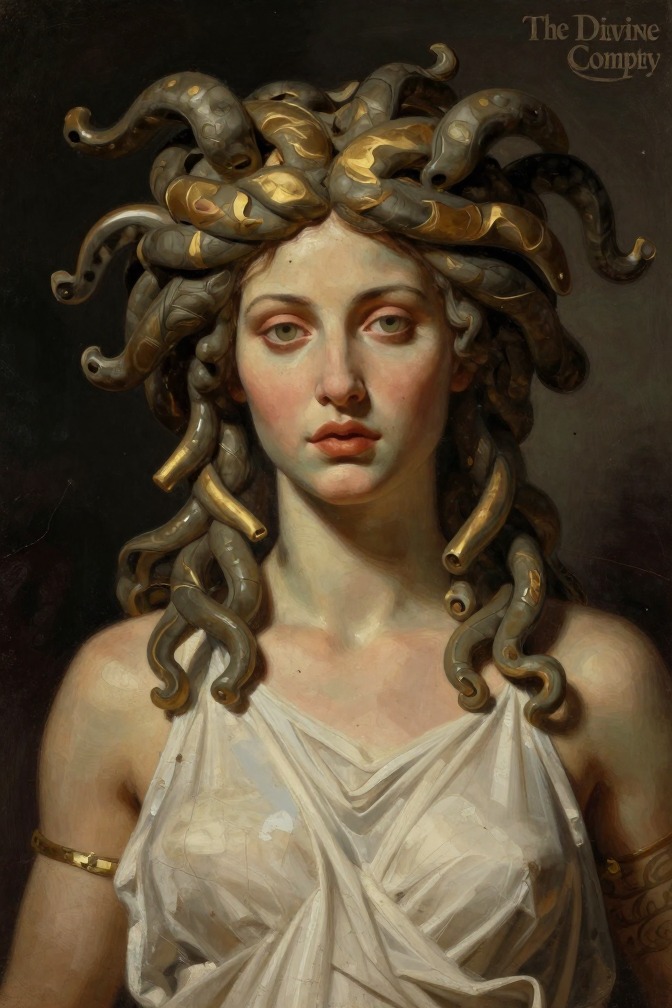
Medusa is a monstrous figure from Greek mythology who appears in Dante's Inferno as a threat at the gates of the City of Dis, where her petrifying gaze embodies the paralysis of spiritual despair and the danger of looking back toward damnation.
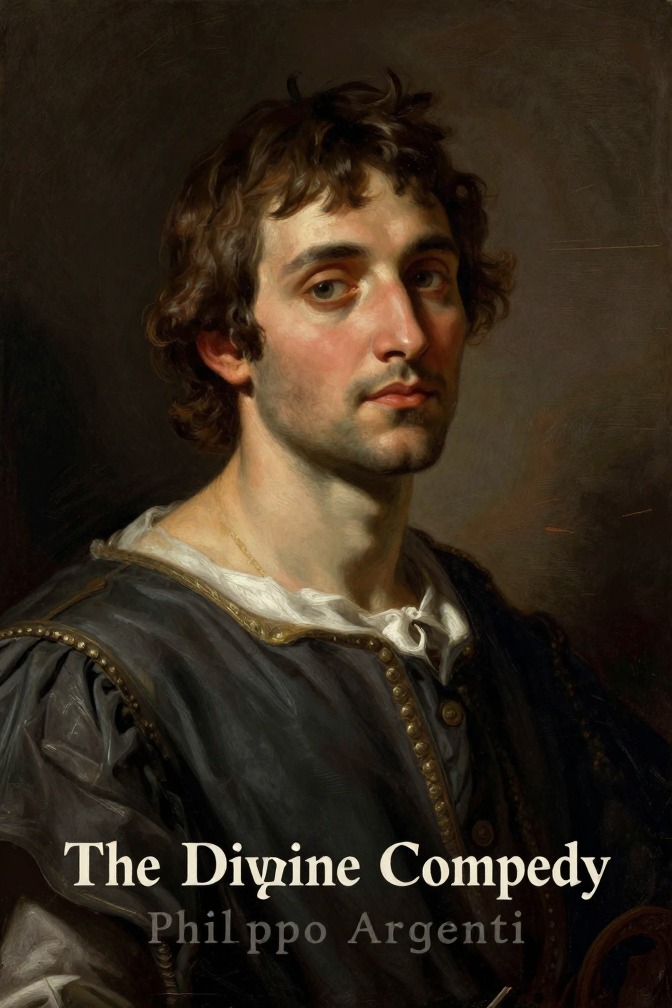
Philippo Argenti is a minor but vividly depicted figure in Dante Alighieri's *Inferno*, a Florentine nobleman of the Adimari family whose single appearance in Canto VIII serves as a concentrated example of the wrathful damned and of Dante's own capacity for righteous indignation. He rises from the muddy waters of the Styx to challenge the living pilgrim, only to be violently subdued by the other wrathful souls and torn apart by his own teeth, an episode that elicits Virgil's rare praise and Dante's unapologetic satisfaction.
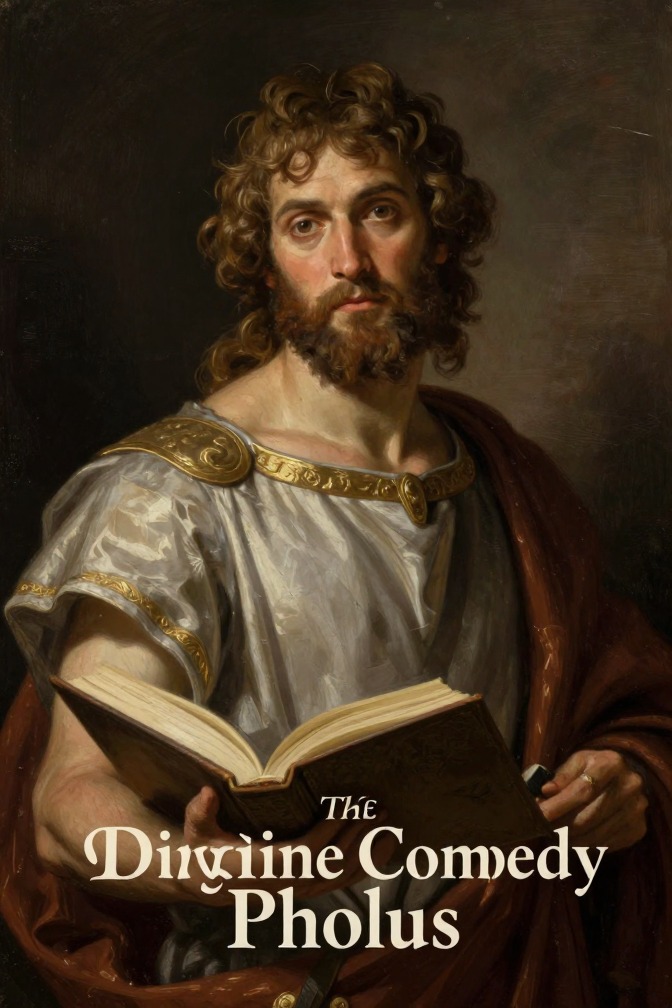
Pholus is a centaur encountered by Dante and Virgil in the First Round of the Seventh Circle of Hell, the River of Blood, where the violent against their neighbors are punished. He is one of the three centaurs who initially challenge the poets, alongside Nessus and Chiron, and is identified by Virgil as a figure who was "so wrathful" in life, a characterization that aligns with the centaurs' role as guardians of this bolgia who shoot with arrows any soul that emerges from the boiling blood beyond the measure allotted by its crime.
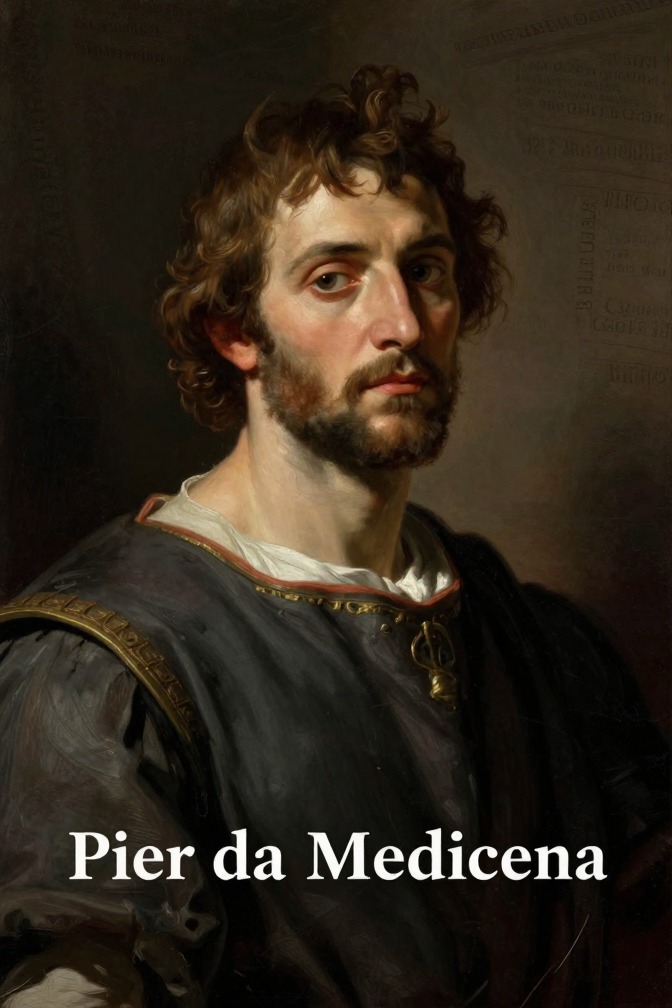
Pier da Medicina is a damned soul in the Ninth Bolgia of Malebolge, punished among the Schismatics for sowing discord. He appears in Inferno Canto XXVIII, where his mutilated body—throat pierced, nose cut off, and a single ear remaining—serves as a visible emblem of his sin. He delivers a prophecy of betrayal and murder, warning two noblemen of Fano that a one-eyed tyrant will lure them to their deaths, and identifies the traitor Curio, whose severed tongue underscores his crime of inciting civil strife.
Plutus is the demonic guardian of the Fourth Circle of Hell in Dante's Inferno, where the avaricious and the prodigal are punished. He appears as a monstrous, bloated figure who initially challenges Dante and Virgil's passage but is swiftly silenced by Virgil's invocation of divine will, demonstrating the supremacy of God's order over infernal chaos.
Robert Guiscard is a Norman warrior celebrated in Dante's Paradiso as a crusader and conqueror of southern Italy, whose martial glory is inscribed among the lights of the Cross of Mars in the fifth heaven.
Romeo, a humble minister and pilgrim from Provence, served Raymond Berenger IV, Count of Provence, with such skill and integrity that he secured the marriages of the count's four daughters to kings, yet was ultimately driven into exile and poverty by the count's ingratitude and malicious courtiers. His story, recounted by the spirit of the Emperor Justinian in the Heaven of Mercury, serves as a poignant example of virtuous service rewarded with earthly injustice but recognized in the divine order.
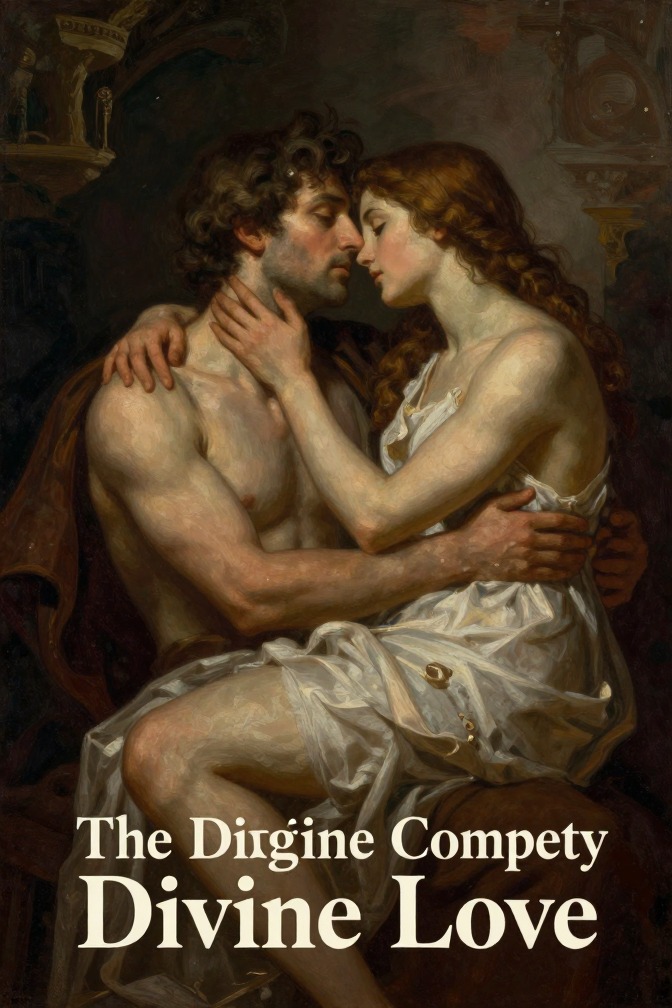
Divine Love is the central theological and poetic force of Dante Alighieri's Divine Comedy, functioning as both the prime mover of the cosmos and the ultimate source of salvation, grace, and moral order that structures the entire journey from Hell to Paradise.
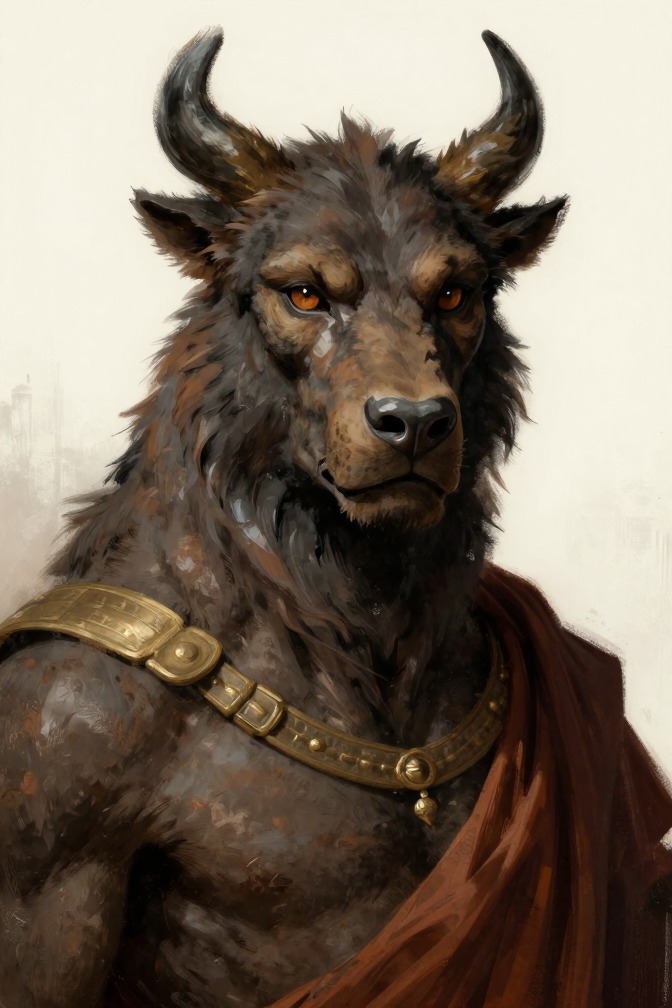
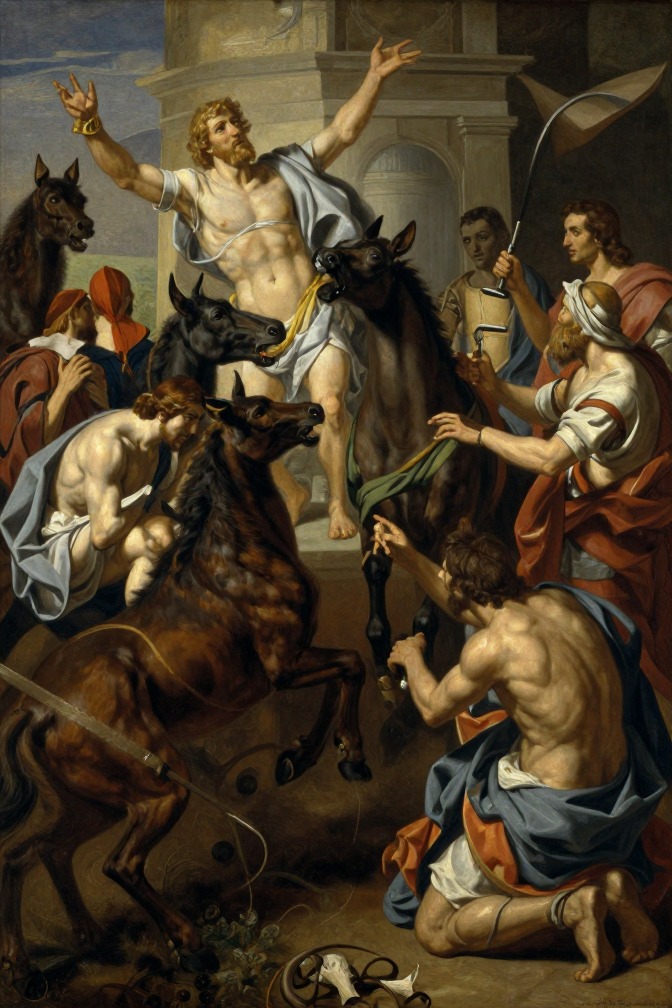
The Descent to the Seventh Circle and the Centaurs is a pivotal event in Dante's Inferno where the poet and his guide Virgil descend into the first ring of the seventh circle, the realm of the violent, encountering the Minotaur, the river of boiling blood (Phlegethon), and the centaurs who patrol it, marking a transition from the sins of incontinence to the more deliberate sins of violence and establishing the principle of contrapasso for the violent.
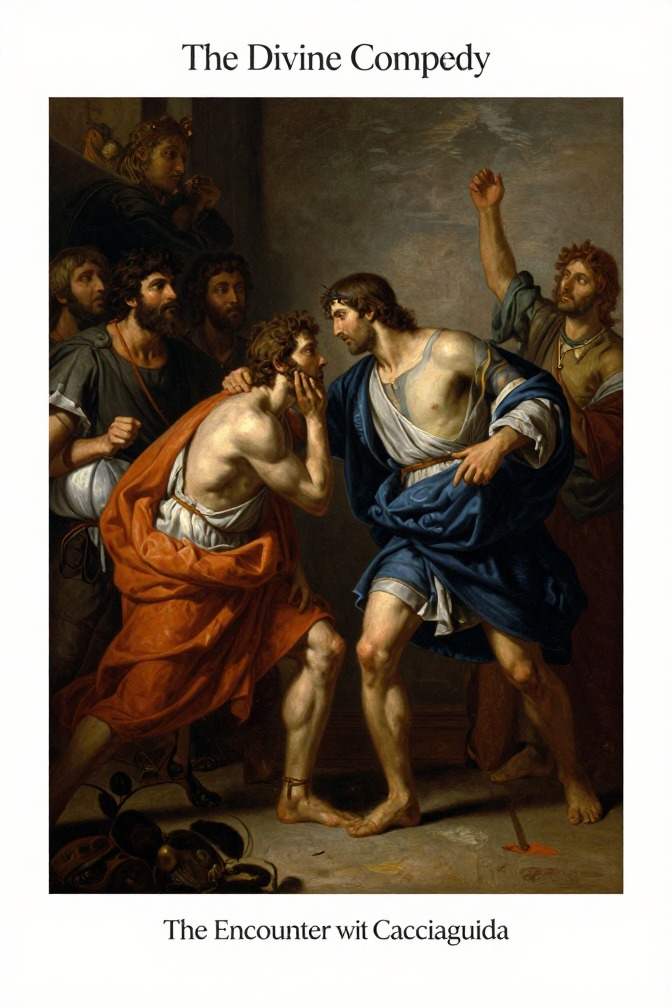
The Encounter with Cacciaguida and Prophecy of Banishment is the pivotal event in Paradiso Cantos XV–XVII where Dante Alighieri meets his crusader ancestor Cacciaguida in the sphere of Mars, receives a detailed prophecy of his exile from Florence, and is charged with writing his vision for the world. This encounter transforms Dante from a fearful pilgrim into a poet-prophet, establishes the moral and political authority of the Commedia, and provides the autobiographical and historical core of the entire poem.
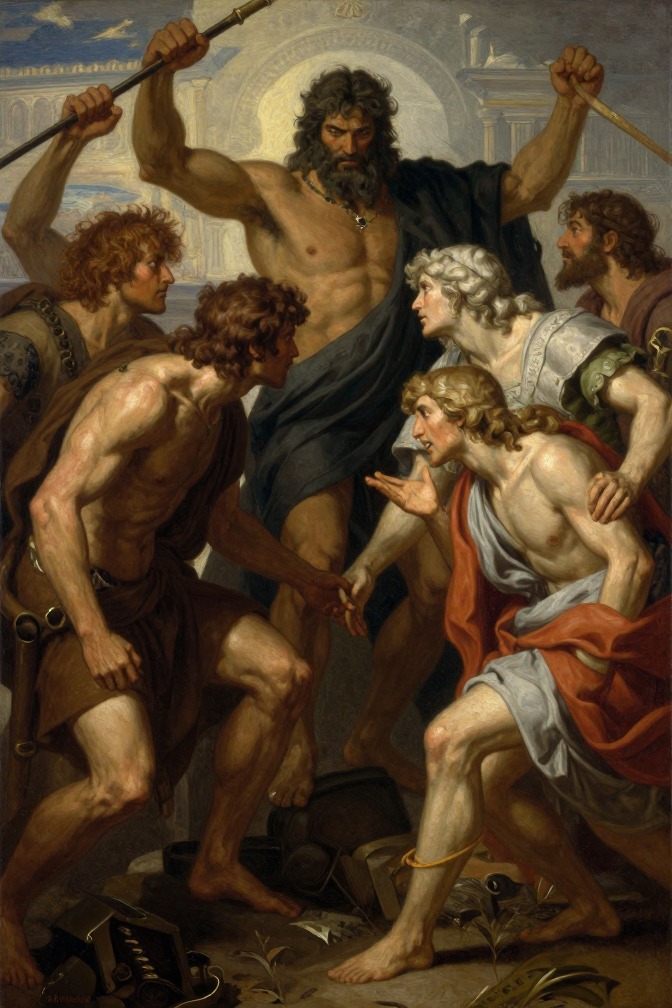
The Giants and the Descent to Cocytus is the pivotal transition from the eighth circle of fraud to the ninth circle of treachery in Dante Alighieri's Inferno, where the poets encounter the towering figures of Nimrod, Ephialtes, and Antaeus, who serve as both the final guardians of the abyss and the means of descent into the frozen lake that punishes traitors. This sequence marks the last physical boundary before the absolute evil at the universe's center, transforming the poem's geography from a landscape of fire and stone to one of ice and silence.
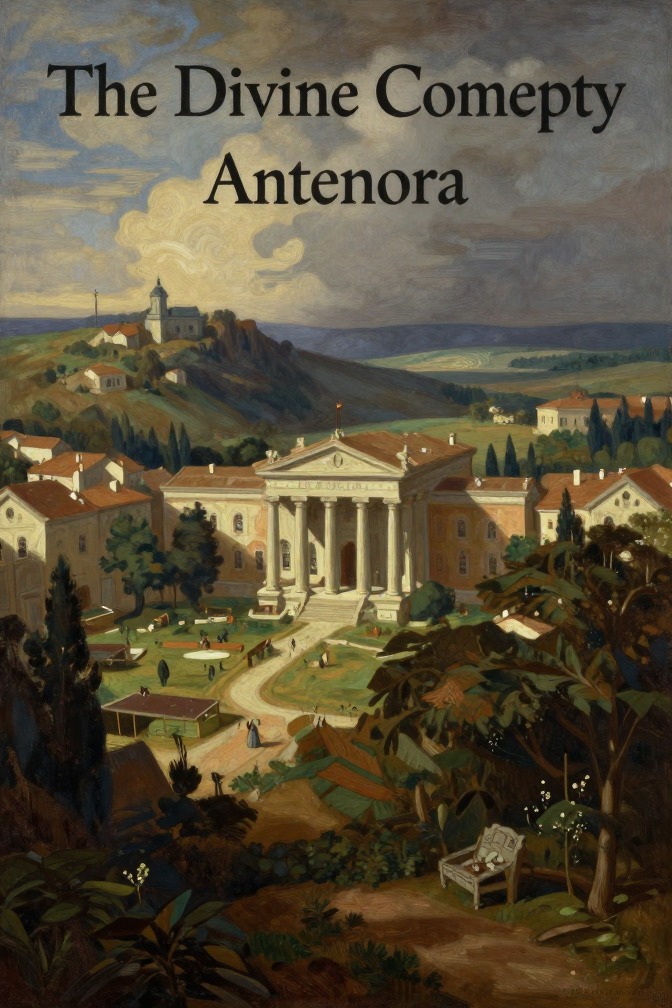
Antenora is the second of four concentric divisions within the Ninth Circle of Hell, a frozen lake reserved for traitors to their country or political party. Named after the Trojan prince Antenor, whom medieval tradition regarded as a traitor, this zone is distinguished by its punishment of immersion in ice up to the head, with the most notorious inmates including Bocca degli Abati, Buoso da Duera, and the eternally gnawing pair of Count Ugolino and Archbishop Ruggieri.
Mount Purgatory is the second realm of Dante Alighieri's afterlife, a towering island-mountain in the southern hemisphere where souls purge the seven deadly sins before ascending to Paradise. It is the central setting of the Purgatorio canticle, structured as seven concentric terraces, each dedicated to cleansing one capital vice through a specific contrapasso, and culminating in the Earthly Paradise at its summit. The mountain's unique geography, its prohibition on nocturnal ascent, and its role as the site of moral transformation distinguish it sharply from the static punishments of Hell and the eternal joys of Heaven.
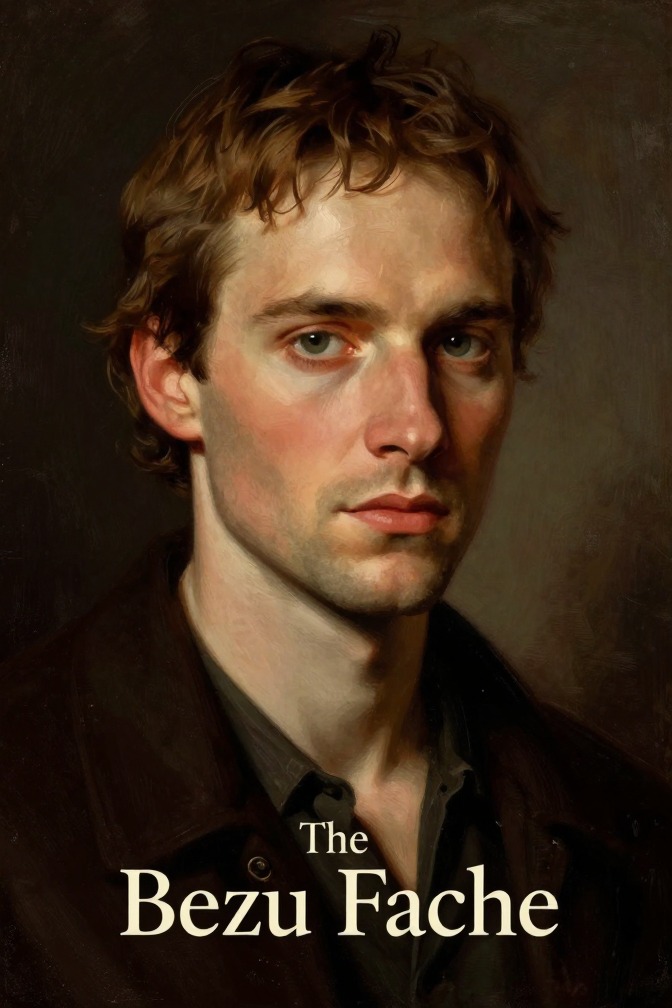
Bezu Fache is the captain of the French Judicial Police (DCPJ) who leads the investigation into Jacques Saunière's murder and becomes Robert Langdon's primary antagonist, driven by a zealous certainty of Langdon's guilt that nearly derails the pursuit of the true killer.