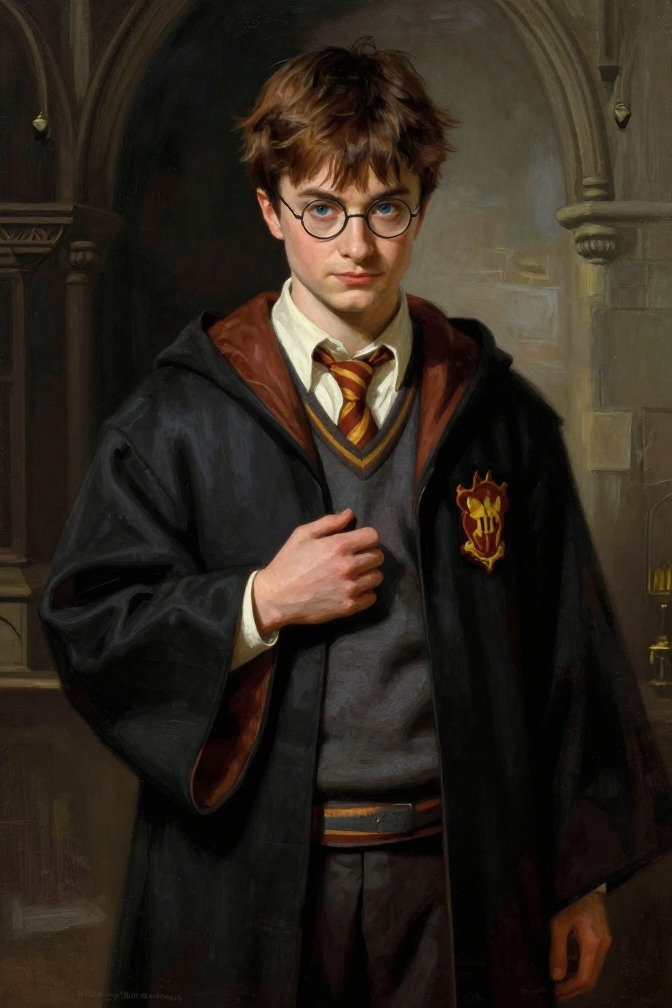
Peter Pettigrew transforms back into human form in the Shrieking Shack, revealing that Ron Weasley's pet rat Scabbers is actually the long-presumed-dead wizard who betrayed Harry's parents to Lord Voldemort.
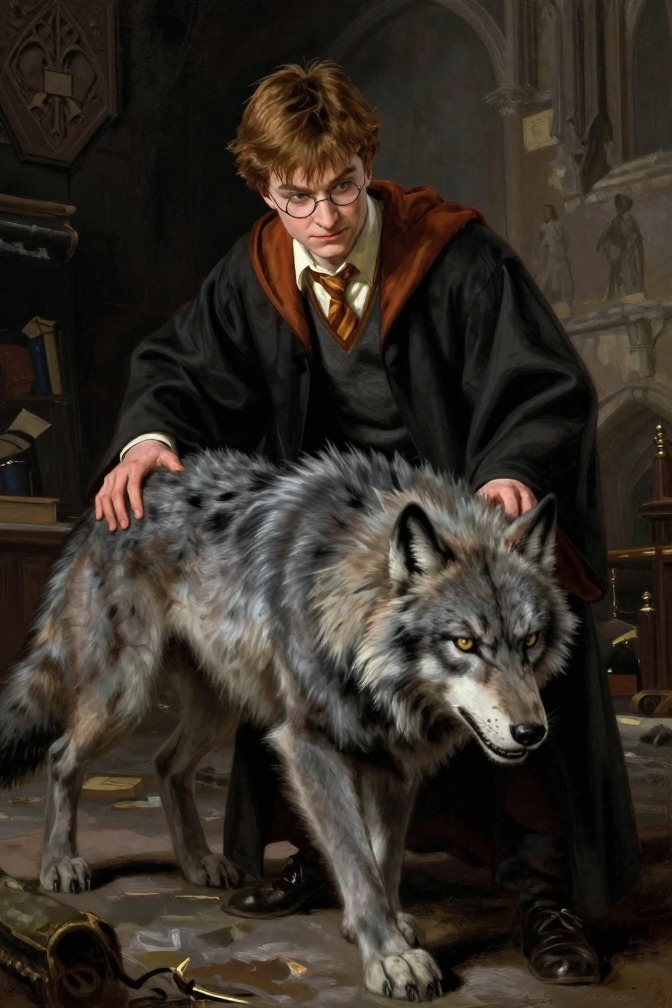
Remus Lupin's transformation into a werewolf under the full moon is the climactic revelation of his hidden identity and the central crisis of the Shrieking Shack confrontation, shattering the trust of Harry, Ron, and Hermione and forcing the truth about Sirius Black's innocence and Peter Pettigrew's survival into the open.
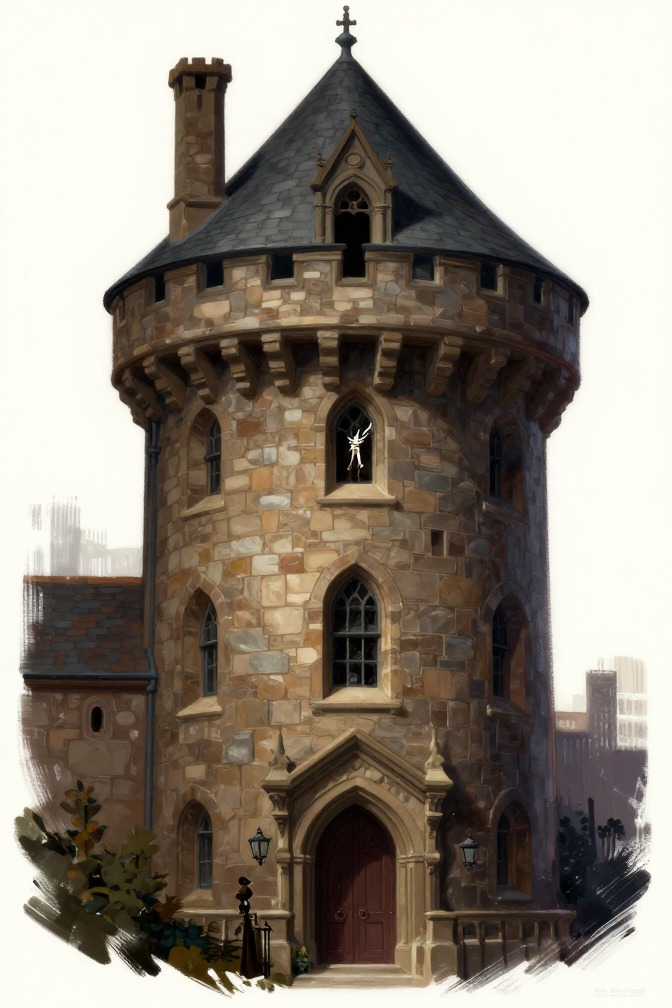
Sirius Black breaks into Gryffindor Tower on the night of the Gryffindor victory party, slashing Ron Weasley's bed curtains with a knife before fleeing, an event that exposes Neville Longbottom's loss of the passwords and triggers a tightening of school security.
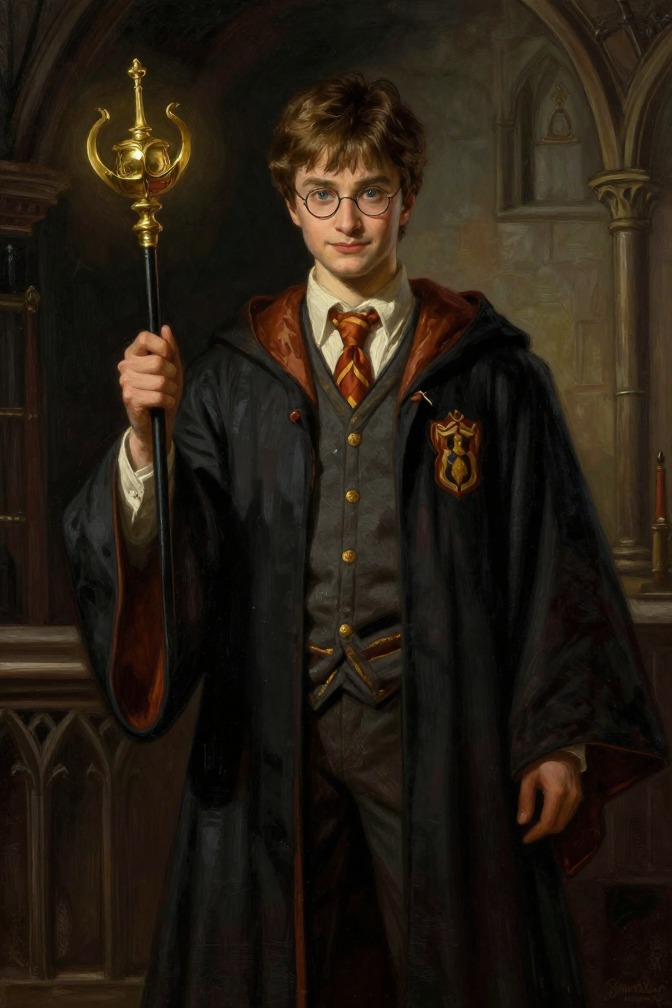
The Order of Merlin is a prestigious wizarding award granted by the Ministry of Magic, conferred in three classes to recognize exceptional achievement, heroism, or service to the magical community. In Harry Potter and the Prisoner of Azkaban, the Order of Merlin serves as a marker of official recognition, a source of bitter rivalry, and a symbol of how the Ministry's judgments can be manipulated by political influence and personal grudges.
Prophecy in Harry Potter and the Prisoner of Azkaban is a rare and genuine act of divination that dramatically alters the story's trajectory. Unlike the theatrical and often fraudulent predictions of Sybill Trelawney, this prophecy is delivered in a trance state and reveals the imminent return of Lord Voldemort through his servant, Peter Pettigrew. It functions as a crucial plot device, introducing a new layer of existential threat and setting the stage for the series' escalating conflict.
Quidditch is the most popular sport in the wizarding world, a high-speed, dangerous game played on broomsticks that serves as a central arena for competition, character development, and thematic conflict throughout Harry Potter and the Prisoner of Azkaban.
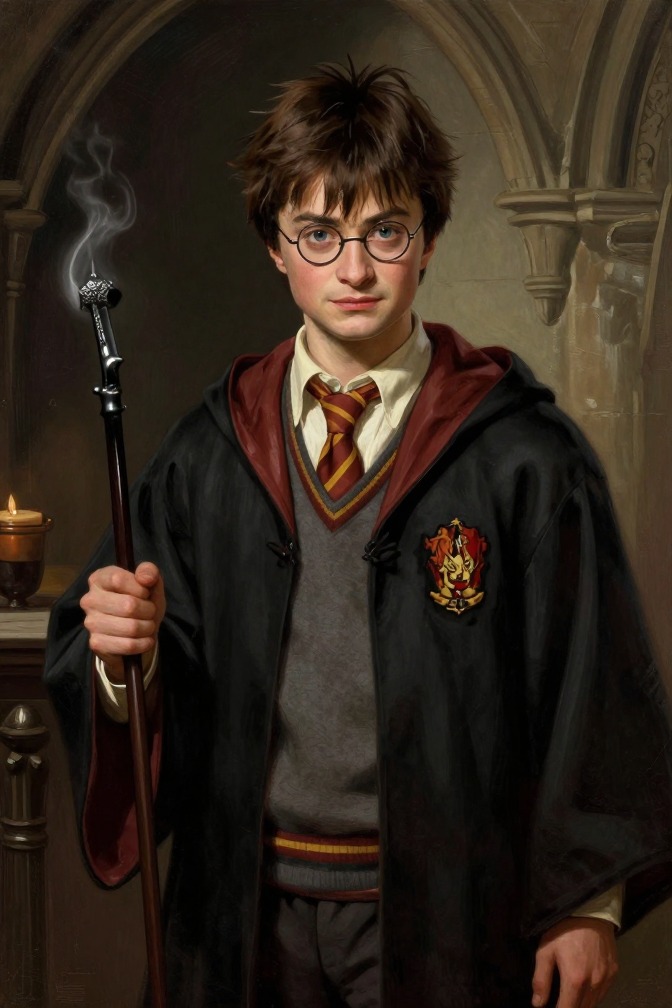
Expecto Patronum is the incantation for the Patronus Charm, a highly advanced defensive spell that conjures a positive, silver guardian to repel Dementors. Harry Potter learns this charm from Remus Lupin over several sessions, initially struggling because the Dementors force him to relive his parents' murder. He first produces a formless silver mist, then a cloudy Patronus, and finally, during a Quidditch match and later at the lake, a fully corporeal silver stag—the same animal his father, James Potter, became as an Animagus. The charm requires the caster to concentrate on a single, very happy memory, and its success is a measure of inner strength and hope.
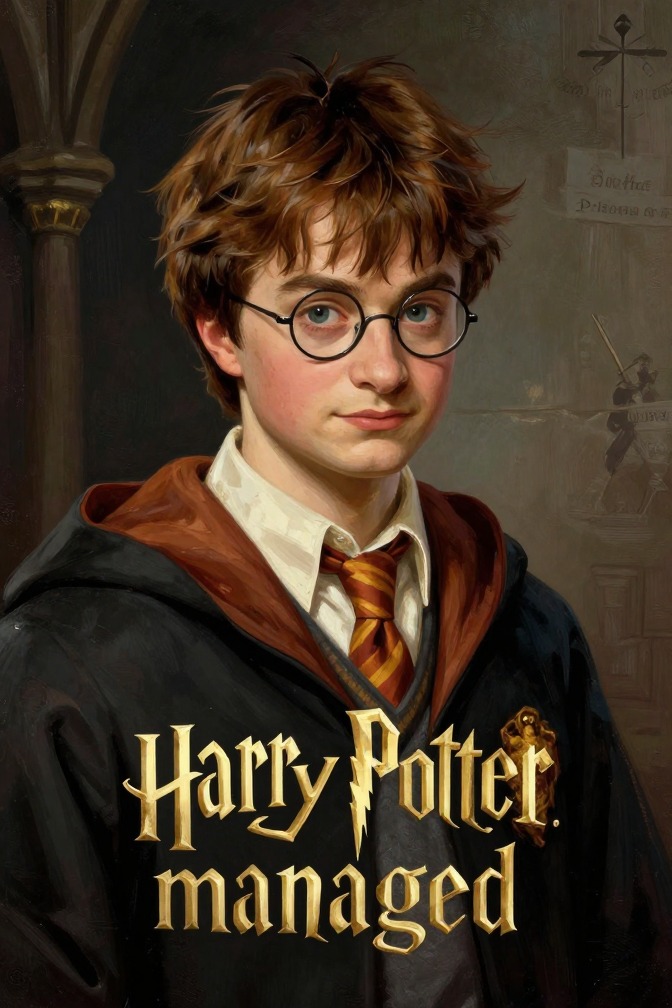
Mischief managed is the deactivation phrase for the Marauder's Map, a magical document that reveals the entire Hogwarts castle and grounds, including the movements of every person within it. Uttered while tapping the parchment with a wand, the phrase instantly erases all the map's ink markings, returning it to the appearance of a blank, innocuous piece of parchment, thereby concealing its true nature from anyone who might confiscate it.
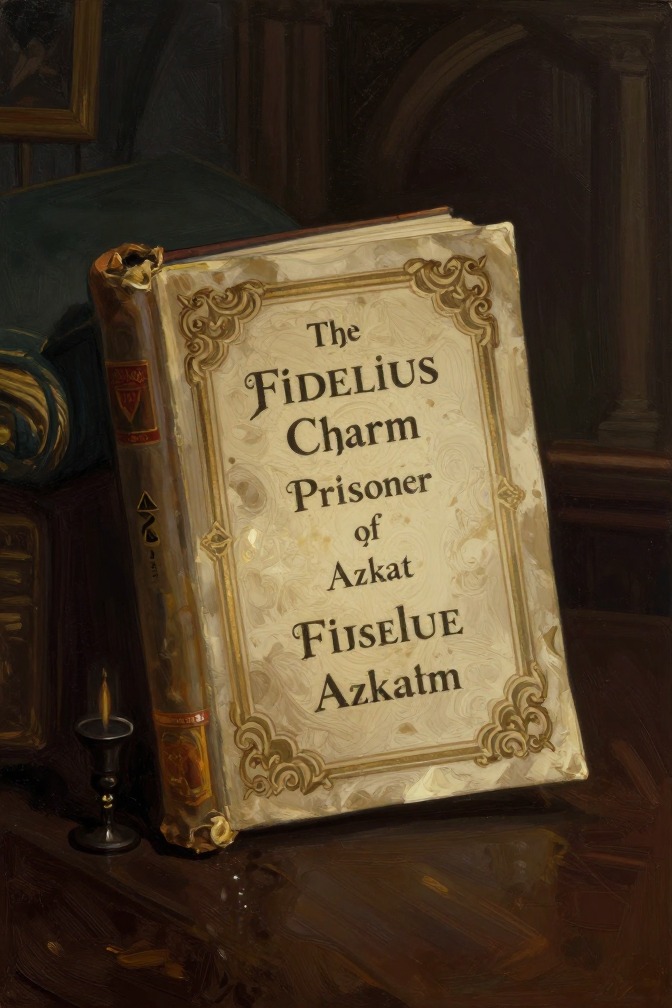
The Fidelius Charm is an immensely complex and powerful magical spell that conceals a secret within a single living soul, making it impossible to find unless the chosen Secret-Keeper voluntarily divulges the information. In Harry Potter and the Prisoner of Azkaban, the charm is central to the backstory of his parents' deaths, as their Secret-Keeper, Peter Pettigrew, betrayed them to Lord Voldemort, an act that set the entire plot of mistaken identity, pursuit, and redemption into motion.
Harry Potter's Hogsmeade ban is a central restriction in Harry Potter and the Prisoner of Azkaban, imposed by the Dursleys' refusal to sign a permission form and upheld by the Ministry of Magic and Hogwarts staff due to the threat from Sirius Black. This ban isolates Harry from his peers, fuels his resentment, and drives him to break school rules by using the Marauder's Map to visit Hogsmeade illegally, ultimately leading to his discovery of the truth about Black and Pettigrew.
Remus Lupin's lycanthropy is a central secret and driving force in Harry Potter and the Prisoner of Azkaban, shaping his past friendships, his present vulnerability, and his eventual resignation from Hogwarts. It explains his monthly disappearances, his shabby health, the creation of the Marauders, and the deep enmity with Severus Snape, while also serving as a powerful symbol of societal prejudice and the burden of a stigmatized identity.
September the first is the fixed date on which the Hogwarts Express departs from King's Cross Station, Platform Nine and Three-Quarters, at eleven o'clock, marking the official start of each new school year at Hogwarts School of Witchcraft and Wizardry. This date functions as the story's primary temporal anchor, a threshold that separates the Muggle summer world from the wizarding school year, and it is the occasion for the Sorting of new students, the return of returning students, and the first gathering of the entire school community in the Great Hall.
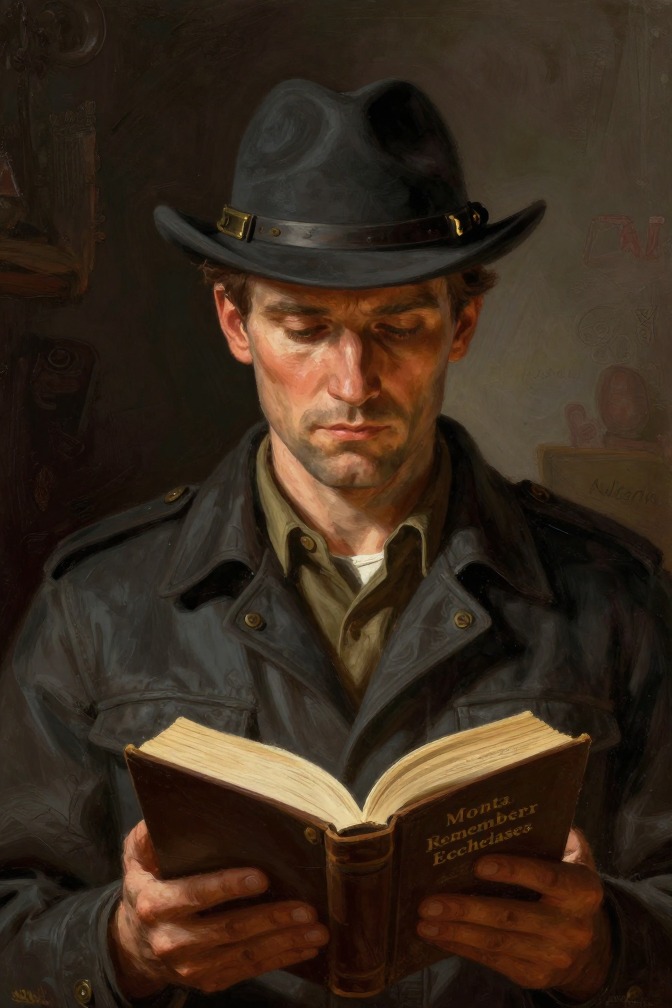
Montag remembers Ecclesiastes is a pivotal action in which Guy Montag, after the bombing of the city, recovers the text of the Book of Ecclesiastes from his memory, transforming him from a fugitive fireman into a living repository of forbidden knowledge and marking his final integration into Granger's group of book-people.
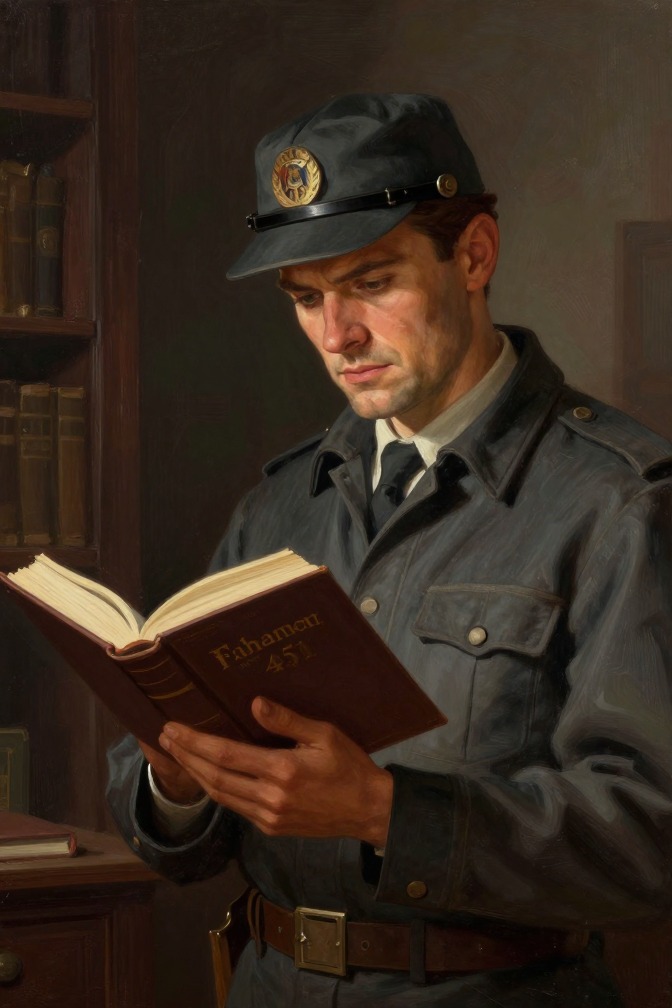
Montag steals a book during a fire raid, an impulsive act that marks his first concrete step toward rebellion and sets the entire plot of Fahrenheit 451 in motion.
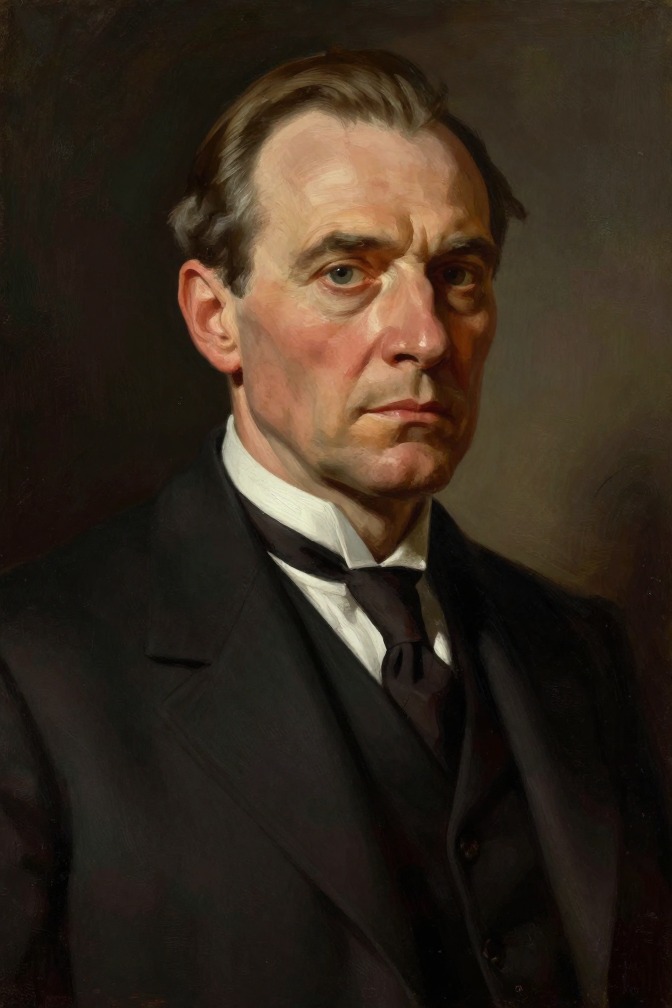
Captain Beatty is the erudite and cynical fire chief who serves as the primary antagonist in Fahrenheit 451, embodying the intellectual and moral contradictions of a society that has outlawed books in the name of happiness. A voracious reader himself, Beatty uses his knowledge not to enlighten but to enforce conformity, making him a uniquely dangerous figure who understands the very thing he destroys.
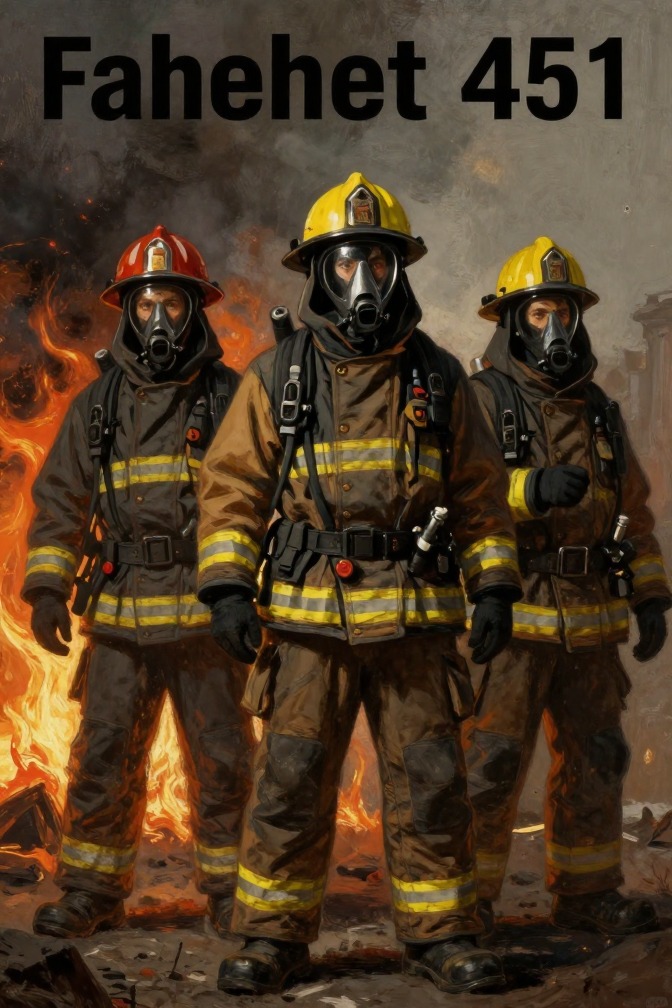
The Firemen are the state-sanctioned enforcers of book prohibition in the dystopian society of Fahrenheit 451, whose official role has been inverted from fire prevention to the systematic burning of books and the suppression of intellectual dissent.
The Family is the name Mildred Montag gives to the interactive television characters who fill the walls of her parlour, replacing genuine human relationships with a constant, emotionally empty stream of programmed chatter and colour. They represent the novel's central critique of a society that has substituted mass-produced, pacifying entertainment for authentic connection, thought, and feeling.
The Happiness Boys is a self-designated title used by Captain Beatty to describe the firemen of Fahrenheit 451, framing their role as enforcers of a society-wide mandate for compulsory happiness through the suppression of intellectual and emotional complexity.
Emergency Hospital is the institution that responds to Mildred Montag's overdose, embodying the dehumanized, mechanized medical care of Fahrenheit 451's dystopian society.
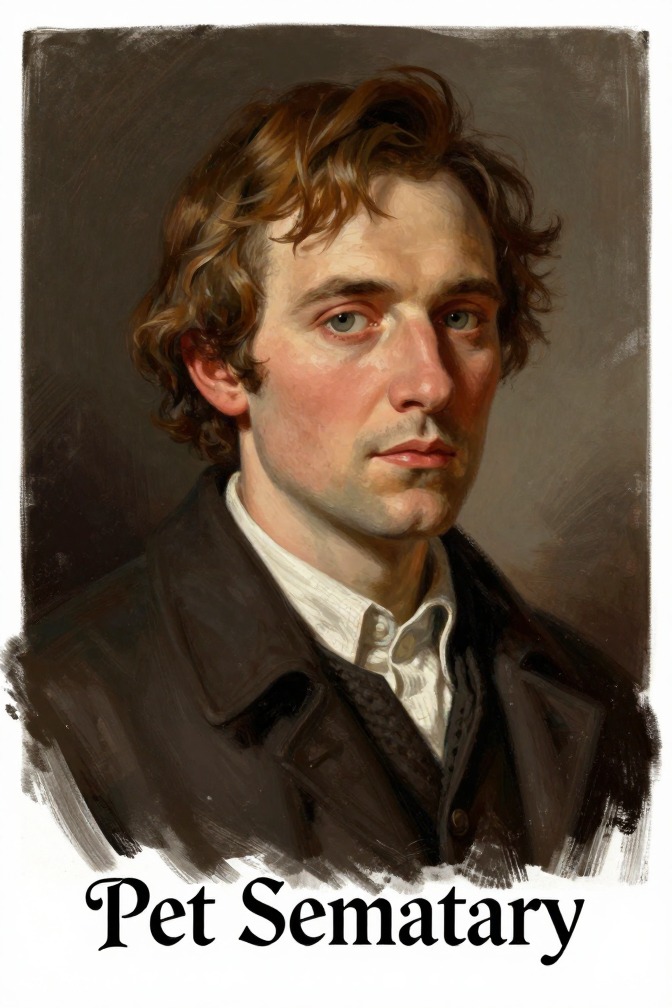
Bill Baterman is a Ludlow resident who, after his son Timmy is killed in World War II, secretly exhumes the body and reburies it in the Micmac burying ground beyond the Pet Sematary, bringing Timmy back as a malevolent, knowing entity. His desperate act sets a precedent for the horror that later engulfs Louis Creed, and his story—told by Jud Crandall—serves as a dire warning about the consequences of using the burial ground for human resurrection.
Church is the Creed family's tomcat, originally named Winston Churchill, whose death and subsequent resurrection from the Micmac burying ground catalyzes the novel's central horror. His return, marked by physical and behavioral changes, serves as a grim proof-of-concept for the burying ground's power, foreshadowing the far more catastrophic resurrection of Gage Creed and ultimately driving Louis Creed toward his final, desperate act.
Church's Death and Resurrection is the pivotal supernatural event in Stephen King's Pet Sematary, in which the Creed family cat, Winston Churchill, is killed by a truck on Route 15 and then secretly reburied by Louis Creed and Jud Crandall in the ancient Micmac burying ground beyond the Pet Sematary, returning to life the next day in a profoundly altered, diminished state. This event establishes the burying ground's power to reverse death and sets the pattern—and the moral trap—for the far more catastrophic resurrections that follow.
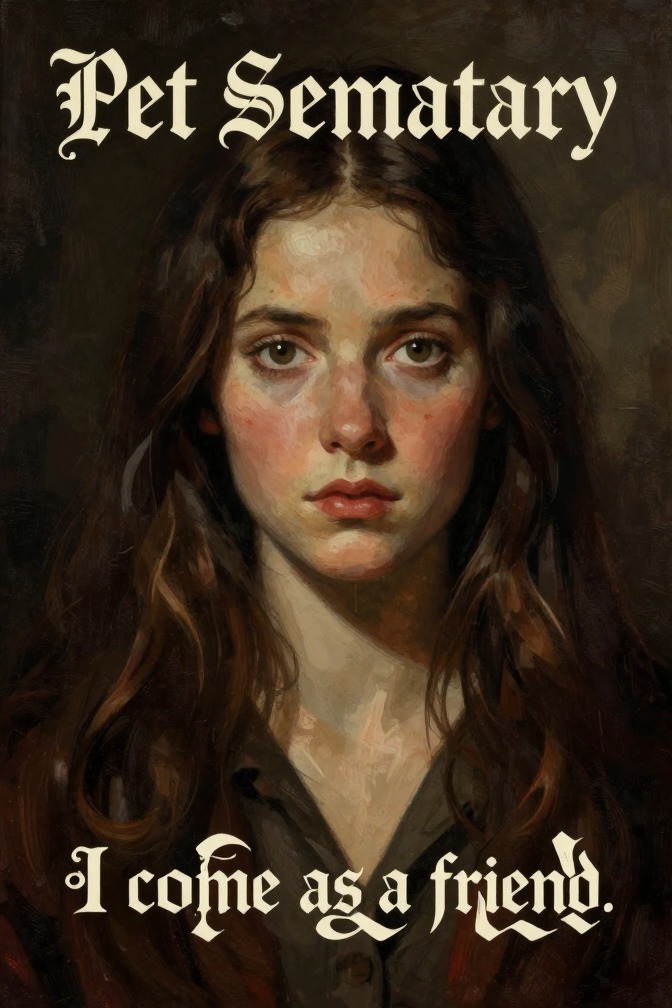
The phrase "I come as a friend" is a crucial, ambiguous warning delivered by the ghost of Victor Pascow to Louis Creed during a nightmare, which serves as a central thematic statement about the deceptive nature of the Micmac burying ground's power.
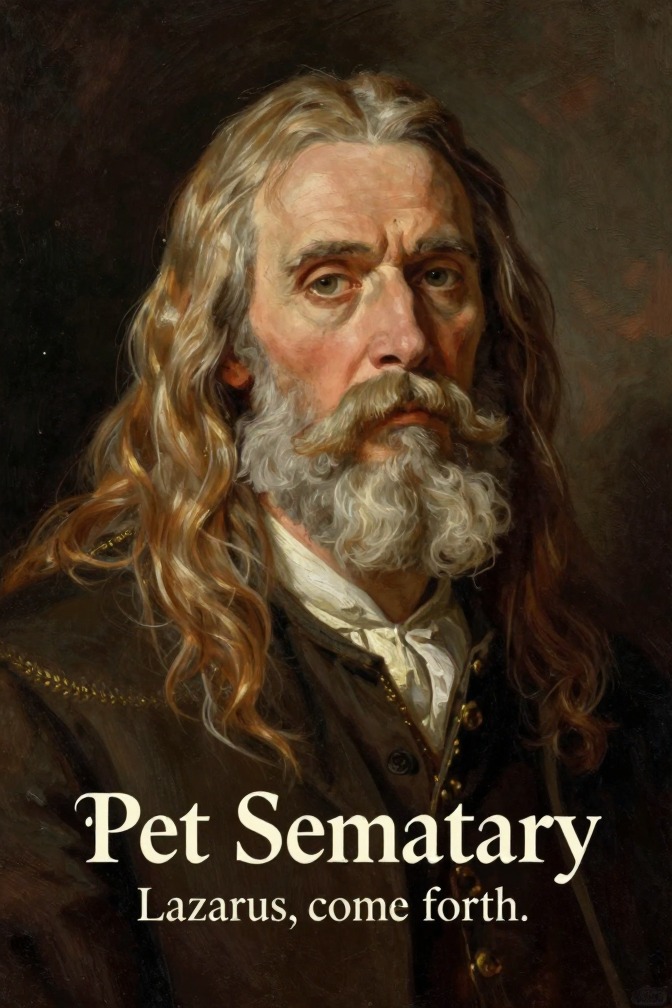
Lazarus, come forth is the biblical command Jesus speaks to raise Lazarus from the dead, and in Pet Sematary it becomes a recurring, increasingly desperate invocation of resurrection that marks the story's central moral and supernatural crisis. The phrase first appears in the novel's epigraph, is echoed by Ellie Creed in her childish faith that God can bring her brother back, and finally haunts Louis Creed as he contemplates and then executes the forbidden act of digging up his son's body and carrying it to the Micmac burying ground. Each recurrence tightens the tension between the promise of miraculous return and the novel's grim insistence that some doors, once opened, admit only horror.
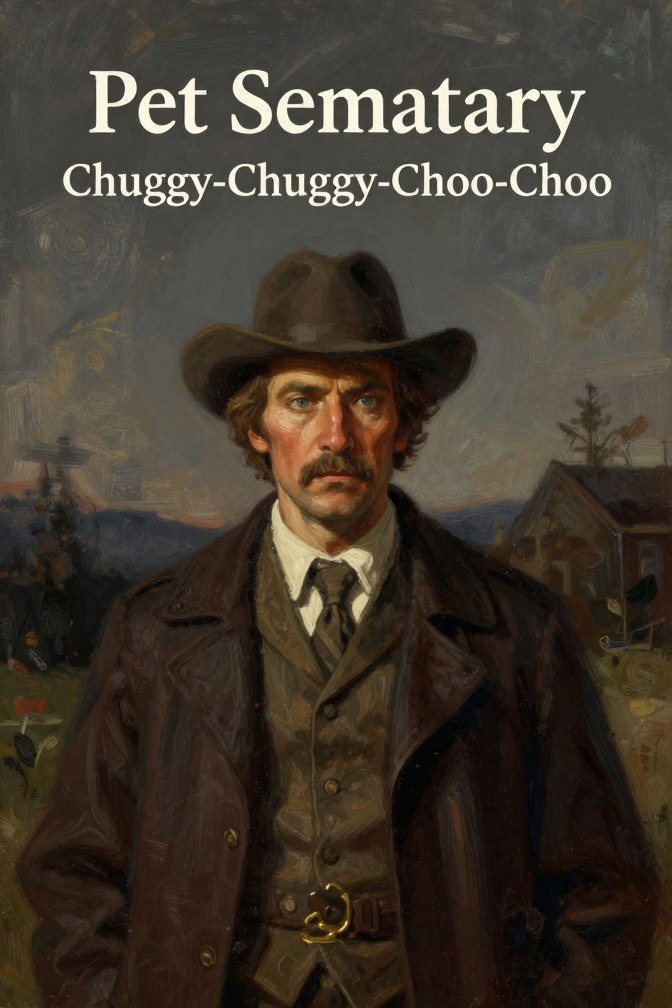
The Chuggy-Chuggy-Choo-Choo is a bright plastic toy train belonging to Gage Creed that Louis Creed throws at the resurrected cat Church in a moment of fear and revulsion, marking a turning point in his relationship with the animal and foreshadowing the violence to come.
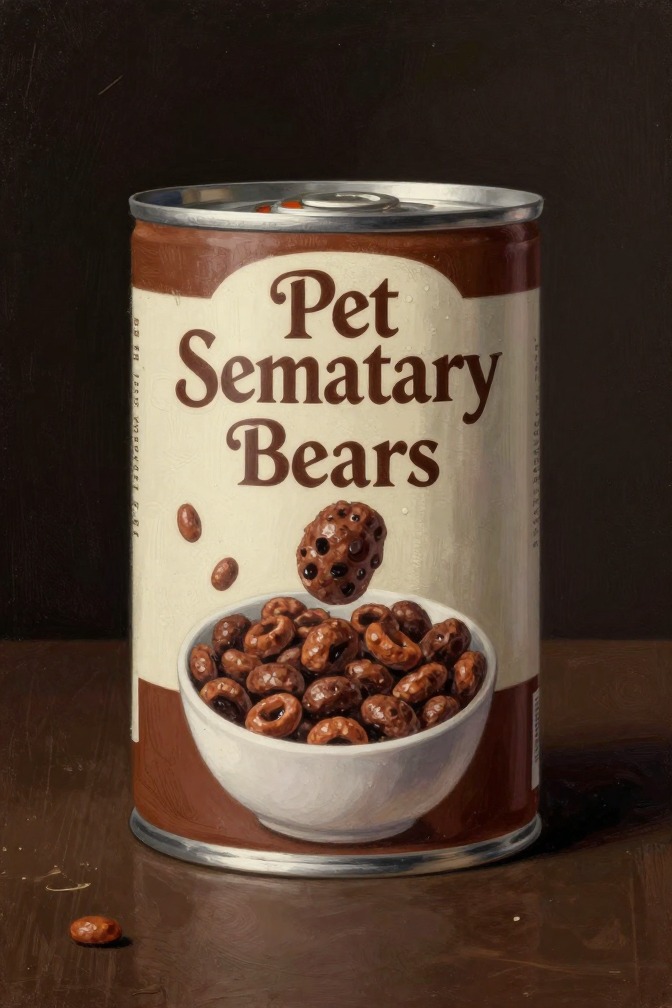
Cocoa Bears cereal is a breakfast food that Gage Creed eats regularly, and it becomes a symbol of his lost presence and the family's grief after his death.
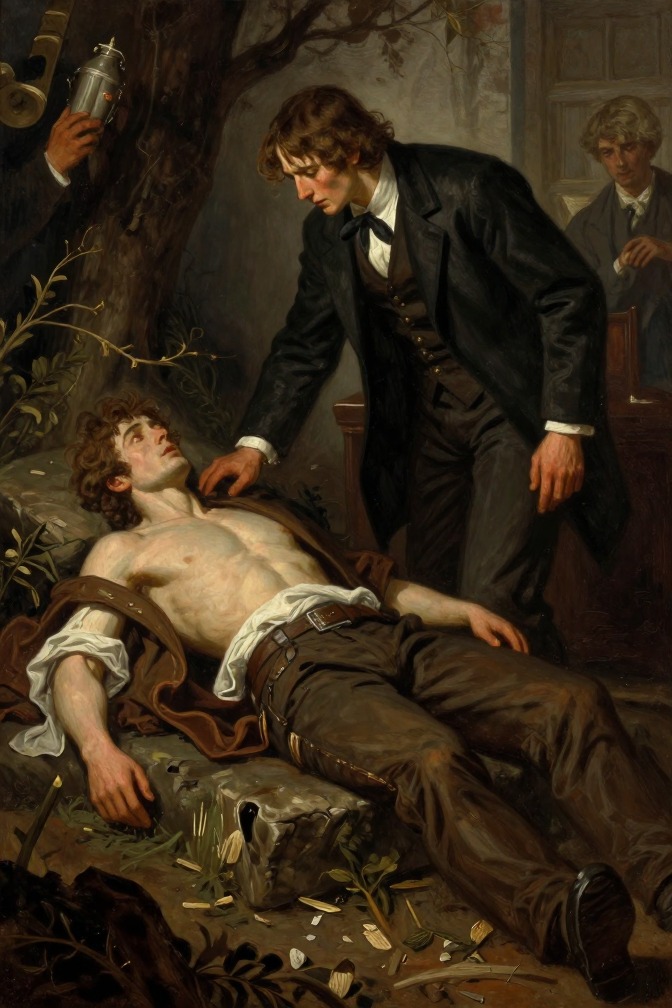
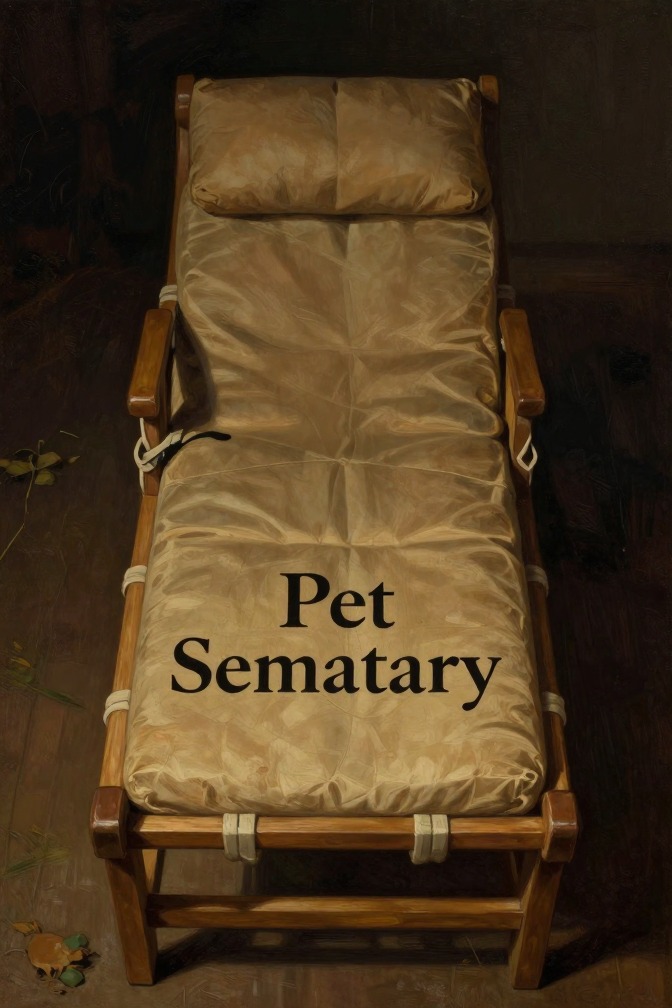
The hard stretcher is a piece of medical equipment used at the University of Maine at Orono's Student Medical Center for patients with spinal or neck injuries. It appears during the chaotic aftermath of Victor Pascow's fatal accident, where its deployment by inexperienced candy-stripers underscores the infirmary's unpreparedness for such a catastrophic event and becomes a symbol of the institutional and emotional disarray that marks Louis Creed's first day on the job.
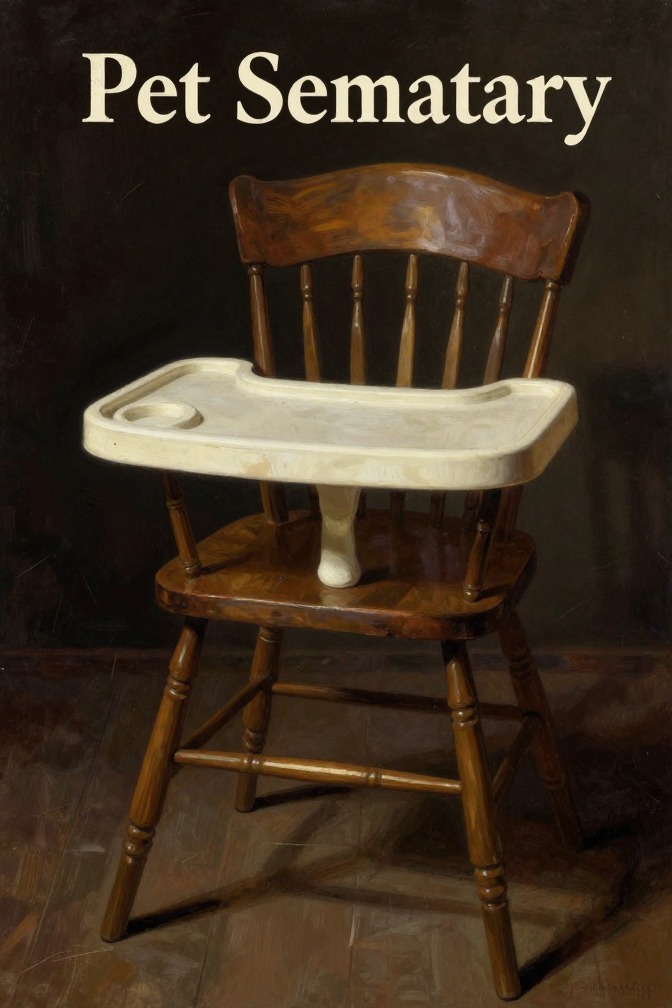
The high chair is a mundane domestic object in the Creed household that becomes a site of Gage's chaotic, messy vitality and, after his death, a poignant symbol of the irreplaceable, ordinary life that has been lost.
The Polaroid picture of Ellie pulling Gage on her sled is a central object in the novel, serving as a tangible anchor for Ellie's grief and her desperate attempt to keep her brother's memory alive after his death. It becomes a symbol of the family's shattered happiness and the impossibility of returning to a state of innocence, contrasting sharply with the unnatural resurrection that Louis later attempts.
Ellie Creed's Schwinn bicycle, a small red bike with training wheels, appears in the Creed garage as a mundane object that becomes a marker of domestic life and, after Gage's death, a painful reminder of the children's vanished world.