The Voigt-Kampff apparatus is the primary empathy-testing device used by bounty hunters in the San Francisco Police Department to distinguish human beings from escaped androids, particularly those equipped with the advanced Nexus-6 brain unit. Its operation and the controversy surrounding its reliability form a central technical and moral axis of the novel, as the test's ability to detect androids determines both the fate of suspected androids and the psychological stability of the hunters who wield it.
The First Law of Kipple, as articulated by John Isidore, states that "Kipple drives out nonkipple," a universal principle of entropy that governs the decay of all inanimate objects and spaces, particularly in the abandoned, dust-choked world of post-apocalyptic Earth.
In the post-apocalyptic world of *Do Androids Dream of Electric Sheep?*, the distinction between a 'real' living animal and an electric or artificial one is a central, fraught social and moral category. Owning a genuine animal is a marker of status, empathy, and moral worth within the theology of Mercerism, while possessing a mere electric facsimile is a shameful secret that threatens one's social standing and spiritual fusion with Mercer. The relentless pursuit of a real animal drives the protagonist Rick Deckard's actions and defines the value system of a world where most species have been rendered extinct by radioactive dust.
The Armstrong kidnapping case is the pivotal backstory of Murder on the Orient Express, a horrific crime that drives the novel's central conspiracy and provides the motive for the collective murder of Samuel Edward Ratchett, the man who escaped justice for the kidnapping and death of three-year-old Daisy Armstrong.
The murder of Samuel Edward Ratchett—revealed to be the notorious kidnapper Cassetti—on the night of the Orient Express's snowbound halt is the central crime of the novel, a meticulously planned execution carried out by twelve passengers acting as a self-appointed jury to avenge the Armstrong family tragedy.
Colonel Armstrong was the father of Daisy Armstrong, the three-year-old girl kidnapped and murdered by Cassetti (alias Ratchett). His family's destruction—his wife's death in childbirth, his own suicide, and the suicide of the nursemaid Susanne—forms the emotional core of the conspiracy that leads to Ratchett's execution on the Orient Express.
Cyrus Hardman, the American detective traveling undercover on the Orient Express, harbored a secret romantic attachment to Susanne, the French nursery-maid who died by suicide after being wrongly suspected of complicity in the Armstrong kidnapping case. This unspoken love, revealed only through Poirot's psychological probing and Hardman's own emotional reaction, explains why a professional operative with no direct connection to the Armstrong family joined the conspiracy to execute Ratchett.
Sonia Armstrong was the mother of Daisy Armstrong, the three-year-old girl kidnapped and murdered by Cassetti (alias Ratchett). Her death—from premature labor and a broken heart after the discovery of her daughter's body—is the emotional core of the crime's motive, driving her mother, sister, and household servants to form a jury of twelve and execute Cassetti on the Orient Express.
Victor is Dorian Gray's French valet, a quiet and efficient servant who attends to his master's daily needs and becomes an unwitting witness to the aftermath of Dorian's crimes.
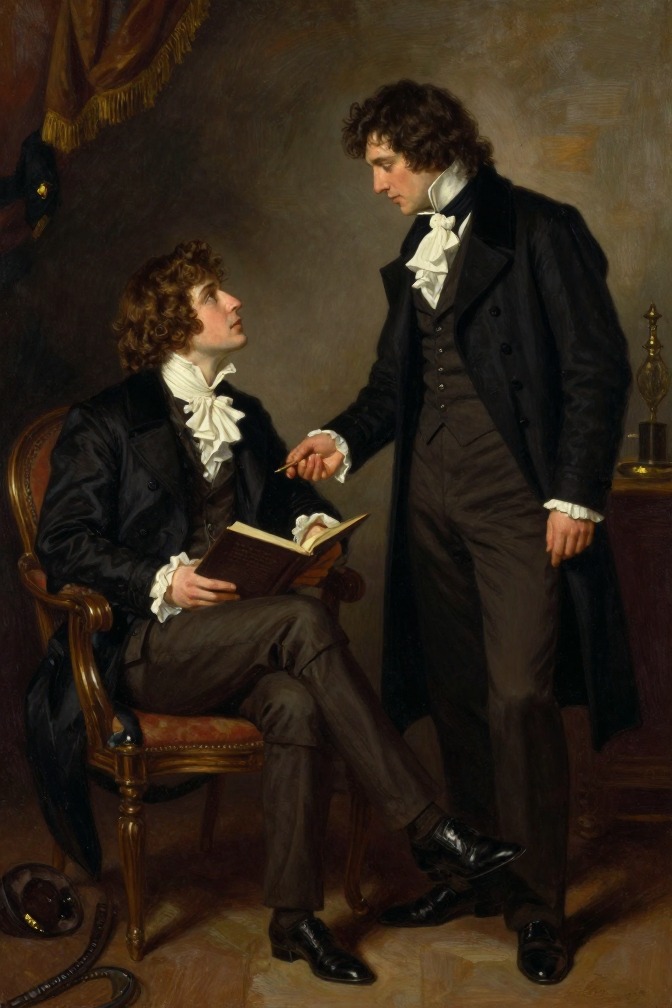
The meeting between Dorian Gray and Lord Henry Wotton in Basil Hallward's studio is the catalytic event of the novel, the moment when Lord Henry's seductive philosophy of youth, beauty, and hedonism first takes root in Dorian's impressionable mind, awakening in him a profound self-consciousness about his own appearance and a desperate fear of aging that will drive the entire plot.
The Picture of Dorian Gray is the enchanted portrait painted by Basil Hallward that becomes the repository of Dorian Gray's soul, aging and bearing the marks of his sins while he himself remains perpetually young and beautiful. It is the central symbol and mechanism of the novel, embodying the Faustian bargain at the heart of the story and serving as Dorian's conscience, his secret shame, and ultimately the instrument of his destruction.
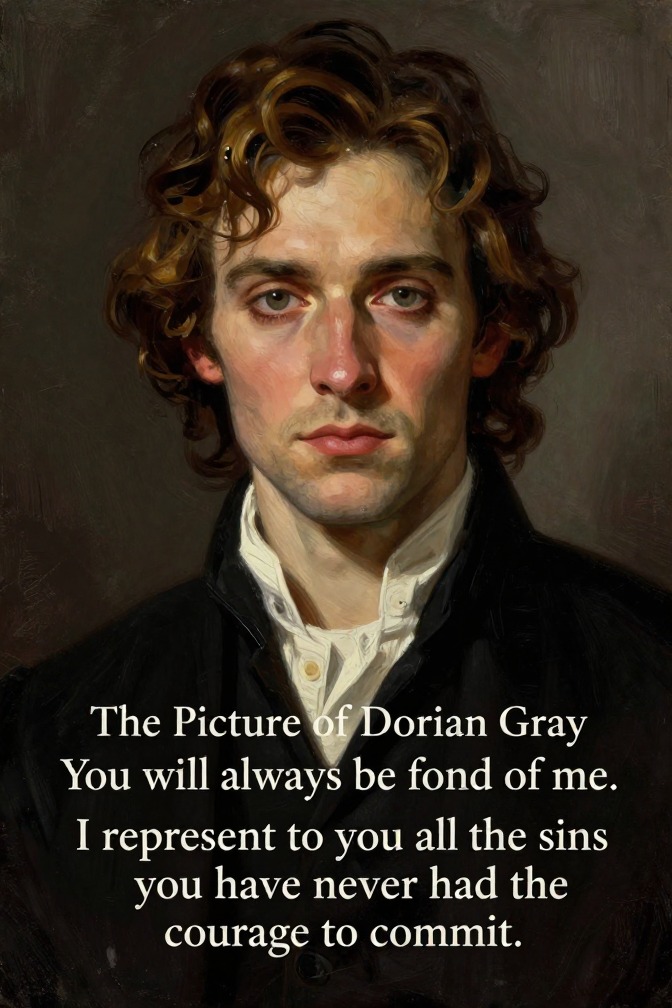
This aphorism, spoken by Lord Henry Wotton to Dorian Gray during a dinner at the Bristol, encapsulates the novel's central dynamic of influence, temptation, and the seduction of a corrupting philosophy. It is both a declaration of Lord Henry's enduring hold over Dorian and a concise statement of his worldview: that he embodies the forbidden desires Dorian lacks the courage to act upon, making their bond one of vicarious sin and intellectual fascination.
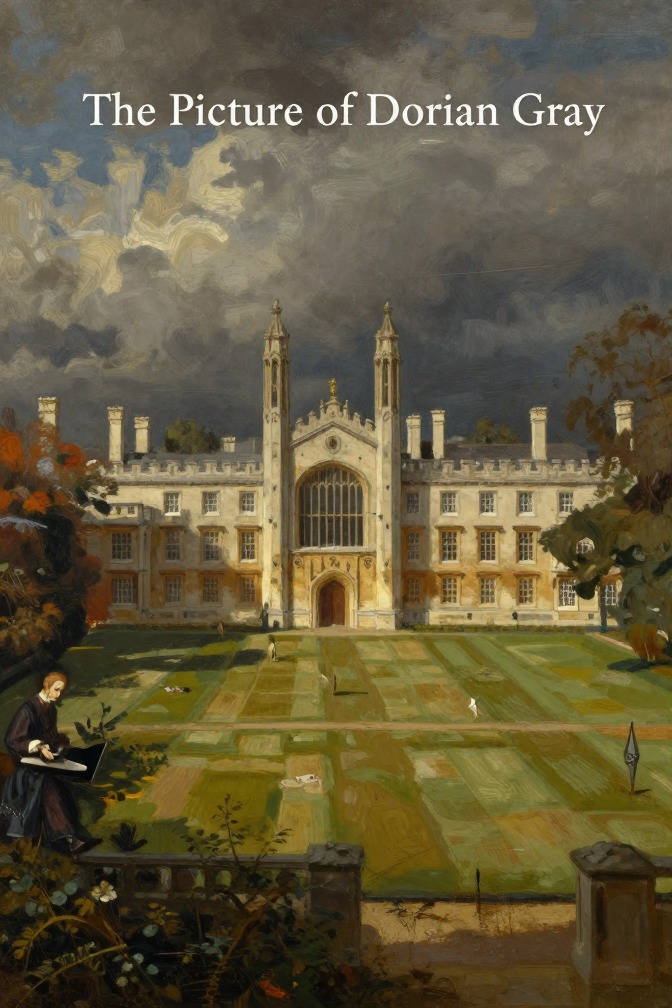
Cambridge is the university where Basil Hallward studied and where his friendship with Lord Henry Wotton began, and it is also the institution where Alan Campbell pursued his scientific training. The city serves as a background for formative intellectual and personal relationships that shape the novel's central conflicts.
The Campanile, or St Mark's Campanile, is a Venetian landmark that appears in Dorian Gray's consciousness as a symbol of beauty, memory, and the passage of time, linked to his reading of Gautier's poetry and his reflections on a past romance.
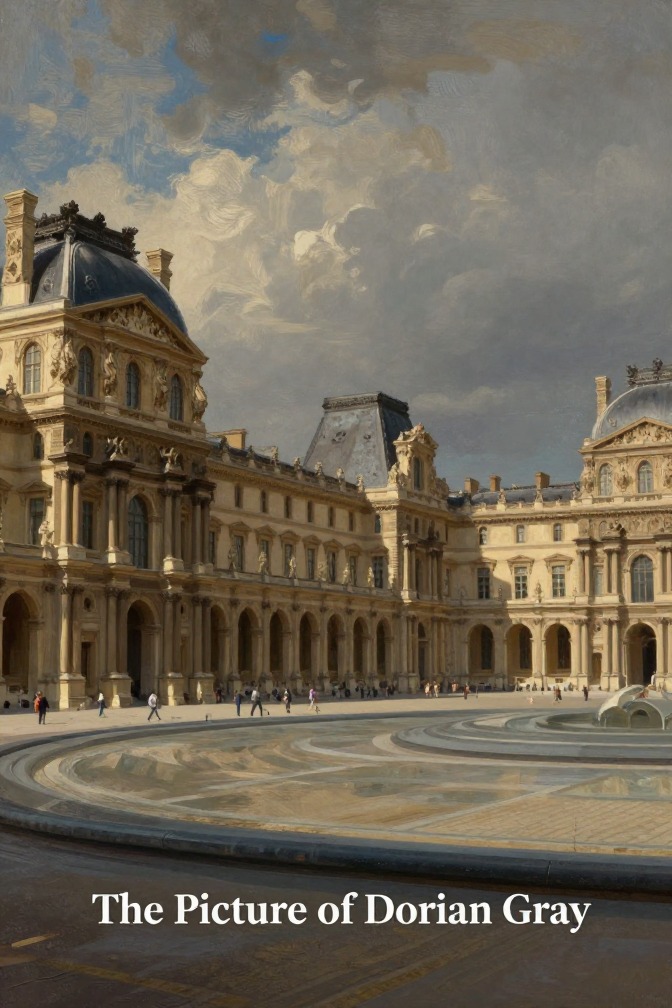
The Louvre appears in *The Picture of Dorian Gray* as a cultural landmark referenced in a passage from Gautier's *Émaux et Camées*, which Dorian reads after murdering Basil Hallward. The museum is evoked through the image of a "monstre charmant" couching in its porphyry room, a statue that Gautier compares to a contralto voice. This fleeting allusion situates the Louvre within the novel's broader pattern of aesthetic and decadent references that shape Dorian's consciousness.
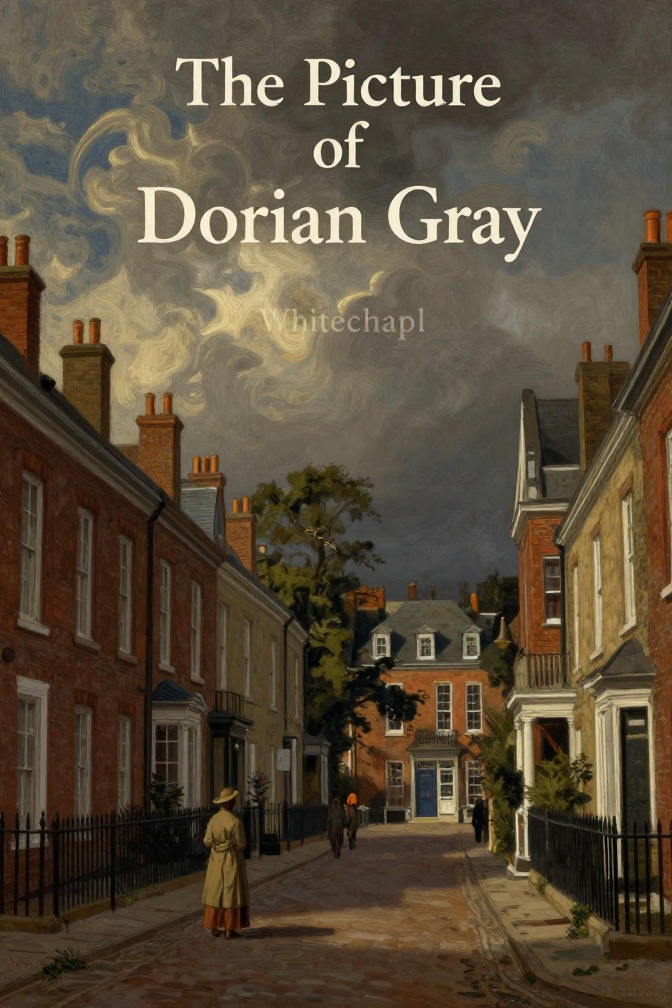
Whitechapel is the East End district of London that becomes the primary setting for Dorian Gray's secret life of vice and crime, functioning as the spatial counterpart to his elegant West End existence and the physical manifestation of the moral decay hidden beneath his unchanging youthful appearance.
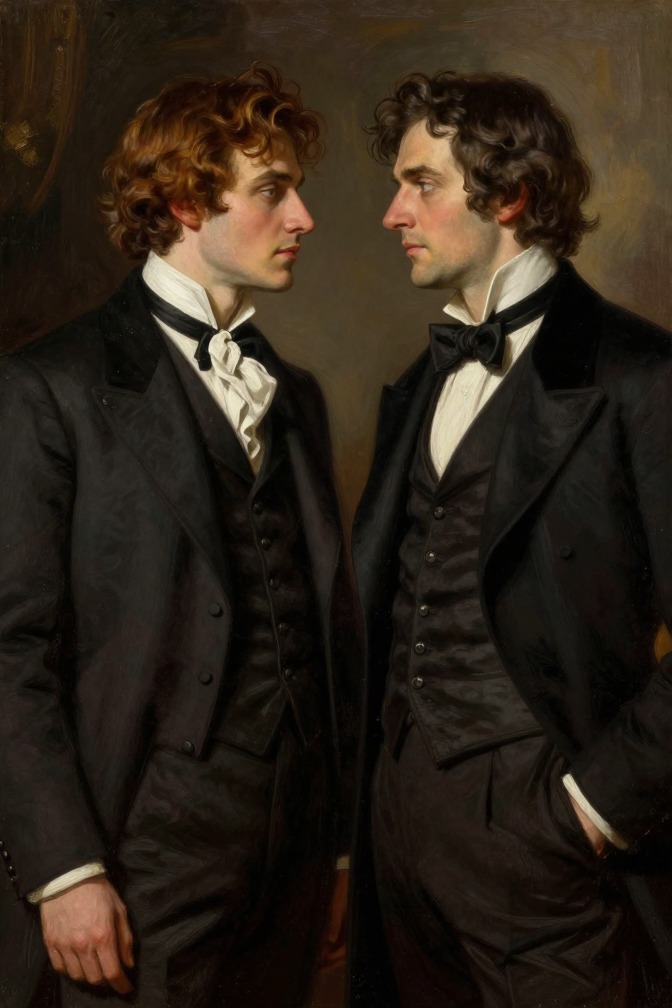
The friendship between Basil Hallward and Lord Henry Wotton is a central relationship in *The Picture of Dorian Gray*, defined by deep affection, intellectual opposition, and a tragic divergence in their influence over Dorian Gray. Basil, the earnest and devoted artist, and Lord Henry, the cynical and hedonistic aristocrat, are old Oxford friends whose bond is tested by their competing claims on Dorian's soul, ultimately leading to Basil's murder and the permanent rupture of their connection.
The marriage of Lord Henry Wotton and Lady Victoria Wotton is a central illustration of the novel's themes of deception, estrangement, and the performance of social roles. Their union is characterized by mutual indifference, a life of necessary deception, and a complete lack of emotional intimacy, serving as a practical demonstration of Lord Henry's cynical philosophies on marriage and relationships.
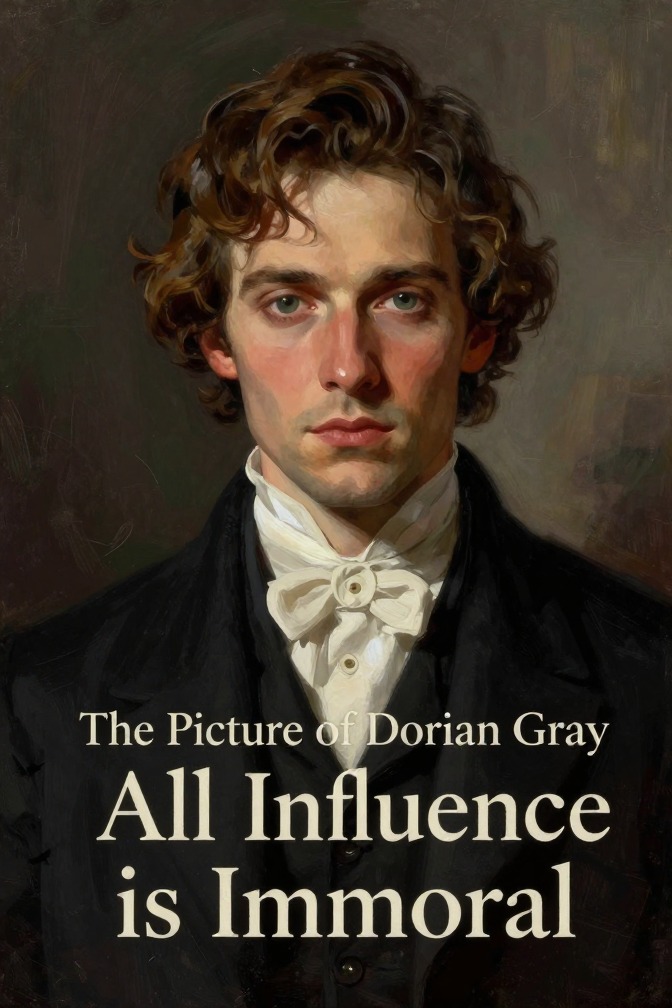
All Influence is Immoral is a central philosophical principle articulated by Lord Henry Wotton in Oscar Wilde's The Picture of Dorian Gray, which posits that any influence one person exerts over another is inherently unethical because it transfers the influencer's soul onto the influenced, robbing them of their authentic self. This doctrine serves as the ideological foundation for Dorian Gray's moral corruption, as Lord Henry's seductive words awaken in him a dangerous self-awareness and a desire for eternal youth, ultimately leading to a life of hedonism, cruelty, and murder.
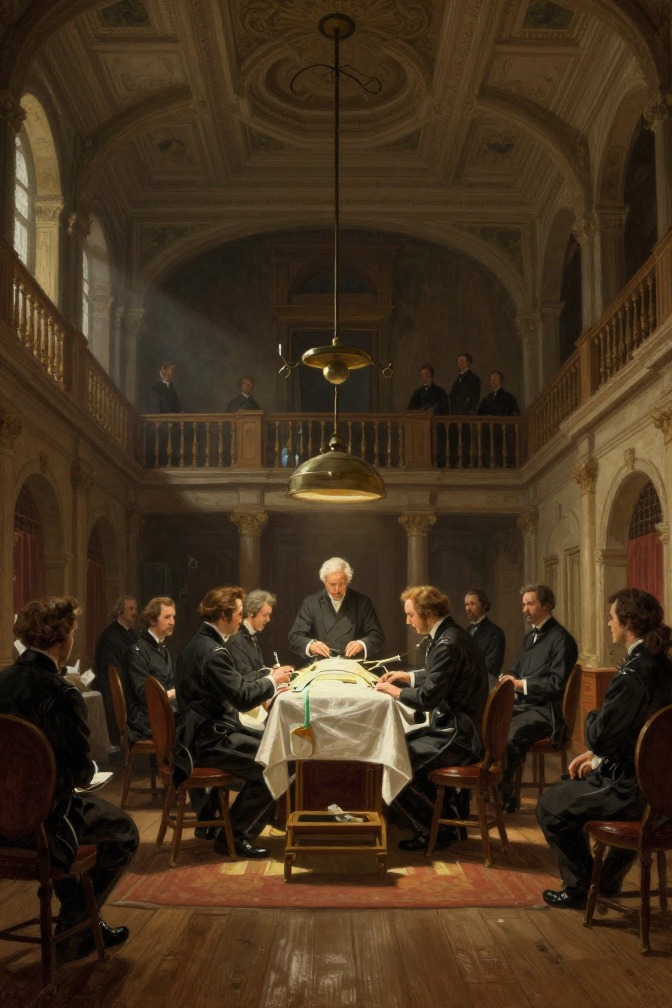
The surgical theatre is the large, dimly lit, and now-disused anatomical lecture hall within Dr. Jekyll's laboratory building, serving as the primary physical and symbolic threshold between the public world and the secret cabinet where Jekyll's transformations occur.
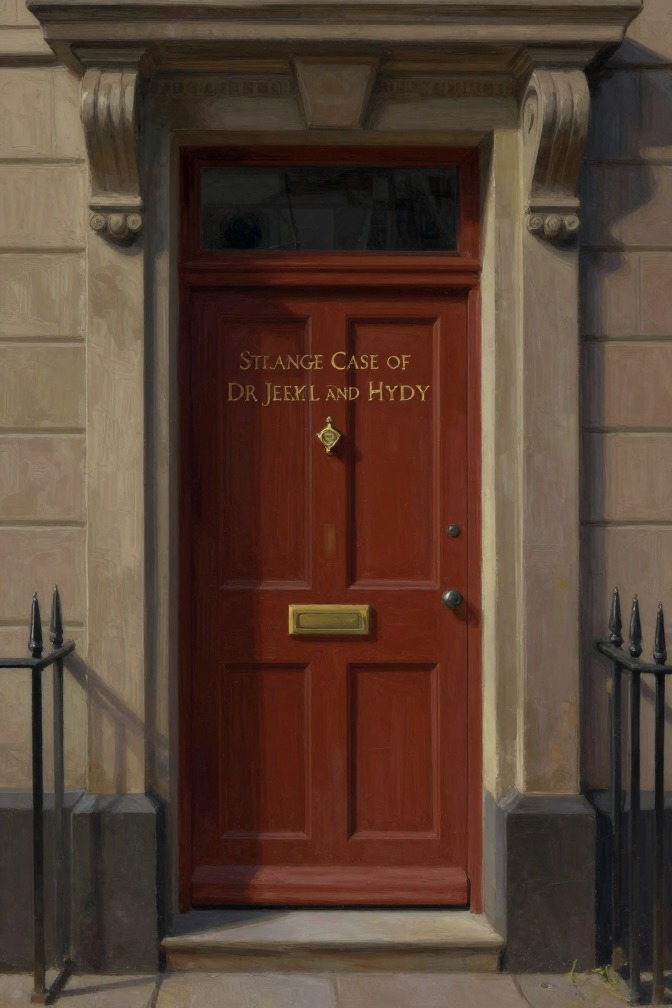
The by-street door is the inconspicuous back entrance to Dr. Jekyll's laboratory, serving as the secret passage through which Edward Hyde comes and goes, and becomes the central symbol of the hidden, sinister connection between the two men.
Edwin Leeford is the deceased father of Oliver Twist and Monks, a man whose youthful indiscretion and tragic death set the entire plot of Oliver Twist in motion. His secret relationship with Agnes Fleming, his forced marriage, and his final, penitent will—which Oliver's half-brother and mother conspired to destroy—constitute the hidden history that Mr. Brownlow and others labor to uncover. Though he never appears alive in the narrative, Leeford's actions and intentions reverberate through every major revelation, making him the absent origin of the novel's central mystery.
Noah Claypole and Charlotte form a romantic partnership that is characterized by manipulation, exploitation, and a stark power imbalance, with Noah dominating Charlotte through emotional and physical coercion, a dynamic that ultimately leads them into the criminal underworld of London.
Bard's Parley with Thorin is the tense diplomatic confrontation at the Gate of the Lonely Mountain, where Bard, the dragon-slayer and heir of Girion, demands a share of the treasure for the ruined people of Lake-town and the restoration of Dale, only to be met with Thorin's gold-lust and refusal, setting the stage for the siege of the Mountain.
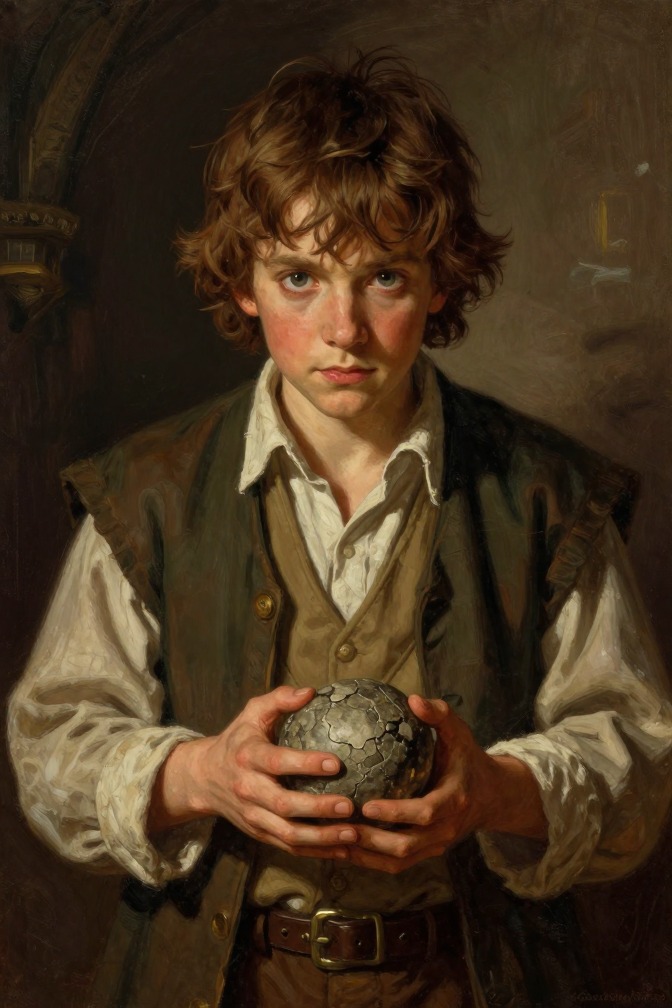
Bilbo Baggins secretly gives the Arkenstone, the Heart of the Mountain, to Bard and the Elvenking to use as a bargaining chip against Thorin Oakenshield, an act of desperate peacemaking that breaks the siege but triggers Thorin's wrath and a near-fatal rupture.
Bilbo Baggins rescues his twelve dwarf companions from the giant spiders of Mirkwood, a turning point that transforms him from a reluctant tagalong into a respected leader and earns him the dwarves' lasting gratitude.
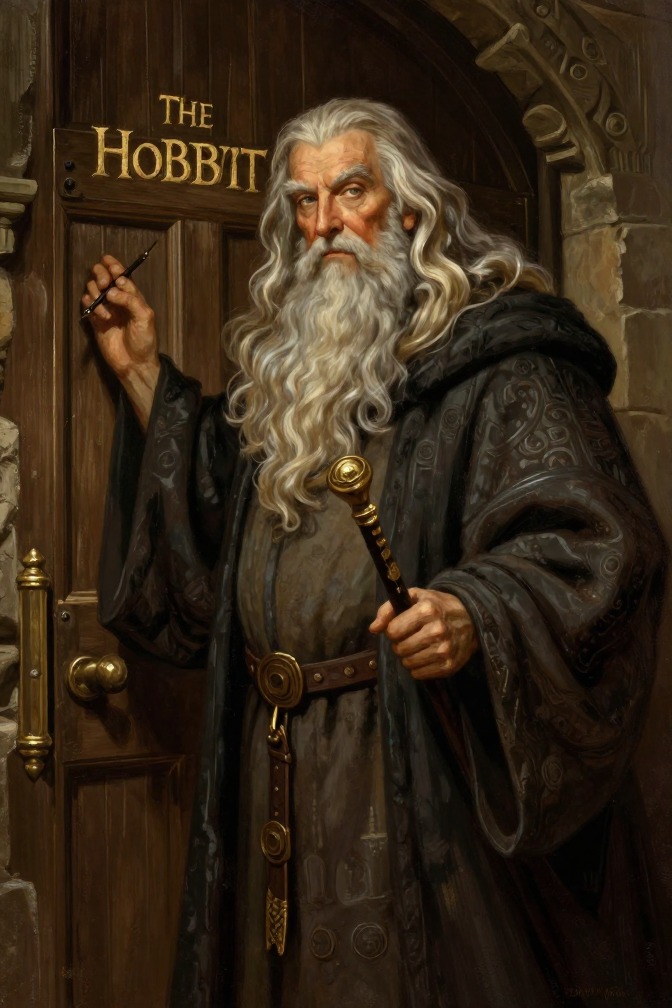
Gandalf marks Bilbo's door with a secret sign to identify him as a burglar for Thorin's expedition, setting the adventure in motion.
The Men of Lake-town, also known as the Lake-men or Esgaroth, are a community of mortal humans who live in a wooden town built on the Long Lake, under the shadow of the Lonely Mountain. They play a crucial role in the story as the suppliers and supporters of Thorin's company, and later as the victims of Smaug's wrath and the beneficiaries of the dragon's death. Their fortunes are tied to the quest for the dwarves' treasure, and their actions—from welcoming Thorin to fighting in the Battle of Five Armies—shape the outcome of the adventure.
The Grey Mountains are a vast northern range in Middle-earth, serving as a perilous boundary and a region infested with goblins, orcs, and other dangers, forming a key geographical and narrative barrier in the quest to the Lonely Mountain.
The 11th Century is a historical period referenced in Edmond Kirsch's presentation as the era when the Islamic scientific movement in Baghdad collapsed after the theologian al-Ghazali's writings questioned Greek logic and declared mathematics the 'philosophy of the devil,' leading to the compulsory study of theology and the end of scientific inquiry in the Islamic world.