Bassey Park is a public park in Derry, Maine, situated along the Kenduskeag Canal. It serves as a central location for community events, such as the Canal Days Festival, and is the site of the fatal assault on Adrian Mellon in 1984. The park is also a recurring location in the childhood experiences of the Losers' Club, where they gather, play, and confront the town's underlying horror.
Bowers Farm is the dilapidated, isolated property on the outskirts of Derry, Maine, where Henry Bowers lives with his abusive, mentally unstable father, Butch Bowers. The farm is a site of poverty, violence, and the breeding ground for Henry's hatred, particularly against the Hanlon family, and serves as a base from which Henry and his gang launch their attacks on the Losers' Club.
Costello Avenue is a residential and commercial street in Derry, Maine, that serves as a key route for several members of the Losers' Club during their childhood. It connects the Derry Public Library to the Costello Avenue Market and the Kleen-Kloze Washateria, and its geography—including the steep drop into the Barrens—makes it a site of both mundane errands and violent encounters with the town's bullies.
Derry, Maine, is the central setting of Stephen King's novel *It*, a small city with a dark and violent history that serves as the hunting ground for a malevolent, shape-shifting entity. The town's seemingly ordinary facade conceals a cycle of horrific events, including child murders and unexplained disasters, that recur approximately every twenty-seven years. Derry is both a character and a crucible, shaping the lives of its inhabitants and ultimately becoming the site of a final confrontation between the Losers' Club and the ancient evil that dwells beneath its streets.
The Hanlon Farm is the rural home of Mike Hanlon and his parents, Will and Jessica Hanlon, located on Witcham Road near the Derry town line. It is a working farm that anchors Mike's childhood and provides the setting for his father's stories about Derry's violent history, including the fire at the Black Spot and the family's struggles with the racist Bowers family. The farm represents a place of hard work, family love, and a deep, uneasy connection to the town's dark past.
The Kissing Bridge is a covered wooden footbridge over the Canal in Derry, Maine, connecting Bassey Park to Derry High School. It is a site of both adolescent romance and grotesque horror, serving as the location where Adrian Mellon was thrown to his death and where the town's deep-seated homophobia and violence converge. The bridge's surfaces are covered with graffiti, including declarations of love and hate, and it is here that the clown Pennywise appears to Don Hagarty after the murder, offering balloons and uttering the phrase "They float." The bridge is also a place where Eddie Corcoran once sat, contemplating his abusive stepfather, and where the Losers' Club later encounters the decaying web of It. Its destruction during the 1985 storm, when a piece of the Paul Bunyan statue shears through its roof, marks the end of an era for Derry.
The Black Spot was a makeshift social club for the black soldiers of Company E at the Derry Army Air Corps Base, built in 1930 from an old requisition shed. It became a popular jazz venue drawing white civilians from Derry and beyond, and was burned down by the Maine Legion of White Decency in a racist arson attack that killed dozens. The fire ended the 1929-30 cycle of violence in Derry and left a lasting scar on the town's history.
The Falcon is a gay bar in Derry, Maine, that opened in 1973 and became the social center of the town's small gay community. Its owner, Elmer Curtie, initially failed to realize his clientele was almost exclusively gay, but by the time he did, the bar was profitable and peaceful. The Falcon is the setting from which Adrian Mellon and his boyfriend Don Hagarty emerged on the night of Mellon's murder in July 1984, and its location near the bus station and the Main Street Bridge made it a focal point in the events leading to the killing.
Thomaston State Prison is the correctional facility in Maine where John Webber Garton was sentenced to serve ten to twenty years for the first-degree manslaughter of Adrian Mellon. It appears in the novel as one of the two prisons (alongside Shawshank State Prison) that receive the convicted killers of Adrian Mellon, marking the legal aftermath of the 1984 Canal Days Festival murder.
The Salinas cemetery is the burial ground in Salinas, California, where Samuel Hamilton is interred after his funeral in March 1912, and it serves as the site where Adam Trask confronts his grief and begins a process of emotional release that leads him to visit Kate and ultimately to free himself from his long paralysis.
The Hamilton Sofa is a goose-neck horsehair sofa that Samuel Hamilton gave to his wife Liza before their first child was born, and it becomes a central comic object in the family lore when Tom Hamilton uses it as a makeshift vehicle to take two girls to a dance, an act that provokes Liza's wrath and reveals the family's distinctive blend of improvisation, humor, and tension.
Timshel is the Hebrew word at the heart of East of Eden's moral philosophy, a single verb that Lee, after years of collaborative study with Chinese sages and a rabbi, retranslates from the fourth chapter of Genesis as 'thou mayest' rather than the King James 'thou shalt' or the American Standard 'do thou.' This retranslation transforms the Cain and Abel story from a narrative of predestination or command into one of human choice, and it becomes the novel's central statement about free will, moral responsibility, and the possibility of triumph over sin.
Juliana Frink is a judo instructor living in Canon City, Colorado, and the ex-wife of Frank Frink. She becomes entangled with a Nazi assassin, Joe Cinnadella, whom she kills in self-defense, and then travels to Cheyenne to warn the author Hawthorne Abendsen of the threat against him, ultimately confronting him with the truth of his own novel.
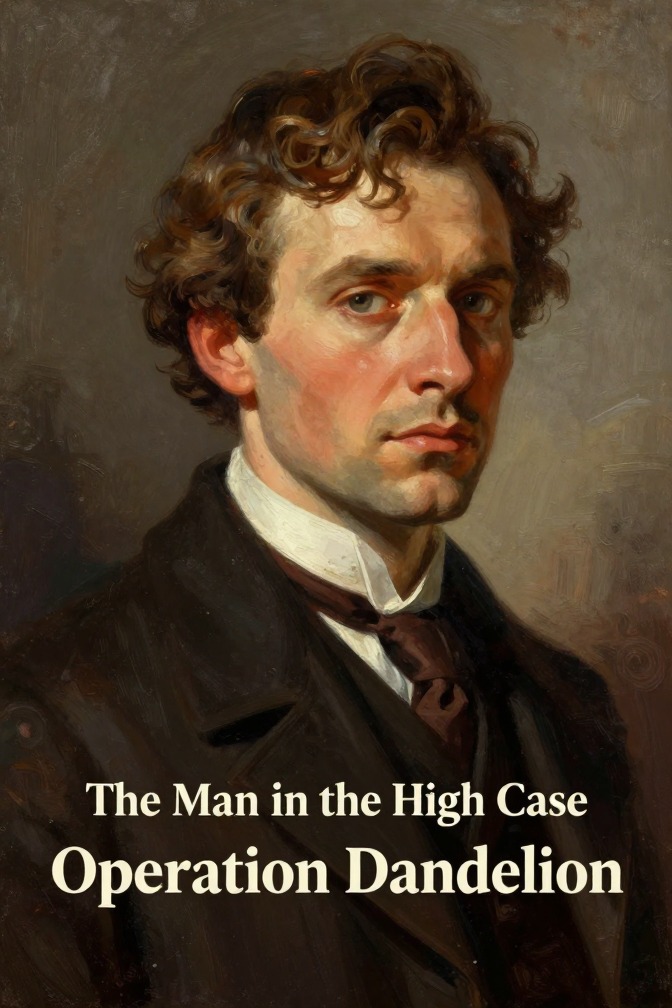
Operation Dandelion is the secret German plan for a surprise nuclear attack on the Japanese Home Islands, revealed by Rudolf Wegener to General Tedeki in San Francisco. It is the central geopolitical conspiracy of the novel, whose exposure and potential prevention drive the plot's climax and illuminate the moral compromises of the Axis world.
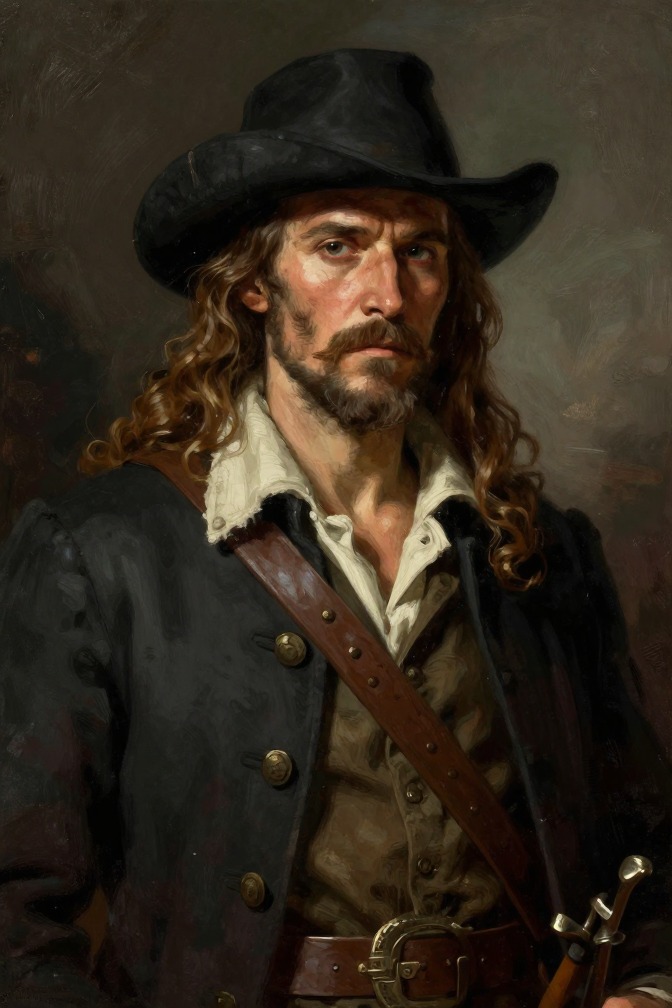
The death of Blind Pew is a pivotal event in Treasure Island, marking the violent end of the blind beggar who terrorized the Admiral Benbow Inn and the collapse of the pirate assault on the Hawkins family. Trampled by the horses of revenue officers, Pew's demise eliminates the most formidable of the old buccaneers and clears the way for Jim Hawkins to deliver the treasure map to Dr. Livesey and Squire Trelawney, setting the entire adventure in motion.
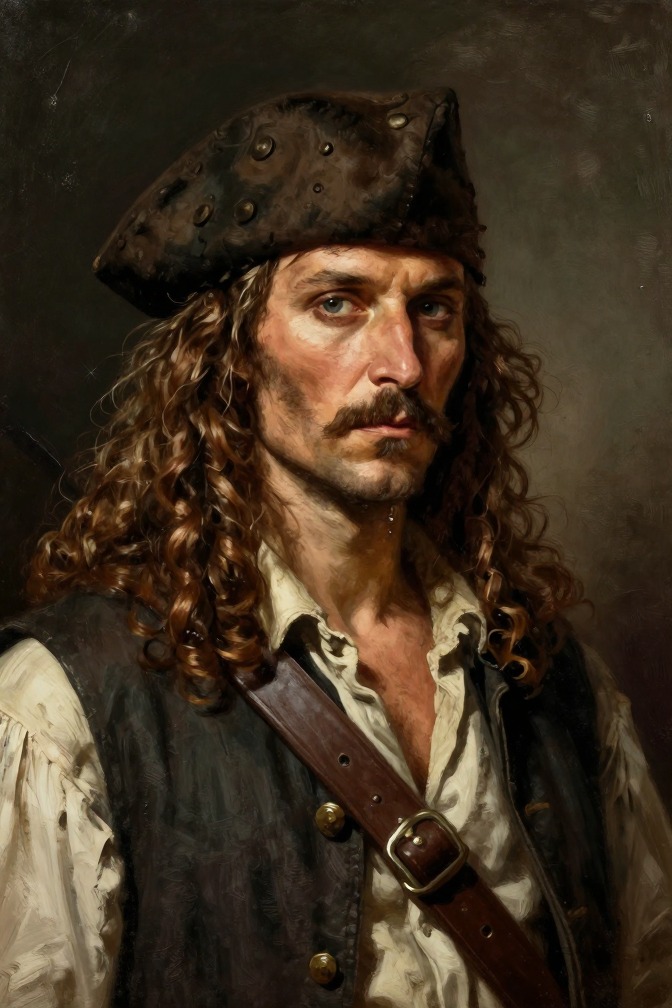
Long John Silver is the one-legged ship's cook aboard the Hispaniola who secretly leads the pirate mutiny to seize Flint's treasure, yet his cunning, charm, and shifting loyalties make him the novel's most complex and unforgettable figure. He is introduced as a trusted and likable man, but his true nature as a ruthless buccaneer emerges through his manipulation of the crew, his brutal murder of a loyal sailor, and his constant maneuvering to save his own neck. Silver's relationship with Jim Hawkins is central, as he both threatens the boy's life and ultimately depends on him, creating a dynamic of mutual survival that defines the story's moral ambiguity.
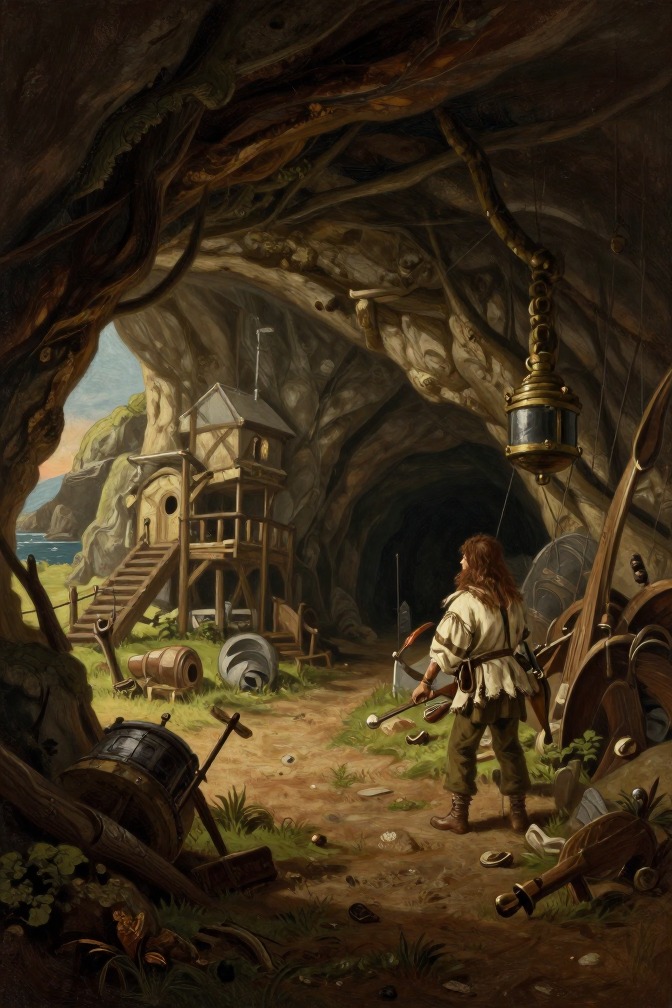
Ben Gunn's Cave is the hidden treasure-house on Treasure Island where the marooned sailor Ben Gunn secretly stored Flint's treasure after digging it up, and it becomes the final refuge and stronghold of the loyal party after they abandon the stockade.
Billy Bones and Jim Hawkins is a central relationship in Treasure Island, tracing the boy's complex bond with the old buccaneer from fear and service to pity and grief, and ultimately shaping Jim's role in the adventure.
Billy Bones and Long John Silver are former shipmates under the pirate Captain Flint, with Bones serving as first mate and Silver as quartermaster. Their shared criminal past and knowledge of Flint's buried treasure form the hidden link between the old buccaneer's terror at the Admiral Benbow and the one-legged sea-cook who orchestrates the mutiny aboard the Hispaniola. Silver's name is the one Bones most dreads, and Silver's eventual arrival on the island completes the circle of Flint's old crew.
Squire Trelawney and Long John Silver form the central relationship of Treasure Island, a bond of trust that becomes the story's great betrayal. Trelawney, the wealthy and impulsive squire, hires Silver as ship's cook on the strength of a chance meeting in Bristol, believing him a loyal and capable man. Silver, secretly the ringleader of a pirate crew, exploits the squire's openness to infiltrate the expedition and seize the treasure. Their relationship traces the arc from naive confidence to bitter disillusionment, culminating in Silver's capture and Trelawney's contemptuous dismissal of him as a 'prodigious villain and imposter.'
The Voigt-Kampff apparatus is the primary empathy-testing device used by bounty hunters in the San Francisco Police Department to distinguish human beings from escaped androids, particularly those equipped with the advanced Nexus-6 brain unit. Its operation and the controversy surrounding its reliability form a central technical and moral axis of the novel, as the test's ability to detect androids determines both the fate of suspected androids and the psychological stability of the hunters who wield it.
The First Law of Kipple, as articulated by John Isidore, states that "Kipple drives out nonkipple," a universal principle of entropy that governs the decay of all inanimate objects and spaces, particularly in the abandoned, dust-choked world of post-apocalyptic Earth.
In the post-apocalyptic world of *Do Androids Dream of Electric Sheep?*, the distinction between a 'real' living animal and an electric or artificial one is a central, fraught social and moral category. Owning a genuine animal is a marker of status, empathy, and moral worth within the theology of Mercerism, while possessing a mere electric facsimile is a shameful secret that threatens one's social standing and spiritual fusion with Mercer. The relentless pursuit of a real animal drives the protagonist Rick Deckard's actions and defines the value system of a world where most species have been rendered extinct by radioactive dust.
The Armstrong kidnapping case is the pivotal backstory of Murder on the Orient Express, a horrific crime that drives the novel's central conspiracy and provides the motive for the collective murder of Samuel Edward Ratchett, the man who escaped justice for the kidnapping and death of three-year-old Daisy Armstrong.
The murder of Samuel Edward Ratchett—revealed to be the notorious kidnapper Cassetti—on the night of the Orient Express's snowbound halt is the central crime of the novel, a meticulously planned execution carried out by twelve passengers acting as a self-appointed jury to avenge the Armstrong family tragedy.
Colonel Armstrong was the father of Daisy Armstrong, the three-year-old girl kidnapped and murdered by Cassetti (alias Ratchett). His family's destruction—his wife's death in childbirth, his own suicide, and the suicide of the nursemaid Susanne—forms the emotional core of the conspiracy that leads to Ratchett's execution on the Orient Express.
Cyrus Hardman, the American detective traveling undercover on the Orient Express, harbored a secret romantic attachment to Susanne, the French nursery-maid who died by suicide after being wrongly suspected of complicity in the Armstrong kidnapping case. This unspoken love, revealed only through Poirot's psychological probing and Hardman's own emotional reaction, explains why a professional operative with no direct connection to the Armstrong family joined the conspiracy to execute Ratchett.
Sonia Armstrong was the mother of Daisy Armstrong, the three-year-old girl kidnapped and murdered by Cassetti (alias Ratchett). Her death—from premature labor and a broken heart after the discovery of her daughter's body—is the emotional core of the crime's motive, driving her mother, sister, and household servants to form a jury of twelve and execute Cassetti on the Orient Express.
Victor is Dorian Gray's French valet, a quiet and efficient servant who attends to his master's daily needs and becomes an unwitting witness to the aftermath of Dorian's crimes.
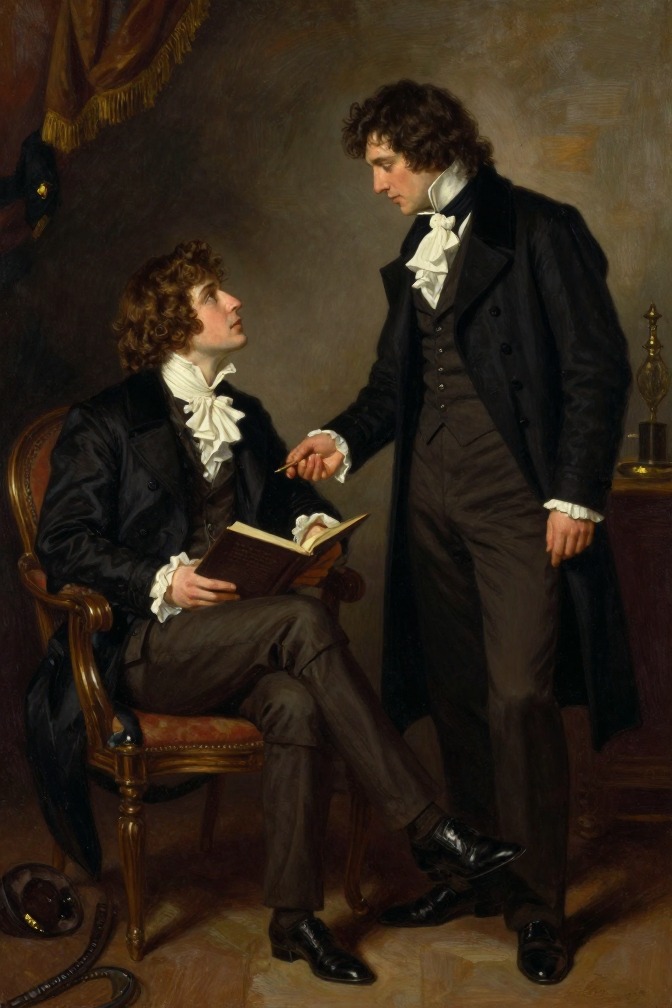
The meeting between Dorian Gray and Lord Henry Wotton in Basil Hallward's studio is the catalytic event of the novel, the moment when Lord Henry's seductive philosophy of youth, beauty, and hedonism first takes root in Dorian's impressionable mind, awakening in him a profound self-consciousness about his own appearance and a desperate fear of aging that will drive the entire plot.