Bordeaux is a major city in southwestern France that serves as a key waypoint in the Nightingale escape route, where an airman code-named Jean-Claude boards the train, and its name is also used as a password in the network's coded communications.
The Bidassoa River is the natural border between France and Spain near the Basque coast, and in Kristin Hannah's *The Nightingale* it becomes the climactic physical and symbolic obstacle that Isabelle Rossignol and the downed airmen she guides must cross to reach freedom. Swollen by rain into a dangerous torrent, the river forces the escape party to use a rickety suspension bridge under the glare of searchlights, making the crossing the most harrowing moment of Isabelle's many Pyrenean journeys and the point at which her transformation from reckless girl to hardened resistance operative is fully sealed.
Vianne Mauriac and Captain Wolfgang Beck share a complex, morally fraught relationship defined by occupation, dependence, and a tragic intimacy that ends in violence. Beck is the German officer who requisitions Vianne's home, Le Jardin, and his presence forces her into a daily negotiation between survival and complicity. Over time, their interactions evolve from formal hostility to a strained, almost personal understanding, culminating in Vianne's desperate act of killing him to protect her sister Isabelle. This relationship is the crucible in which Vianne's transformation from a passive, rule-following wife into a woman capable of lethal resistance is forged.
Bernard is the earnest, academically gifted son of Charley, Willy Loman's next-door neighbor, who serves as a foil to Biff Loman and embodies a version of the American dream based on hard work rather than popularity.
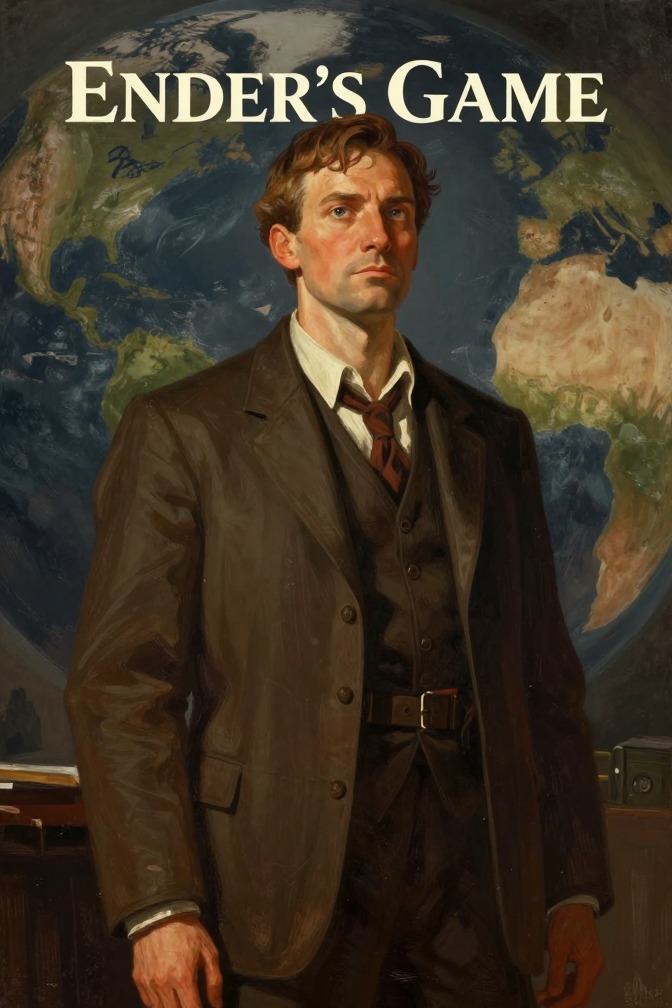
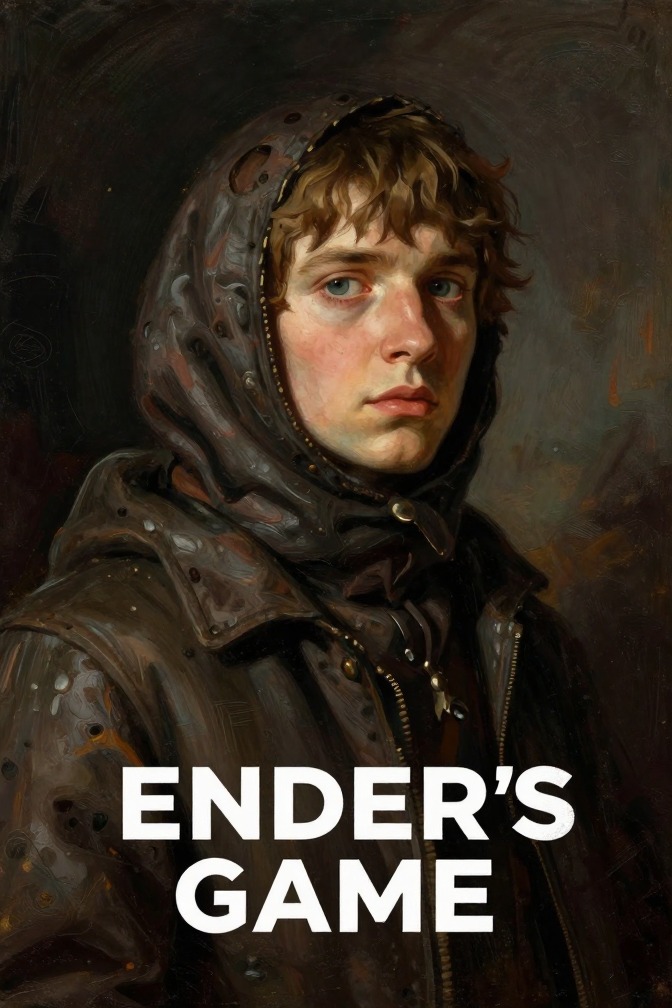
Ender agrees to go to Battle School after Colonel Graff visits his home, a decision that sets the entire novel in motion. This pivotal moment transforms a six-year-old Third, already marked by violence and isolation, into the military prodigy destined to command humanity's fleet against the buggers.
Ender leaves Earth with Colonel Graff to enter Battle School, a pivotal departure that separates him from his family and sets him on the path to becoming humanity's military savior.
The Buggers are the alien species whose two invasions of Earth frame the novel's conflict, and whose third invasion Ender Wiggin unknowingly commands the human fleet against, ultimately destroying their homeworld. Their hive-mind nature, instantaneous communication, and the revelation that they were not malicious but tragically misunderstood make them central to the novel's themes of empathy, war, and the ethics of genocide.
The Hive-Queen is the central intelligence and reproductive core of the bugger species, a single entity whose death causes the collapse of all her workers. Mazer Rackham theorized that each bugger fleet is controlled by a queen, and that killing her instantly disables every individual in the hive. After the Third Invasion, Ender Wiggin discovers a preserved queen cocoon on a bugger world, and through a psychic link he learns the buggers' perspective, ultimately becoming the Speaker for the Dead to tell their story.
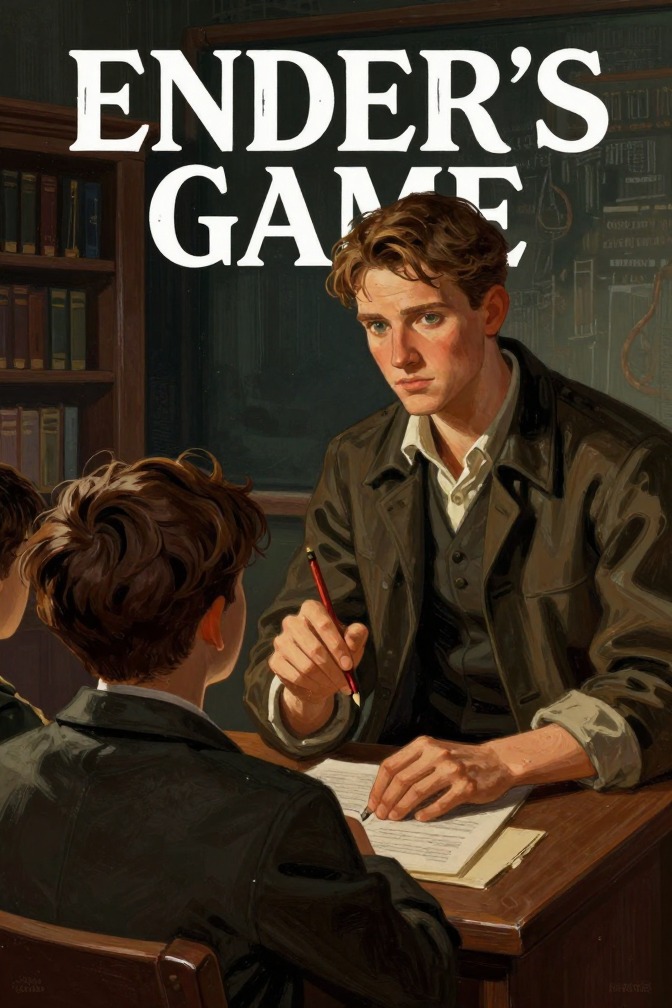
Bernard's Downfall is the pivotal event in Ender's early days at Battle School, where the six-year-old Ender Wiggin, isolated and tormented by the older boy Bernard and his gang, secretly hacks the school's desk messaging system to send prank messages signed 'God' and later forged as Bernard's own, publicly humiliating Bernard and breaking his power over the launch group. This event marks Ender's first strategic victory in the school's social war, establishes his reputation as a brilliant and ruthless tactician, and sets the pattern for his later command style, while also revealing the teachers' deliberate manipulation of the boys' social dynamics.
The ansible, officially the Philotic Parallax Instantaneous Communicator, is a fictional device in Orson Scott Card's Ender's Game that enables instantaneous communication across interstellar distances, a crucial technology for the International Fleet's command and control during the Third Invasion. Its development, based on the buggers' own instantaneous mental communication, allows humanity to coordinate a vast fleet across light-years, and it becomes the medium through which Ender Wiggin unknowingly commands the real war, ultimately leading to the destruction of the bugger homeworld and the subsequent discovery of the Hive-Queen's cocoon.
Command School is the advanced military training institution in Orson Scott Card's Ender's Game, where Ender Wiggin is sent after Battle School to learn fleet command. It is secretly the headquarters of the International Fleet's Third Invasion, and its final examination is the real battle that destroys the bugger homeworld.
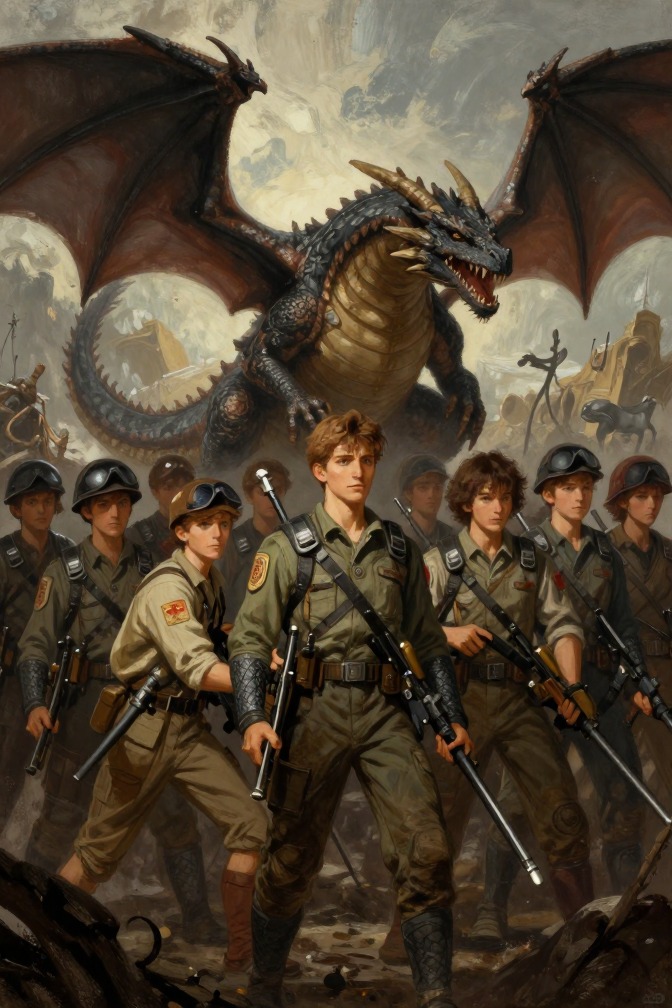
Dragon Army is the Battle School army commanded by Ender Wiggin, created from an untrained and underage group of soldiers, which under his innovative leadership becomes the most successful fighting force in the school's history, winning every battle and revolutionizing null-gravity tactics before being dismantled by the teachers.
The League is the supranational political-military alliance that unites humanity against the Buggers, providing the legal and organizational framework for the International Fleet, the Battle School, and the wars that define Ender Wiggin's life. It is the institution that authorizes Ender's birth as a Third, conscripts him into military service, and ultimately becomes the arena for post-war power struggles, with its fate intertwined with the rise of Peter Wiggin as Hegemon.
Ender and Stilson's conflict is the pivotal first act of violence in Ender's Game, a brutal confrontation that defines Ender's character, triggers his recruitment into the Battle School, and haunts him throughout the novel as a symbol of his capacity for destructive violence.
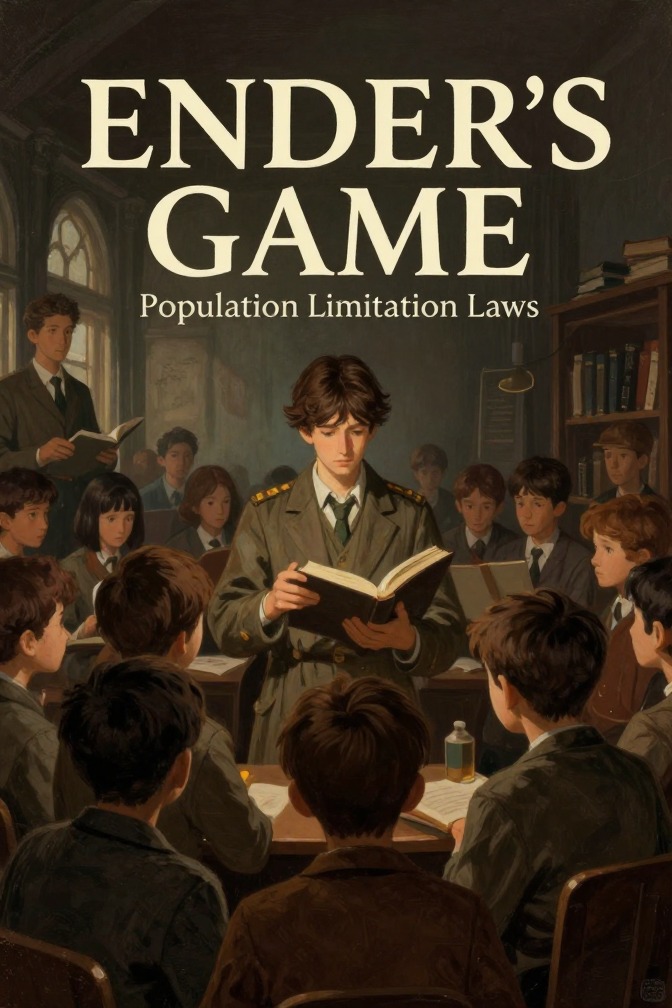
The Population Limitation Laws are a central piece of world-building in Ender's Game, a set of international regulations that restrict families to two children, making any third child—a 'Third'—a legally sanctioned but socially stigmatized anomaly. These laws shape the Wiggin family's dynamics, drive Ender's isolation and self-perception, and ultimately become a political flashpoint in the novel's exploration of state power over individual lives.
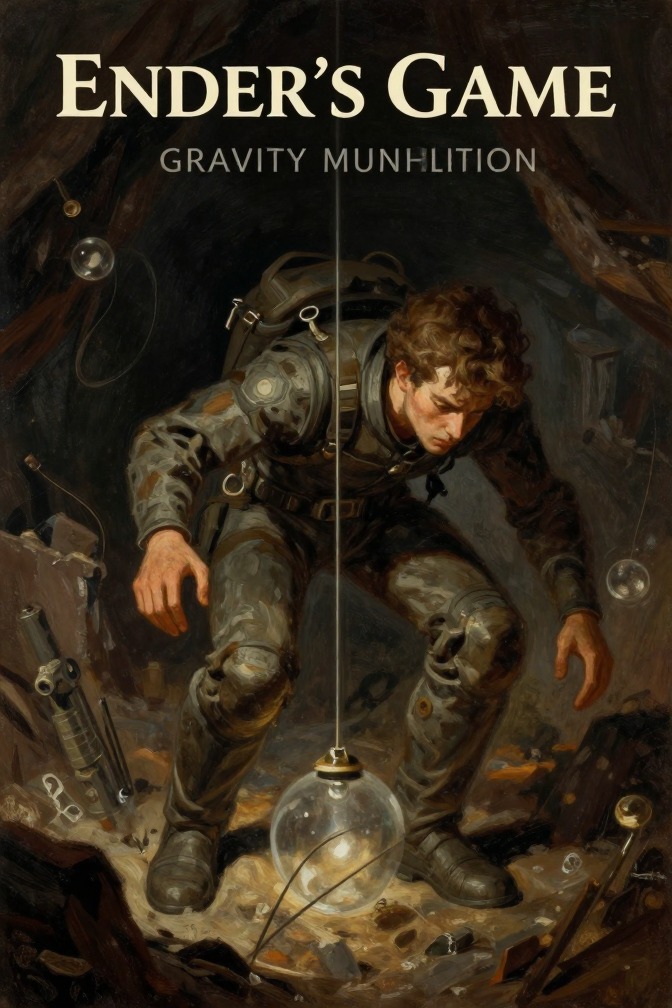
Gravity manipulation is a foundational technology in Ender's Game, enabling the Battle School's zero-gravity training, the starships' interstellar travel, and the strategic reorientation that defines Ender's military genius. It is also a lens through which the novel explores the relativity of perspective, the ethics of war, and the possibility of communication across species.
Mrs. Martin is the mother of Robert Martin and his sisters, the matriarch of Abbey Mill Farm, and a shrewd, affectionate woman who actively promotes her son's marriage to Harriet Smith.
Frank Churchill's dependence on his aunt and uncle, the Churchills of Enscombe, is a defining condition of his life, shaping his movements, his secrecy, and his conduct throughout the novel. Though he is the son of Mr. Weston, he was given up as a child to be raised by his wealthy, childless relatives, and this adoption, combined with his expectation of inheriting their fortune, places him under a financial and social obligation that severely limits his freedom. His inability to visit his father at Randalls for years, the elaborate concealment of his engagement to Jane Fairfax, and the constant deferral of his own wishes to the caprices of Mrs. Churchill all stem from this fundamental state of dependency, making him a figure whose amiable surface is undercut by a lack of independence that Mr. Knightley, in particular, finds contemptible.
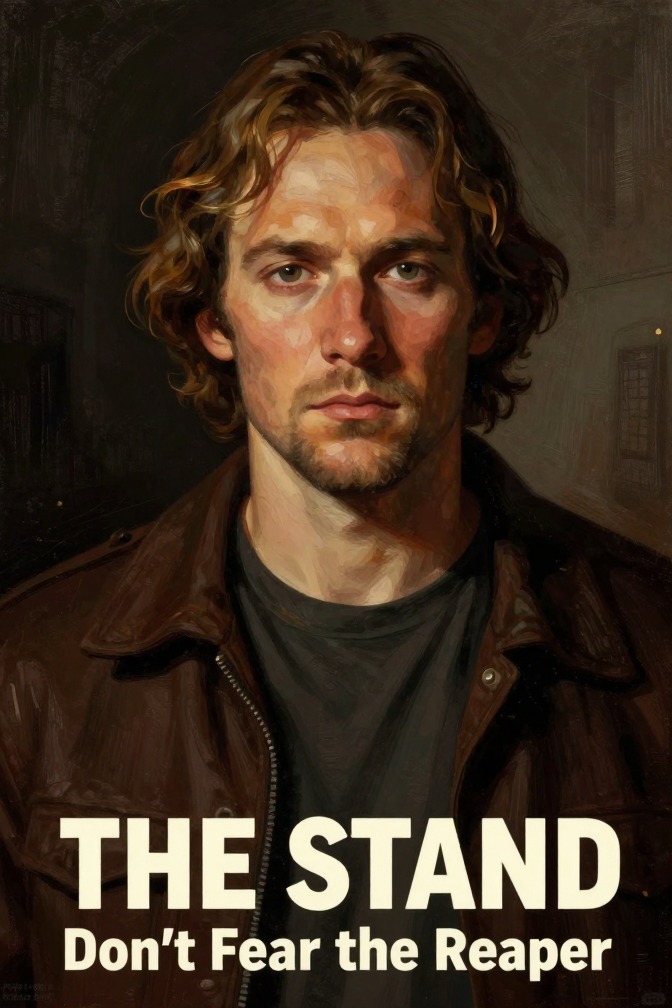
Don't Fear the Reaper is a song by the rock band Blue Öyster Cult, quoted in the epigraph of Stephen King's novel The Stand. The lyrics, which appear in the novel's front matter, depict a woman named Mary who is urged not to fear death and who ultimately embraces it by flying away with a mysterious figure. The song's refrain, "Don't fear the Reaper," serves as a thematic counterpoint to the novel's central confrontation with mortality, plague, and the supernatural, and its imagery of a beckoning, otherworldly lover resonates with the novel's portrayal of the dark man, Randall Flagg.
The relationship between Mother Abagail and Nick Andros is the central spiritual and strategic bond of the Boulder Free Zone, forged through shared prophetic dreams and a mutual recognition of divine purpose. Mother Abagail, a 108-year-old prophet, identifies Nick as the leader God has chosen, while Nick, a deaf-mute drifter, becomes her most trusted confidant and the practical architect of the community's survival, a bond that endures even after Nick's death in the Free Zone Committee bombing.
Chris Chambers, the toughest and most loyal member of the gang, is fatally stabbed in a Portland Chicken Delight restaurant in late 1971 while trying to make peace between two arguing strangers. His death, a sudden and senseless act of violence, marks the tragic end of a life defined by a fierce struggle against the poverty and low expectations of his hometown, Castle Rock, and by his deep, transformative friendship with Gordon Lachance.
Rebecca de Winter is the deceased first wife of Maxim de Winter, whose pervasive presence dominates the narrative of Daphne du Maurier's novel. Though dead before the story begins, she is the central antagonist whose memory, possessions, and influence shape the lives of every other character, ultimately driving the plot toward its violent revelations and tragic conclusion.
Rebecca's death is the central, hidden event of the novel, revealed in Maxim's confession to be not a sailing accident but a murder he committed in the cottage on the cove, after which he sank her body in the bay inside her boat, Je Reviens.
Maxim de Winter's blunt, unromantic proposal to the narrator at a breakfast table in Monte Carlo, which simultaneously reveals his need for companionship and his determination to move forward, while also foreshadowing the shadow of Rebecca that will haunt their marriage.
The dining-room at Manderley is the formal space where the household's rigid routines, social hierarchies, and the lingering presence of Rebecca de Winter are most starkly enacted, serving as a stage for the narrator's daily experience of inadequacy and displacement.
Jack Goldman is a minor student hostage in Room 16 during Charlie Decker's hostage crisis at Placerville High School. He participates in the collective judgment and attack on Ted Jones, representing the ordinary student who becomes part of the mob.
John Downes Vance, a history teacher at Placerville High School, is the second person killed by Charles Decker during the hostage crisis, shot in the throat when he opens the classroom door after the fire alarm. His death marks the point of no return for Decker and solidifies the crisis as a lethal standoff.
Mr. Carlson is the chemistry and physics teacher at Placerville High School whose near-fatal assault by Charlie Decker with a pipe wrench serves as the immediate precursor to the hostage crisis. His injury, a hairline skull fracture requiring surgery to remove bone splinters from his brain, triggers Charlie's suspension, mandatory psychiatric counseling with Don Grace, and the escalating psychological pressure that culminates in the school shooting. Though he appears only in flashback, Mr. Carlson functions as the story's first victim of Charlie's violence and the catalyst that transforms Charlie from a troubled student into a documented threat, setting the institutional machinery of expulsion and confinement in motion.
Mr. Johnson is a history teacher at Placerville High School who becomes an early witness to and participant in the hostage crisis, first heard lecturing on Hessian mercenaries and later attempting to intervene when Charlie Decker takes Room 16 hostage, only to be driven off by gunfire.
Mrs. Granger is the mother of Carol Granger and the host of the birthday party where Charlie Decker, at age twelve, suffered a humiliating beating from Dicky Cable while wearing a corduroy suit his mother had forced him to wear, an event that crystallized his sense of social rejection and rage.