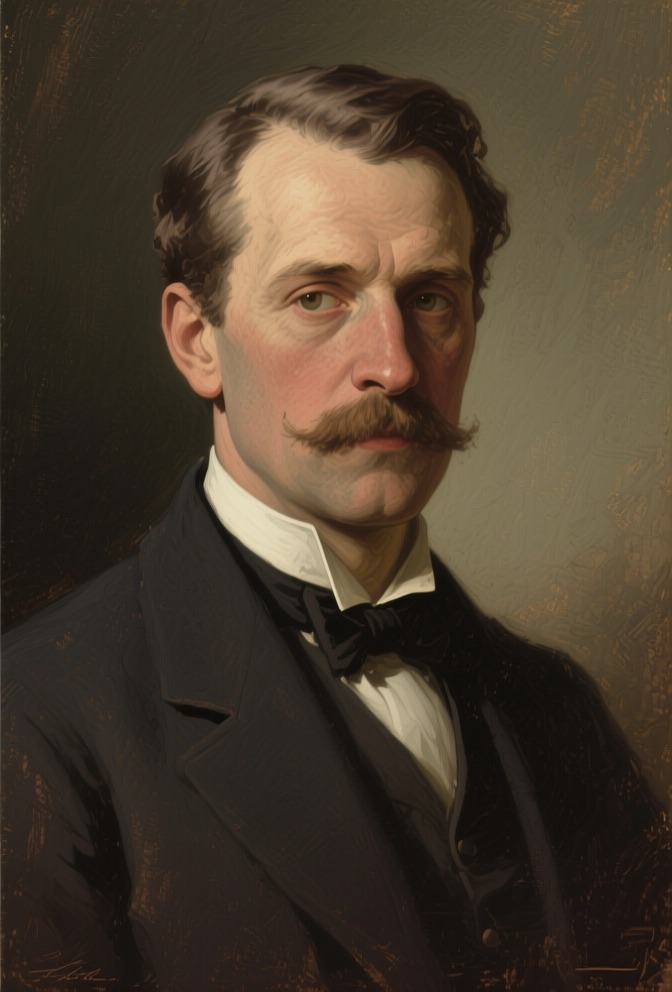
Frank Churchill's dependence on his aunt and uncle, the Churchills of Enscombe, is a defining condition of his life, shaping his movements, his secrecy, and his conduct throughout the novel. Though he is the son of Mr. Weston, he was given up as a child to be raised by his wealthy, childless relatives, and this adoption, combined with his expectation of inheriting their fortune, places him under a financial and social obligation that severely limits his freedom. His inability to visit his father at Randalls for years, the elaborate concealment of his engagement to Jane Fairfax, and the constant deferral of his own wishes to the caprices of Mrs. Churchill all stem from this fundamental state of dependency, making him a figure whose amiable surface is undercut by a lack of independence that Mr. Knightley, in particular, finds contemptible.
Don't Fear the Reaper is a song by the rock band Blue Öyster Cult, quoted in the epigraph of Stephen King's novel The Stand. The lyrics, which appear in the novel's front matter, depict a woman named Mary who is urged not to fear death and who ultimately embraces it by flying away with a mysterious figure. The song's refrain, "Don't fear the Reaper," serves as a thematic counterpoint to the novel's central confrontation with mortality, plague, and the supernatural, and its imagery of a beckoning, otherworldly lover resonates with the novel's portrayal of the dark man, Randall Flagg.
The relationship between Mother Abagail and Nick Andros is the central spiritual and strategic bond of the Boulder Free Zone, forged through shared prophetic dreams and a mutual recognition of divine purpose. Mother Abagail, a 108-year-old prophet, identifies Nick as the leader God has chosen, while Nick, a deaf-mute drifter, becomes her most trusted confidant and the practical architect of the community's survival, a bond that endures even after Nick's death in the Free Zone Committee bombing.
Chris Chambers, the toughest and most loyal member of the gang, is fatally stabbed in a Portland Chicken Delight restaurant in late 1971 while trying to make peace between two arguing strangers. His death, a sudden and senseless act of violence, marks the tragic end of a life defined by a fierce struggle against the poverty and low expectations of his hometown, Castle Rock, and by his deep, transformative friendship with Gordon Lachance.
Rebecca de Winter is the deceased first wife of Maxim de Winter, whose pervasive presence dominates the narrative of Daphne du Maurier's novel. Though dead before the story begins, she is the central antagonist whose memory, possessions, and influence shape the lives of every other character, ultimately driving the plot toward its violent revelations and tragic conclusion.
Rebecca's death is the central, hidden event of the novel, revealed in Maxim's confession to be not a sailing accident but a murder he committed in the cottage on the cove, after which he sank her body in the bay inside her boat, Je Reviens.
Maxim de Winter's blunt, unromantic proposal to the narrator at a breakfast table in Monte Carlo, which simultaneously reveals his need for companionship and his determination to move forward, while also foreshadowing the shadow of Rebecca that will haunt their marriage.
The dining-room at Manderley is the formal space where the household's rigid routines, social hierarchies, and the lingering presence of Rebecca de Winter are most starkly enacted, serving as a stage for the narrator's daily experience of inadequacy and displacement.
Daniel Malvern is the Maine State Police sharpshooter who, during the Placerville High School hostage crisis, fired the single shot that struck Charles Decker in the chest—a shot that would have been fatal had it not been stopped by the steel body of a padlock in Decker's breast pocket. His role is brief but pivotal: the sniper's bullet, intended to end the standoff, instead becomes the event that reveals the extraordinary luck (or fate) protecting Decker and that deepens the crisis by failing to neutralize him.
Jack Goldman is a minor student hostage in Room 16 during Charlie Decker's hostage crisis at Placerville High School. He participates in the collective judgment and attack on Ted Jones, representing the ordinary student who becomes part of the mob.
John Downes Vance, a history teacher at Placerville High School, is the second person killed by Charles Decker during the hostage crisis, shot in the throat when he opens the classroom door after the fire alarm. His death marks the point of no return for Decker and solidifies the crisis as a lethal standoff.
Mr. Carlson is the chemistry and physics teacher at Placerville High School whose near-fatal assault by Charlie Decker with a pipe wrench serves as the immediate precursor to the hostage crisis. His injury, a hairline skull fracture requiring surgery to remove bone splinters from his brain, triggers Charlie's suspension, mandatory psychiatric counseling with Don Grace, and the escalating psychological pressure that culminates in the school shooting. Though he appears only in flashback, Mr. Carlson functions as the story's first victim of Charlie's violence and the catalyst that transforms Charlie from a troubled student into a documented threat, setting the institutional machinery of expulsion and confinement in motion.
Mr. Johnson is a history teacher at Placerville High School who becomes an early witness to and participant in the hostage crisis, first heard lecturing on Hessian mercenaries and later attempting to intervene when Charlie Decker takes Room 16 hostage, only to be driven off by gunfire.
Mrs. Granger is the mother of Carol Granger and the host of the birthday party where Charlie Decker, at age twelve, suffered a humiliating beating from Dicky Cable while wearing a corduroy suit his mother had forced him to wear, an event that crystallized his sense of social rejection and rage.
Mrs. Green is a minor but symbolically significant character at Placerville High School, the typing teacher whose classroom's relentless clickety-clack of typewriters becomes a recurring auditory motif in Charles Decker's narration, representing the monotonous, inescapable machinery of school life and the constant surveillance of the administration.
Randy Earl is a minor character in Stephen King's novel *Rage*, appearing as one of Carl Decker's friends during a hunting trip in the Allagash wilderness. He participates in the crude, misogynistic conversation around the campfire, laughing at jokes about Carl's wife and making a graphic comment about slitting women's noses, which contributes to the toxic masculine environment that traumatizes the young Charlie Decker.
Rita Decker is the mother of Charles Decker and the wife of Carl Decker, whose intellectual independence and fierce protectiveness of her son place her at the center of the family's destructive dynamics. She is a cultured, strong-willed woman who reads serious periodicals, plays the piano, and refuses to be dominated, yet her marriage is marked by coldness and her son's violence is partly a response to the world she and her husband created.
Judge Samuel K. N. Deleavney is the presiding judge at Charles Decker's trial, whose August 27, 1976, verdict of not guilty by reason of insanity commits Decker to indefinite confinement at Augusta State Hospital, a legal judgment that formally strips Decker of accountability and seals his fate as a ward of the state.
Sandra Cross is a senior at Placerville High School whose quiet, dreamy exterior conceals a profound sense of unreality and a secret sexual history that becomes a central revelation during Charlie Decker's hostage crisis. Her testimony about her relationships with Ted Jones and an anonymous boy at the Rollerdrome exposes the gap between her public image as a "Nice Girl" and her private search for authentic experience, making her a key figure in the classroom's psychological unraveling.
Tanis Gannon is a minor but significant student hostage in Room 16 during Charlie Decker's hostage crisis at Placerville High School. She emerges as a voice of practical empathy and quiet moral authority, first by offering Irma Bates concrete advice on self-care during the fight with Grace Stanner, and later by participating in the collective judgment of Ted Jones. Her actions reveal the crisis's power to dissolve social hierarchies and forge unexpected solidarity among the students.
The Decker Home is the family residence in Placerville, Maine, where Charles Decker grew up and where the foundational traumas of his life unfolded. It is the site of his earliest memory of the Creaking Thing, the violent confrontation with his father in the garage, and the domestic tensions that shaped his psychological collapse.
Gania's Refusal to Retrieve the Money is the climactic moral test of Gavrila Ardalionovitch Ivolgin at Nastasia Philipovna's birthday party, where she throws a packet of one hundred thousand roubles into the fire and challenges him to pull it out with his bare hands. His paralysis and eventual faint reveal the precise boundary of his greed and pride, marking the moment his ambition collapses into public humiliation and self-loathing.
Rogojin's murder of Nastasya Philipovna is the catastrophic climax of Dostoevsky's novel, an act of jealous, possessive love that destroys both victim and killer and leaves Prince Myshkin permanently shattered. The killing, carried out with a garden knife in Rogojin's dark house on the night Nastasya fled her own wedding, transforms the three central characters into a tableau of madness, death, and idiocy from which none recovers.
Keller is a retired army officer, boxer, and self-proclaimed man of noble impulses who attaches himself to the prince's circle, oscillating between drunken confessions of theft and offers of chivalrous service.
Nastasia Philipovna Barashkoff is the beautiful, proud, and tormented central female figure of Dostoevsky's The Idiot, whose tragic life and violent death drive the novel's exploration of innocence, suffering, and redemption. Orphaned and seduced as a child by the wealthy libertine Afanasy Ivanovitch Totski, she becomes a kept woman who oscillates between self-loathing and defiant pride, rejecting offers of rescue from both the passionate merchant Parfen Rogojin and the Christ-like Prince Muishkin. Her fate—murdered by Rogojin on the night she was to marry Muishkin—crystallizes the novel's darkest themes: the impossibility of escaping a ruined past, the destructive power of pride, and the failure of pure goodness to save a soul that cannot forgive itself.
Tchebaroff is the unscrupulous lawyer who orchestrates Antip Burdovsky's fraudulent claim against Prince Muishkin, exploiting the prince's gratitude to his deceased benefactor Pavlicheff. He is exposed by Gavrila Ardalionovitch Ivolgin's investigation, which proves Burdovsky is not Pavlicheff's son, and his machinations ultimately collapse, revealing him as a rogue motivated by profit.
Vera Lebedeff is the eldest daughter of Lukian Timofeyovitch Lebedeff, a quiet, kind-hearted young woman who becomes one of Prince Muishkin's most loyal and perceptive companions during his stay at Pavlofsk. She acts as a discreet messenger between the prince and Aglaya Epanchin, and her deep, unspoken sympathy for the prince's suffering marks her as one of the few characters in the novel whose goodness is entirely without self-interest.
Apres moi le deluge ("After me the deluge") is a French motto that Hippolyte Terentieff places at the head of his written confession, "My Necessary Explanation," which he reads aloud at Prince Muishkin's birthday gathering. The phrase crystallizes the nihilistic, self-justifying logic of a dying man who, having concluded that his remaining weeks make all moral and social bonds meaningless, asserts the right to act without regard for consequences. In the novel, the motto becomes a compressed emblem of the existential crisis that drives Hippolyte's failed suicide attempt and his bitter indictment of a world he believes has already abandoned him.
Berlin appears in The Idiot as a transit point and a symbolic threshold, marking the prince's passage from his Swiss treatment back into Russian society and serving as a site where he first articulates his longing for connection with his homeland.
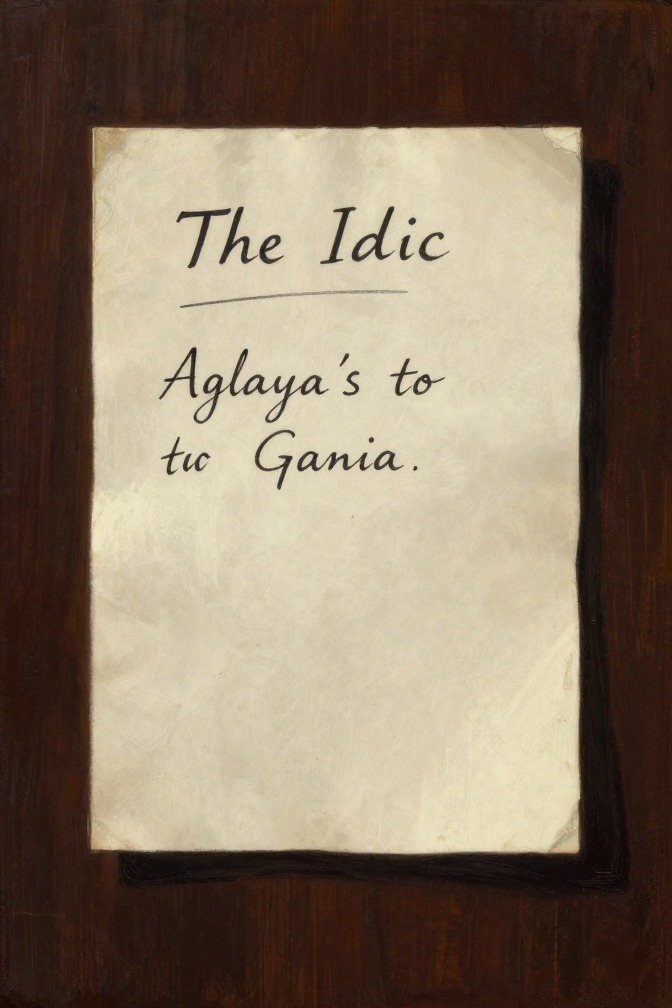
Aglaya's note to Gania is a brief, decisive letter summoning Gavrila Ardalionovitch Ivolgin to a secret early-morning meeting at the green bench in the park, a rendezvous that exposes the tangled romantic and social ambitions surrounding her and reveals her capacity for bold, independent action.