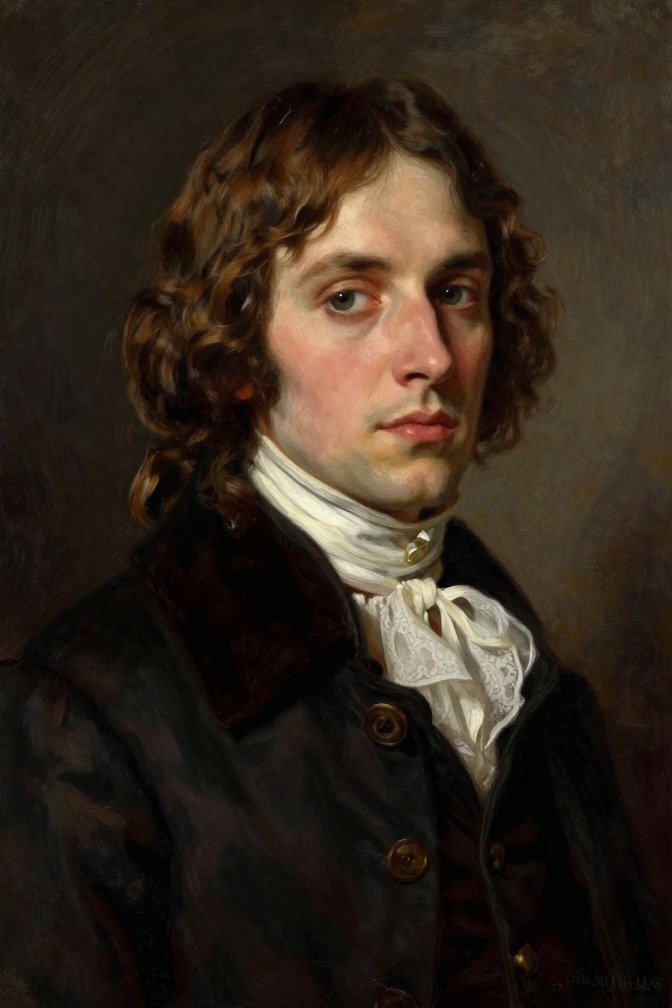
Judge Samuel K. N. Deleavney is the presiding judge at Charles Decker's trial, whose August 27, 1976, verdict of not guilty by reason of insanity commits Decker to indefinite confinement at Augusta State Hospital, a legal judgment that formally strips Decker of accountability and seals his fate as a ward of the state.
Sandra Cross is a senior at Placerville High School whose quiet, dreamy exterior conceals a profound sense of unreality and a secret sexual history that becomes a central revelation during Charlie Decker's hostage crisis. Her testimony about her relationships with Ted Jones and an anonymous boy at the Rollerdrome exposes the gap between her public image as a "Nice Girl" and her private search for authentic experience, making her a key figure in the classroom's psychological unraveling.
Tanis Gannon is a minor but significant student hostage in Room 16 during Charlie Decker's hostage crisis at Placerville High School. She emerges as a voice of practical empathy and quiet moral authority, first by offering Irma Bates concrete advice on self-care during the fight with Grace Stanner, and later by participating in the collective judgment of Ted Jones. Her actions reveal the crisis's power to dissolve social hierarchies and forge unexpected solidarity among the students.
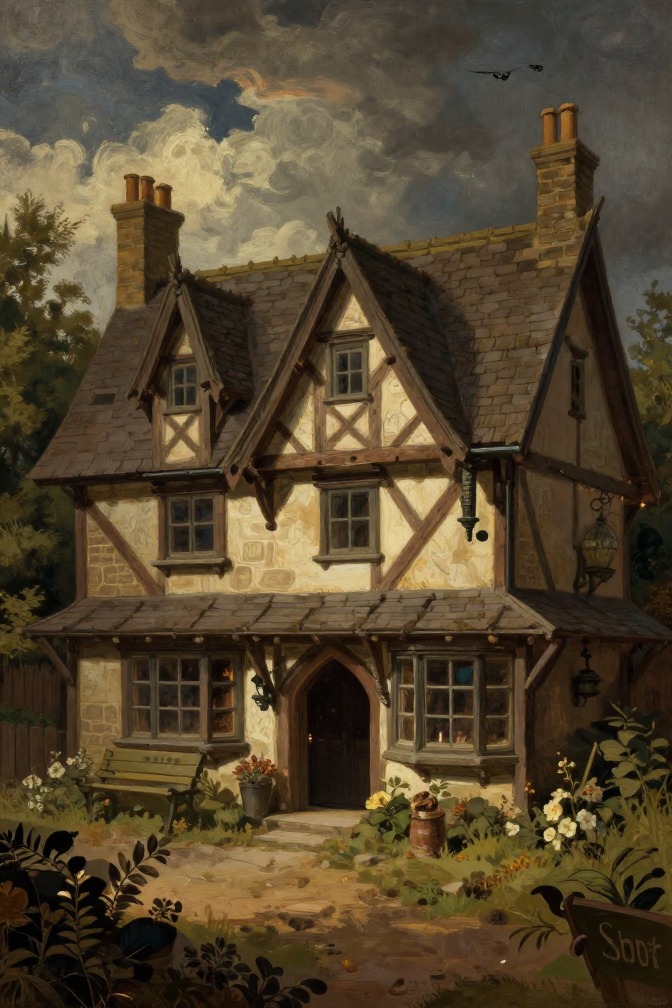
The Decker Home is the family residence in Placerville, Maine, where Charles Decker grew up and where the foundational traumas of his life unfolded. It is the site of his earliest memory of the Creaking Thing, the violent confrontation with his father in the garage, and the domestic tensions that shaped his psychological collapse.
Gania's Refusal to Retrieve the Money is the climactic moral test of Gavrila Ardalionovitch Ivolgin at Nastasia Philipovna's birthday party, where she throws a packet of one hundred thousand roubles into the fire and challenges him to pull it out with his bare hands. His paralysis and eventual faint reveal the precise boundary of his greed and pride, marking the moment his ambition collapses into public humiliation and self-loathing.
Rogojin's murder of Nastasya Philipovna is the catastrophic climax of Dostoevsky's novel, an act of jealous, possessive love that destroys both victim and killer and leaves Prince Myshkin permanently shattered. The killing, carried out with a garden knife in Rogojin's dark house on the night Nastasya fled her own wedding, transforms the three central characters into a tableau of madness, death, and idiocy from which none recovers.
Keller is a retired army officer, boxer, and self-proclaimed man of noble impulses who attaches himself to the prince's circle, oscillating between drunken confessions of theft and offers of chivalrous service.
Nastasia Philipovna Barashkoff is the beautiful, proud, and tormented central female figure of Dostoevsky's The Idiot, whose tragic life and violent death drive the novel's exploration of innocence, suffering, and redemption. Orphaned and seduced as a child by the wealthy libertine Afanasy Ivanovitch Totski, she becomes a kept woman who oscillates between self-loathing and defiant pride, rejecting offers of rescue from both the passionate merchant Parfen Rogojin and the Christ-like Prince Muishkin. Her fate—murdered by Rogojin on the night she was to marry Muishkin—crystallizes the novel's darkest themes: the impossibility of escaping a ruined past, the destructive power of pride, and the failure of pure goodness to save a soul that cannot forgive itself.
Tchebaroff is the unscrupulous lawyer who orchestrates Antip Burdovsky's fraudulent claim against Prince Muishkin, exploiting the prince's gratitude to his deceased benefactor Pavlicheff. He is exposed by Gavrila Ardalionovitch Ivolgin's investigation, which proves Burdovsky is not Pavlicheff's son, and his machinations ultimately collapse, revealing him as a rogue motivated by profit.
Vera Lebedeff is the eldest daughter of Lukian Timofeyovitch Lebedeff, a quiet, kind-hearted young woman who becomes one of Prince Muishkin's most loyal and perceptive companions during his stay at Pavlofsk. She acts as a discreet messenger between the prince and Aglaya Epanchin, and her deep, unspoken sympathy for the prince's suffering marks her as one of the few characters in the novel whose goodness is entirely without self-interest.
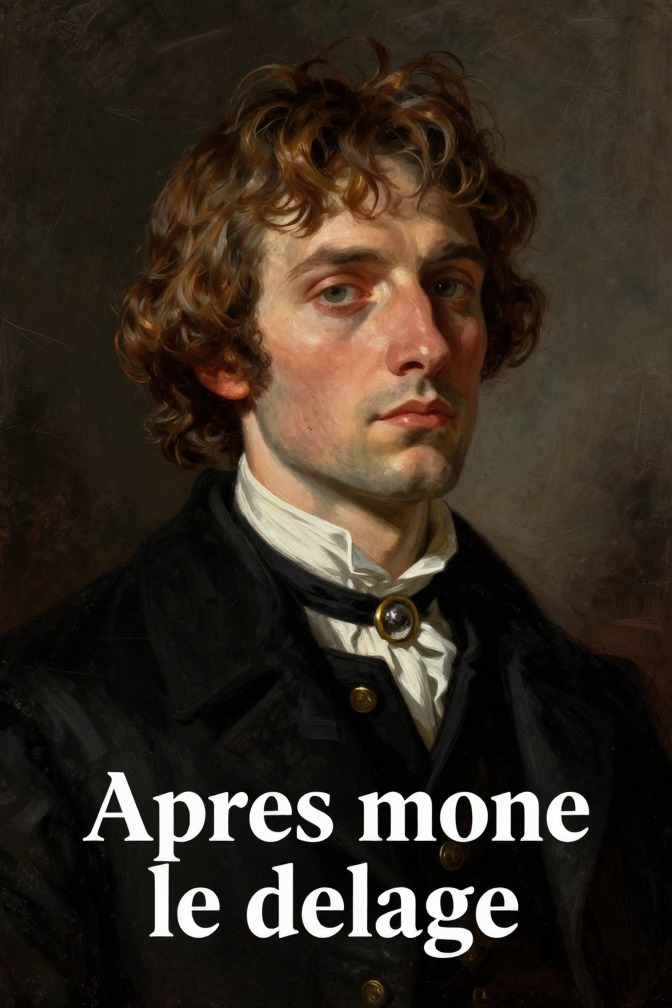
Apres moi le deluge ("After me the deluge") is a French motto that Hippolyte Terentieff places at the head of his written confession, "My Necessary Explanation," which he reads aloud at Prince Muishkin's birthday gathering. The phrase crystallizes the nihilistic, self-justifying logic of a dying man who, having concluded that his remaining weeks make all moral and social bonds meaningless, asserts the right to act without regard for consequences. In the novel, the motto becomes a compressed emblem of the existential crisis that drives Hippolyte's failed suicide attempt and his bitter indictment of a world he believes has already abandoned him.
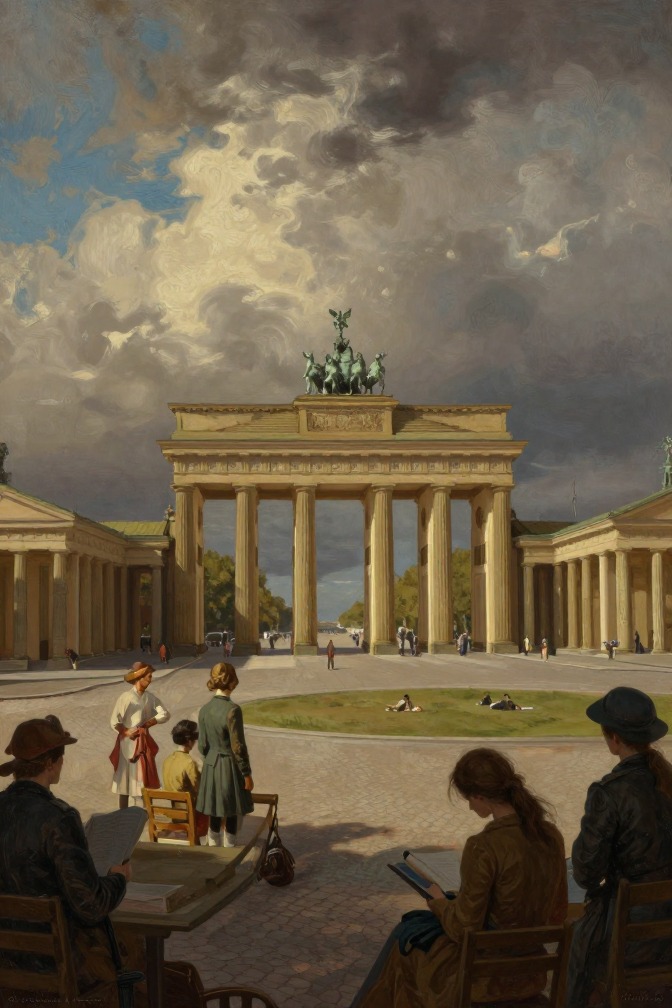
Berlin appears in The Idiot as a transit point and a symbolic threshold, marking the prince's passage from his Swiss treatment back into Russian society and serving as a site where he first articulates his longing for connection with his homeland.
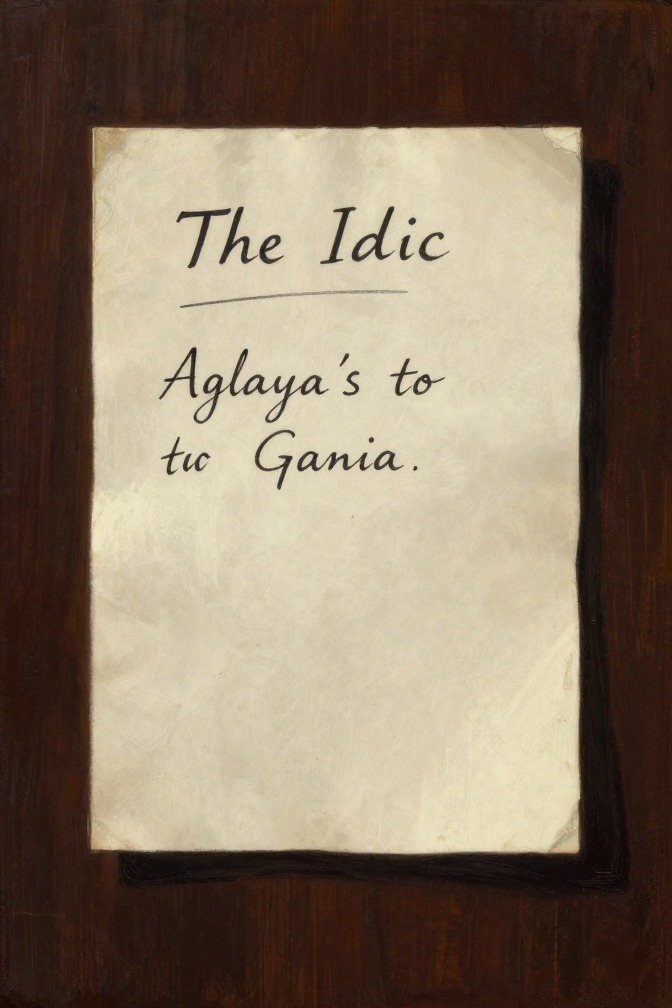
Aglaya's note to Gania is a brief, decisive letter summoning Gavrila Ardalionovitch Ivolgin to a secret early-morning meeting at the green bench in the park, a rendezvous that exposes the tangled romantic and social ambitions surrounding her and reveals her capacity for bold, independent action.
Ganya Ivolgin and Aglaya Epanchin's relationship is a central but ultimately frustrated thread in The Idiot, defined by Aglaya's contemptuous rejection of Ganya's ambitious suit and her use of him as a foil to test Prince Myshkin's feelings. Ganya's pursuit of Aglaya is driven by social ambition and a desire to escape his family's disgrace, while Aglaya treats him with alternating mockery and cold indifference, culminating in a humiliating dismissal that exposes the mercenary foundations of his proposal.
Pavlovsk is a suburban destination outside Petersburg that appears in Fyodor Dostoevsky's "White Nights" as a symbol of the social world from which the Dreamer is excluded, and as a casual remark that shatters his elaborate fantasy life.
Godland is one of the small, ephemeral provinces that sprang up along the Great Southern Highway in the chaotic aftermath of the Nightfall eclipse, a territorial fragment defined by the paranoia of the Search and the struggle for control of fire.
The Eclipse, also called Nightfall, is the total eclipse of the red sun Dovim by the invisible satellite Kalgash Two, an event that occurs once every 2,049 years and plunges the entire world of Kalgash into complete Darkness, triggering universal madness and catastrophic fires.
Alisher Ganiev is a young Light Magician from Samarkand who enters the Moscow Night Watch after his father, a devona (a Central Asian Other), is killed by Day Watch agents while delivering a crucial artifact—the Chalk of Destiny—to Gesar. His arrival triggers a violent confrontation with the Dark Ones and sets in motion the climactic attempt to rewrite a human destiny.
In Stephen King's *Insomnia*, the Centurions are a term used by the deranged Ed Deepneau to designate the supposed enemies of his anti-abortion crusade—a list of individuals he believes are complicit in a vast conspiracy to murder unborn children and harvest fetal tissue. The label functions as a paranoid, delusional framework that transforms ordinary citizens, including Ralph Roberts, into targets for violence, and it becomes a key element in the escalating conflict that drives the novel's plot.
Juniper Hill is a psychiatric hospital in Maine where Charlie Pickering, a pro-life extremist who attacked Ralph Roberts, was sent for treatment after a failed firebombing attempt at WomanCare. The institution represents the legal system's attempt to manage mental illness within the context of politically motivated violence, though its effectiveness is questioned when Pickering is released and resumes his violent activities.
Cho Chang is a Ravenclaw student at Hogwarts who was Harry Potter's first romantic interest, a relationship that ended awkwardly after their disastrous date at Madam Puddifoot's Tea Shop and the emotional fallout from Cedric Diggory's death. By the events of the sixth year, she has moved on, but her presence continues to evoke complex feelings in Harry, serving as a benchmark for his emotional growth and his evolving understanding of love and loss.
Madam Malkin is the proprietor of Madam Malkin's Robes for All Occasions in Diagon Alley, a robe-maker who serves Hogwarts students and their families. She is a minor but recurring character whose shop becomes a site of tense encounters between Harry Potter and Draco Malfoy, and whose professional neutrality is tested by the escalating conflict of the Second Wizarding War.
Mr. Ollivander, the preeminent wandmaker of the British wizarding world, vanishes from his Diagon Alley shop under mysterious circumstances during the summer before Harry Potter's sixth year, an event that signals the escalating reach of Lord Voldemort's forces and creates a practical and symbolic crisis for the wizarding community.
Pansy Parkinson is a Slytherin sixth-year student at Hogwarts who serves as Draco Malfoy's girlfriend and constant companion, embodying the snobbish, cruel, and sycophantic values of pure-blood supremacy while remaining a largely peripheral figure whose primary narrative function is to reflect Malfoy's status and to provide a foil for Hermione Granger and Ginny Weasley.
The Shield Hat is a defensive magical object invented and sold by Fred and George Weasley at their joke shop, Weasleys' Wizard Wheezes, designed to repel minor to moderate jinxes and hexes. It represents the twins' transition from pure pranksters to serious entrepreneurs capitalizing on the wartime demand for protective gear, and it becomes a surprising commercial success when the Ministry of Magic itself places a bulk order.
The Dark Mark is the magical symbol of Lord Voldemort and his Death Eaters, a blazing green skull with a serpent protruding from its mouth like a tongue, conjured into the sky to mark a murder or signal a Death Eater's presence. It serves as both a brand of allegiance burned into the left forearm of every Death Eater and a floating beacon of terror that announces their deeds to the world. Throughout Harry Potter and the Half-Blood Prince, the Mark functions as a barometer of Voldemort's rising power, a tool of communication and intimidation, and the final, devastating signal that Dumbledore has been killed.
The Gryffindor Common Room is the central social and domestic hub for Gryffindor House at Hogwarts, a warmly lit, circular tower room whose physical and symbolic character—its cozy fire, deep armchairs, and the ever-present portrait of the Fat Lady—serves as the primary setting for the private conversations, emotional confrontations, and strategic planning that define the sixth-year narrative.
The Hog's Head is a dim, grimy pub in Hogsmeade that serves as a discreet meeting place for those operating on the margins of wizarding society, most notably hosting the interview between Albus Dumbledore and Sybill Trelawney during which the prophecy about Harry Potter and Lord Voldemort was made, and later serving as the cover for Dumbledore's departure on the night of his death.
The Fake Galleon is a set of enchanted coins used by Draco Malfoy to communicate secretly with Madam Rosmerta, who was under the Imperius Curse, as part of his plan to assassinate Albus Dumbledore. These coins, adapted from the method invented by Dumbledore's Army, allowed Malfoy to issue instructions without being detected by the school's security measures.
The Death Eaters are Lord Voldemort's followers, a terrorist organization of Dark wizards and witches who operate in secret to spread terror, enforce pure-blood supremacy, and aid Voldemort's quest for immortality and domination over both the Wizarding and Muggle worlds.