Edward Wentworth, the former curate of Monkford and brother of Captain Frederick Wentworth, is a minor but significant figure in Persuasion, whose past residence in Somersetshire provides the initial link between the Croft family and the Elliots, and whose earlier acquaintance with Anne Elliot forms a crucial part of the backstory that shapes the novel's central romance.
Louisa Musgrove is a spirited, determined young woman whose fall from the Cobb at Lyme precipitates a crisis that reshapes the romantic fates of several characters, ultimately leading to her unexpected engagement to Captain Benwick.
Ampleforth, a minor poet in the Ministry of Truth's Records Department, is arrested for preserving the word "God" in a Kipling rhyme and is last seen being led to Room 101; his fate illustrates how the Party destroys any private aesthetic or intellectual standard.
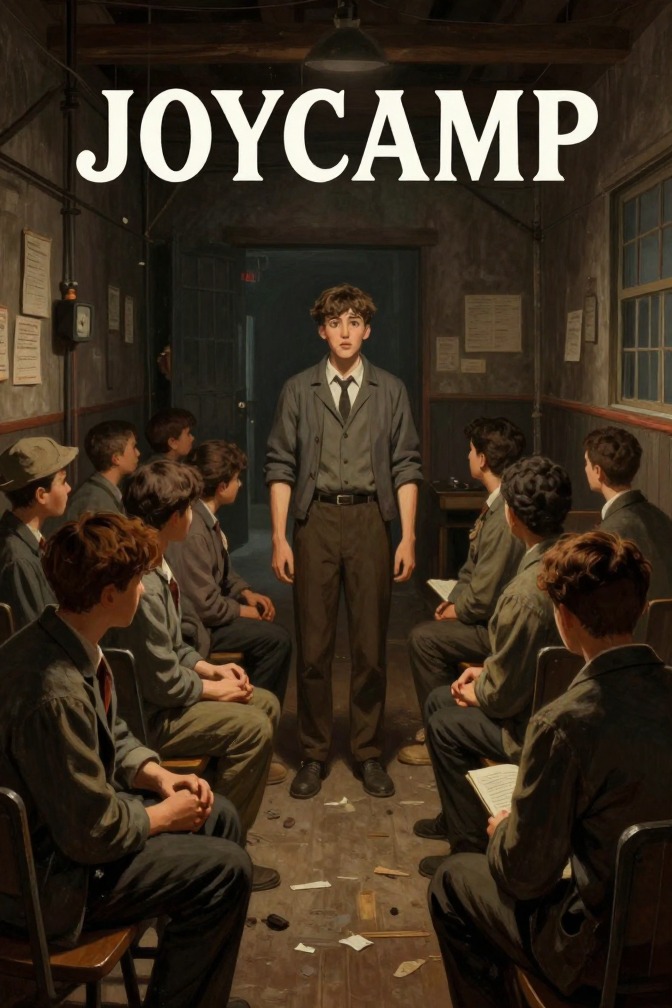
Joycamp is a Newspeak B-vocabulary word meaning "forced-labour camp," one of the invented language's clearest euphemisms, built to make the terror of Oceania's punishment camps sound like a holiday.
The place where there is no darkness is the phrase O'Brien speaks to Winston Smith in a dream seven years before the novel's action. It functions as a promise of secret alliance, a prophecy of meeting, and finally as the name of the windowless Ministry of Love cell where Winston is re-educated and betrayed. The phrase condenses the novel's central paradox: the longing for understanding is fulfilled only as total exposure.
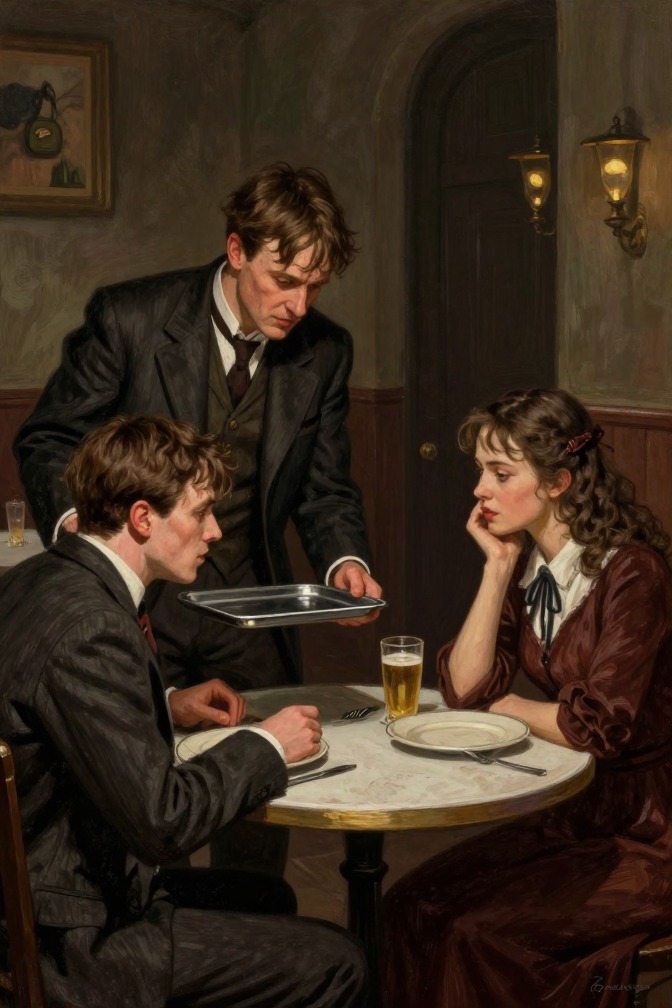
The canteen meeting is the covert exchange in the Ministry of Truth's basement lunchroom where Winston Smith and the dark-haired girl from the Fiction Department, after a week of failed attempts, arrange their first secret rendezvous in a few whispered sentences between spoonfuls of stew. It converts their correspondence-by-note into a planned tryst at Victory Square, establishes their method of anonymous contact, and sets in motion the affair that leads to the Golden Country, the room above Mr Charrington's shop, and their arrest.
Winston Smith buys a thick quarto-sized blank book from a junk shop for two dollars fifty, an apparently trivial purchase that becomes the material basis of his diary and the first concrete act of rebellion in the novel.
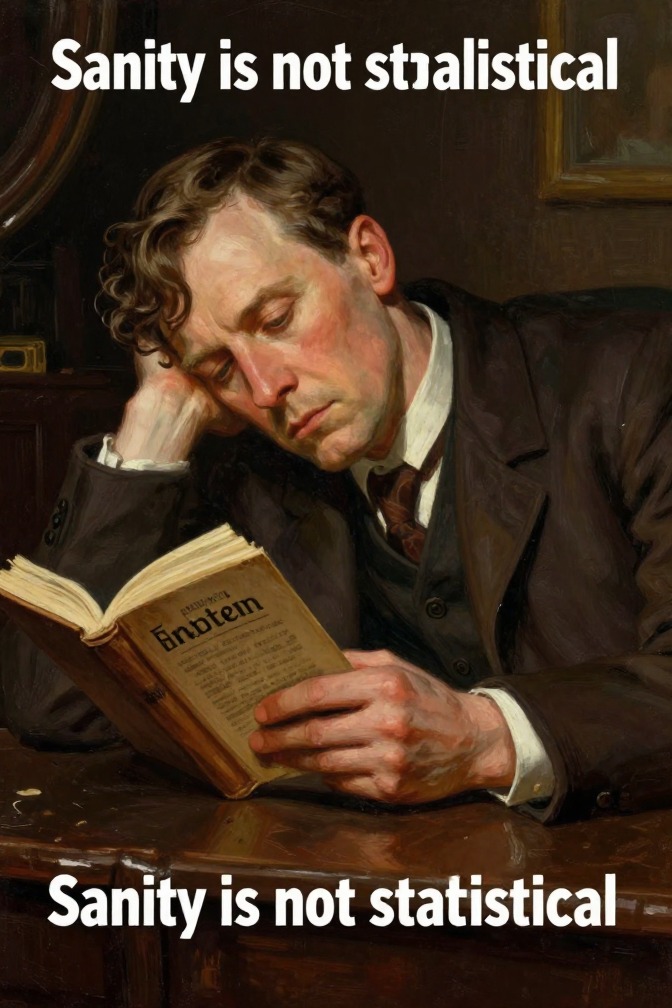
Sanity is not statistical is Winston Smith's murmured credo after reading Emmanuel Goldstein's forbidden book, asserting that a lone truthful mind can remain sane against the whole world; the Ministry of Love later inverts it into Sanity was statistical, marking the destruction of his rebellion.
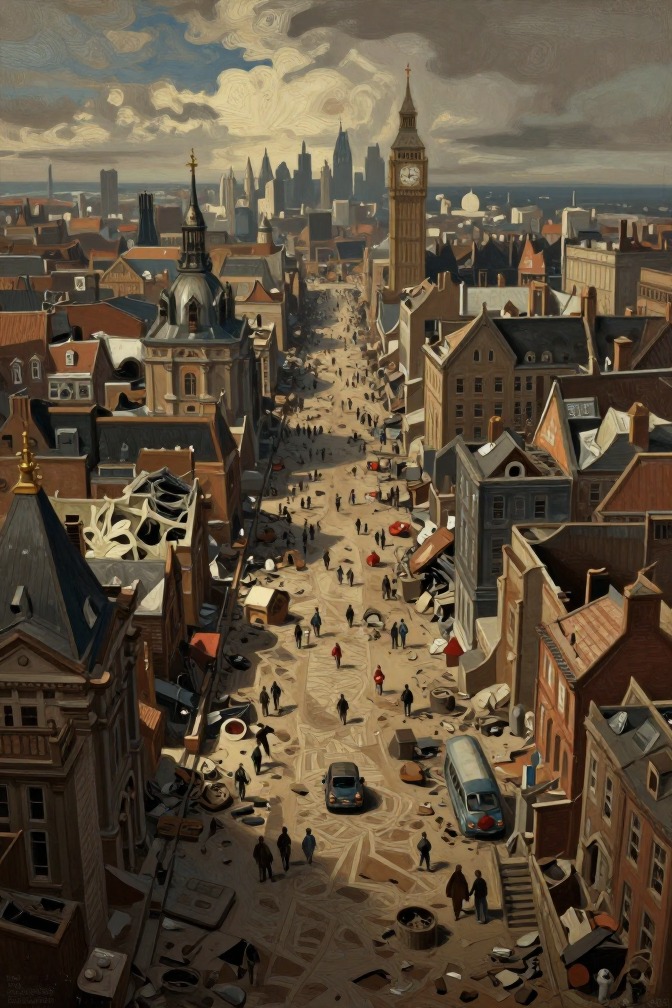
Airstrip One is the province of Oceania in which Nineteen Eighty-Four is set, with London as its chief city and the administrative heart of the superstate. Formerly England or Britain, it is the stage for Winston Smith's rebellion and destruction.
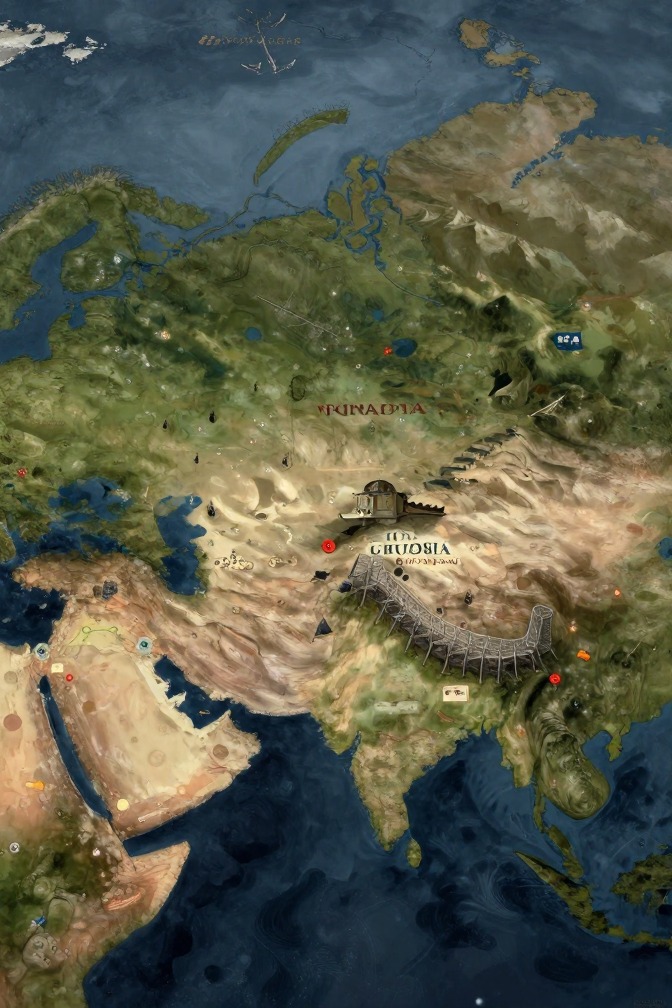
Eurasia is one of the three rival super-states in Nineteen Eighty-Four, covering the northern Eurasian land-mass and serving at the novel's opening as Oceania's designated enemy. Its image is manufactured by propaganda, its geography is rooted in wartime geopolitics, and its ever-shifting status demonstrates the Party's power to control memory and rewrite the past.
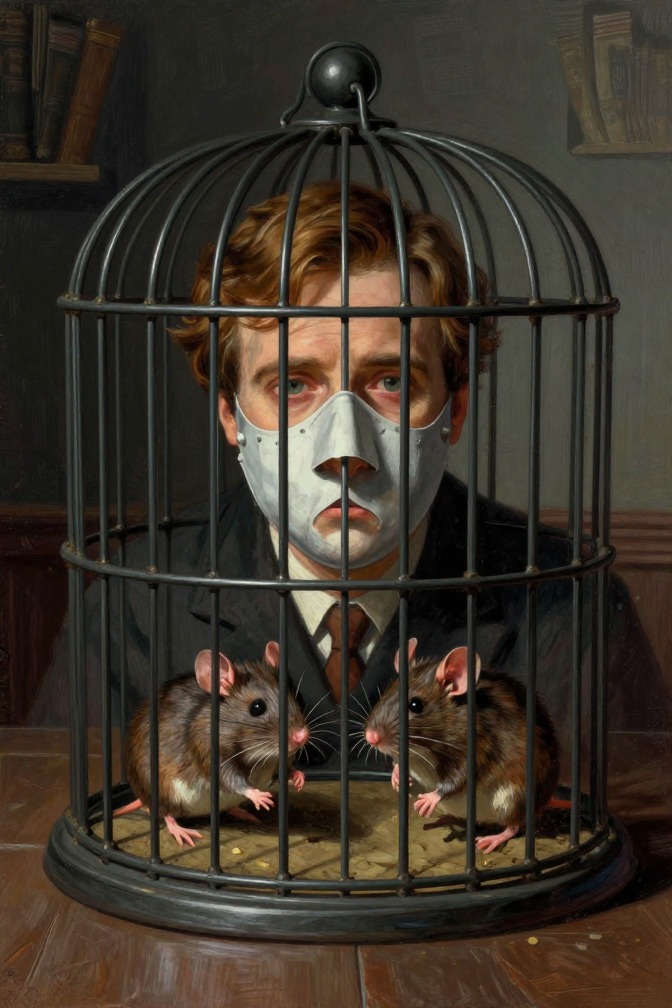
The Rat Cage is a torture device used in Room 101 of the Ministry of Love, consisting of an oblong wire cage with a fencing-mask attachment and two rats, employed by O'Brien to force Winston Smith to betray Julia by exploiting his phobia of rats.
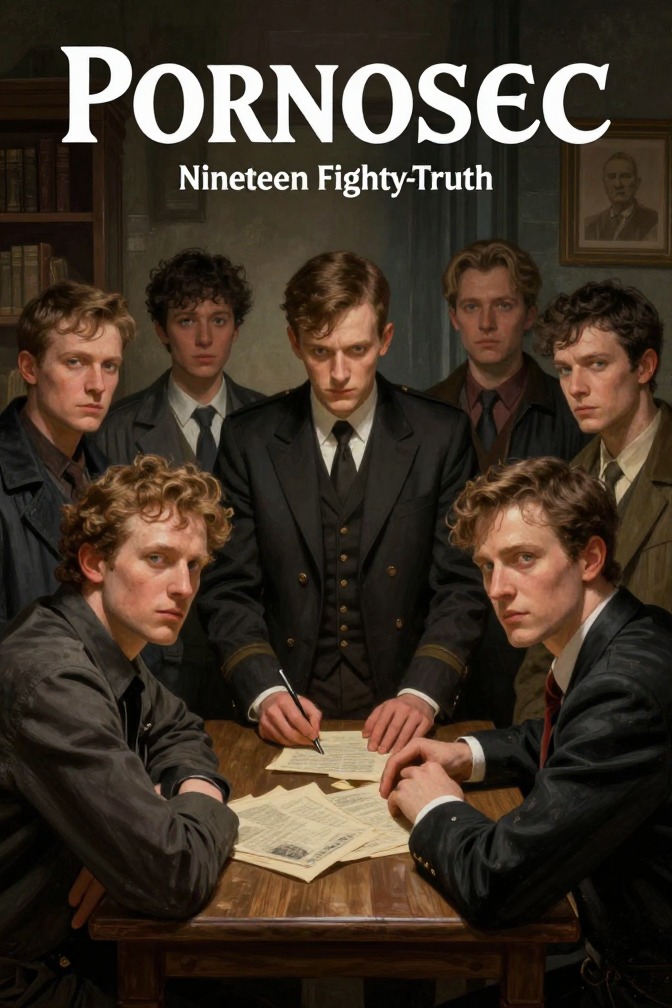
Pornosec is a sub-section of the Fiction Department in the Ministry of Truth of Oceania, dedicated to producing the lowest grade of pornography for distribution among the proles. Its existence illustrates the Party's doublethink: officially puritanical, yet secretly manufacturing sexual content to pacify the lower classes while Party members are forbidden from viewing it.
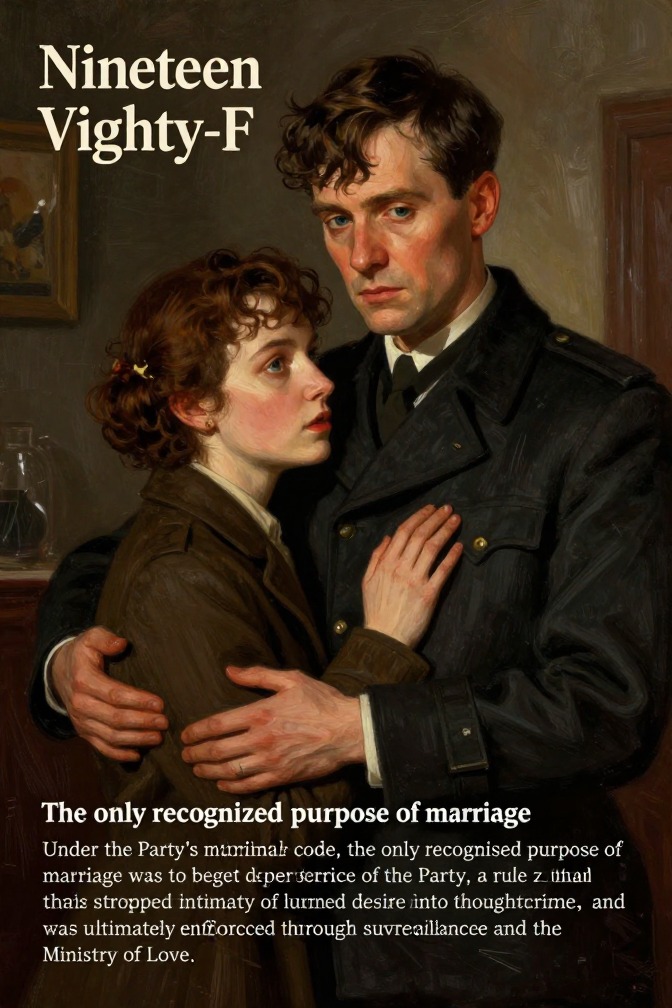
An entry explaining the Party rule that marriage exists solely to produce children for the state, its role in the Party's assault on sexual pleasure and the family, its enforcement through surveillance and terror, its effects on Winston Smith's marriage to Katharine and on Julia's rebellion, and its place in the novel's critique of totalitarian power.
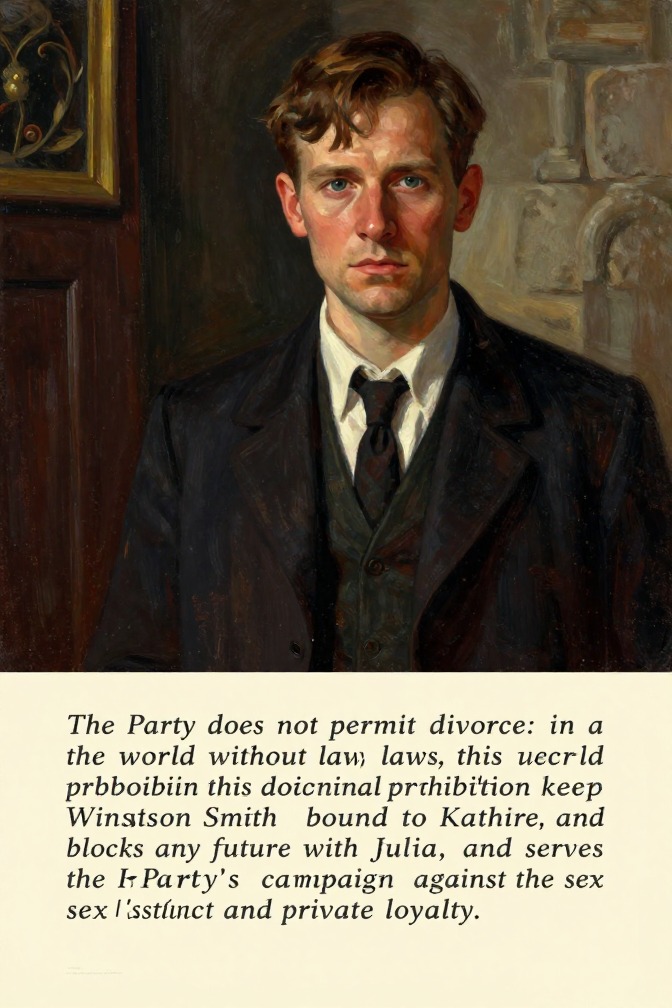
The Party does not permit divorce, a rule that locks Party members into marriages they cannot dissolve, though it tacitly encourages separation when no children exist. This prohibition is one of the many instruments by which the Party regulates personal life, suppresses emotional bonds, and ensures that all loyalties ultimately run toward the collective.
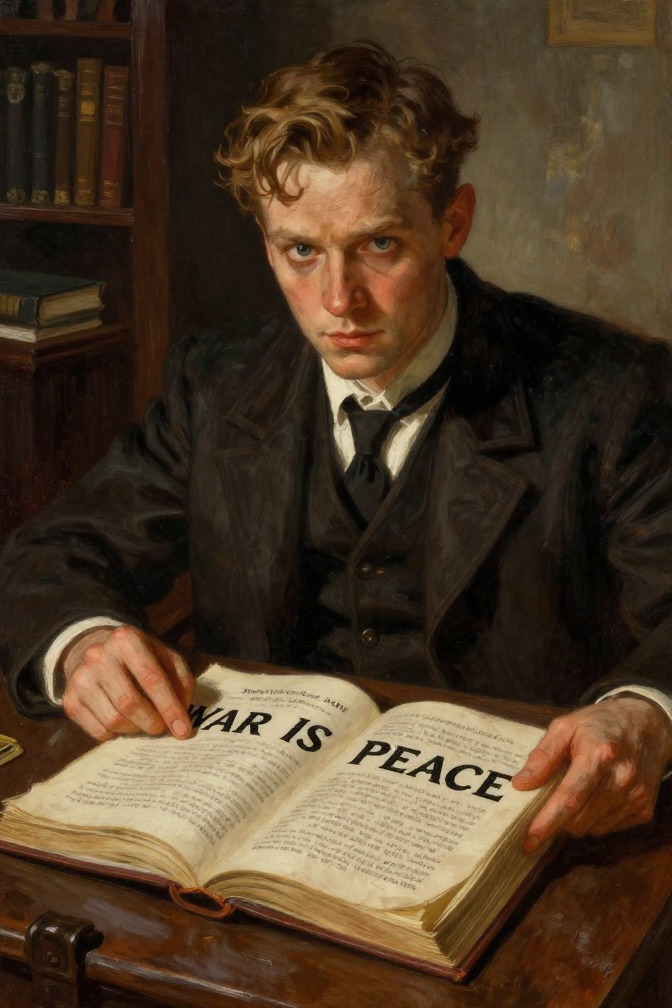
War is Peace is one of the three slogans of the Party in Oceania, displayed on the Ministry of Truth and repeated at moments of collective ritual. It condenses the Party's central doctrine that perpetual war is the machinery of peace and hierarchy, and it becomes the title of a chapter in Emmanuel Goldstein's forbidden book. The slogan's paradox is finally vindicated inside the Ministry of Love, where O'Brien reveals that the Party seeks power for its own sake, and in the café where Winston Smith learns to love Big Brother.
1984 is the fictional present of George Orwell's Nineteen Eighty-Four, the year in which Winston Smith opens his diary and dates its first page April 4th, 1984. Defined by surveillance, rationing and permanent war, the year is so thoroughly controlled by the Party's falsification of records that its own date cannot be verified — which makes the act of inscribing it a rebellion and the pivot of the novel's meditation on time.
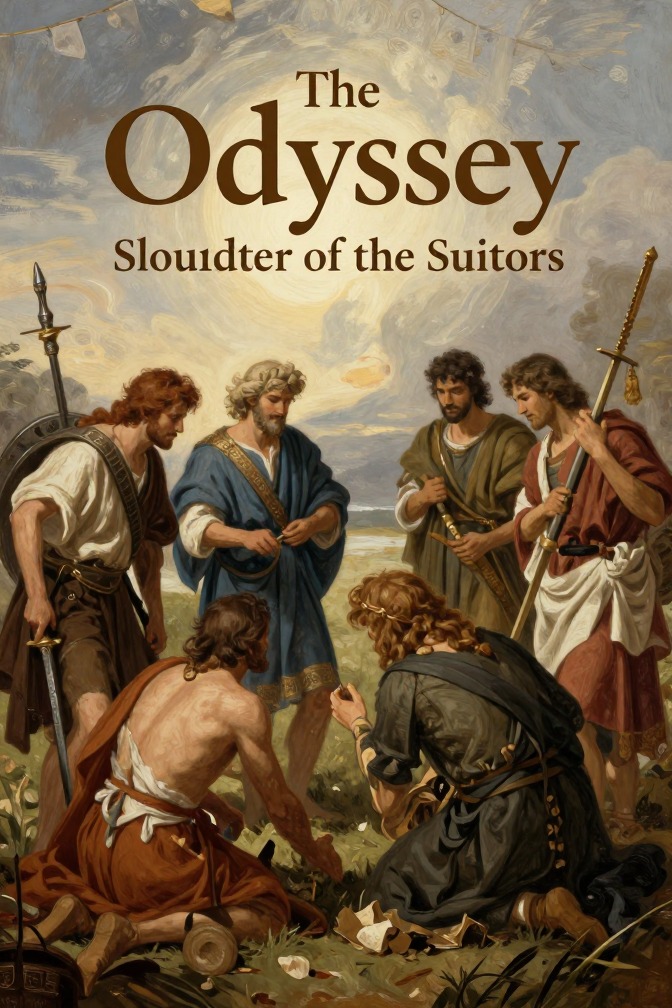
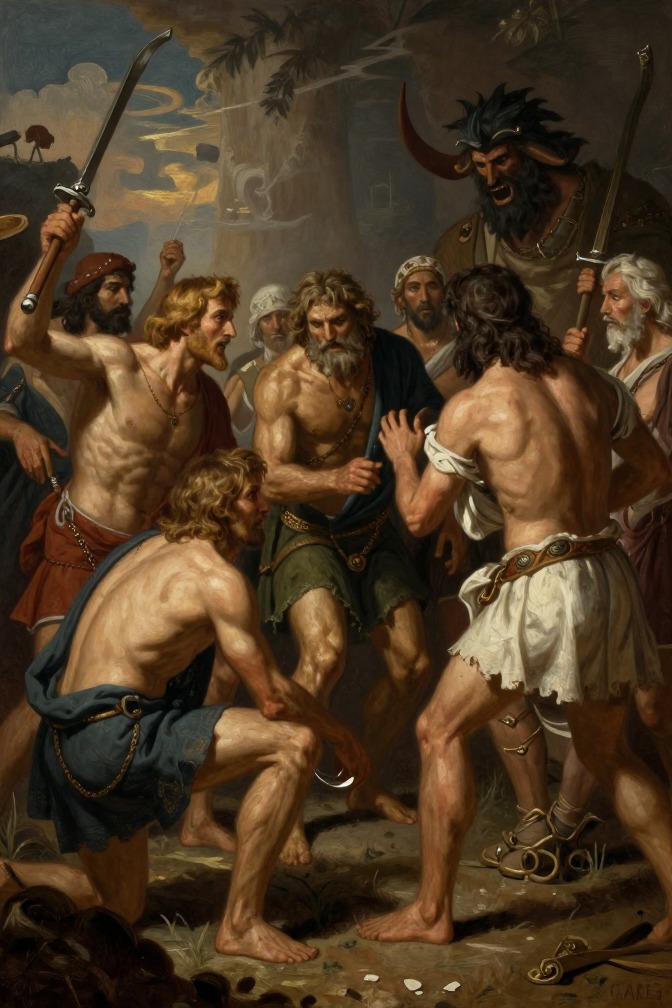
The Slaughter of the Suitors is the climactic mass execution in which Odysseus, with the help of Telemachus, Eumaeus, and Philoetius, kills all 108 suitors who have been consuming his estate and courting Penelope, thereby reclaiming his household and restoring order to Ithaca.
Andraemon is a minor figure in the Odyssey, known as the father of Thoas, the Aetolian warrior who plays a small but telling role in a story Ulysses tells Eumaeus to test his hospitality and to illustrate the cunning that once saved him from the cold during a night ambush before Troy.
Cleitus is a minor figure in the Odyssey, mentioned only in the Catalogue of Heroines during Odysseus's visit to the Underworld. He is the son of the seer Mantius and a grandson of the legendary prophet Melampus. His sole narrative significance lies in his fate: the dawn goddess Eos, throned in gold, carried him off for his beauty's sake, granting him immortality among the gods. This brief episode, embedded in Odysseus's account of the ghosts of famous women, serves as a compressed example of divine favor and mortal beauty rewarded with translation out of the human world.
Deiphobus is a Trojan prince, son of King Priam and brother of Hector, who becomes the husband of Helen after Paris's death and is killed during the sack of Troy; his house is the site of the fiercest fighting on the night the city falls, and his death is recounted by Menelaus and by Odysseus in his own narrative, marking him as a central figure in the Trojan War's final catastrophe.
Dmetor, son of Iasus, is a minor figure in the Odyssey, a wealthy Cypriot king who purchases the disguised Odysseus as a slave after the Egyptian raid, and whose name appears only in the false tale Odysseus tells Antinous during the beggar's confrontation in the suitors' hall.
Euanthes is the father of Maron, the priest of Apollo at Ismarus whose life Odysseus spares during the sack of the Cicons' city, and who in gratitude gives Odysseus the exceptionally strong wine that later enables him to intoxicate and blind the Cyclops Polyphemus.
Hephaestus, the lame god of fire and metalworking, appears in the Odyssey primarily as a craftsman whose divine artifacts—the silver mixing bowl given to Menelaus, the gold and silver mastiffs guarding Alcinous's palace, and the golden figures of youths lighting the Phaeacian banquet hall—embody the poem's fascination with material splendor and the power of skilled making. His most vivid narrative role comes in Demodocus's song of the love affair between Ares and Aphrodite, where Hephaestus, the cuckolded husband, uses his craft to forge unbreakable chains that trap the lovers in bed, turning his physical lameness into a strategic advantage and provoking the laughter of the Olympian gods. Through his creations and his story, Hephaestus functions as a figure who transforms vulnerability into mastery, linking the themes of deception, justice, and the social value of artisanal labor that run through the epic.
Pheidon, king of the Thesprotians, is a minor but strategically important figure in Odysseus's fabricated narrative of his wanderings. He appears only in the false tales Odysseus tells Eumaeus and Penelope, serving as a crucial source of the hopeful news that Odysseus is alive, wealthy, and about to return home. Pheidon's role is entirely instrumental: he provides the credibility Odysseus needs to test the loyalty of his servants and to prepare Penelope for the possibility of her husband's return, while also advancing the poem's themes of hospitality, wealth, and the power of persuasive storytelling.
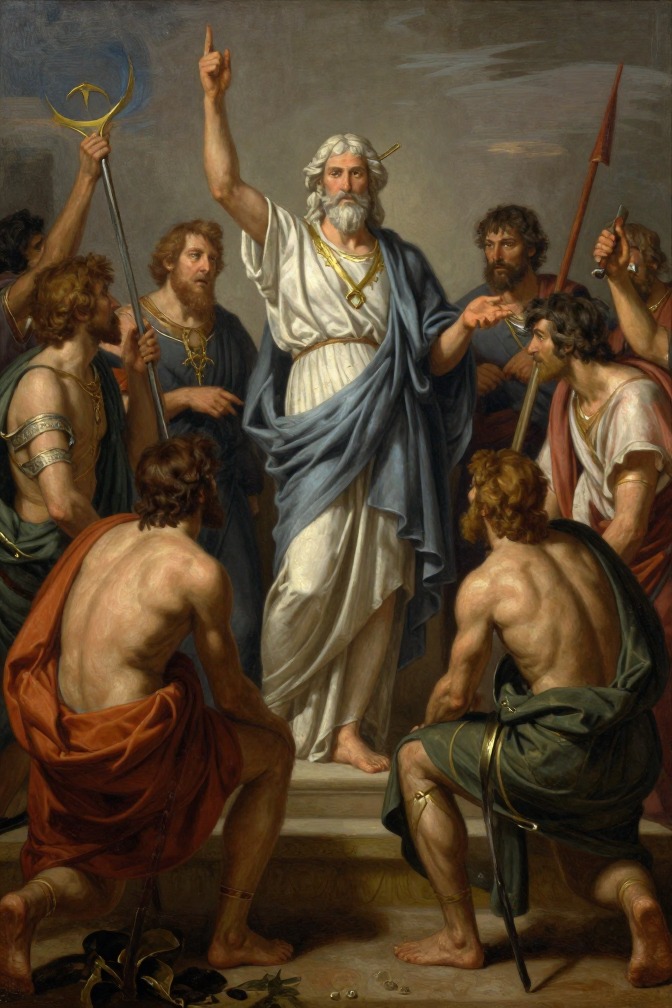
The Council of the Gods is the inaugural divine assembly of the Odyssey, in which Zeus, Athena, and the other Olympians debate the fate of Odysseus and set in motion the entire plot of his homecoming and the punishment of the suitors.
The Laestrygonians Episode is a brief but devastating encounter in Odysseus's wanderings, in which a race of cannibal giants annihilates eleven of his twelve ships and their crews, leaving only Odysseus's own vessel to escape. It marks the most catastrophic single loss of life in the hero's entire journey and underscores the theme of helplessness before savage, lawless forces.
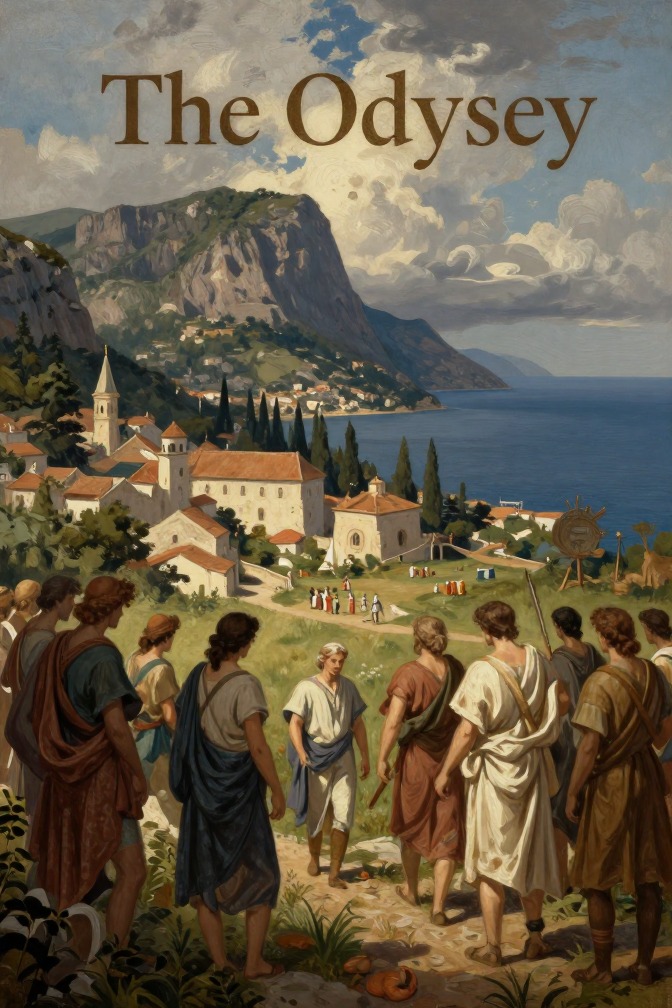
Ithaca, the rugged island kingdom of Odysseus, is the central geographical and emotional locus of the Odyssey, representing the hero's ultimate goal of homecoming (nostos) and the site of his final, violent reclamation of order. The poem constructs Ithaca not merely as a physical place but as a complex symbol of identity, loyalty, and rightful rule, contrasting its rocky, goat-friendly terrain with the fertile, exotic lands Odysseus visits, while its domestic spaces—the palace, the storeroom, the bedchamber—become the stage for the suitors' transgression and Odysseus's long-deferred revenge.
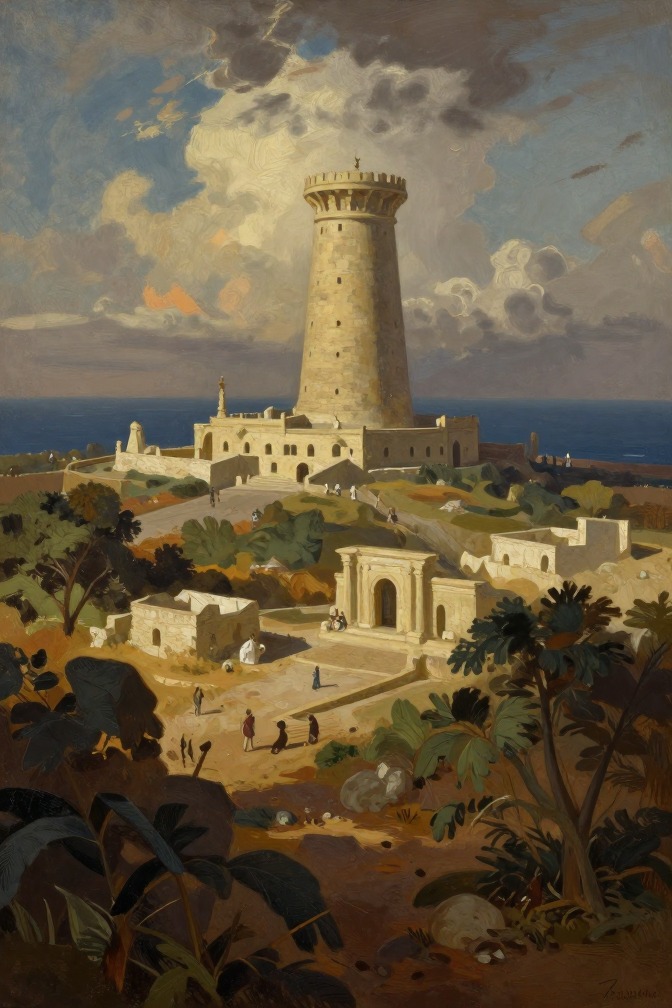
Pharos is the island off the coast of Egypt where Menelaus was stranded for twenty days on his return from Troy, and where he captured the shape-shifting sea god Proteus to learn how to break the divine anger that held him there.
Pylos, the coastal city of King Nestor on the western Peloponnese, serves as the first destination of Telemachus's quest for news of his father Odysseus and as a model of orderly, pious kingship in contrast to the chaos in Ithaca.
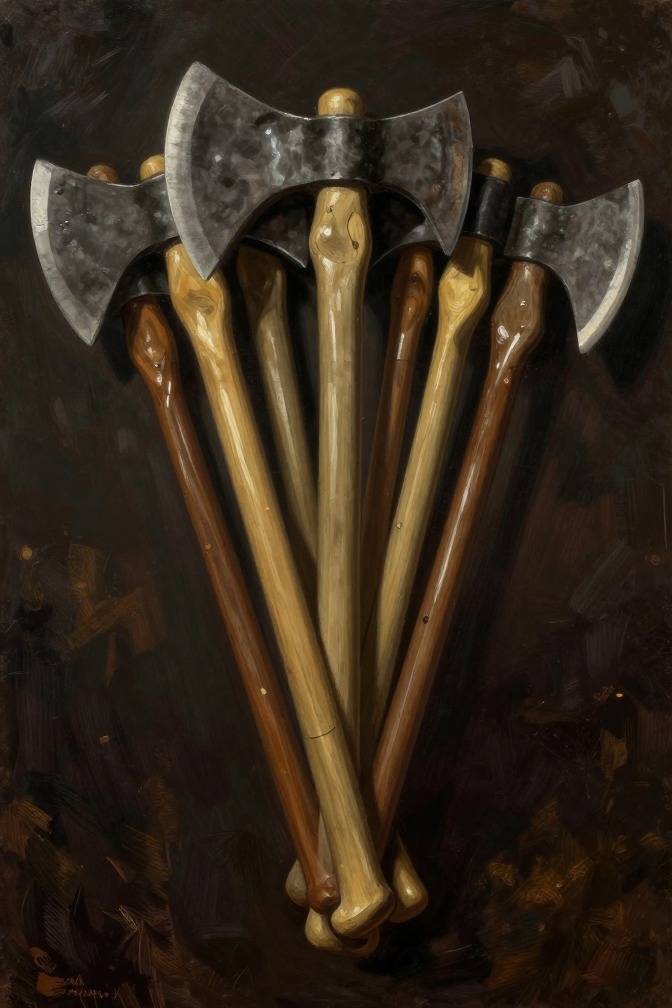
The twelve axes are the central object in the contest Penelope devises to choose a new husband, a test that only Odysseus can pass and that triggers the slaughter of the suitors.