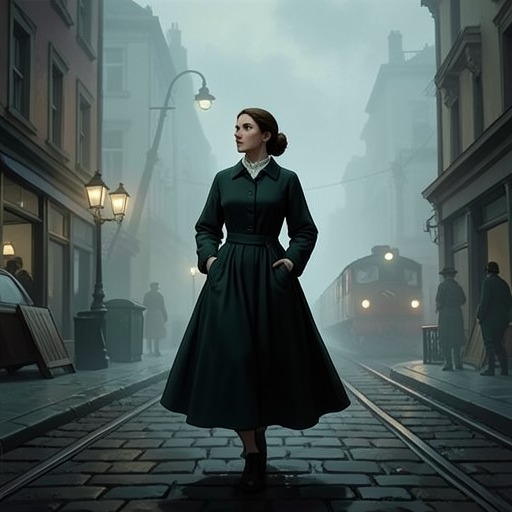
Eveline and Dirk’s car crash
1919Eveline Hutchins and Dirk McArthur’s car crash transforms an uneasy night drive into an accident, a hurried attempt at secrecy, and a sharp confrontation with Eveline’s family. The collision leaves Eveline physically unharmed but her dress ruined, while Dirk is bleeding and injured; by morning, the incident has become a source of family mortification and private grief.
The Drive and Its Turning Point
On a hot night, Dirk drove west through seemingly endless suburbs and out onto the prairie. Eveline understood that they ought to go home, but said nothing. When Dirk stopped beside a white barn, she realized he was very drunk. He offered her a drink from a flask, which she refused. In the headlights, his face, shirtfront, and mussed hair appeared chalk-white. Their conversation exposed a strain beneath their intimacy: Eveline challenged his claim to love her, and Dirk admitted that he loved himself best. She touched his hair and teased him; as rain began, he turned the car around toward Chicago.
The drive’s movement from intimacy to danger is abrupt. The car, which had carried them out into the prairie, now headed back through the rain, but the narrative gives no precise account of where it left the road or struck. Eveline remembered only that she was crawling out from beneath the seat. The collision interrupts their exchange without resolving its emotional question: Dirk’s admission remains between them as the immediate danger becomes physical.
The Collision and Emergency Response
Eveline was not hurt, though her evening dress was ruined. Rain streaked the headlights of the cars that had stopped on either side of them. Dirk sat on the mudguard of the first car to arrive and called to ask whether she was all right. He was bleeding from a gash in his forehead and held his arm against his body as if cold. The contrast between Eveline’s minor physical consequence and Dirk’s visible injuries gives the accident an uneven aftermath, even as both are caught up in its confusion.
What followed came to Eveline as a blur of practical emergencies: telephoning her father, getting Dirk to the hospital, and dodging reporters. She also called Dirk’s father and asked him to act to keep the accident out of the morning papers. The effort to manage the news made concealment part of the event’s immediate consequences, alongside medical care. At eight on a hot spring morning, Eveline returned home in a nurse’s borrowed raincoat over the ruined dress.
Family Fallout
The family was at breakfast when Eveline arrived. No one spoke at first. Her father stood and reproached her for her behavior and for the pain and mortification she had caused the family; he added that she might have sustained serious injuries and told her to go upstairs and rest. His response shifted the episode from a private accident into a family judgment, centering not only on the danger Eveline had escaped but also on the public and domestic embarrassment surrounding it.
Eveline went upstairs, double-locked her door, and sobbed on the bed. The ending offers no reconciliation or explanation between her and Dirk: it closes on her withdrawal after the crash and her father’s rebuke. The accident thus leaves two kinds of damage in view—the injuries Dirk carried away and the emotional isolation Eveline sought behind a locked door.