From the 1880s through 1917
Jack Reed’s Awakening
Raised in a prosperous Oregon family, [Jack Reed](entity:character-recall-character-jack-reed-c9090f19f8b5) went east to Harvard, where he absorbed its literary traditions and learned the manners of an ambitious young man. But the life of clubs and poems could not keep his attention from workers he met who were poor, unemployed, and injured by the existing order.
Reporting on the [Paterson](entity:location-recall-location-2778a1a002b9) strike and the [Mexican Revolution](entity:event-recall-event-mexican-revolution-33547521dcbd) transformed his writing and politics. As war spread, he covered its fronts and, in 1917, joined soldiers and peasants in [Petrograd](entity:location-recall-location-petrograd-9c533dd90aeb) during the [October Revolution](entity:event-recall-event-october-revolution-68c43d173e02), making the revolution the defining commitment of his life.
From the 1850s through January 1919
Roosevelt’s Strenuous Life
Born into a wealthy New York family, [Theodore Roosevelt](entity:character-recall-character-theodore-roosevelt-ba10b8b8a4e5) cultivated an image of physical courage, public service, and energetic leadership. He became a reform politician, western rancher, war hero, and president, repeatedly presenting American power as a righteous instrument for order and progress.
The account punctures that heroic image with the interests and compromises beneath it: the war in Cuba serves commercial power, the Panama Canal advances American influence, and his Progressive crusade fails to remake politics. By the time he dies at [Sagamore Hill](entity:location-recall-location-d828d9baec82) in [1919](entity:time-recall-time-1919-329d1bdc3600), the amateur warrior’s world has passed into the hands of his sons.
From the 1830s through 1918
The Morgan Inheritance
The Morgan family rises from insurance and mercantile ventures into a financial empire spanning banks, railroads, industry, and international credit. [J. Pierpont Morgan](entity:character-recall-character-j-pierpont-morgan-f2e2a0c29b21) becomes Wall Street’s commanding broker, presenting himself as a guardian of the national economy while consolidating private power.
After his death in 1913, his son inherits the system. During the war and peace negotiations, loans and corporate influence give the house a reach that dwarfs the rhetoric of democratic purpose; in the novel’s account, war’s casualties and financial profits grow together.
From 1856 through 1916
Wilson’s Rise
[Woodrow Wilson](entity:character-recall-character-woodrow-wilson-38391917f7db) grows up in a minister’s household where language, scripture, and correct argument shape his ambitions. After an academic career and a celebrated reform governorship in [New Jersey](entity:location-recall-location-39f2e21cff7b), he wins the presidency by promising a New Freedom and presenting himself as the champion of the common citizen.
His early rhetoric of restraint and reform becomes harder to sustain as international crisis builds. Re-elected on the claim that he has kept the country out of war, he stands at the edge of a conflict that will test both his principles and his faith in political language.
From the 1880s through 1917
Hibben’s Diplomatic Disillusionment
[Paxton Hibben](entity:character-recall-character-paxton-hibben-2f6c1c8491d9) begins as a privileged Midwestern student seeking romance and distinction through diplomatic service. In [St. Petersburg](entity:location-recall-location-9f1d225f9690), the violence of the 1905 [Russian Revolution](entity:time-recall-time-russian-revolution-7545ea8f48ee) draws him into the streets and shakes his confidence in respectable political order.
His later work as a correspondent and relief worker exposes him to hunger, disease, and the wreckage of war. He carries hopes for reform into public life, but the European war and the American turn toward intervention push those hopes aside.
From 1886 through 1918
Bourne’s Antiwar Stand
Born with a physical disability and raised amid financial strain, [Randolph Bourne](entity:character-recall-character-randolph-bourne-50d671edc973) works his way through Columbia and becomes a writer shaped by music, education, and reform politics. At first he sees Wilson’s New Freedom as a possible route toward a more democratic society.
When the administration turns to conscription and wartime discipline, Bourne breaks with his former allies and writes against the war. Isolation, surveillance, and personal loss follow; he dies shortly after the armistice, leaving behind the warning that war strengthens the state at the expense of individual freedom.
Before his South American voyage
Joe’s Break from the Navy
[Joe Williams](entity:character-recall-character-joe-williams-3b66e01fb2f0) grows up in Washington among family photographs, baseball memories, and the working waterfront. He joins the Navy, but the service’s discipline and hierarchy soon feel like another trap rather than a route to independence.
After striking a petty officer, he knows he cannot remain in uniform. In [Buenos Aires](entity:location-recall-location-buenos-aires-f4be140f43ae), he hides his Navy uniform and tries to sell his way into the merchant marine, carrying his few possessions in a cigarbox that preserves the family and childhood he has left behind.
From childhood through his early teens
Dick’s Childhood Loss
[Richard Ellsworth Savage](entity:character-recall-character-richard-ellsworth-s-861d9e7e9f77) grows up with fragmentary memories of his father and then loses contact with him as his mother and brother settle in [Trenton](entity:location-recall-location-trenton-c9f93693c185). He is sensitive, bookish, and drawn to poems, while the household’s financial dependence on an aunt leaves him resentful and constrained.
When his father reappears, frail after imprisonment, the meeting unsettles the boy more than he can explain. The brief reunion ends in another separation, and the memory of his father’s hurt face remains entangled with Dick’s later attempts to make a life through literature and social standing.
Childhood through adolescence
Eveline’s Early Dreams
[Eveline Hutchins](entity:character-recall-character-eveline-hutchins-7b6f3c83bb67) grows up in a minister’s comfortable household, where she admires her father and imagines a life shaped by painting, poetry, and service. Her sisters’ teasing and her family’s strict moral atmosphere intensify her self-consciousness and hunger for an identity of her own.
A lunch with [Sally Emerson](entity:character-recall-character-sally-emerson-6ed670f89b7a) introduces her to an artistic world of stylish interiors, modern music, and cultural ambition. [Eveline](entity:character-recall-character-eveline-3602145f573a) begins to see how far her family’s sheltered life stands from the creative society she wants to enter.
After leaving the Navy
Joe’s Forged Papers
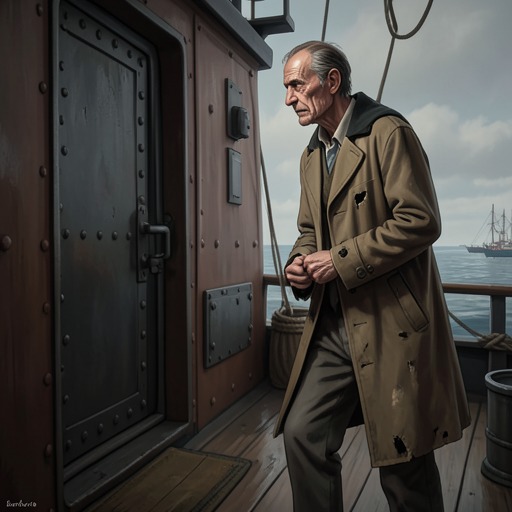
On the [Buenos Aires](entity:location-recall-location-buenos-aires-f4be140f43ae) waterfront, Joe seeks a forged able-seaman certificate so he can ship out under a new identity. A pair of intermediaries charge him heavily and bind him to a deduction from his future wages, leaving him nearly penniless but with a berth on the British freighter Argyle.
The deal offers escape from the Navy but not control over his life. Joe boards with his cigarbox and little understanding of what awaits him in wartime waters or in the authorities’ suspicious view of an undocumented American sailor.
1917 through 1920
Reed Joins the Revolution
[Jack Reed](entity:character-recall-character-jack-reed-c9090f19f8b5) travels to [Russia](entity:location-recall-location-russia-8ee8be401081) as a war correspondent and finds that the revolutionary upheaval is no longer a distant subject for lively reporting. In [Petrograd](entity:location-recall-location-petrograd-9c533dd90aeb) he works among the new revolutionary leadership, writes about the events, and commits himself to the workers’ state.
His work and travel exhaust him, and he contracts typhus. He dies in [Moscow](entity:location-recall-location-moscow-b59c72aac896) after the revolution, leaving behind a career in which the energetic Harvard playboy has given everything to the political cause he came to believe in.
After the Argyle crosses the Atlantic
Joe’s Detention in Liverpool
The Argyle’s officers suspect Joe of being a German agent and punish him after he resists being treated as an ordinary seaman. When the ship reaches [Liverpool](entity:location-recall-location-liverpool-7a375e857bb9), British police remove him, search him invasively, destroy his slippers, and confine him while officials question his identity.
A consul eventually confirms that Joe is American and secures his release, but offers little practical help beyond a small amount of money and a place on an American ship. The experience leaves Joe humiliated, hungry, and newly wary of the patriotic authorities who claim to protect him.
During Dick’s summers at Bay Head
Dick and Hilda’s Affair
While working at a seaside hotel, [Richard Ellsworth Savage](entity:character-recall-character-richard-ellsworth-s-861d9e7e9f77) becomes close to [Edwin Thurlow](entity:character-recall-character-edwin-thurlow-f90d3282ef9d) and [Hilda Thurlow](entity:character-recall-character-hilda-thurlow-8ba8ad55f263). Hilda’s dissatisfaction with her marriage and her appetite for a less confined life draw the inexperienced boy into an affair that mixes desire with guilt and religious fear.
Dick later sees the affair as part of his education in adult appetite, but it gives him no secure emotional ground. Hilda eventually reconciles with Edwin and moves on, leaving Dick to turn disappointment into poems and a self-conscious pose of worldly experience.
Before the war
Eveline and Dirk
[Eveline](entity:character-recall-character-eveline-3602145f573a)’s friendship with [Dirk McArthur](entity:character-recall-character-dirk-mcarthur-6b65429e9675) becomes an intense, uncertain romance. She wants him to recognize her as a serious artist and a possible wife, while his affection remains impulsive and self-centered.
After a drunken drive ends in a car crash, Eveline is left to manage the family’s alarm and the public embarrassment. When she later asks Dirk directly about his intentions, he admits that he is not the marrying kind; she hides her hurt behind laughter and turns toward work instead.
From her Texas school years into young adulthood
Daughter and Joe Washburn
[Anne Elizabeth Trent](entity:character-recall-character-anne-elizabeth-tren-faa8e4907d3d), whom her family calls Daughter, grows up on a [Texas](entity:location-recall-location-2ec0e36ff72c) ranch and develops a lasting, conflicted attachment to [Joe Washburn](entity:character-recall-character-joe-washburn-fee047e2d49c). Her spirited attempts to provoke his attention culminate in a dangerous dive from a bluff; Joe pulls her from the water, and she spends the summer recovering from a fractured skull.
Later, after escaping a finishing school and moving to New York, she sees Joe again and finds that the feeling has not disappeared. But Joe’s life and ambitions move elsewhere, and their closeness never becomes the lasting partnership she imagines.
After his release in England
Joe Finds American Friends
Joe meets American sailors in [Liverpool](entity:location-recall-location-liverpool-7a375e857bb9), where shared drinks and familiar speech briefly restore his confidence after jail. Their night out ends in a drunken brawl and another arrest, but the group’s insistence on their American identity makes the episode feel, to Joe, like a rough version of home.
He finally ships on an American vessel and reaches [Norfolk](entity:location-recall-location-norfolk-cb7f812776bb). There he meets [Della Matthews](entity:character-recall-character-della-matthews-15c9d5b07e83), falls for her, and begins to picture a settled life ashore, though he has neither a dependable job nor the habits that such a life would require.
Before the United States enters the war
Eveline Meets Eleanor
[Eveline](entity:character-recall-character-eveline-3602145f573a) meets [Eleanor Stoddard](entity:character-recall-character-eleanor-stoddard-b197af38544e) at the Art Institute and is exhilarated by the older woman’s confidence, humor, and independence. The friendship offers a model of female companionship that seems more sustaining than the romantic ideals Eveline has been taught to expect.
They begin a decorating business and move among artists, theater people, and patrons. Eveline hopes that work and friendship will give her a life of her own, though she continues to measure herself against the men and social circles that promise excitement or approval.
During her early years in New York
Anne Joins the Strike
At college, [Anne Elizabeth Trent](entity:character-recall-character-anne-elizabeth-tren-faa8e4907d3d) meets [Edwin Vinal](entity:character-recall-character-edwin-vinal-db46cd973898) and is drawn into social work and reform politics. Through [Webb Cruthers](entity:character-recall-character-webb-cruthers-0395bf9e80f4), she visits a [New Jersey](entity:location-recall-location-39f2e21cff7b) textile strike and sees the workers’ hardship alongside the police and company power arrayed against them.
At a rally, she watches [Ben Compton](entity:character-recall-character-ben-compton-63efd2b888e9) speak and sees the crowd forced away from a meeting. Her own racial and class prejudices surface in her judgment of the strikers, but the encounter begins to unsettle the confident assumptions she brought from [Texas](entity:location-recall-location-2ec0e36ff72c).
After Joe returns from sea and earns an officer’s license
Joe Marries Della
Joe returns to [Norfolk](entity:location-recall-location-norfolk-cb7f812776bb) with a chance to advance in the merchant marine. With the help of [Captain Perry](entity:character-recall-character-captain-perry-bcbdcb72f85f), he studies for a third mate’s license, and Della agrees to marry him before his next voyage.
The wedding is awkward and hurried. Joe must leave for [France](entity:location-recall-location-france-f5cafc8a8ad4) that night, while Della postpones their intimacy and worries about pregnancy. Their marriage begins with longing, uncertainty, and the assumption that Joe’s future at sea will provide the security Della wants.
1916 through the American entry into the war
Dick Chooses Ambulance Work
At Harvard, [Richard Ellsworth Savage](entity:character-recall-character-richard-ellsworth-s-861d9e7e9f77) grows close to [Blake Wigglesworth](entity:character-recall-character-blake-wigglesworth-8572e2d443c0) and becomes increasingly troubled by the growing war. He is a pacifist, but political arguments and the pressure to choose a side make his private convictions harder to keep separate from his future.
After the [United States](entity:location-recall-location-5d55e9152db1) enters the conflict, he rejects a safe route into government work and joins the [Norton-Harjes Ambulance Service](entity:organization-recall-organization-norton-harjes-am-c2a1df4e6ec4). He leaves college and friends behind, carrying with him the belief that service near the front may be more honest than the rhetoric being offered at home.
During her family’s stay in Santa Fe
Eveline’s New Mexico Affair
In [Santa Fe](entity:location-recall-location-c1e0d146dc2d), [Eveline](entity:character-recall-character-eveline-3602145f573a) meets the painter [José O’Riely](entity:character-recall-character-jos-o-riely-98296cd5af0d) and is captivated by his working-class subjects and his contempt for her polished amateurism. She begins posing for him and convinces herself that the relationship will be a real artistic and erotic awakening.
Their secret meetings end when his wife discovers the drawings and confronts Eveline’s family. José chooses his household and livelihood over the affair, while Eveline returns to the East carrying another disappointment and the belief that her life must change.
After his arrival in France
Dick Reaches the Front
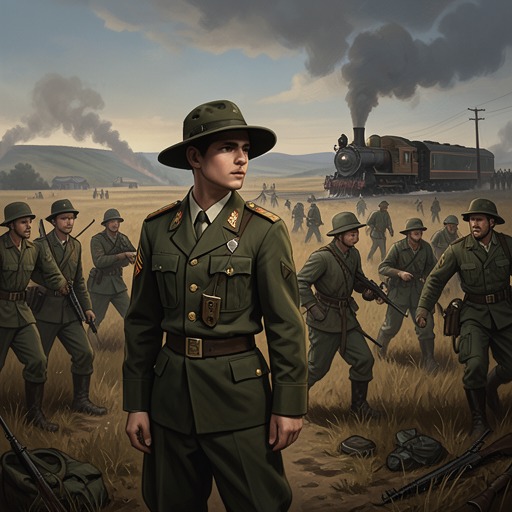
[Richard Ellsworth Savage](entity:character-recall-character-richard-ellsworth-s-861d9e7e9f77) reaches [France](entity:location-recall-location-france-f5cafc8a8ad4) with the ambulance service and encounters the war first through its wounded bodies, medical wards, and exhausted personnel. His idealized image of service gives way to the routine of carrying casualties and seeing men arrive alive and leave dead.
In a Camera Eye passage, a young volunteer’s close-cropped head and uniform become inseparable from the sensation of death. Dick’s experience makes the conflict less a question of patriotic ideals than a physical process imposed on vulnerable individuals.
After his early wartime voyages
Joe Survives the North Star’s Sinking
Joe ships on the [North Star](entity:object-recall-object-north-star-c2d1a7a808ad), a freighter carrying war material toward [France](entity:location-recall-location-france-f5cafc8a8ad4). When a German submarine forces the crew to abandon ship, Joe cuts the lashings on the liferafts, helping ensure that the men have a chance to survive.
The ship sinks in cold water, but the crew is rescued and taken to [Glasgow](entity:location-recall-location-glasgow-50d067f692a1). [Captain Perry](entity:character-recall-character-captain-perry-bcbdcb72f85f) praises Joe’s initiative and urges him to pursue an officer’s ticket, briefly offering a path beyond the foc’sle and the routine exploitation of seamen.
During the Verdun campaign
Dick’s Ambulance Companions
In the ambulance section near [Verdun](entity:location-recall-location-b32288defec7), Dick and a circle of young volunteers drink, joke, and argue as shells fall around them. Their irreverence becomes a way to endure fear, but the routine of evacuation, gas, and casualties repeatedly breaks through their performances of unconcern.
They imagine returning home to tell the truth about the war, even as the machinery of censorship and official service limits what can be said. The group’s camaraderie offers comfort without giving them a convincing answer to the violence they witness.
During Anne’s New York college years
Daughter and Edwin
[Anne Elizabeth Trent](entity:character-recall-character-anne-elizabeth-tren-faa8e4907d3d)’s meetings with [Edwin Vinal](entity:character-recall-character-edwin-vinal-db46cd973898) lead her into settlement work and a romance organized around shared ideals of service. She becomes engaged to him, but resists the idea that marriage must immediately define her future.
Her involvement with journalism and [Webb Cruthers](entity:character-recall-character-webb-cruthers-0395bf9e80f4) pulls her toward more confrontational politics. The promise of a life built on service begins to compete with her desire for independence and the unresolved pull of [Joe Washburn](entity:character-recall-character-joe-washburn-fee047e2d49c).
During Joe’s return voyage after marrying Della
Joe Is Torpedoed Again
Joe sails as an officer on the [Higginbotham](entity:object-recall-object-higginbotham-2e2d3aba58be), hoping to prove himself and build a future with Della. A voyage that initially promises advancement turns disastrous when the poorly maintained ship is struck at sea and the crew must abandon her.
Joe survives, but [Captain Perry](entity:character-recall-character-captain-perry-bcbdcb72f85f) dies after rescue. The ship’s owners and financial claimants delay the crew’s pay, leaving Joe stranded in [Boston](entity:location-recall-location-boston-aded649f4602) and unable to get home to his wife. The loss turns his professional promise into another period of dependence and uncertainty.
After the United States enters the war
Eveline in New York’s Radical Circles
Back in New York, [Eveline](entity:character-recall-character-eveline-3602145f573a) finds work with [Eleanor](entity:character-recall-character-eleanor-f86629a4f595) and encounters [Don Stevens](entity:character-recall-character-don-stevens-2011d9107414), a radical journalist who treats her as both a political audience and a possible lover. His predictions of war, revolution, and state repression excite and bewilder her.
Eveline’s attraction to ideas does not become a settled political commitment. She moves among pacifists, artists, and reformers while war fever takes hold, and accepts a chance to go to [Paris](entity:location-recall-location-paris-c02b439ce220) with the Red Cross as a way out of a country she finds increasingly suffocating.
During Joe’s wartime return to Norfolk
Joe Loses Della
Joe comes back to [Norfolk](entity:location-recall-location-norfolk-cb7f812776bb) hoping to make a home with Della, but discovers that she has grown more absorbed in wartime social life and the men in uniform who surround her. Their arguments expose the gulf between Joe’s desire for a private family and Della’s search for security and excitement.
After he strikes a young officer he finds with her, Joe leaves town rather than remain in a marriage that has become a source of humiliation. He heads north, broke and unsettled, still trying to decide whether the sea or a shore career offers any real escape.
From his adolescence into the prewar years
Ben Chooses the Workers
[Ben Compton](entity:character-recall-character-ben-compton-63efd2b888e9) grows up in a Jewish working family in [Brooklyn](entity:location-recall-location-brooklyn-e6b5895cd305), where his parents hope that education will lift him into a respectable profession. Work at a construction camp introduces him to [Nick Gigli](entity:character-recall-character-nick-gigli-4bb306205285), who teaches him to see exploitation as a class system rather than a collection of individual injustices.
When the camp workers strike over stolen wages, Ben refuses to keep working for the employer. He leaves with Nick after the strike is broken, choosing solidarity over the business career his family had imagined for him.
Late 1917
The Section Moves to Italy
After time in the French ambulance service, Dick and his companions transfer to [Italy](entity:location-recall-location-125be658b0d0) as the front approaches crisis. Their convoy turns the journey into a disordered tour of wine, cafés, and scenery, while the retreat and the war remain close enough to disrupt their holiday mood.
The group’s appetite for pleasure is also a response to exhaustion and danger. Dick watches the volunteers make an uneasy life between official duty and private escape, a pattern that will deepen as he becomes more involved in the American relief apparatus.
After his departure from Norfolk
Joe’s Sea Life Continues
Joe sails again, this time through dangerous Atlantic and Mediterranean waters, while his letters to Della grow colder and harder to answer. A bout of dengue leaves him incapacitated in [St. Thomas](entity:location-recall-location-c4b2e8028533), where he is dependent on others for shelter and passage home.
A later ship takes him back to New York, where he tries to find his sister [Janey](entity:character-recall-character-janey-b940b8df69a0) and consider a steadier life. Instead, he is caught in the draft-registration crackdown and meets [Glen Hardwick](entity:character-recall-character-glen-hardwick-6bf9eeca7e7a), who offers him another berth and a return to sea.
During the New Jersey textile strike
Daughter Strikes Back
On a picket line, [Anne Elizabeth Trent](entity:character-recall-character-anne-elizabeth-tren-faa8e4907d3d) sees a policeman kick a fallen young striker. She responds instinctively, striking at the officer and ending up in jail on charges that include rioting and sedition.
The episode brings her into closer contact with [Ben Compton](entity:character-recall-character-ben-compton-63efd2b888e9) and the workers’ movement, but it also exposes how deeply her sympathies remain divided by class and prejudice. Her father’s alarm and illness draw her back to [Texas](entity:location-recall-location-2ec0e36ff72c), where family duty again threatens to contain the life she is trying to make.
During Joe’s later wartime service
The Chemang Is Lost
Joe joins the armed merchant ship [Chemang](entity:object-recall-object-chemang-e9fa25e146ee) with [Glen Hardwick](entity:character-recall-character-glen-hardwick-6bf9eeca7e7a), carrying supplies through a dangerous convoy and then sailing without protection. Off [Vigo](entity:location-recall-location-38633c87501d), an explosion floods the ship and forces the crew to beach her; the men survive but are left stranded while ownership and official arrangements shift around them.
Joe’s service is again reduced to waiting, unpaid labor, and uncertain passage. The episode reinforces his sense that the ordinary sailor bears the danger while the people who control ships and cargo remain distant from the consequences.
During the Italian retreat
Dick’s Moral Break in Italy
Dick and [Steve Warner](entity:character-recall-character-steve-warner-deec7f3f39aa) witness Italian officers humiliate a young woman and abuse an orderly during a meal. Their discomfort separates them from the officers’ laughter, and they later find the orderly in tears, ashamed of the military men he serves.
Soon afterward, the Red Cross removes Dick and several companions from the section for their alleged seditious views and letters. Dick refuses to pretend that he supports the war, but the removal also gives the group a chance to wander through [Italy](entity:location-recall-location-125be658b0d0) before official authority catches up with them.
During the later American war effort
Bud Dies in a Plane Crash
[Anne Elizabeth Trent](entity:character-recall-character-anne-elizabeth-tren-faa8e4907d3d) receives word that her brother Bud has been killed on his first solo flight during training in [San Antonio](entity:location-recall-location-7d0a32329a64). The news turns her grief toward the safety of the aircraft and the people responsible for inspecting them.
[Joe Washburn](entity:character-recall-character-joe-washburn-fee047e2d49c) urges her to accept military risk as inevitable, but Anne cannot reconcile that argument with a death caused at home. Her attempt to confront the aviation authorities ends in a fainting spell, after which she returns to [Dallas](entity:location-recall-location-c4cb387e610e) and is treated as unstable rather than heard as a critic.
November 1918
Joe’s Armistice-Day Fight
Joe returns to sea and reaches [St. Nazaire](entity:location-recall-location-st-nazaire-9bae6eef65c6) as the armistice celebrations break out. He searches for Jeanette, but when he sees her dancing with a Black French officer, jealousy and racism overwhelm him; he attacks the officer and knocks Jeanette down as the crowd surges around him.
A bottle strikes Joe’s head and leaves him unconscious. The victory celebration, supposed to mark the end of the war, instead exposes the violence and racial hostility that the war has intensified in him.
After the United States enters the war
Eveline Arrives in Paris
[Eveline](entity:character-recall-character-eveline-3602145f573a) reaches [Paris](entity:location-recall-location-paris-c02b439ce220) with Eliza Felton and becomes caught in an air raid before she has established herself with the Red Cross. A French officer escorts her through the bombing, then tries to follow her to her room; a young American intervenes and gets her away from him.
The encounter captures the mixture of danger, improvised intimacy, and uncertainty that will define Eveline’s European life. She arrives seeking freedom from her old surroundings, but finds that war has rearranged every ordinary boundary.
1918
The Romanov Execution
A news account describes the execution of the former Russian imperial family, recording the killing of the czar, czarina, their children, and attendants. The printed report brings the revolution’s violence into the novel’s fractured public record.
The episode stands beside the war’s other claims of necessity and justice. In the surrounding narrative, news of political upheaval reaches people who are already trying to decide whether revolution offers liberation or simply another form of coercion.
Before 1915
The Joe Hill Story
The book recounts [Joe Hill](entity:character-recall-character-joe-hill-f7bf487f4731)’s migration from Sweden, his years of itinerant labor, and his growth into a songwriter for the [Industrial Workers of the World](entity:organization-recall-organization-industrial-worke-352a022de5b3). His songs spread through camps, jails, and working-class gathering places, giving the movement a voice that could travel farther than its organizers.
After a murder conviction in Utah, efforts to secure a new trial fail. Hill is executed in 1915, leaving behind the instruction that the workers should organize rather than mourn him.
Before and during the early war years
Ben’s Organizing Years
[Ben Compton](entity:character-recall-character-ben-compton-63efd2b888e9) studies at City College while working and supporting his family. He becomes involved in socialist and labor circles, shares a precarious life with Helen Mauer, and helps organize workers during strikes, discovering that public speaking can make a crowd listen.
His organizing brings arrests, jail time, and conflict with his family, who want him to pursue a safer life. Each encounter sharpens his commitment, but also makes him more vulnerable to the political repression gathering around wartime dissent.
Late 1918 through early 1919
The Peace Conference Begins
[Woodrow Wilson](entity:character-recall-character-woodrow-wilson-38391917f7db) travels to Europe as the most powerful public symbol of a promised peace. His [Fourteen Points](entity:rule-recall-rule-fourteen-points-ec5737df9c55) have raised hopes among people who have suffered the war, even as the leaders of the [Allied Powers](entity:organization-recall-organization-allied-powers-29e631dccd81) bargain over territory, resources, and influence.
The negotiations narrow from a large public conference to a small circle of powerful men. Wilson’s language of self-determination meets the practical force of oil, imperial interests, and secret diplomacy, setting the terms for his later disillusionment.
During the Paris war years
Eveline’s Paris Attachments
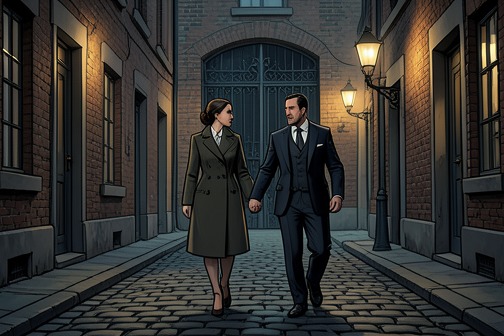
[Eveline](entity:character-recall-character-eveline-3602145f573a) works for the Red Cross and grows close to [Eleanor Stoddard](entity:character-recall-character-eleanor-stoddard-b197af38544e), while also spending time with the disillusioned correspondent [Jerry Burnham](entity:character-recall-character-jerry-burnham-bc4415451ba5) and the radical [Don Stevens](entity:character-recall-character-don-stevens-2011d9107414). Her friendships and romances offer competing versions of what a meaningful life might be: art, pleasure, political action, or public influence.
When [J. Ward Moorehouse](entity:character-recall-character-j-ward-moorehouse-094a5a35122a) arrives as a publicity official, Eveline is drawn to his confidence and apparent sincerity. She does not yet understand how thoroughly his work joins public ideals to corporate power, or how much [Eleanor](entity:character-recall-character-eleanor-f86629a4f595)’s relationship with him will shape her own access and isolation.
Late in the war
Joe Leaves the Sea Again
After surviving further voyages, Joe returns to the [United States](entity:location-recall-location-5d55e9152db1) determined to settle down and reunite with Della. Instead, he finds her surrounded by wartime work, social obligations, and men in uniform, while their shared home feels more like a place he has arrived at late.
Their relationship collapses into jealousy and drinking. After a violent confrontation, Joe leaves [Norfolk](entity:location-recall-location-norfolk-cb7f812776bb) for New York and tries to find work, a ticket, or any direction that might restore his sense of control.
During the Paris Peace Conference
Eveline’s Relationship with J.W.
[Eveline](entity:character-recall-character-eveline-3602145f573a) increasingly accompanies [J. Ward Moorehouse](entity:character-recall-character-j-ward-moorehouse-094a5a35122a) through the social world of [Paris](entity:location-recall-location-paris-c02b439ce220), where he discusses publicity, oil, and America’s postwar role. A trip south with him becomes intimate, and she imagines that their attraction might free them both from conventional limits.
But J.W.’s self-revelation keeps returning to business, reputation, and his wife’s illness. When Eveline returns to Paris, his secretary and colleagues make clear that the relationship has no recognized place in his public life; Eveline is left with private memories and a growing sense of humiliation.
January through September 1919
Wilson’s Ideals Falter
At the [Paris](entity:location-recall-location-paris-c02b439ce220) negotiations, Wilson accepts compromises that fall short of the democratic peace he had promised. The treaty settlement leaves questions of empire, resources, and national self-determination unresolved, while criticism at home threatens his standing.
He returns to the [United States](entity:location-recall-location-5d55e9152db1) and undertakes a speaking tour to win support for the [League of Nations](entity:organization-recall-organization-league-of-nation-17aa7547009d). Exhaustion and a stroke in [1919](entity:time-recall-time-1919-329d1bdc3600) end the campaign, leaving the idealist physically broken and politically defeated.
After the 1918 armistice
Anne Meets Dick
[Anne Elizabeth Trent](entity:character-recall-character-anne-elizabeth-tren-faa8e4907d3d) travels to Europe with [Near East Relief](entity:organization-recall-organization-near-east-relief-4e1446bd26b6) and meets [Richard Ellsworth Savage](entity:character-recall-character-richard-ellsworth-s-861d9e7e9f77) on a train to [Rome](entity:location-recall-location-f3877a21016f). His humor, fluency, and experience abroad captivate her, and the ruins and landscapes of [Italy](entity:location-recall-location-125be658b0d0) intensify her wish to escape the life she has known.
Their excursion to [Tivoli](entity:location-recall-location-5259227d3f23) turns into a passionate encounter. Anne is a virgin and Dick is impatient, but they begin a relationship that gives her a sense of possibility and soon carries consequences neither of them has planned for.
January 1919
Dick Sees Wilson in Rome
As a courier during Wilson’s visit to [Rome](entity:location-recall-location-f3877a21016f), [Richard Ellsworth Savage](entity:character-recall-character-richard-ellsworth-s-861d9e7e9f77) watches the president move through ceremonies among ruins and dignitaries. The public language of shared humanity feels increasingly hollow to Dick as he imagines ordinary Europeans placing their hopes in a leader who may not deliver peace.
His private conversation with Anne afterward turns his political unease into a question of personal responsibility. For a moment he tries to hold on to the idea that remaining human matters more than fitting himself to the machinery of war and diplomacy.
Early 1919
Dick and Anne Separate
Anne tells Dick that she is pregnant and assumes that they will marry. Dick, frightened about money, his uncertain career, and his mother’s needs, urges her to find a way to end the pregnancy rather than accept responsibility for a family.
Anne agrees to postpone the decision and tries horseback riding, but her hope that Dick will choose her remains. Their relationship becomes a painful contest between her desire for a shared future and his determination not to let it disrupt his prospects.
Spring 1919
Anne Is Sent Home
The [Near East Relief](entity:organization-recall-organization-near-east-relief-4e1446bd26b6) organization sends Anne home after her absences and independent conduct. She returns to [Paris](entity:location-recall-location-paris-c02b439ce220) injured from a riding accident and tells Dick that she intends to have the child, but he again refuses marriage and suggests that another man might support her.
Dick gives her a doctor’s address and calls her wonderful, then lets her leave alone. Anne tears up his note and, feeling abandoned and ashamed, reaches out to [G. H. Barrow](entity:character-recall-character-g-h-barrow-2b675b475e9c), who is eager to offer companionship and a possible rescue.
After the United States enters the war
Ben’s Antiwar Arrest
[Ben Compton](entity:character-recall-character-ben-compton-63efd2b888e9) refuses to support the war effort and continues speaking against it despite pressure from employers, friends, and family. After a pro-revolution meeting in New York, federal agents arrest him and question him for days, using isolation and threats to break his resolve.
His lawyer secures his release on bail, but a court convicts him and sentences him to twenty years. The punishment makes plain that wartime authority treats dissent not as debate but as a threat to be removed.
Spring 1919
Anne’s Last Paris Night
Anne tries to spend her final evening in [Paris](entity:location-recall-location-paris-c02b439ce220) with Barrow, but a dinner with [Eveline Hutchins](entity:character-recall-character-eveline-hutchins-7b6f3c83bb67), Dick, and the Peace Conference circle makes her feel invisible. Barrow’s speech about Wilson and the future cannot fill the emptiness she feels after Dick’s rejection.
She slips away to dance with a group of French aviators and asks one named Pierre to take her flying. The flight begins before dawn; as the plane climbs and loops, Anne becomes frightened and sick, and the narrative breaks off with the aircraft losing a wing.
May 1919
The Paris General Strike
During the [Paris](entity:location-recall-location-paris-c02b439ce220) general strike, the streets fill with workers, red flags, soldiers, and police. A Camera Eye passage follows the narrator through confrontations, barricades, and gunfire before he takes refuge in a café with other people waiting out the violence.
The unrest reveals the fragile gap between official declarations of peace and the lives of those still facing hunger, repression, and political conflict. The postwar city is not calm; it is a place where the unfinished war has moved into the streets.
After the May Day unrest
Eveline Marries Paul
[Eveline](entity:character-recall-character-eveline-3602145f573a) grows lonely and uncertain as [Paris](entity:location-recall-location-paris-c02b439ce220)’s social world rearranges itself around the peace negotiations. She turns toward [Paul Johnson](entity:character-recall-character-paul-johnson-7c8e24736382), a young soldier whose awkwardness and earnestness make him seem less powerful but more open than the men who have disappointed her.
Their romance develops quickly, and Eveline becomes pregnant. Paul agrees to marry her and imagines a future in New York, but their plans are shaped as much by necessity as by confidence that they understand one another.
After the armistice
Ben Enters Prison
[Ben Compton](entity:character-recall-character-ben-compton-63efd2b888e9) remains out on bail while supporters try to reverse his conviction. He is sheltered by [Morris Stein](entity:character-recall-character-morris-stein-ecd5e12e3f46) and [Fanya Stein](entity:character-recall-character-fanya-stein-188f3ae9b277), but dependence on them and the loss of his place in the movement deepen his frustration.
When his appeal fails, Ben reports for custody on a day of patriotic celebration in New York. He watches soldiers march through flag-covered streets and is taken away to prison, convinced that the workers, rather than liberal patrons or political leaders, will have to secure his release.
After the armistice
Joe’s Postwar Drift
Joe returns to the sea after leaving Della and takes work on the [Appalachian](entity:object-recall-object-appalachian-eeb29b0060c5). In [Genoa](entity:location-recall-location-73f077d9952a), he climbs aboard a burning tanker, steals a sweater and cigars, and pockets silk stockings that he first imagines bringing to Della, though he no longer believes he is returning to her.
After further voyages and illness, he earns a second mate’s license and opens a savings account, trying to turn himself into a more respectable man. Yet the life he builds remains dependent on ships, chance encounters, and the next berth.
June 1919
The Peace Treaty Is Signed
The [Treaty of Versailles](entity:object-recall-object-cd302d4be518) is completed and signed after negotiations that have repeatedly narrowed the promises made to the public. In the novel’s account, the settlement is shaped by bargaining among powerful governments and financial interests rather than by the uncomplicated principle of self-determination.
For the characters, the end of the fighting does not bring a clear return to ordinary life. Soldiers remain abroad, political prisoners remain in jail, and work, love, and public ideals all have to be renegotiated in a world that still feels organized by wartime power.
After the peace negotiations
Paul and Eveline’s Wedding
[Eveline](entity:character-recall-character-eveline-3602145f573a) and [Paul Johnson](entity:character-recall-character-paul-johnson-7c8e24736382) marry, and [Eleanor Stoddard](entity:character-recall-character-eleanor-stoddard-b197af38544e) hosts a gathering that brings together Red Cross acquaintances, political radicals, and the couple’s uneasy friends. Dick attends while trying to conceal the pain of Anne’s rejection and the news that his former college companion [Blake Wigglesworth](entity:character-recall-character-blake-wigglesworth-8572e2d443c0) has died.
The evening is strained rather than celebratory. [Don Stevens](entity:character-recall-character-don-stevens-2011d9107414) confronts Dick about his willingness to work for [J. Ward Moorehouse](entity:character-recall-character-j-ward-moorehouse-094a5a35122a), and Paul’s drunkenness leaves a small domestic symbol of their uncertain future: one of the parakeets dies in its cage.
During the Paris Peace Conference
The Red Cross Publicity Machine
[Richard Ellsworth Savage](entity:character-recall-character-richard-ellsworth-s-861d9e7e9f77) begins working with [J. Ward Moorehouse](entity:character-recall-character-j-ward-moorehouse-094a5a35122a), who has secured a place near the American delegation and the world of corporate publicity. Dick moves from uniformed service into a career that promises travel, influence, and a chance to continue writing on the side.
At a press gathering, J.W. presents cooperation between oil interests as a new era of peace and democracy. Dick hears how public language can transform corporate advantage into a story of national service, and his own place in that machinery becomes increasingly difficult to distinguish from the institutions he once distrusted.
1919
The Red Scare Tightens
Across the postwar [United States](entity:location-recall-location-5d55e9152db1), news reports of strikes, revolutionary movements, and mutiny are paired with calls to suppress radicals. [Ben Compton](entity:character-recall-character-ben-compton-63efd2b888e9)’s prosecution and the continuing campaign against the [Industrial Workers of the World](entity:organization-recall-organization-industrial-worke-352a022de5b3) show how the language of national security can be used to restrict speech and organize public hostility.
The result is a peace that preserves many of the war’s habits: surveillance, loyalty tests, and punishment for dissent. The novel’s news fragments make repression seem both local and national, reaching workers, veterans, immigrants, and anyone suspected of disloyalty.
1918 through November 1919
Centralia’s Timber War
The book turns to the logging camps of the Pacific Northwest, where timber owners and patriotic organizations seek to drive union organizers out of the industry. [Wesley Everest](entity:character-recall-character-wesley-everest-ed00e6b1ce97), a returned soldier and skilled marksman, joins the [Industrial Workers of the World](entity:organization-recall-organization-industrial-worke-352a022de5b3) and the loggers’ effort to claim better wages and working conditions.
After an earlier attack on the union hall, the conflict culminates on [Armistice Day](entity:time-recall-time-armistice-day-5d9eab5aa825) in Centralia. A parade of veterans charges the hall, shots are fired, and a mob captures Everest after he escapes toward the river; the killing that follows is concealed by an official account that turns murder into a supposed escape and suicide.
After the war
The Body of an American
The book ends by imagining the selection and burial of an unidentified American soldier. At [Châlons-sur-Marne](entity:location-recall-location-ch-lons-sur-marne-7fa75bdcb133), officials choose one coffin from many, unable to establish whether the dead man was rich or poor, immigrant or native-born, celebrated or unknown.
The closing passage follows [John Doe](entity:character-recall-character-john-doe-3d141eacda12) from birth through ordinary jobs, military inspection, the loss of his service record and identification tag, and death in the mud. His anonymous remains are brought home beneath the [American flag](entity:object-recall-object-656b905028ee) and decorated with medals, while public ceremony turns an irrecoverable individual life into a national symbol.