La Jolla
AccidentLa Jolla is the site of a later fatal collision involving Laura Hutchinson, whose arrest for driving while intoxicated casts new light on the unresolved Golden Gate Bridge crash and the death of Phillip Chapman. The news turns the location into a point of reversal: evidence and allegations from the new case challenge the earlier public impression that Phillip might have been responsible.
The Fatal Collision and Its Repercussions
A television report tells Page Clarke and Trygve Thorensen that Hutchinson was arrested in La Jolla after a head-on collision. Initial reports differ on the toll: one says a family of four was killed and Hutchinson’s twelve-year-old daughter was seriously injured; another reports that five family members died, including a woman who was eight months pregnant, and describes the daughter’s injuries as a broken arm, stitches, and a mild concussion. The unborn baby also died despite efforts to save it, and Hutchinson faced four counts of felony vehicular manslaughter. Page connects the report to the earlier collision, realizing that Hutchinson may have been drunk then as well; Trygve’s earlier doubts about how that crash was investigated now seem vindicated. The newspaper later reports that Hutchinson is due to go on trial in La Jolla, bringing the location back into the story as the new case proceeds.
Evidence, Privilege, and the Earlier Crash
The La Jolla case changes the meaning of the earlier collision without resolving its cause. At the Golden Gate Bridge, investigators could not establish which car crossed the center line; Phillip Chapman’s blood contained alcohol, but not enough to meet the legal threshold for intoxication. Laura Hutchinson was not tested: a patrolman accepted her statement that she had not been drinking and treated her distress and status as a senator’s wife as reasons not to investigate further. A later report of her arrest for intoxicated driving in La Jolla makes that decision newly consequential, but does not by itself prove what happened in San Francisco.
Further information, obtained by Trygve Thorensen through an investigative reporter, points to a history kept from public view: Hutchinson had reportedly made four unsuccessful stays at a Los Angeles alcohol-treatment clinic in three years and had been involved in at least six minor accidents and a more serious one on Martha’s Vineyard. Records had been sealed or suppressed, allegedly through political favors and the work of her husband’s lawyers and public-relations staff. The later case in La Jolla therefore brings not only a new charge but a broader record into view, exposing how unequal scrutiny and incomplete evidence helped leave Phillip carrying suspicion. The novel does not report the outcome of the La Jolla trial; it presents the trial’s approach as a new stage of accountability after the earlier crash’s responsibility remained uncertain.
Public Reckoning and Delayed Accountability
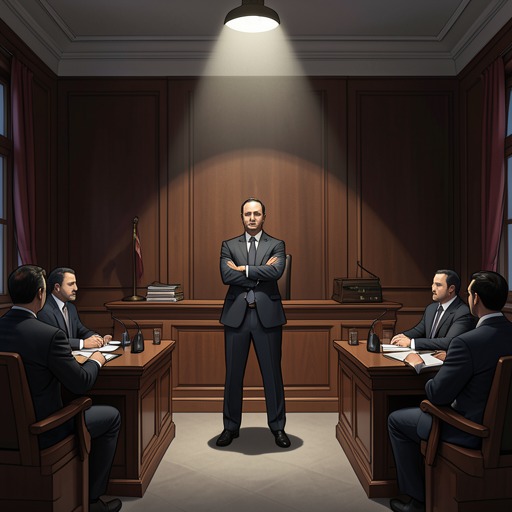
The case in La Jolla also changes how the earlier crash is remembered. During Labor Day weekend, a newspaper reported that Laura Hutchinson was to stand trial there. Chloe Thorensen’s anger was sharpened by the thought that Phillip Chapman had been left to bear suspicion while the driver’s role remained unresolved. A person had recently come forward to say Hutchinson seemed to have been drinking when she left a party before the Golden Gate Bridge collision, prompting the painful question of why the police had not recognized or investigated the possibility. The later prosecution offered a prospect of accountability in La Jolla, but it could not undo the uncertainty and blame that had already fallen on Phillip and his family.
The public attention surrounding the case also reaches the hospital. Reporters tried to draw Page Clarke into expressing anger at Hutchinson, but Page instead spoke of sorrow for everyone who had lost loved ones or endured the consequences of the La Jolla collision. Hospital staff then closed the intensive-care unit doors and drew the shades to keep photographers from recording Page or Allyson Clarke. La Jolla thus remains linked not only to criminal proceedings but to a wider aftermath in which bereaved families face public scrutiny while the earlier crash’s unresolved responsibility continues to matter.
The Trial on the Horizon
By Labor Day weekend, La Jolla has become less a distant place in the news than the destination of an approaching reckoning: a newspaper says Laura Hutchinson’s trial is to begin Tuesday. At the lake, Chloe Thorensen hopes Hutchinson will be imprisoned, thinking of Phillip Chapman and of how suspicion had settled on him while the earlier crash remained unresolved. The notice offers no verdict, only a next step. As Page Clarke reflects that her life has changed in five months, La Jolla remains the site of accountability still to come, set against losses and uncertainty that no trial can reverse.