Laura Hutchinson's alcoholism
AccidentLaura Hutchinson's alcoholism becomes consequential through a widening gap between what the public is told and what later emerges: after the Golden Gate Bridge crash, responsibility remains uncertain, while reports of her drinking and earlier accidents point to a history that powerful people had managed to keep quiet.
Signs and Concealment
At the hospital, Trygve Thorensen says the evidence cannot establish who crossed the center line in the collision that killed Phillip Chapman and badly injured Allyson Clarke and Chloe Thorensen. Phillip's blood test showed alcohol, but not enough for him to be considered drunk; Laura Hutchinson appeared sober, and the police did not test her. With the cars' positions inconclusive, blame remains unsettled. Trygve is angry, but recognizes that anger cannot resolve what the available evidence does not show.
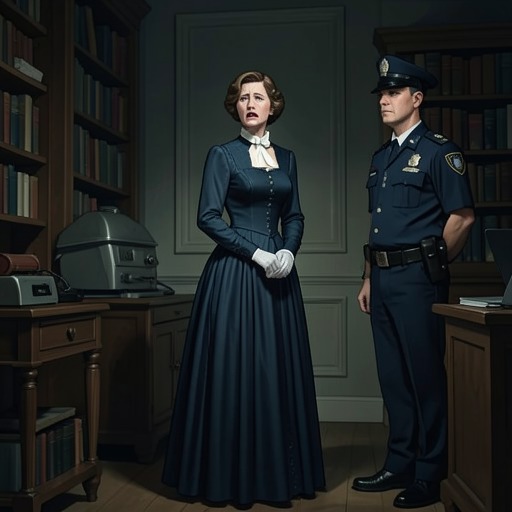
The public account soon tilts toward Phillip. A newspaper article presents Hutchinson as a grieving, upstanding mother and implies that the teenagers had been drinking, despite not directly accusing Phillip of being drunk. Trygve distrusts the insinuations and says Hutchinson's aides were promoting a favorable image of her. He does not claim that she caused the crash; he insists that the evidence could implicate either driver, and that the assumption that a young man must have been reckless is not proof. The distinction matters: uncertainty about the collision is not itself evidence of Hutchinson's innocence or guilt.
Months later, Trygve tells Page Clarke that someone had seen Hutchinson extremely drunk at a party, where she was quietly taken away. He also recalls hearing that she had been attentive to the Chapmans and had donated substantially to Redwood High School in Phillip's name. Page had once suspected Hutchinson felt guilty, but now says she had stopped blaming her. Neither the party report nor Hutchinson's gestures settle what happened on the bridge; together, they show how little the family knew while private information about her drinking stayed out of public view.
Confirmation and the Hidden Record
The uncertainty surrounding the Golden Gate Bridge collision changes sharply when news arrives of another crash in La Jolla. Laura Hutchinson is arrested at the scene, and tests show that she was driving while intoxicated. The first report says four members of a family were killed; a later broadcast clarifies that the victims included a couple, their two young children, and the couple’s unborn child, whose emergency delivery did not save it. Hutchinson’s twelve-year-old daughter survives with injuries and is reported stable. For Page Clarke, the new facts make her fear that Hutchinson had been drinking during the earlier collision seem suddenly credible. They do not establish what happened on the bridge, but they transform suspicion into a question the family can no longer dismiss.
A reporter friend then gives Trygve Thorensen information about Hutchinson’s concealed history. She had reportedly spent four recent periods at a prominent Los Angeles detoxification clinic, all within three years, using another name; none of the stays had succeeded. Department of Motor Vehicles records showed at least half a dozen minor accidents and a more serious collision in Martha’s Vineyard, where she spent summers. That crash had caused injuries, including a concussion to Hutchinson, but no deaths. The reports suggest that the Golden Gate Bridge collision was not an isolated warning sign, even though the earlier incidents had not been publicly assembled into a pattern.
The means by which that history stayed obscure are part of the account. Records had been sealed where possible, and Hutchinson’s husband’s lawyers and public-relations staff had worked to protect her reputation. Trygve’s friend suggests that bribes or political favors may have helped close records, but this remains a suspicion, not an established finding. The contrast is nevertheless clear: while Phillip Chapman had become the convenient subject of blame after the bridge crash, Hutchinson’s earlier accidents and repeated treatment stays had been kept from public scrutiny.
The new revelations widen the consequences beyond the two families who had been waiting for news of their children. Page understands that, in the same year, Hutchinson had injured her own daughter, killed six people across the two crashes, and left Allyson Clarke in a coma and Chloe Thorensen seriously injured. Mothers Against Drunk Driving speaks publicly, and the Chapmans give an interview about Phillip’s death and the damage to his reputation. The senator’s representatives continue to suggest that mechanical failures caused the La Jolla crash, while Hutchinson remains unavailable for comment. The shift in public attention does not undo the losses, but it reverses the earlier story that had allowed Phillip to carry suspicion while Hutchinson’s record remained concealed.
Public Reckoning and the Limits of Accountability
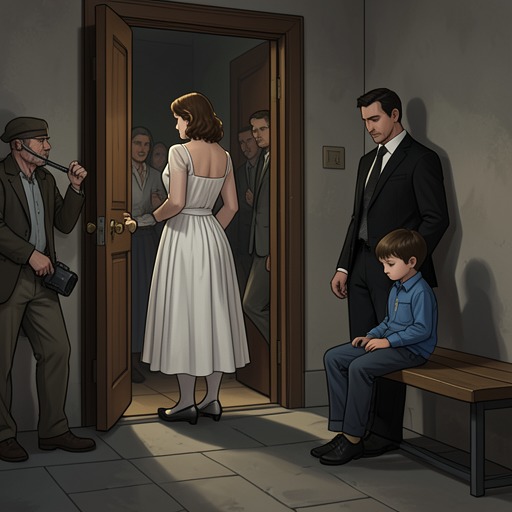
As the La Jolla crash brought renewed attention to the Golden Gate Bridge collision, reporters tried to draw Page Clarke into expressing fury at Laura Hutchinson. Page instead said she felt sadness for everyone who had lost loved ones or suffered through the accidents, including the relatives of the La Jolla family. She declined to turn grief into a public accusation. At the hospital, nurses closed the intensive-care unit doors and drew the shades so photographers could not capture Page or Allyson Clarke, making the family’s effort to protect a private space part of the same struggle as the public search for blame.
The legal response could name only part of the loss. Hutchinson was arraigned on four counts of felony vehicular manslaughter; the unborn child, who died after an emergency cesarean, could not be the subject of a separate murder charge. By the following week, television programs were interviewing families bereaved in similar crashes, and news footage showed Hutchinson entering the courthouse in dark glasses. The maximum possible sentence was forty years. Page felt that even this severe potential punishment did not begin to match what Hutchinson owed the people affected. The record thus closes not with repair or certainty about the earlier collision, but with public exposure and prosecution that remain incapable of restoring those who died or undoing the injuries left behind.
Narrative Function and Evidentiary Limits
The account distinguishes a history that makes suspicion more persuasive from proof about one specific collision. Hutchinson’s later arrest and concealed record recast the earlier uncertainty, but they do not establish who crossed the center line on the Golden Gate Bridge. That distinction gives her alcoholism a double narrative force: it exposes how an undisclosed pattern can shape the meaning of past events, while preserving the limits of what later evidence can establish about them.