Bastille Day 1991
The Colin Boy Disappears
During the annual lakeside gathering, a brawl spreads among soldiers, local youths, and holidaymakers. By morning the [Colin boy](entity:character-recall-character-colin-boy-c94c2cd292de) is missing, and despite searches of the woods and lake, his body is never found.
The disappearance becomes part of the valley’s private folklore: a story that turns the lake into a place of threat as well as summer escape. It will haunt Anthony’s later encounters with the water.
July 1992
Anthony’s Fourteenth Summer
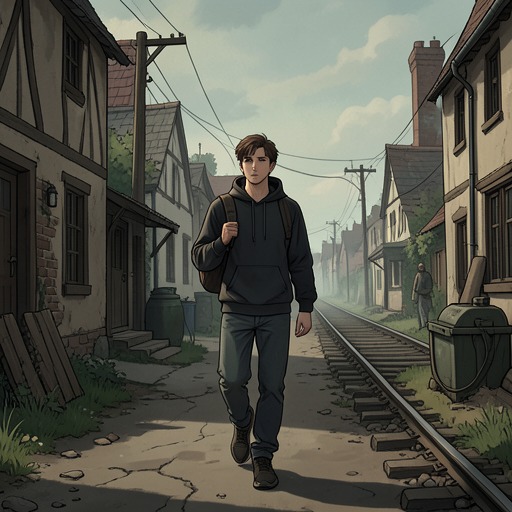
At fourteen, Anthony spends his days bored beside the lake, smoking and following his older cousin around. He feels awkward in his body and resentful of his family’s narrow prospects, while dreaming of leaving [Heillange](entity:location-recall-location-heillange-845dc17c8551).
The cousin’s independence attracts Anthony, who trusts him almost absolutely. Their summer will bring Anthony his first intense infatuation and a chain of decisions that neither boy can control.
One hot afternoon in July 1992
The Stolen Canoe
After Anthony begs to visit the supposed topless beach, his cousin agrees to take a canoe from the [Léo-Lagrange recreation center](entity:organization-recall-organization-l-o-lagrange-rec-8b8b33d79aec). They carry it through the brush and launch it while counselors shout after them.
The theft turns their aimless afternoon into a risky escape across the lake. Anthony cuts his palm in the boathouse, and the blood that follows him becomes an unnerving detail against the boys’ carefree bravado.
Later that afternoon in July 1992
The Girls at Bare-Ass Beach
The cousins reach [Bare-Ass Beach](entity:location-recall-location-b9639776a2d8) and find two nervous girls in swimsuits, waiting for a motorboat. The girls’ fear initially makes Anthony uncomfortable, but the arrival of the boat’s confident owner transforms the encounter into an impromptu gathering.
Hashish and easy conversation dissolve the hostility. Anthony learns the name of one girl, [Stéphanie](entity:character-recall-character-st-phanie-a71d63bfb1f5) Chaussoy, and is captivated by her; the afternoon gives his adolescent longing a face and a name.
That evening in July 1992
The Invitation to Drimblois
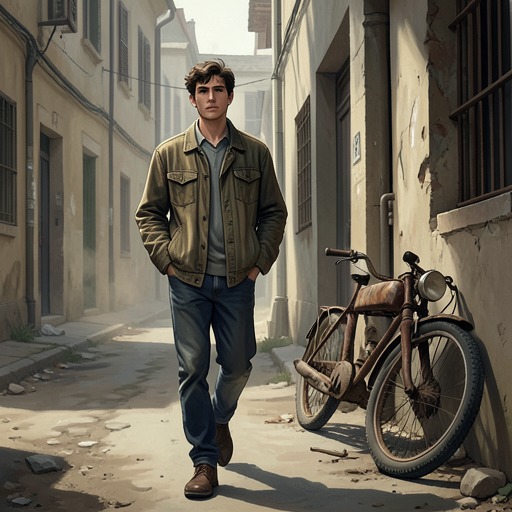
Alex invites Anthony and his cousin to a party at a wealthy family’s home in [Drimblois](entity:location-recall-location-drimblois-3a38dbf4952a), where [Stéphanie](entity:character-recall-character-st-phanie-a71d63bfb1f5) may also appear. The distance is a problem, but the cousin urges Anthony to take his father’s motorcycle.
Anthony is afraid of his father’s anger and initially refuses. His cousin’s teasing about Anthony’s lack of experience with girls presses on a deeper insecurity, until Anthony decides he would rather risk trouble than spend another evening alone.
The same evening
Hélène Lets Him Ride
At home, Anthony’s parents and their neighbors drink on the patio while discussing work, family tensions, and the [ZUP](entity:location-recall-location-zup-8cece4f4d018). His mother, [Hélène Casati](entity:character-recall-character-h-l-ne-casati-90d4eeedae83), catches him taking the Yamaha but does not stop him; she warns him about the consequences and speaks with unsteady tenderness.
Anthony rides away without a helmet, caught between fear and exhilaration. His mother’s reluctant permission briefly shelters him from the household’s usual conflict, even as the stolen freedom carries him toward the night’s disasters.
Night into the early morning, July 1992
The Party in Drimblois
Anthony and his cousin arrive at the glass-walled house, drink heavily, and sell hash to guests. Anthony finds [Stéphanie](entity:character-recall-character-st-phanie-a71d63bfb1f5) and her friend [Clémence](entity:character-recall-character-cl-mence-b6dd6a79a223), but his attempts to join their circle are awkward; older boys mock his face and offer him an unknown substance to sniff.
He passes out and later learns that Clémence went for his cousin when he collapsed. The party exposes the distance between Anthony and the confident, privileged crowd he longs to join, while leaving him confused about Stéphanie’s attention.
Near midnight, July 1992
The Party Crashers
Two uninvited youths, including [Hacine Bouali](entity:character-recall-character-hacine-bouali-5af2c5bd2313), enter the party and refuse to leave. The hosts and swimmers crowd around them, while a threat to call the police briefly shifts the balance.
As he retreats, [Hacine](entity:character-recall-character-hacine-11bd7d81490b) kicks over a barbecue, scattering hot coals and burning a girl. The disturbance gives Hacine a reputation as a volatile troublemaker and becomes one of the first links between him and Anthony’s summer.
The early hours after the party crash
Nirvana at the Pool
After the disturbance, the party slowly resumes. [Stéphanie](entity:character-recall-character-st-phanie-a71d63bfb1f5) swims in the pool, and Anthony watches from the edge, too embarrassed by his clothes and too overwhelmed by the occasion to join her.
As [“Smells Like Teen Spirit”](entity:expression-recall-expression-smells-like-teen-s-8b26b3840e75) plays, the crowd briefly finds a shared language in the song’s anger and disenchantment. Anthony falls asleep outside, still hoping the night might yet bring him closer to Stéphanie.
Dawn after the Drimblois party
The Missing Yamaha
At dawn, Anthony finds his cousin but discovers that his father’s Yamaha is gone from behind the woodpile. The two boys have no explanation and must walk back toward [Heillange](entity:location-recall-location-heillange-845dc17c8551).
For Anthony, the missing motorcycle transforms one reckless night into a family crisis. He knows the news will reach his father, and his mother’s fear that the family could fall apart begins to feel painfully plausible.
The morning after the party
Hacine’s Failed Job Interview
[Hacine](entity:character-recall-character-hacine-11bd7d81490b) attends an appointment at City Hall expecting to find work, but the employment adviser explains that she can offer only guidance and résumé help. Her questions and bright encouragement make him feel patronized rather than assisted.
He leaves without a job, carrying fresh evidence that formal institutions have little to offer him. His frustration feeds the idleness and resentment already building in the [ZUP](entity:location-recall-location-zup-8cece4f4d018).
That afternoon
Waiting in the ZUP
Back in the housing estate, [Hacine](entity:character-recall-character-hacine-11bd7d81490b) spends the day with [Eliott](entity:character-recall-character-eliott-cee168831f5c) and the other young men, waiting for customers while their hash supply dwindles. Heat and inactivity make the hours feel almost solid, and the boys imagine jobs and lives elsewhere without knowing how to reach them.
Hacine’s business is failing at the same time that his scooter has broken down. The lack of prospects intensifies his anger and makes the prospect of dealing with the countryside’s more dangerous suppliers seem increasingly unavoidable.
That evening
Hacine Burns the Hay Bale
After leaving the courtyard, [Hacine](entity:character-recall-character-hacine-11bd7d81490b) rides out to a field and watches a hay bale under the fading light. He plays with his lighter, then sets the bale alight and stands back as the flames spread.
Fire brings him an immediate, frightening calm. The act gives his helplessness a destructive outlet and foreshadows the violence he will later direct at people rather than property.
Later that evening
The Father’s Suspicion
At home, [Hacine](entity:character-recall-character-hacine-11bd7d81490b)’s father questions him about smoke and tells him that people have seen Hacine’s absent older brother. Hacine dismisses the report, but the mention of his brother unsettles both father and son.
The old man asks whether Hacine found work at City Hall. When Hacine explains that there was no job, his father insists that a person who truly wants work can find it, widening the gulf between his authority and his son’s experience.
The morning after the party
Patrick’s Anger at Home
[Patrick Casati](entity:character-recall-character-patrick-casati-0009cc58877f) waits for Anthony, who returns exhausted with his cousin after a night away. He questions them, takes the cousin home, and brings Anthony along to work rather than allowing him to shower first.
The father and son move through a tense day of labor, uneasy affection, and unspoken fear about the missing motorcycle. Their closeness remains real, but it is constrained by Patrick’s drinking and the authority Anthony both resents and craves.
That evening
The Confession to Hélène
After the workday, Anthony tells his mother that the motorcycle vanished at the party. Hélène, already strained by the tension in her marriage, realizes that Patrick cannot be allowed to discover the truth without preparation.
She decides that she and Anthony must find the motorcycle. Her fear that its loss could destroy the family turns the search into more than a question of money or property.
The next several days
The Cousin’s Retreat
Anthony tries repeatedly to find his cousin, who disappears for days and offers little help when he finally returns. He argues that the motorcycle is probably gone and tells Anthony to confess to his father.
Anthony cannot accept that advice. The cousin’s distance marks a change in their relationship: the boy who once followed him everywhere now finds himself alone with the consequences of their shared recklessness.
A few days after the theft
A Visit to Le Grand
Anthony persuades his cousin to visit [Manu](entity:character-recall-character-manu-91d5f38f8c61), known as Le Grand, at [L’Usine](entity:location-recall-location-l-usine-9e7623466c31). The cousin does most of the talking, asking whether Manu can help them recover the motorcycle from the Bouali family, though neither boy has proof that [Hacine](entity:character-recall-character-hacine-11bd7d81490b) took it.
Manu turns the visit into a test of loyalty and control. His hospitality becomes a trap, drawing the boys deeper into a dangerous adult world they do not understand.
During the visit to Manu
The Gun on the Coffee Table
[Manu](entity:character-recall-character-manu-91d5f38f8c61) pressures Anthony and his cousin to snort cocaine, then reveals a loaded MAC 50 pistol and offers it to them. Anthony is fascinated by its weight and mechanical solidity, while his cousin tries to end the visit.
When Manu refuses to let them leave, he grabs the pistol himself and orders them out. The encounter gives Anthony a new, lethal object to imagine as a solution to the crisis, and leaves him with a dangerous sense of possibility.
The following Thursday
Hélène Visits Malek
Hélène takes Anthony to the [ZUP](entity:location-recall-location-zup-8cece4f4d018) to speak with [Hacine](entity:character-recall-character-hacine-11bd7d81490b)’s father, [Malek Bouali](entity:character-recall-character-malek-bouali-f2f0b3946f12). After forcing their way into his apartment, they explain that Patrick’s motorcycle has disappeared and ask to speak with Hacine.
Malek offers tea and listens, but insists that his son is not a thief. Hélène recognizes the humiliation and hard history behind his defense, including the racial hierarchy he endured at [Metalor](entity:organization-recall-organization-metalor-cbfc8e172f65), yet refuses to leave without a promise that the motorcycle will be returned.
That night
Malek Beats His Son
After Hélène and Anthony leave, Malek prepares a shortened ax handle. When [Hacine](entity:character-recall-character-hacine-11bd7d81490b) comes home, his father strikes him repeatedly, then locks him in his room and tells him the next morning that he will kill him if he steals again.
Hacine is left bruised and ashamed, but anger replaces any repentance. He vows to find Anthony and his cousin, turning his father’s violence into another source of the feud.
Several days later
Hélène Finds the Burning Motorcycle
Hélène takes a rare day for herself at [Guérémange Swimming Pool](entity:location-recall-location-gu-r-mange-c617dd1dcdb5). On her drive home she sees a column of smoke and discovers Patrick’s motorcycle broken and burning in the neighborhood.
The destruction confirms that the family’s attempt to recover the bike has failed and that the conflict has reached their home. Hélène panics and drives off to find Anthony before Patrick can confront them.
The same afternoon
Anthony Steals a Scooter
While staying at Irène’s house with his mother, Anthony slips away through a bathroom window. He steals a BMW scooter outside the [Metro Arcade](entity:location-recall-location-metro-e29a90f4e624), forcing its ignition and fleeing as its owner and other players chase him.
At a traffic light, Vanessa recognizes him and realizes the scooter is stolen. Anthony refuses to explain himself or give her a ride, discovering that his new indifference unsettles her more than his usual embarrassment.
That afternoon
Anthony Confronts Hacine
Anthony rides the stolen scooter into the [ZUP](entity:location-recall-location-zup-8cece4f4d018) courtyard, carrying [Manu](entity:character-recall-character-manu-91d5f38f8c61)’s pistol in his backpack. He draws it and aims at [Hacine](entity:character-recall-character-hacine-11bd7d81490b), who stands his ground despite his fear and the threat of a shot at close range.
Just as Anthony seems ready to fire, the scooter stalls. The interruption breaks his resolve; instead of shooting, he spits in Hacine’s face and escapes. The humiliation does not end the feud, but it establishes that Anthony can approach lethal violence and still stop short.
After the police investigate the motorcycle
Hacine Is Sent to Morocco
Police question [Hacine](entity:character-recall-character-hacine-11bd7d81490b) over the theft, but he says nothing and is released. His father decides to take him to [Morocco](entity:location-recall-location-c725843469a0), presenting the journey as discipline and a chance for the boy to become a man.
Hacine resents being uprooted and believes there is nothing for him there. The move separates him from his friends and begins a long period in which exile, family obligation, and the pursuit of money reshape his life.
Later in the summer of 1992
Anthony and Stéphanie at the Overlook
After an encounter in which Anthony intervenes when Romain harasses [Stéphanie](entity:character-recall-character-st-phanie-a71d63bfb1f5), Anthony follows her across the open land. She challenges him about trailing her, but eventually invites him to share vodka at the [Virgin Mary Statue Overlook](entity:location-recall-location-d2bab9e1a2c9).
He asks her to go out with him and tells her she is beautiful. Stéphanie admits she wants to leave [Heillange](entity:location-recall-location-heillange-845dc17c8551) for [Paris](entity:location-recall-location-657453741ed3), while Anthony can barely imagine what that future means. Their brief closeness begins in a place where both can see how small their town feels.
The summer of 1992
Stéphanie and Simon at the Party
At the party in [Drimblois](entity:location-recall-location-drimblois-3a38dbf4952a), [Stéphanie](entity:character-recall-character-st-phanie-a71d63bfb1f5) is already drawn to [Simon Rotier](entity:character-recall-character-simon-rotier-c71e61766a09), whose aloofness and attention keep her uncertain. Later she remembers that after drinking and taking poppers, she let [Simon](entity:character-recall-character-simon-99ba1396ec7a) touch and finger her before he ignored her again.
The experience deepens her fixation rather than giving her the relationship she wants. Simon’s intermittent attention becomes a pattern of attraction, humiliation, and hope that will shape Stéphanie’s choices for years.
From 1992 to 1994
Hacine’s Moroccan Years
In [Tétouan](entity:location-recall-location-f7e7d8305dc2), [Hacine](entity:character-recall-character-hacine-11bd7d81490b) initially resists life among his relatives but gradually builds a social world through cousins, hashish, and the girl Ghizlane, whom he loves from a distance. When she marries someone else, he turns his energy toward making money through the cannabis trade.
He moves from small-scale dealing to transporting large shipments across Europe and earns far more than his father ever did. The business gives him power and mobility, but it also turns his view of success toward acquisition and leaves him vulnerable to criminal rivals.
During his Moroccan years
Hacine’s Failed Investment
[Hacine](entity:character-recall-character-hacine-11bd7d81490b) and his cousin [Driss](entity:character-recall-character-driss-f1b803433c36) invest drug money in a promised real-estate venture, convinced that its polished projects and respectable contacts are legitimate. The organizer disappears with their capital, while workers and local officials demand money from the cousins whose names are on the documents.
Threats escalate, and Driss is attacked and loses an eye. The betrayal destroys Hacine’s confidence in the venture and helps convince him to abandon [Morocco](entity:location-recall-location-c725843469a0) and return to [Heillange](entity:location-recall-location-heillange-845dc17c8551).
1994
Hacine Returns to Heillange
After two years away, [Hacine](entity:character-recall-character-hacine-11bd7d81490b) drives back to [Heillange](entity:location-recall-location-heillange-845dc17c8551) with drugs, money, and the shame of his failed investments. He visits his aging father, who welcomes him warmly and has kept his bedroom ready, but Hacine says he cannot stay.
The reunion is tender but uneasy. Hacine has returned to the place that formed him, yet he arrives as someone who has learned to measure life in money, risk, and control.
The evening of Hacine’s return
Hacine Attacks Kader
[Hacine](entity:character-recall-character-hacine-11bd7d81490b) finds his old friends in the courtyard and learns that younger dealers, led by [Kader](entity:character-recall-character-kader-4bfc38d9b66f), now control the local hash trade. After waiting for Kader to arrive, he strikes him across the jaw with the ax handle.
The sudden assault silences the group and announces Hacine’s intention to reclaim authority. His return is not a homecoming so much as a bid to impose himself on a changed neighborhood by force.
Before the 1994 funeral
Patrick’s Sobriety and Separation
After separating from Hélène, Patrick stops drinking for a period and saves the money he would have spent at the bar in a jam jar. He finds work servicing vending machines for [Districan](entity:organization-recall-organization-districan-8b1497e4085f) and tries to rebuild a life through routine and small economies.
Sobriety gives him clarity but also exposes how much of his social life and self-image depended on alcohol. His savings become a gesture toward Hélène, a late attempt to repay her and reconnect with the family he has damaged.
The mid-1990s
Stéphanie’s Ambition Takes Shape
Under pressure from her father to pass the baccalauréat with honors, [Stéphanie](entity:character-recall-character-st-phanie-a71d63bfb1f5) begins studying seriously and discovers both the difficulty and pleasure of intellectual work. She comes to understand that education sorts young people into unequal futures, despite the language of merit.
Her grades improve, and she becomes determined to enter the elite academic track rather than settle for the comfortable local life her parents imagine for her. The effort begins her transformation from an apparently carefree teenager into an ambitious student.
During Stéphanie’s final school years
Simon’s Affair with Clémence
[Clémence](entity:character-recall-character-cl-mence-b6dd6a79a223) eventually confesses to [Stéphanie](entity:character-recall-character-st-phanie-a71d63bfb1f5) that she has been sleeping with [Simon](entity:character-recall-character-simon-99ba1396ec7a), sometimes while Stéphanie still believed herself to be his girlfriend. The revelation hurts, but the two friends begin comparing experiences and exposing Simon’s selfishness together.
Their candid conversation restores a measure of equality and trust. They can condemn Simon without pretending that either of them was immune to his charm, rebuilding their friendship through honesty and shared judgment.
By the summer before 1996
Stéphanie Is Admitted to ESSEC
After years of demanding study in [Paris](entity:location-recall-location-657453741ed3), [Stéphanie](entity:character-recall-character-st-phanie-a71d63bfb1f5) passes the competitive entrance examinations and wins admission to [ESSEC Business School](entity:organization-recall-organization-essec-business-s-3362c99df426). The achievement confirms the future she has chosen, even though the work has brought anxiety, loneliness, and doubt.
Her success also sharpens her wish to escape [Heillange](entity:location-recall-location-heillange-845dc17c8551) and its limited horizons. She is no longer the girl who relied on charm and drift; she has entered a system whose rewards she understands and intends to claim.
After Hacine’s return, before July 1996
Hacine’s New Life with Coralie
[Hacine](entity:character-recall-character-hacine-11bd7d81490b) begins a relationship with [Coralie](entity:character-recall-character-coralie-cf91f2686dc8) and takes temporary demolition work with [Solodia](entity:organization-recall-organization-solodia-601af37294a1), helping clear neglected workers’ housing. Under the guidance of [Jacques](entity:character-recall-character-jacques-179ee49f5837), he learns to pace himself instead of treating every job as a race.
The work is monotonous, but Coralie, his friends, and ordinary routines give him a life he can temporarily accept. His new stability stands in contrast to the drug empire he once imagined building, though the old hunger for escape remains.
April 1996
Anthony Enlists
At a career fair in Metz, Anthony is drawn to the army’s images of military life and signs enlistment papers. He plans to leave on July 15, the day after his eighteenth birthday and the national holiday.
The decision gives him a route out of [Heillange](entity:location-recall-location-heillange-845dc17c8551) and a structure to replace the school path he never mastered. He imagines discipline, travel, and a chance to become the kind of man his father might respect.
After he begins military service
Anthony’s Knee Injury
Anthony injures his meniscus playing soccer in the army and is sent for treatment. After surgery and months of rehabilitation, military doctors determine that he is no longer fit to serve and discharge him with two years of pay.
He leaves [Germany](entity:location-recall-location-a3c24dd56e42) with money but no direction. His attempt to escape through military service ends early, and the return journey to [Heillange](entity:location-recall-location-heillange-845dc17c8551) becomes another reminder that leaving is not the same as finding a future.
After his discharge, before 1998
Anthony Comes Home
Anthony reaches [Paris](entity:location-recall-location-657453741ed3) for the first time but feels overwhelmed by its scale, crowds, and unfamiliar streets. After spending a cold night near the station, he buys a ticket home and arrives at Hélène’s house, where she feeds him before he sleeps for twenty hours.
He tries a succession of temporary jobs and eventually finds work at [Gordon](entity:organization-recall-organization-gordon-71bf48443bc7). He rents a small apartment and acquires a car on credit, but the life he has built remains precarious and emotionally narrowed.
Late 1997 or early 1998
Hacine and Coralie Have a Baby
[Hacine](entity:character-recall-character-hacine-11bd7d81490b) and [Coralie](entity:character-recall-character-coralie-cf91f2686dc8)’s daughter, [Océane](entity:character-recall-character-oc-ane-fc51e66fe70e), is born. The infant brings exhausting routines of night feedings, diapers, and work, while Coralie becomes distressed about her changed body and Hacine feels increasingly like a stranger in the life he has entered.
He loves his daughter but cannot make fatherhood cure his anger or sense of confinement. The baby becomes the center of Coralie’s world, while Hacine struggles to find a place in a family life that seems to have formed around him without his consent.
Before the 1998 World Cup semifinal
Hacine Buys the Suzuki
When a salesman offers a [Suzuki DR 125](entity:object-recall-object-suzuki-dr-125-a7669791ca3a), [Hacine](entity:character-recall-character-hacine-11bd7d81490b) buys it impulsively despite having no motorcycle license and little financial room. [Coralie](entity:character-recall-character-coralie-cf91f2686dc8) objects that they owe her parents money and cannot afford the purchase.
The motorcycle becomes a small act of escape from domestic routine. It also revives the old pleasure of movement that Hacine has never fully abandoned, even as the purchase deepens the couple’s conflict over money and responsibility.
The morning of the semifinal
Coralie Gives Hacine an Ultimatum
[Coralie](entity:character-recall-character-coralie-cf91f2686dc8) wakes [Hacine](entity:character-recall-character-hacine-11bd7d81490b) with coffee and asks what he plans to do during the France-Croatia game. When he refuses to engage with the family crisis, she tells him she does not want him around unless he changes; otherwise she will leave with [Océane](entity:character-recall-character-oc-ane-fc51e66fe70e) and he will never see them again.
Her warning forces Hacine to confront the possibility that his passivity and flight could cost him his family. He goes to work carrying the threat, while Coralie’s mother takes care of the baby.
July 14, 1998, second half
France Falls Behind Croatia
[Hacine](entity:character-recall-character-hacine-11bd7d81490b) watches the World Cup semifinal in [L’Usine](entity:location-recall-location-l-usine-9e7623466c31) after avoiding home and the demands of his workmates. Davor Šuker scores for Croatia soon after halftime, and the bar falls silent as the French crowd absorbs the setback.
The match has given the town a shared focus, but Hacine’s own future remains unsettled. In the crowded bar he unexpectedly finds himself in the same space as Anthony, whose past with him has never been resolved.
July 14, 1998, minutes after Croatia scores
France’s Comeback and the Reunion
Lilian Thuram scores twice, turning the match around and sending [L’Usine](entity:location-recall-location-l-usine-9e7623466c31) into delirious celebration. Anthony and [Hacine](entity:character-recall-character-hacine-11bd7d81490b), who have recognized each other, join the crowd’s embraces before they have had time to decide what their reunion means.
The national euphoria briefly suspends their hostility. In the bar, old grievances give way to shared excitement, though the reconciliation is fragile and shaped by the spectacle around them.
During the match
The Cousin Goes Home
Anthony watches the semifinal at his cousin’s newly built house, where his cousin and Nath have begun a settled family life. The cousin leaves at halftime to return to his pregnant partner, promising to celebrate after the final.
Anthony understands the choice but feels the distance between his own restless life and his cousin’s domestic commitments. He heads back into town alone, where the night’s celebrations will bring him face to face with both his past and his remaining desires.
Late on July 14, 1998
Anthony Tells Hacine His Father Died
After France wins, Anthony and [Hacine](entity:character-recall-character-hacine-11bd7d81490b) speak outside [L’Usine](entity:location-recall-location-l-usine-9e7623466c31). Anthony tells Hacine that Patrick died exactly two years earlier, drowning in the lake.
The news changes the emotional ground between them. The father whose motorcycle began their feud is no longer alive, and the old conflict can no longer be answered through him. Hacine agrees to give Anthony a ride on his Suzuki.
Later that night
The Ride to Stéphanie’s House
Anthony persuades [Hacine](entity:character-recall-character-hacine-11bd7d81490b) to let him ride the Suzuki across an empty parking lot. Instead of stopping after the agreed run, Anthony circles Hacine at speed, then rides away toward [Stéphanie](entity:character-recall-character-st-phanie-a71d63bfb1f5)’s house.
The motorcycle gives him the old sensation of freedom and carries him toward the person he has never stopped wanting. His reckless detour turns the night’s tentative reconciliation into a last attempt to reach a different life.
Near dawn on July 15, 1998
Stéphanie Rejects Anthony
Anthony reaches the Chaussoys’ house and is caught in the motion-activated lights. [Stéphanie](entity:character-recall-character-st-phanie-a71d63bfb1f5) comes out to speak with him, but refuses his invitation to ride and tells him that their possibility is over.
She is preparing to leave for [Canada](entity:location-recall-location-ed6a2f8d0910) and intends to build a life beyond [Heillange](entity:location-recall-location-heillange-845dc17c8551). Anthony tells her he thinks of her all the time, but she goes inside without offering him a future or even letting him see her face clearly.
July 14, 1996
Patrick Waits for Anthony
On the day before Anthony is due to leave for the army, Patrick prepares fishing gear and a present, hoping his son will come to see him. He drinks through the afternoon while waiting and eventually sets out to find Anthony himself.
His longing is mixed with alcohol, resentment, and a fear that his son is slipping away. Patrick has no settled way to express affection, but the effort to meet Anthony is one of his last attempts to repair their strained bond.
July 14, 1996, after the fireworks
Anthony and Stéphanie Meet Again
At the [Bastille Day](entity:time-recall-time-bastille-day-56461e2421a0) celebration on [American Beach](entity:location-recall-location-c05c166aab38), Anthony sees [Stéphanie](entity:character-recall-character-st-phanie-a71d63bfb1f5) again. They dance, kiss, and move away from the crowd, briefly giving each other the closeness they have circled around since their first summer.
Stéphanie asks him not to assume that the encounter promises anything. Anthony is leaving the next morning, and their intimacy carries the weight of a farewell neither of them knows how to make openly.
Later that night
The Attack on the Opel
Anthony drives [Stéphanie](entity:character-recall-character-st-phanie-a71d63bfb1f5) away from the festivities. They begin having sex in the Opel, but several men surround the car, strike its roof, peer through the window, and taunt them while Stéphanie is exposed and frightened.
The attackers vanish when Anthony sounds the horn and switches on the lights. The episode leaves the couple shaken and their intimacy abruptly broken; Anthony takes Stéphanie home without any promise that they will meet again.
The same night, July 14, 1996
Patrick Walks into the Lake
After drinking heavily at the celebration, Patrick wanders away from the crowd and eventually strips off his clothes at the lakeshore. [Hacine](entity:character-recall-character-hacine-11bd7d81490b) follows at a distance and watches him enter the water and swim away into the darkness.
Hacine calls after him, but Patrick disappears. Hacine finds Patrick’s clothes and hunting knife on the shore and leaves with the weapon, uncertain whether he has just witnessed a death or simply abandoned a man who may return.
July 15, 1996
Anthony Leaves Heillange
Anthony’s train leaves at 10:15, taking him away to begin military service. Before leaving, he packs the few things his mother has prepared, including two Snickers bars tucked beneath his shirts.
His departure is both an escape and a surrender to an institution that promises to give him orders. He leaves behind Hélène, Patrick’s unresolved fate, and the town whose roads and landscapes have shaped his sense of himself.
After Patrick disappears into the lake
Hacine Takes Patrick’s Knife
At the lakeshore, [Hacine](entity:character-recall-character-hacine-11bd7d81490b) searches Patrick’s belongings and takes the hunting knife. He walks back through the woods thinking about Patrick and Anthony, feeling no clear remorse and sensing that violence has become part of who he is.
The knife is a physical remnant of the night’s unresolved loss. Patrick’s disappearance leaves Anthony’s family with grief and unanswered questions, while Hacine carries away an object that binds him to the dead man’s fate.
A few days after the 1998 World Cup semifinal
Hélène and Anthony’s Lakeside Picnic
Anthony invites Hélène to a picnic at [Déchetterie Beach](entity:location-recall-location-d-chetterie-499b771acd4d), bringing wine and snacks while she prepares leftover food. He says he wants to talk about Patrick, but the two instead share a meal and exchange small pieces of family news.
They remember Patrick without either idealizing him or turning his life into a simple cautionary tale. The evening’s ordinary tenderness gives Anthony and Hélène a rare chance to be together without falling into their familiar arguments.
That evening
Anthony Returns the Suzuki
After the picnic, Anthony leaves Hélène and rides the Suzuki through the woods toward [Darty](entity:organization-recall-organization-darty-0e6aeed7e7e2), where [Hacine](entity:character-recall-character-hacine-11bd7d81490b) works. He plans to leave the motorcycle outside and put the keys in the mailbox, ending his possession of it without demanding gratitude or reconciliation.
As he rides through the familiar valley, he feels both pain and belonging. The book ends not with escape but with Anthony moving through the place that has shaped him, aware of its hold even as he tries to leave its debts behind.