Jim’s sobriety
AnimalsJim’s sobriety is presented through small, observable refusals rather than an account of how it began or what sustaining it requires. Its significance emerges in his relationship with Laura: not drinking changes the terms of a shared social ritual, enters an argument about having a baby, and becomes a charged subject at Mel’s wedding, where Laura’s own drinking throws his resolve into relief.
Refusal and the Hotel Conversation
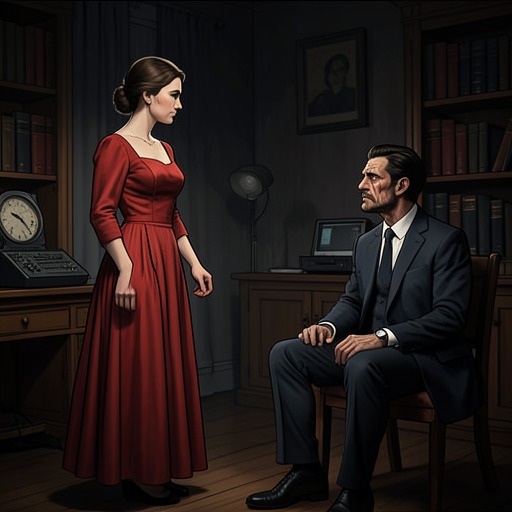
At the hotel bar, Laura is tired and asks for whisky. Before reconsidering, she invites Jim to have one with her. He declines, smiling as he does so, and says he had wondered whether she would manage it. The exchange makes his abstinence concrete: alcohol is available, Laura proposes sharing it, and he does not join her. His response is light in tone, but the invitation and refusal expose an important difference between them in that moment. The scene does not explain when Jim stopped drinking, why he did so, or how long he has been sober; it shows sobriety as a present boundary in their relationship.
The hotel conversation shifts from drinking to the possibility of a baby. Jim tells Laura that if they are going to have a child, she should take better care of her body. Laura, who has been crying, becomes furious and answers with a burst of criticism. She objects to his repeated talk about babies and says their intimacy has worsened since he stopped drinking. Her response connects sobriety to a change she perceives in their life together, but it is part of an angry dispute, not an independent account of what caused that change. The scene establishes that Jim’s abstinence has become material Laura can invoke in a larger argument over pressure, parenthood, and dissatisfaction.
Sobriety and the Baby Question
Jim’s comment about caring for her body is framed around the possibility of having a child, not around a general discussion of sobriety. Laura answers by attacking both his manner of speaking about parenthood and the effect she associates with his having stopped drinking. Their disagreement therefore gathers two kinds of change into one confrontation: a possible future with a baby, and a present relationship in which Jim no longer drinks. The evidence does not show them resolving either subject in this exchange.
The conflict also makes clear that the couple does not attach a single shared meaning to Jim’s sobriety. Jim’s refusal at the bar is presented without explanation, while Laura treats the change as relevant to their intimacy and uses it in a moment of anger. The contrast matters without establishing that abstinence itself caused their difficulties. What the scene supports is narrower and more revealing: sobriety is no longer merely Jim’s private conduct, because it has entered the language of their relationship and the argument over what their future should be.
The Wedding Challenge
At Mel’s wedding, Laura’s attention repeatedly returns to Jim’s refusal of alcohol. She takes champagne from a passing tray and attempts to give him a glass; he refuses in a notably forceful tone. She then drinks the champagne herself, gets more, and continues drinking. During the speeches, she addresses Jim quietly about having maintained his abstinence. He answers through clenched teeth, and she says she had hoped he would not keep it up. The exchange makes her opposition explicit, while his reply confirms that his sobriety is something she has been watching and testing.
The wedding scene sharpens the difference between them through action rather than explanation. Laura offers Jim a drink, he declines, and she drinks several glasses before confronting him about continuing to abstain. The occasion places that disagreement in a public celebration, but the evidence does not say that Jim drinks or that his resolve changes. Instead, the scene ends with Laura voicing a wish that he had not persisted and Jim maintaining his refusal.
Relationship and Limits of the Evidence
Across the hotel and wedding scenes, Jim’s sobriety appears both as a practical choice—he turns down whisky and champagne—and as a recurring source of tension with Laura. At the hotel, it is bound up with her criticism of their intimacy and his remarks about a possible baby. At the wedding, it becomes the explicit subject of a pointed exchange, set against Laura’s own consumption of champagne. These moments show the state affecting their interactions in different settings, from a private bar conversation to a wedding reception.
The account leaves important matters unstated. It does not give the origin of Jim’s sobriety, his reasons for stopping, the length of time he has maintained it, or any recovery plan. Nor does it establish that Laura’s criticism changes his decision. The evidence instead concentrates on what his abstinence reveals between them: he refuses the drinks Laura offers, while she treats that refusal and its consequences as part of a larger, unresolved conflict.