Laura Joyce’s recurrent binge drinking
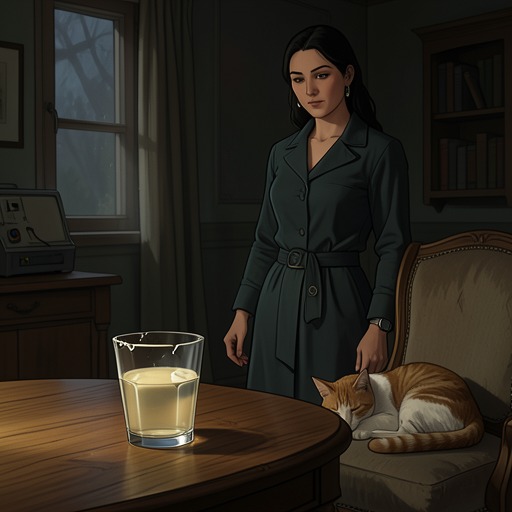
AnimalsLaura Joyce’s recurrent binge drinking is both a private method of managing distress and a recurring pressure on her closest relationships. She describes alcohol as company and as a means of freezing inner conflict, not as a route to artistic brilliance. The temporary comfort has a cost: hangover rituals, breached boundaries, and a growing difficulty for Jim to imagine how their lives can remain in balance.
Identity and Pattern
Laura’s drinking appears as a repeated pattern rather than a single crisis. After one episode of self-charming, she assesses its effects as stable but critical and follows a practical set of rules intended to prevent a horrific hangover: no news or parental phone calls, fresh air if she can tolerate being upright, sitcoms, and carbohydrates. The comic precision of this regimen makes the aftermath legible as familiar, not exceptional. She wakes with an unbrushed, furry mouth and a swollen tongue; the morning begins with bodily evidence of the previous day’s excess.
The ritual also has limits. Laura’s rules are ways to manage the consequences, not proof that she has stopped drinking or brought it under control. The morning-after checklist sits beside the prospect of doing it again, turning self-care into part of a cycle that both recognizes harm and accommodates its return.
Intoxication as Company and Self-Solidarity
Laura’s account of drinking gives alcohol a social character. She regards wine and whisky as lucid kinds of drunkenness and favors them partly because they feel like company. Different drinks acquire imagined personalities: Merlot is rambunctious, Chardonnay loud, Pinot Grigio unexpectedly incisive; Laphroaig offers intensity without solemnity. This playful casting makes solitude feel populated, even as it reveals how much work Laura asks intoxication to do for her.
She explicitly rejects the Romantic idea that drunkenness produces genius. The point, as she frames it, is not to create but to destroy the part of herself that cares whether she creates. Drinking supplies what she calls self-solidarity: a way to settle the battles within, or at least hold them still. The distinction matters. Alcohol does not resolve the conflict or produce a new direction; it offers temporary suspension.
That impulse belongs to a wider pattern of trying too hard. Laura recalls overexerting herself at school, in sketching, tooth-brushing, and netball, where she kept overshooting. The recurrence links the desire for relief to a life organized around excess effort: drinking becomes another means of escaping the strain of relentless self-monitoring, rather than a cure for it.
Escalation and Rationalization
In a beer garden, Laura watches Tyler with a mixture of admiration and longing. Tyler seems to her to occupy a cosmic vantage over Space and Time, and Laura wants to join that perspective. The moment turns on the desire itself: knowing that she is not addicted becomes, ironically, fuel for continuing downward toward what she imagines as a final outpost before giving up restraint. Her language expands into impossible destinations, from a desert-edge saloon to a brothel on Pluto. The extravagant imagery conveys how the next step can appear both absurd and compelling.
The scene shows a rationalization at work without making it a simple declaration of dependence. Laura’s belief that she is not addicted does not protect her from escalation; it can help make the next boundary seem negotiable. The comic scale of her imagined descent coexists with the seriousness of the pattern: each step is framed as a choice she can still control, even as the pull of further excess becomes the scene’s central force.
Jim and the Cost of Repetition
Laura has a rule against turning up at Jim’s late at night. After she does so while drunk, the next morning brings the familiar recognition that the visit was a breach of their agreement. She also sees how intoxication changes her judgment: actions that would not seem sensible otherwise can feel like excellent ideas in the moment. The rule’s existence records an earlier attempt to put a boundary around the consequences; its violation shows how readily that boundary can disappear during a binge.
The following breakfast brings the pattern into direct conversation. Jim asks whether Laura has considered drinking less. She answers that she usually has in the morning, then changes her mind by evening. Her reply describes the cycle with stark economy: intention survives the morning, but not the return of the conditions in which she drinks. Jim then wonders how they can remain on a level with one another during the precious time they have together. Laura cannot answer. She experiences the past as reviled and the future as threatening, while Jim frames the issue in terms of both their needs. Her silence and paralysis show that the question is no longer only how she will feel after drinking; it is also what the recurring pattern is doing to the relationship.
Care and Thematic Significance
Laura’s drinking is set against her capacity to care for Tyler during Tyler’s drug-related medical crisis. Laura calls for an ambulance, proposes getting Tyler to hospital when Tyler refuses, and ultimately helps her to the bathroom, undresses her, runs a bath, and washes her slowly and gently. The episode concerns Tyler’s drug use, not an episode of Laura drinking, but it places Laura in the role of practical caretaker amid the dangers of intoxication. Her attentiveness does not resolve her own drinking pattern; it makes clear that vulnerability and care coexist with it.
Across these episodes, intoxication offers Laura companionship and temporary relief from inner conflict, while its repetitions expose the inadequacy of that relief. The hangover rules manage the morning after; the late-night visit tests an agreed boundary; the breakfast conversation reveals a relational cost that cannot be contained by routine. Drinking is therefore neither presented as creative liberation nor reduced to a single lapse. It is a recurring strategy that quiets one kind of distress while placing Laura’s judgment, promises, and shared time with Jim under increasing strain.