The Memory-Erasure Rule
AnotherThe Memory-Erasure Rule is the mechanism by which the Yomiyama phenomenon makes the Extra Person appear fully legitimate within third-year Class 3. It does not merely remove a name from someone’s mind: it reorganizes memories, records, and other traces of the past so that contradictions become temporarily coherent. The rule therefore turns false recognition into social reality, while making later investigation dependent on fragile notes and exceptional survivors of the alteration.
Definition and Operation
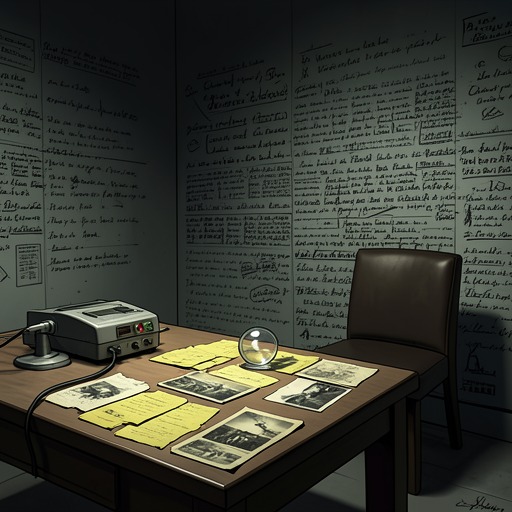
The rule affects people directly involved with the phenomenon. Their memories of who the Extra Person is cannot be retained for long; they fade with time and eventually disappear. Mr. Chibiki explains that even the teacher who first revealed the situation to him had forgotten it completely within a month, while his own recollection had become unreliable. He could barely preserve the account because he had written notes in a notebook at the time.
The alteration is broader than personal forgetfulness. When the Extra Person is concealed within the class, records and memories are tampered with throughout the surrounding world. Class lists, school records, official documents, diaries, notes, photographs, videotapes, and computer data may all be corrupted or revised. Details that should contradict the Extra Person’s presence are made to agree, so that ordinary common sense no longer exposes the impossibility.
Records, Memory, and the Repaired Past
A class list from 1996 provides a concrete example. Mami Asakura’s name belonged on the list because she was treated as a member of that class, yet her name was absent from the 1993 list where it should have appeared. The missing entry included both the mark indicating her death and the note recording it. According to Mr. Chibiki, the disappearance occurred because the phenomenon had altered the evidence that would have revealed the contradiction.
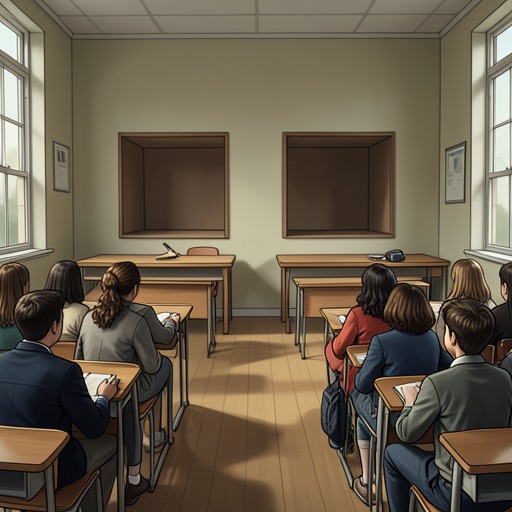
Mami Asakura had actually died at fourteen in October 1993, but her family, friends, teachers, and classmates had forgotten that fact. When she appeared as the casualty in 1996, everyone accepted the false reality that she was beginning her third year, and she remained fourteen. No one could question the arrangement because memories of the past and every connected detail had been adjusted to make her presence seem natural.
The correction continues until the casualty vanishes after the graduation ceremony. Then memories and records return to their proper state, while people close to the casualty lose the memory that the person had ever appeared in the class as the Extra Person. The rule thus has two temporal movements: it constructs a consistent false past while the phenomenon is active, then restores the ordinary record by erasing the casualty’s anomalous participation.
Social Consequences and Attempts at Resistance
The rule also shapes the class’s practical responses. The “not there” strategy was intended to increase the number of people treated as absent to two, but that attempt had no effect. Once the strategy failed to reduce the disasters, there was no reason to continue ignoring Mei Misaki and Koichi Sakakibara. The class’s behavior changed gradually after Mr. Kubodera’s death, and classmates began acting toward Mei as though she genuinely existed, including addressing her during lunch.
The rule makes investigation especially vulnerable to error. Naoya Teshigawara suspected that Tomohiko Kazami was the Extra Person because Kazami could not remember shared childhood experiences, including a riverbank base and an abandoned bicycle trip toward the ocean. Yet Koichi understood that such memory gaps proved nothing: the casualty was not a fake imitation but the actual dead person returned to life, without awareness of having already died. Ordinary failures of recollection could therefore be mistaken for supernatural evidence, while the true evidence was made inaccessible by the rule itself.
Witnesses, Exceptions, and the Rule’s Endurance
Mr. Chibiki can interact normally with Mei Misaki and Koichi Sakakibara because he has no direct tie to their class and is therefore considered safe from the phenomenon’s effects. His position outside the class allows him to serve as an observer and explain the rule, although even his memory becomes uncertain when he relies on recollection rather than contemporaneous notes. He later acknowledges the peculiar circumstances surrounding the year’s third-year Class 3, but the class’s own members remain subject to the distortions he describes.
The rule’s most decisive confirmation comes from Katsumi Matsunaga’s recorded confession. After he killed the Extra Person in his 1983 class, he observed that the disasters ended and that, beginning the next day, no one connected with the class remembered that a boy had belonged to it since April. Their memories had been “repaired,” in his formulation. The recording survives as an unusually durable witness to a process designed to remove its own subject from collective awareness.
Final Significance
The Memory-Erasure Rule makes the Yomiyama phenomenon more than a sequence of deaths. It is a system that governs recognition itself, deciding which person can be acknowledged, which records can remain coherent, and which past the community is permitted to remember. Its power lies in its completeness: the casualty is accepted because every surrounding fact supports the acceptance, and forgotten afterward because every surrounding fact is restored.
Its final irony is that memory is both the phenomenon’s instrument and its vulnerability. The rule erases the knowledge needed to resist it, yet notebooks, recordings, and the testimony of people who stand partly outside the class can preserve traces of what has been removed. Even after the casualty has been returned to death, Mei Misaki and Koichi Sakakibara remain as exceptional witnesses to a person whom everyone else has forgotten, demonstrating that the repaired collective past is never entirely beyond challenge.