Antigone condemned to be buried alive
AntigoneAntigone condemned to be buried alive is the punishment Creon orders after Antigone refuses to withdraw her defiance. It makes the conflict between royal power and her obligation to her brother physically unavoidable: she is removed from the city and sealed in a cave, where she dies before the stones can be cleared.
Cause and Meaning
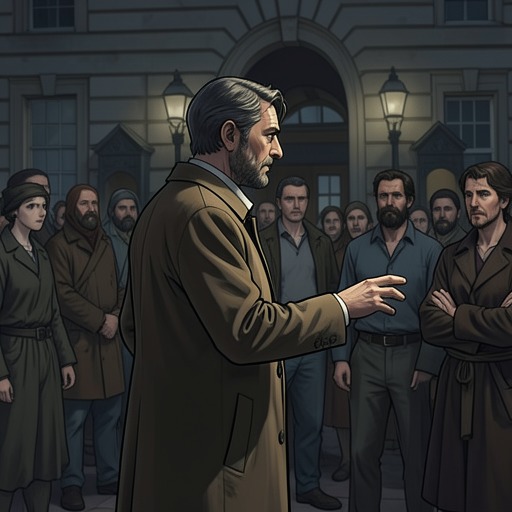
Antigone frames the conflict as a division of roles: Creon must put her to death, while she and Ismene must bury their brother. She presents this as the part each has been given, not as a choice that can be settled by accommodating Creon. At the same time, she insists that she did not consent to his terms and that the choice to refuse remains hers. The sentence therefore follows a confrontation in which political authority can determine her fate but cannot make her say yes.
Her sense of what remains possible is starkly limited. She acknowledges that she can do little, but says she must do what she can. Creon, by contrast, describes rule as the work of steering a foundering ship: someone must take the wheel and act amid disorder, even when action carries a human cost. Their opposed accounts sharpen the meaning of the punishment. For Creon, it is bound to the demands of governing; for Antigone, it confirms that she will not exchange her refusal for a life shaped by his authority.
Sentence and Confinement
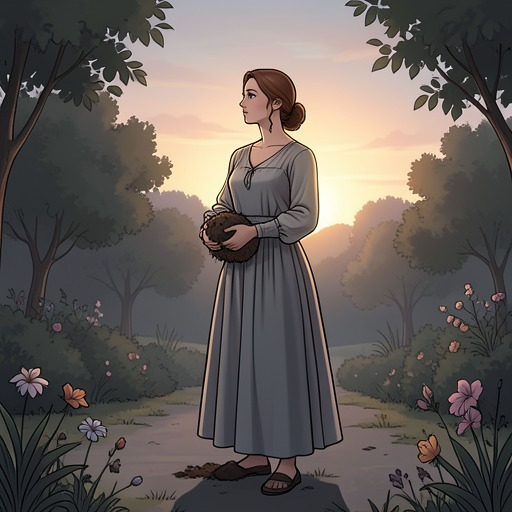
A Guard reports that Antigone is to be walled up in a cave so that the city will not be defiled by her blood. The account presents confinement, rather than a public execution, as the form of her sentence. The cave becomes both her place of punishment and, in her words, her tomb, bridal bed, final resting place, and eternal home beneath the earth. She sits alone in the large empty room and wraps her arms around herself, anticipating the separation that the sentence imposes.
The punishment is carried out as Antigone is thrown into the cave and the final stones are being put in place. The arrangement is meant to leave her sealed away, but the tomb does not remain silent: a cry from inside alerts those present that something has gone wrong. Creon is the first to understand the implication and calls for the stones to be removed. The order that was supposed to confine Antigone instead becomes the setting for the discovery of her death.
Discovery and Consequences
When the entrance is opened, Antigone is found dead at the back of the tomb, hanging from the cords of her sash. Haemon is beside her, on his knees, holding her. Creon enters after another stone is moved and tries to raise his son, but Haemon rejects him. Haemon then kills himself beside Antigone. The effort to reverse the sentence comes too late to save her, and the cave becomes the scene of further loss for Creon’s family.
The outcome gives the state’s power a severe limit: Creon can order Antigone enclosed, but he cannot turn that enclosure into a living resolution of their conflict. Her death follows from the sentence, while the discovery brings Haemon’s death and confronts Creon with consequences he cannot undo. Antigone’s refusal thus remains bound to the end of the play: even in the place chosen to silence and contain her, the act of opening the tomb reveals the cost of the decision.