Polynices’ forbidden burial state
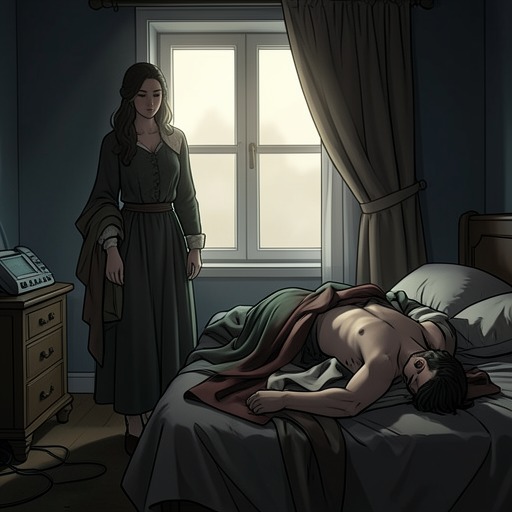
AntigonePolynices’ forbidden burial state is the public and political condition created by Creon’s decree: Polynices is denied mourning and funeral rites, and his body is left exposed after his death in the battle for Thebes. The prohibition makes an act of family and religious duty punishable by death, setting Antigone’s insistence on burial against Creon’s claim that the city must be governed through obedience and order.
The Decree and Its Stakes
After Eteocles and Polynices kill one another outside Thebes, Creon distinguishes between the brothers in death. Eteocles, designated the good brother, receives a grand funeral; Polynices, condemned as a villain and traitor, is to remain unburied and unmourned, food for jackals and vultures. Creon declares that anyone who performs the sacred rites for him will be put to death. The contrast makes the body a political sign: the state honors one brother while denying the other the rites that would allow him to be mourned and laid to rest.
The order follows a conflict over rule as well as a military defeat. Polynices had gathered foreign princes to his cause, and their forces were beaten before the seven gates of Thebes. With the city saved and both brothers dead, Creon’s distinction between them presents a public judgment on the struggle. Yet the decree reaches beyond judgment: it makes the treatment of a corpse an instrument of rule and places anyone who would bury Polynices under threat of execution.
Antigone’s Duty to the Dead
Antigone refuses to treat the prohibition as a reason to abandon her brother. She explains that she had to bury him because those left unburied wander eternally without rest. Her account makes burial more than a gesture of affection: it is an obligation owed to the dead, and a way of ending the brother’s exposure to a restless, unresolved fate. She compares the care she would have given a living brother returning exhausted from a hunt—removing his shoes, bringing food, making his bed—with the care she can still give Polynices after his own life has ended.
She also accepts the conflict as a fixed collision of roles. Antigone says that Creon must have them put to death while they must bury their brother; the roles, in her view, have already been cast. When she later insists that she did not say yes and can still refuse what she dislikes, the burial becomes the clearest expression of that refusal. She cannot control the decree or the royal force behind it, but she can perform the act she believes is hers to do.
The Corpse as Political Argument
Creon’s account of the exposed body makes the decree’s practical and theatrical purposes explicit. He says he would have buried Polynices for sanitation alone, but insists that the whole city must smell the corpse for a month so that the people he governs will understand. The duration and public exposure are intended as instruction: the body is not simply left unattended but made into a warning addressed to the population.
The same speech reveals Creon’s contempt for the people he governs, whom he compares to sheep. Antigone’s burial duty and Creon’s political lesson therefore attach opposing meanings to the same corpse. For Antigone, leaving her brother unburied denies him rest and violates a duty she cannot relinquish. For Creon, allowing the body to remain exposed communicates the consequences of defiance and reinforces his authority. The dispute is not resolved by sanitation; Creon acknowledges that he could bury Polynices for that reason, yet chooses the month-long public spectacle because he believes the city needs to see and smell it.
Competing Ideas of Choice and Responsibility
Antigone and Creon describe responsibility in incompatible terms. Antigone frames burial as the action still available to her, however little else she can do; she will not accept the decree as an answer to the duty she recognizes. Creon, by contrast, argues that someone must say yes and steer the ship of the state. He imagines a vessel taking on water amid crime, poverty, and misery, with a mutinous crew and officers protecting themselves. In that emergency, he says, the ruler cannot pause to make fine distinctions: he must seize the wheel, issue orders, and act against the first person who advances.
The metaphor explains why Creon sees obedience as a political necessity, but it also shows what that necessity costs. In the storm, the person at the wheel and the person struck in the crowd lose their individual names; only the ship and the storm remain. Antigone rejects precisely this subsuming of a particular obligation into the state’s demand for survival. Her refusal turns the burial prohibition into a test of whether political necessity can erase an individual’s duty to the dead.
Consequence and Meaning
The prohibition establishes the stakes of Antigone’s action before the conflict between her and Creon is settled: burying Polynices means defying a public order that threatens death, while obeying it means leaving him without the rites Antigone considers necessary. The decree thus converts mourning into resistance and makes the treatment of the dead a question about the limits of political power.
The exposed body also holds together the play’s competing claims. Creon uses it to make authority visible to the city; Antigone understands burial as the last care she can offer her brother. The decree’s force depends on making the corpse a public lesson, but that spectacle cannot make Antigone consent. Her refusal exposes the distance between a ruler’s command and the personal obligation the command seeks to overrule.