Antigone’s belt
AntigoneAntigone’s belt is a sash whose cords become the instrument of Antigone’s suicide in her tomb. Its decisive appearance comes when the stones are moved: Antigone is found hanging from the cords, and Haemon is kneeling beside her, holding her body. The belt thus links the play’s intimate material world to its final catastrophe, making Antigone’s death visible and setting the last chain of loss in motion.
The Belt and Antigone’s Choices
Earlier, Antigone defines the roles imposed on her and Ismene as a demand that they bury their brother, while Creon must put them to death. She insists that, even if the range of action is narrow, she can still do what she can. The belt’s later use gives that insistence a terrible physical conclusion: after refusing Creon’s terms, she dies in the place where she has been confined.
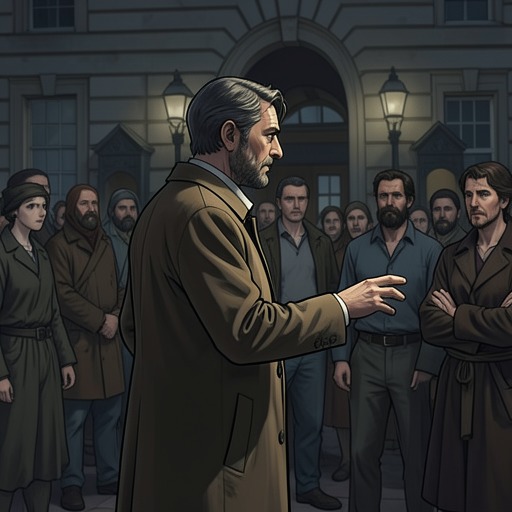
In the confrontation with Creon, Antigone rejects his claim that political obligations and practical necessity should determine her answer. She says that she has not agreed, and that the choice to refuse remains hers, even though Creon can use his crown and guards to have her killed. The belt is not described during this argument, but its eventual role makes the distinction between political power and personal choice concrete: Creon controls the sentence and the tomb, while Antigone’s last act takes place inside it.
The Sash in the Tomb
When the last stones are being rolled into place, a cry comes from inside the tomb. The gathered people recognize that it is not Antigone’s voice. Creon understands first and calls for the stones to be removed; he works alongside the slaves, his hands bleeding as they open a way into the cave.
At the back of the tomb, Antigone is hanging from the cords of her sash. The cords are described as blue, green, and red, like a child’s necklace. The detail makes the belt unmistakably particular: it is not merely an abstract instrument of death, but a colored personal garment whose cords now hold her. Haemon is on his knees, embracing her and moaning, his face buried in her dress. The belt’s appearance is inseparable from this tableau of grief.
Consequences and Significance
Creon enters after another stone is moved and tries to raise Haemon, pleading with him. Haemon ignores him, then turns, spits in his father’s face, draws his sword, and ultimately plunges it into his own stomach before collapsing against Antigone. The belt does not cause Haemon’s response, but it is central to the discovery that confronts him: Antigone’s dead body, still hanging from its cords, is the scene around which his rejection of Creon and his suicide unfold.
The object’s significance also sharpens the play’s contrast between the scale of political language and the smallness of an intimate thing. Creon has argued that someone must steer the storm-struck ship of the state, even at the cost of distinctions and individual names. At the end, that public argument gives way to bodies in a cave, Antigone’s colored sash, and the consequences of the sentence Creon imposed. The belt remains a personal object, but in the final scene it bears the weight of Antigone’s refusal, her death, and the disaster that follows.