Polynices’ small shovel
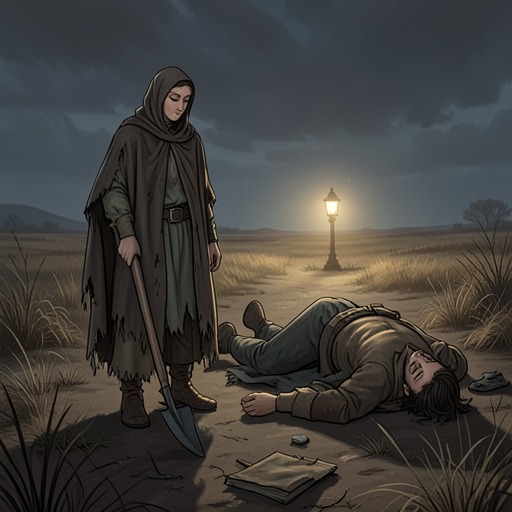
AntigonePolynices’ small shovel is a worn childhood beach toy that becomes both the practical instrument and the tangible evidence of Antigone’s forbidden burial of Polynices. Once removed by the guards, it marks the change between her first and second attempts: the first is made with the shovel, the second with her fingernails.
Childhood Object and Family Memory
Antigone identifies the shovel as a little iron tool her family used to take on vacation for making sandcastles at the beach. It belonged to Polynices, who had carved his name into its handle with a knife. Antigone explains that this personal mark is why she left it beside him: the object was not merely equipment for covering the body, but something unmistakably his, carried from childhood into death.
Evidence of the Burial
The guards initially report finding only a footprint they describe as lighter than a bird’s. On a closer search, Durant goes farther away and discovers a little child’s shovel, old and rusty. The guards doubt that a child could have carried out the act, but the Senior Guard keeps the shovel as evidence. Their suspicion contrasts with Antigone’s account: the small, weathered tool belongs to Polynices and has been used by his sister.
Confiscation and the Second Attempt
The shovel does not remain available to Antigone. When Creon points to her handcuffed hands, slightly smiling and covered in dirt, he recognizes that the guards took the tool and that she had to use her fingernails the second time. Antigone confirms the sequence: after the shovel was taken, she used her hands. The object’s removal therefore changes the physical means of the burial, but does not prevent her from trying again.
Narrative Significance
The shovel joins two sharply different settings: the family’s beach vacations, where children made sandcastles, and the forbidden burial of Polynices. Its carved name makes the connection intimate and specific, while its rust and small size make it appear incongruous as evidence in a grave-related crime. Once held by the guards, an object chosen by Antigone as a personal link to her brother becomes part of the authorities’ case against her. Its absence, in turn, makes the second attempt more physically direct: when the tool is gone, her hands take its place.