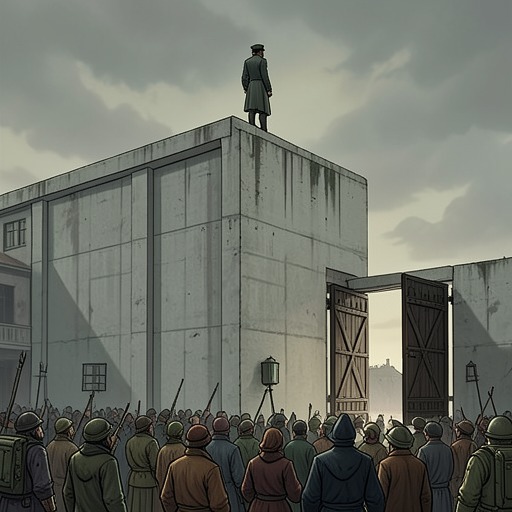
Argive army
AntigoneThe Argive army is the external military force Polynices joins after leaving Thebes. In Creon’s account, that enlistment begins a campaign of attacks and assassinations against Oedipus; the army’s presence also forms part of the political background to the later struggle over how Polynices and Eteocles are remembered.## Enlistment and the manhunt Creon tells Antigone that Polynices left after Oedipus did not want him punished, then enlisted in the Argive army. From the day he joined the Argives, Creon says, a manhunt began against Oedipus, an old king who could not bring himself to die or relinquish his kingdom. One attack followed another, and captured assassins eventually confessed to having been paid by Polynices. The account makes the army the setting for Polynices’ departure and political alignment, while distinguishing his alleged role in the attacks from the larger forces working against Oedipus: Creon stresses that Polynices was not the only person paying the assassins.## Place in Creon’s political account Creon presents this history as what happened in the wings of the public drama Antigone is eager to enter. He contrasts the private violence of the attacks with the public ceremony he staged the previous day: Eteocles received a grand funeral, and Thebes made him a hero and saint. Creon says the ceremony—with schoolchildren’s wreaths, the priests, music, military honors, and his own speech—was politically necessary; he could not afford to leave both camps with a villain. He then discloses that, in his judgment, Eteocles was no better than Polynices. The Argive army therefore belongs to the contested history that complicates the city’s official division between a celebrated brother and a dishonored one.## A military image for political rule Elsewhere, Creon describes governing through the image of a ship taking on water: someone must say yes, seize the wheel, issue orders, and act against those advancing, even when the crowd has no name and the person struck might have been a familiar face the day before. This is not a separate account of the Argive army’s actions, but it clarifies the governing logic that surrounds the conflict: political emergency, in Creon’s view, can erase individual identities beneath the name of the ship and the storm. Antigone rejects that logic. She says she has not consented to Creon’s politics or obligations, insists that the choice to refuse remains hers, and regards his power to put her to death as the consequence of his own assent to rule.## The army’s narrative significance The Argive army is not described as an organization with a stated structure or aims; the available account centers on Polynices’ enlistment and the attacks that follow. Its significance lies in how it complicates the political story told in Thebes. Creon’s account connects the enlistment to violence against Oedipus, yet his admission that Eteocles was no more virtuous than Polynices undercuts the clean moral contrast embodied by the public funeral. Against this language of camps, necessity, and collective danger, Antigone frames her own action as a duty to bury her brother and her refusal as a choice she will not surrender. The army thus marks a point where family history becomes political conflict, while the play refuses to let political labels settle the brothers’ moral standing.