Callisto’s bear form
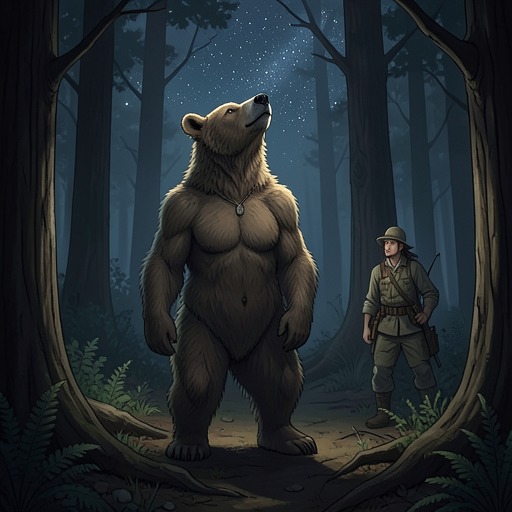
ArtemisCallisto’s bear form is the result of Hera’s enchantment and the physical condition through which Callisto is driven from the huntresses’ company into a perilous life in the woods. It changes how she can move, speak, and interact with the world, while carrying her pregnancy through flight, childbirth, and the fatal encounter with Artemis. The transformation therefore shapes both her immediate survival and the tragedy of her final separation from the goddess she loved.
Cause and Transformation
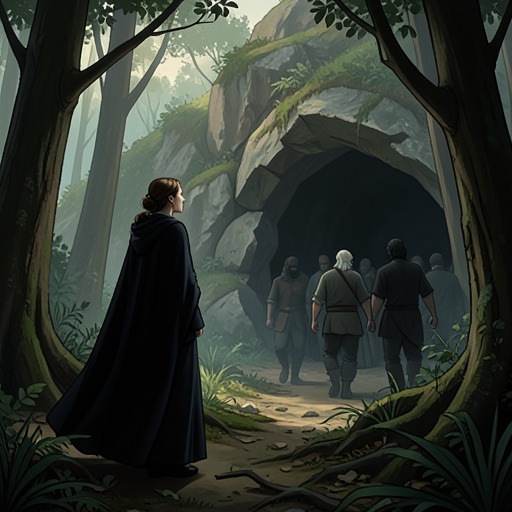
Callisto’s flight begins after Artemis orders her away and summons the hounds. Naked and frightened, she runs through the forest with her hands over her enlarged belly. Hera, who has observed the argument, decides that Zeus must be responsible for Callisto’s condition. Still jealous and resentful toward Artemis, she uses an enchantment to turn Callisto into a large brown bear. Callisto continues fleeing, and the bears’ roars carry across the landscape even after she has disappeared from sight.
The transformation occurs in a conflict already shaped by divine power over women’s bodies and the consequences of Zeus’s relationships. Earlier, Hera had warned Leto that she would carry a child but could not give birth where the sun shone, and she had imprisoned her own daughter Eileithyia to prolong Leto’s suffering. Later, at Aulis, Menelaus reminds Agamemnon of his oath and the campaign against the Trojans; Agamemnon consequently orders that Iphigenia be sacrificed to appease Artemis, and Clytemnestra leads her daughter toward the altar. These parallel episodes establish a recurring world in which women and girls bear the cost of divine hostility, political obligation, or male power. Callisto’s bear form makes that cost literal as a forced change in the body.
Life in the Woods
The new body does not make Callisto safe. As she runs, she grows weary and feels the weight of her pregnancy. Thorns and bushes brush her skin, leaving small cuts and bruises, but fear of Artemis’s hounds keeps her from stopping to look back. She eventually reaches a lake deep in the woods, where the water divides into three rivers flowing toward the sea. Exhausted and thirsty, she tries to scoop up water, only to find that she cannot hold it in her hand.
At the lakeshore, Callisto attempts to cry out, but a roar comes from her throat instead. Seeing her new appearance reflected in the water, she realizes the extent of the transformation. Her thoughts turn to whether Artemis has changed her and whether the huntress is pursuing her as prey. The scene marks the divide between Callisto’s continuing awareness and the animal form that now governs her voice and physical capacities: she remembers her relationship with Artemis, but cannot speak to her or simply return to her former life.
Callisto’s bear body also becomes the means by which she reaches childbirth. Eileithyia finds her and offers to help care for the child, though she cannot protect Callisto from Artemis’s anger. By morning, Callisto’s spirit has strengthened while her body has weakened; she is about to go into labor and gives birth in a cave. Eileithyia names the boy Arcas, saying that he will be the father of the Arcadians and that Callisto’s legacy will live through him. Zeus later sends Hermes to take the baby to King Lycaon, so he can grow up among human beings rather than beasts. The birth thus continues Callisto’s maternal lineage even as her own animal state separates her from the child’s future upbringing.
Pursued by Artemis
The bear form makes Callisto appear to Artemis’s hunting party as game. Artemis is traveling in her chariot when the maidens spot a gigantic bear by the lake. She had not set out intending to kill an animal that day, but feels moved to take up her bow. Hera, still bitter and using magical persuasion, urges her to aim at Callisto, who is trying to escape through the foliage. Another band approaches from the opposite side of the lake, leaving the bear trapped.
Artemis is frustrated and confused when the bear does not run away. Its large eyes keep meeting her gaze, but she does not recognize Callisto. Under Hera’s continued influence, she releases an arrow, which pierces Callisto’s heart. The shot is quick and painless for the bear, yet the pain seems to erupt in Artemis herself. Only after the arrow strikes does the goddess understand what she has done.
Recognition and Significance
Artemis drops her bow and rushes to the dying bear, calling Callisto by name. With a trembling hand on the bear’s muzzle, she finally learns the truth; the other maidens gather, understand what has happened, and fall silent. Callisto wishes she could wipe away Artemis’s tears, but her transformed body cannot do so. As her strength ebbs and drowsiness overtakes her, Artemis embraces the bear and weeps.
The form that first separates Callisto from her former companions ultimately conceals her identity from the person who most needs to recognize her. It preserves her capacity to flee and bear a child, yet it also changes her voice and appearance so profoundly that Artemis mistakes her for an animal to hunt. The sequence turns recognition into a belated event: the goddess understands Callisto’s identity only after her arrow has made reunion impossible. The bear form is therefore not merely a disguise but the bodily condition that links Callisto’s expulsion, isolation, motherhood, and death.