Event 1
Hera’s Persecution of Leto
[Hera’s Persecution of Leto](entity:event-recall-event-hera-s-persecution-of-l-b48157b15755) is the chain of divine retaliation that turns [Leto](entity:character-recall-character-leto-5c55121e2e71)’s pregnancy into a search for a place where she can safely give birth. [Hera](entity:character-recall-character-hera-9e0748a93486)’s curse bars childbirth wherever sunlight falls, and her pursuit extends from the mainland to the waters around [Delos](entity:location-recall-location-delos-0a14d1915116). The ordeal makes Leto’s need for refuge the hinge between [Zeus](entity:character-recall-character-zeus-27d69a7a6c1b) and Hera’s conflict, the island’s transformation into a fixed home, and the labor that later informs [Artemis](entity:character-recall-character-artemis-6f7e6f87eefa)’s chosen duty to help women in childbirth.
## The curse and its enforcement
The persecution begins in the wake of Zeus’s relationship with Leto. Hera’s jealousy of women who attract her husband’s attention makes Leto’s pregnancy a target of retaliation. Hera’s curse specifies that Leto may carry her children but may not bear them anywhere the sun shines. It turns the basic need for shelter into a trap: a place might offer rest, yet still leave Leto exposed to the condition Hera has imposed.
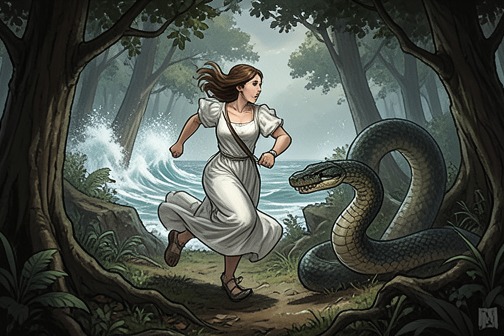
Hera gives the curse a means of enforcement by sending [Python](entity:character-recall-character-python-cd648b341073) to hunt Leto from every sunny place where she might stop. While Leto remains on the mainland, Python can track her. The pregnant Titaness flees from one part of the earth to another, but no land dares receive her; even the wealthy refuse the risk. The threat is therefore not only the pursuing serpent but also the failure of potential hosts to offer protection. Leto’s search becomes a forced passage through a world that knows of her need and still denies her refuge.
## [Wolves](entity:creature-recall-creature-wolves-f665b9881f25) and the route to Delos
Leto’s fortunes change after she leaves Tremilis and follows a wolf’s howl by moonlight to a den. The wolves welcome her when human communities have refused her, and their leader offers to guide her to Delos, where she can give birth beyond Hera’s reach. Leto recognizes the pack as her first allies in the ordeal and promises to rename Tremilis Lycia, meaning “wolf-country,” in their honor. The promise establishes a lasting bond between the route to safety and the animals that helped her find it.
Leto also devises a way to evade Python: she changes herself into a she-wolf. After twelve days and twelve nights of travel over moonlit land, she reaches Delos, surrounded by swans. The island is not attached to the ocean floor and is not counted as land, so it offers a loophole in the curse’s restriction on giving birth in a sunlit place. Leto asks Delos to become the home of her children and promises that the island will be honored and enriched. When Delos questions whether a Titaness’s promise can be trusted, Leto swears an oath by Gaia, Uranus, and the waters of Styx that her children will establish an altar and sacred precinct there and honor the island above all.
## Python at the shore and Delos’s transformation
Acceptance by Delos does not immediately end the danger. As Leto crosses the water toward the floating island, Python follows her by swimming after her. Zeus intervenes: he sends Leto across a dark, wind-driven wave and moves Delos swiftly away before Python can reach the rocky shore. Leto is spared, and the island becomes a refuge where she can prepare to give birth to the twins.
Delos is initially battered by waves, blown by winds, and without a fixed position in the sea. Its willingness to receive Leto changes its condition: when she settles on its shore, the island becomes firm upon the ocean. The promise and its fulfillment are joined. Delos gives Leto a place beyond the curse’s reach; in return, her oath binds the births and future honor of her children to the island.
## The childbirth ordeal
The escape from Python leaves Leto safe from the serpent, but not free from hardship. She begins labor leaning against a great rock on Delos. Her pain is prolonged because [Eileithyia](entity:character-recall-character-eileithyia-8d1f7a3c7a62), the goddess of childbirth and midwifery, cannot come to assist: Hera restrains her daughter to prolong Leto’s suffering. Hera’s punishment thus reaches beyond the curse’s geography and into the availability of care during childbirth.
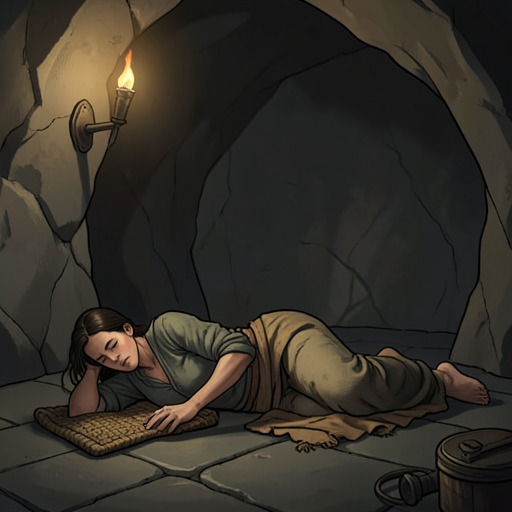
Hera declares that humanity may suffer if that is the cost of making Leto endure. She throws Eileithyia into a dungeon and keeps her imprisoned for thirty days, while Leto faces the challenge of labor without the goddess’s help. After nine days and nine nights of pain, [Rhea](entity:character-recall-character-rhea-2210b8c69e52) and Dione help Leto into a cave on the tenth day. There, in a dry and sheltered place at the island’s center, Themis, Ichnaea, and Amphitrite join them; Themis holds a torch as the deities guide Leto to a resting place away from Hera’s scrutiny.
## Consequences and significance
The persecution culminates not in Hera’s preventing the births, but in Leto’s reaching Delos and enduring labor there after a protracted ordeal. The narrative links that suffering to Artemis’s later request to help women struck by the pains of childbirth. Artemis explains that her own birth brought her mother no pain, and asks for power to assist women in labor. The request turns Leto’s experience into a point of contrast: the daughter born without travail chooses to serve those who suffer it.
The event also frames divine power as both the source of danger and a means of escape. Hera uses her authority to impose a curse, command Python, and restrain Eileithyia; Zeus first withdraws from Leto’s danger and later intervenes when Python reaches the sea. Leto, meanwhile, is not merely carried from threat to rescue: she secures the wolves’ aid, changes into a she-wolf, negotiates with Delos, and binds the island through an oath. Her flight and the island’s welcome transform persecution into a foundation for the twins’ birth and Delos’s sacred standing.
Event 2
Birth of Apollo and Artemis
The birth of [Artemis](entity:character-recall-character-artemis-6f7e6f87eefa) and [Apollo](entity:character-recall-character-apollo-1cf2b99589fd) on [Delos](entity:location-recall-location-delos-0a14d1915116) turns [Hera](entity:character-recall-character-hera-9e0748a93486)’s attempt to punish [Leto](entity:character-recall-character-leto-5c55121e2e71) through childbirth into the beginning of the twins’ divine identities: Artemis arrives first and, while still newly born, helps bring Apollo into the world. The scene joins a struggle over who may control and assist a woman’s labor with an origin story for Artemis’s own later claim to protect women in childbirth.
## Causes and Background
[Zeus](entity:character-recall-character-zeus-27d69a7a6c1b)’s relationship with Leto puts her pregnancy under threat. Zeus knows that his presence endangers her because his wife Hera is jealous of women who attract his attention. Hera discovers the pair despite Zeus’s attempt to disguise them as quails and curses Leto to carry a child but give birth nowhere touched by sunlight. The curse makes the circumstances of the birth inseparable from Hera’s efforts to punish Leto for her relationship with Zeus.
Leto eventually finds refuge on Delos, an island buffeted by waves and wind and lacking a fixed place in the sea. When it agrees to receive the pregnant Leto, it becomes firm on the ocean. Yet refuge does not free her from Hera’s influence: the labor begins against a rock, and the goddess of childbirth, [Eileithyia](entity:character-recall-character-eileithyia-8d1f7a3c7a62), is prevented from helping.
Hera restrains her daughter Eileithyia, whose absence leaves Leto in severe pain without the aid of the goddess specifically associated with childbirth and midwifery. Hera’s opposition is not merely a private quarrel between divine relatives; it makes the laboring mother’s suffering a means of retaliation. Hera declares that she will make Leto suffer even if the pain claims her life, and confines Eileithyia in the palace dungeon for thirty days.
## Labor and Refuge
Leto’s ordeal lasts nine days and nine nights. On the tenth day, [Rhea](entity:character-recall-character-rhea-2210b8c69e52) and Dione help her into a cave. The cavern, dry and comfortable, offers a sheltered place at the center of Delos, away from Hera’s prying eyes and vengeance. A stream murmurs in the darkness, while Themis holds a torch to light the way.
The aid comes from a small group of immortals acting where Hera has blocked the designated birth attendant. Rhea and Dione bring Leto to the cave; ahead of them, Ichnaea, Themis, and Amphitrite have come to help. Together, the five guide Leto to a place to rest, and Rhea holds and soothes her as labor begins. Their care does not erase the preceding days of pain, but it gives Leto a protected place and companions at the moment of delivery.
## The Twins’ Birth
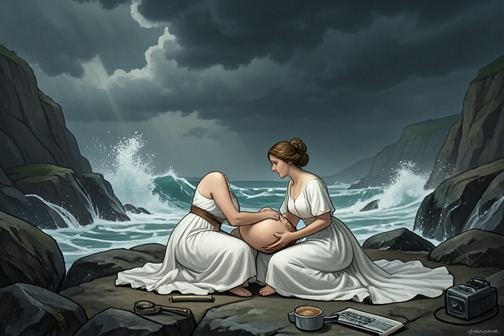
Leto gives birth to Artemis first. The newborn is initially an infant, but, like the gods in the story, grows within moments to the size and age of a mature child. Seeing her mother in pain, Artemis immediately goes to her side and takes her hand. Leto names her firstborn and calls her beautiful, while also describing the future she wants for her: a huntress of the wild, a free spirit whom neither men nor gods can tame.
Artemis then recognizes that another child remains to be born. With Eileithyia absent, she positions herself between Leto’s legs and acts as a midwife. She urges her mother to push, and Leto bears a son. When the pains finally cease, Leto names him Apollo. The newborn twins are described as exceptionally beautiful, and the House of Zeus and Hera will later be struck by their presence.
The birth is witnessed by Rhea, Dione, Themis, Amphitrite, and Ichnaea. Their testimony carries news of Leto and her children to [Olympus](entity:location-recall-location-olympus-51e89921d839). Thus the delivery is both a private crisis in a cave and a publicly consequential divine birth: the witnesses make the twins’ arrival known beyond Delos.
## Aftermath and Significance
Artemis’s first actions establish a connection between her own beginning and childbirth. Born during her mother’s suffering, she responds immediately to Leto’s pain and takes on the work of a midwife when Eileithyia cannot. Later, when Artemis asks Zeus for her powers and domains, she recalls that Leto suffered no pain in carrying or giving birth to her and says the Fates ordained that she should help women in labor. The birth scene therefore supplies the personal origin for a later divine duty: Artemis’s role as helper in childbirth grows out of the moment when she herself helped her mother.
The narrative sets obstructed care against improvised assistance. Hera uses her authority to imprison Eileithyia and prolong Leto’s agony, while the five immortals and the newly born Artemis provide the aid she has withheld. Delos’s shift from a drifting island to a firm refuge also gives the birth a concrete setting: the threatened mother finds a place to deliver, and the twins’ arrival becomes the event through which their identities and future roles first take shape.
Event 3
Artemis’s Six Wishes
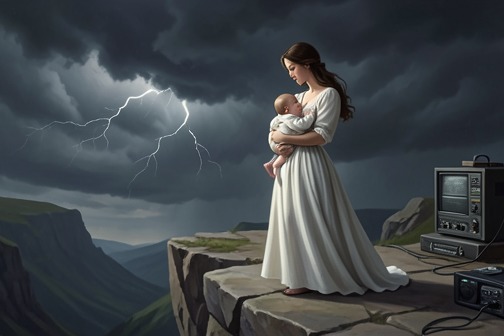
[Artemis’s Six Wishes](entity:event-recall-event-artemis-s-six-wishes-fdaefe330d30) is the decisive exchange in which [Artemis](entity:character-recall-character-artemis-6f7e6f87eefa) converts grief over [Leto](entity:character-recall-character-leto-5c55121e2e71)’s suffering into a self-fashioned identity: not a challenger to [Hera](entity:character-recall-character-hera-9e0748a93486), whom [Zeus](entity:character-recall-character-zeus-27d69a7a6c1b) forbids her to oppose, but a maiden huntress with independent symbols, companions, and domains. Her requests unite chastity, the hunt, and aid to women in childbirth, while Zeus’s assent gives her both a divine commission and room to choose its instruments for herself.
## The Occasion and the Limits of Revenge
Artemis begins by demanding justice for Leto. Her father, Zeus, is alarmed by her determination, but refuses to let her act against Hera, who remains queen of the gods. He offers anything else within his power to give. The restriction redirects rather than extinguishes Artemis’s anger: she recognizes Hera’s authority and resolves to find another way to answer the wrong done to her mother.
The wishes therefore arise at a turning point between a child’s appeal for vengeance and a new, affirmative claim to power. Instead of receiving permission to confront Hera, Artemis secures a life and sphere of action that do not depend on doing so. The exchange sets the terms for her distinct identity, including her separation from her twin brother, [Apollo](entity:character-recall-character-apollo-1cf2b99589fd).
## A Maiden and a Huntress
Artemis’s first requests establish who she intends to be. She asks to remain a maiden and virgin always, to have many names, and to have victories of her own rather than have them confused with Apollo’s achievements. She wants an embroidered deerskin tunic that reaches her knees and is short enough to run in while hunting. She also asks for fierce, swift hounds, and for the name Light Bringer.
Zeus grants these wishes, promising that she will stand apart from Apollo, remain a virgin, and become the pride of the nymphs. He gives her the name Phaesporia, the light bringer of the world. The requests link her public distinction to a practical life: a garment made for movement and a pack suited to the chase accompany the name by which she is to be known. Her identity is not simply bestowed by Zeus; she specifies its terms.
## Weapons, Court, and Territory
The next requests enlarge Artemis’s independence. She asks for a well-bent silver bow and arrows, explicitly preferring silver to gold, and for a chariot to use when running no longer pleases her. She also asks for a court comprising sixty daughters of [Oceanus](entity:character-recall-character-oceanus-0ce23b00157d) as her herald choir, together with twenty handmaidens of the Amnisian nymphs. The handmaidens are to care for her buskins and, when the hunt is over, tend her hounds and guard her bow while she rests.
Her final claims are geographical and vocational. She asks for all the mountains and for the forest, while requesting any city without particular preference: she expects to live in the mountains and visit cities of upright people only when women in the pangs of childbirth call for help. Artemis connects this duty to her own birth, saying that the Fates appointed her as a helper because Leto suffered no pain in carrying or delivering her. Thus a domain associated with the hunt is paired with service to women in labor, and her requested authority extends from wilderness to the moments when she is summoned into a city.
## Zeus’s Answer and the Consequences
Zeus agrees to the wishes and confirms Artemis’s eternal chastity. His answer includes an unusual qualification: she will also retain the ability to change her mind about chastity, though he says this will help ensure that she does not want to. The episode thus makes her enduring commitment part of her granted identity while explicitly leaving the choice with her.
Zeus further grants her the greatest gift as he describes it: the freedom to go out and choose her own gifts, so that they will have special value. After thanking him, Artemis runs off to make those choices. The narration marks the exchange as her passage out of childhood and into life as Artemis the Huntress. Her bow, chariot, retinue, and territories are not yet merely a catalogue of honors; together they provide the means and setting for the role she has just defined.
## The Wishes’ Wider Significance
The six wishes form a coherent answer to the original refusal. Zeus does not authorize revenge against Hera, but Artemis leaves with a separate name, pursuits, and jurisdiction. Her insistence that her achievements not be confused with Apollo’s makes distinction itself one of her aims; the hunt is both an activity and a way to establish a public identity independent of her brother.
The requested territories and duties also resist a simple division between wilderness and civic life. Artemis wants to dwell in the mountains and forest, yet promises to enter cities when women need help in childbirth. The story grounds that role in her own birth and Leto’s experience, turning family history into a reason for divine responsibility. The exchange consequently establishes a huntress who is at once self-governing, accompanied by a defined retinue, and answerable to women who call for aid.
Event 4
Artemis’s Acquisition of the Silver Bow

[Artemis](entity:character-recall-character-artemis-6f7e6f87eefa)’s acquisition of the [Silver Bow](entity:object-recall-object-silver-bow-316182ef1ed2) transforms a gift promised by [Zeus](entity:character-recall-character-zeus-27d69a7a6c1b) into a weapon won through her own resolve. Guided by [Hephaestus](entity:character-recall-character-hephaestus-bed420788e18) to the [Cyclopes](entity:character-recall-character-cyclopes-d7f29a6e3526) beneath the sea near [Lipara](entity:location-recall-location-lipara-ab220682871c), she seeks [Poseidon](entity:character-recall-character-poseidon-e1fba82acfaf)’s aid, meets resistance from the three smiths, and ultimately claims the silver bow and its replenishing [Arrows of Moonlight](entity:object-recall-object-arrows-of-moonlight-490862a6737d). The victory closes one quest and points toward another: Artemis leaves intending to use her new weapon against [Hera](entity:character-recall-character-hera-9e0748a93486) in pursuit of justice for [Leto](entity:character-recall-character-leto-5c55121e2e71).
## The promised gift and Hephaestus’s direction
Artemis approaches Hephaestus with a specific demand: her father, Zeus, has promised her a magnificent bow of true silver, and she wants it made in the form she was promised. She invokes Zeus’s authority and asks her brother to forge it, but Hephaestus initially refuses. True silver, he explains, is exceptionally rare; he could instead make a gold bow and arrows like those of [Apollo](entity:character-recall-character-apollo-1cf2b99589fd). Artemis insists that the promise must be fulfilled as she wishes, and her persistence changes Hephaestus’s response.
Rather than forge the weapon himself, Hephaestus supplies the route to it. He tells Artemis to go deep beneath the sea off Lipara, where the Cyclopes are making a horse trough for Poseidon. The sea god, he says, can give her access to their hidden armory; there, [Brontes](entity:character-recall-character-brontes-88658a52a302), [Steropes](entity:character-recall-character-steropes-39fcbb5c7149), and [Arges](entity:character-recall-character-arges-dae6af32435a) have the skill and distinctive magic required to make her hunter’s bow. The instruction makes the promised gift depend on a new expedition: Artemis must obtain access and persuade—or compel—the smiths to create it.
## Poseidon and the passage to the Cyclopes
Artemis sails out to meet Poseidon, bringing her hounds with her. He rises from the sea as she stands in her small boat, and she confirms that she seeks the Cyclopes’ help to receive what Zeus promised. Poseidon grants her access, allowing her to reach the hidden place where the smiths are at work. The encounter thus connects the bow’s making to both divine permission and Artemis’s own initiative: Hephaestus identifies the makers, while Poseidon opens the way to them.
At the Cyclopes’ valley, Artemis presents herself as a messenger from Poseidon. She asks Brontes, Steropes, and Arges to set aside the horse trough and make a silver bow and quiver of silver arrows that will refill when emptied. In return, she offers them the first game she shoots. The proposal links the weapon to her future identity as a huntress, but the Cyclopes do not accept her offer or treat Zeus’s promise as binding on them. Their refusal turns the encounter from a request into a contest over whether Artemis can enforce her demand.
## Resistance and the making of the bow
When the Cyclopes resist, Artemis declares that she is Zeus’s daughter and gives them an hour to provide the bow and arrows. She then attacks Brontes, striking him with an arrow. The attempted negotiation has failed, and the hourglass marks the limited time she has set for the confrontation; Artemis responds by treating the smiths as opponents to be hunted rather than as craftsmen she can persuade.
The fighting also exposes the loyalty of Artemis’s hounds. One takes the blow intended for its mistress when Steropes charges, and the loss grieves Artemis. The dogs later dart around Steropes and hinder him, giving Artemis the opening to draw her sword and overcome him. The encounter is not simply a display of divine authority: Artemis and her hounds act together, and the outcome depends on her ability to meet the Cyclopes’ resistance directly.
With Steropes defeated, Artemis calls on all three Cyclopes and demands the weapon without delay. She stresses that she spared their lives despite their hostility, and declares that she is more than a mere maiden. Brontes and his brothers surrender. The threat of continued resistance gives way to the result Artemis sought: the Cyclopes make the bow and arrows for her.
## The weapon and its next purpose
Artemis thanks the Cyclopes once the weapon is finished, though they depart cursing under their breath. She raises the Silver Bow in triumph and returns to her boat with her hounds and a quiver full of Arrows of Moonlight. The arrows’ defining property is that the quiver fills again as soon as it is empty, making the promised gift a renewable supply rather than a finite set of shots.
As the boat waits for the hourglass to return them to Poseidon’s seas and the whirlpool begins to take them back, Artemis’s dogs lick her cheek. Her satisfaction at having secured the weapon immediately turns toward what she plans to do with it: she decides that her next quest will be revenge against Hera, and anticipates using the bow and arrows to bring justice for her mother, Leto. The acquisition therefore ends not in repose but in a new intention. A gift first framed as a reward becomes the means by which Artemis expects to pursue a personal conflict.
Event 5
Artemis’s Huntress Retinue
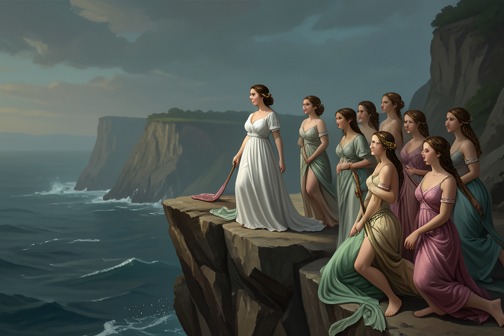
[Artemis’s Huntress Retinue](entity:event-recall-event-artemis-s-huntress-reti-5326b16be853) is the company of handmaidens and sea nymphs assembled to accompany [Artemis](entity:character-recall-character-artemis-6f7e6f87eefa) on her adventures and serve at her temples. Its formation makes the goddess’s chosen life visible: Artemis does not travel alone, but gathers followers whose presence extends her authority into the wild and gives substance to her public identity as a huntress. The group also connects her personal wishes to a wider sacred landscape, from the floating island of [Delos](entity:location-recall-location-delos-0a14d1915116) to the oracle at [Delphi](entity:location-recall-location-delphi-28bf56ecdaa4).
## Formation and the Promise of Companionship
The retinue takes shape through more than one act of recruitment. At the sea, the ancient [Oceanus](entity:character-recall-character-oceanus-0ce23b00157d) appears with his daughters and offers Artemis all sixty, explaining that they will serve her adventures and that their gift settles his debt to [Zeus](entity:character-recall-character-zeus-27d69a7a6c1b). Artemis receives them with gratitude and promises to guard and raise them with honor. The exchange gives the company both a divine patronage and an explicit obligation of care: the nymphs are not merely a gift to be claimed, but followers whose welfare Artemis undertakes to protect.
A later selection narrows that vast company to those who will travel with the goddess. When Artemis meets Opis, she invites her to come and choose five others like herself. The rest are to remain behind and tend Artemis’s temple, where thigh-bones are burned in sacrifice on her altar. The next day Artemis sets out with her hounds and the chosen [Oceanides](entity:character-recall-character-oceanides-b78a1fd43ef5), travelling through the forest from dawn until dusk. This division establishes two complementary roles within the retinue: a mobile group accompanying Artemis into the landscape and a temple-serving group maintaining her cult at home.
## Recruitment at [Arcadia](entity:location-recall-location-arcadia-da516d4ec16e)
The retinue’s public expansion comes at Arcadia, in the territory of [King Lycaon](entity:character-recall-character-king-lycaon-842cf4747037). The king invites Artemis to a feast at his splendid palace, where the bustling city and its people’s high regard for her frame the recruitment as a civic occasion. A royal man announces her as the Huntress of the Wild, Mistress of the [Hounds](entity:creature-recall-creature-hounds-33e563ceb7ec), and daughter of Zeus. The titles place the new followers in the orbit of a goddess whose authority is recognized beyond the wilderness.
The king says that Artemis was expected to select twenty handmaidens. Artemis answers that she will take as many as she wishes, though she intends to keep to the pact with her father unless she sees someone she cannot leave behind. She then chooses nineteen women and tells the king that she wants them all to leave with her the next day. The episode presents the retinue as an act of deliberate selection rather than a fixed quota: Artemis acknowledges the agreement, but asserts her own judgment over who will join her.
## Membership and Service
The gathered company includes the Oceanides and the maidens selected in Arcadia. Its numbers and duties vary by setting: Oceanus offers sixty daughters, while Artemis chooses a smaller travelling party from among them and separately recruits nineteen women at the king’s palace. The evidence therefore depicts the retinue not as one undifferentiated crowd, but as followers selected for different forms of service—accompanying Artemis, joining her adventures, or remaining to tend a sanctuary.
[Callisto](entity:character-recall-character-callisto-99fc814dceb7) enters the retinue as one of the named maidens. When Artemis asks her name, she answers that she is Callisto. The introduction identifies an individual within the larger company and prepares for the importance of the relationship between the goddess and her companion. The group is thus both collective and personal: it supplies Artemis with attendants and fellow travellers, while bringing particular women into close proximity with her life and story.
## Sacred Geography and Narrative Role
The retinue’s meaning is illuminated by the sacred places around which Artemis’s story develops. Delos receives [Leto](entity:character-recall-character-leto-5c55121e2e71) after twelve days and nights of flight from the [Python](entity:character-recall-character-python-cd648b341073). The island is floating and unattached to the ocean floor, and Leto seeks its protection while promising that her children will establish a temple there. Delos fears that the powerful gods might later disdain its poor, rocky soil; Leto answers with a solemn oath that her children will build an altar and sacred precinct and honor the island. When the Python pursues Leto toward the island, Zeus sends her across the waves and moves the floating land beyond the monster’s reach. This sequence establishes temples and divine promises as the ground on which later forms of service, including Artemis’s temple attendants, depend.
The pattern of sacred space and service recurs at Delphi. Artemis pursues the Python to the Oracle of Gaia, where the serpent hides in a cave; she drives it out by shooting arrows that burst into flames. After the killing, [Apollo](entity:character-recall-character-apollo-1cf2b99589fd) claims the oracle, whose priestesses had been trained from infancy to enter a trance in the smoke of laurel and magical herbs and speak in riddles. He orders them to prophesy in his name and institutes annual games at Delphi to appease Mother Earth, naming them the Pythian Games after the enemy they have defeated. Against this background, the retinue’s temple duties are part of a broader narrative in which divine presence is secured, maintained, and publicly represented through places of worship and their attendants.
The company also makes Artemis’s identity tangible in the course of ordinary movement through the story. She travels with handmaidens and choir members, and people come to know her as the maiden of the wild and goddess of hunters. The retinue is therefore not only practical support for her adventures; it is the visible form of her chosen role. Its mixed origins—as a gift of Oceanus, a selectively recruited travelling party, and a group of temple servants—allow the narrative to join companionship, worship, and divine reputation without reducing the followers to a single function.
Event 6
Slaying of Python
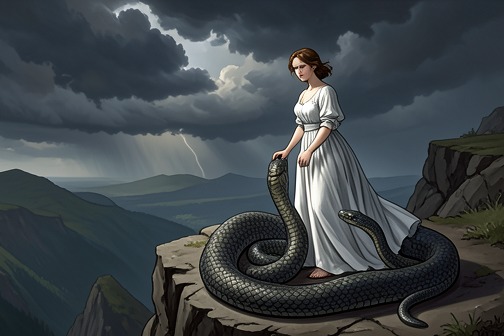
The [Slaying of Python](entity:event-recall-event-slaying-of-python-b7670a27af61) is the joint hunt in which [Artemis](entity:character-recall-character-artemis-6f7e6f87eefa) and [Apollo](entity:character-recall-character-apollo-1cf2b99589fd) kill the dragon associated with [Hera](entity:character-recall-character-hera-9e0748a93486) and with the pursuit of their mother, [Leto](entity:character-recall-character-leto-5c55121e2e71). Artemis initiates the campaign and delivers the final blow, while Apollo helps pin the creature down and fights beside her. Their revenge becomes a turning point in Leto’s story, but the victory also carries a religious consequence: at [Delphi](entity:location-recall-location-delphi-28bf56ecdaa4), Apollo claims the Earth Mother’s oracles for himself and institutes the Pythian Games to appease her.
## Causes and Stakes
The twins’ motive is rooted in the danger [Python](entity:character-recall-character-python-cd648b341073) posed to Leto. Hera’s hostility toward Leto follows [Zeus](entity:character-recall-character-zeus-27d69a7a6c1b)’s relationship with her: Hera feared the attention Zeus gave another woman and cursed Leto to carry children yet be unable to give birth wherever sunlight reached. Hera later insisted that Leto must suffer even at the cost of humanity, and Python is identified by Artemis as the dragon that had hunted their mother. The hunt therefore answers both a personal injury and a continuing threat.
The narrative makes the twins’ revenge explicit before they set out. Artemis calls Python an enemy and describes it as Hera’s beloved pet; Apollo recalls that its presence has kept Leto from leaving [Delos](entity:location-recall-location-delos-0a14d1915116) since the twins were born. Artemis frames the dragon’s death as the end of Hera’s reign of terror. Their target is thus more than a dangerous beast: in the twins’ account, it is an instrument of the persecution that has confined their mother.
## The Hunt and the Killing
Before summoning Apollo, Artemis tests her [Silver Bow](entity:object-recall-object-silver-bow-316182ef1ed2) four times. Her first shots split a pine and an olive tree; the next kills a wild boar; the fourth strikes a city of unjust men who had denied Leto shelter while she wandered. This sequence establishes a progression from marksmanship practice to vengeance for her mother’s treatment. Artemis then asks Apollo to join her, and, though she offers him the glory if they succeed, she also asks him to keep the undertaking secret between them.
The hounds lead the twins to Python, which they see from a hill, its coils spread below. Artemis opens the attack with an arrow. During the fight Apollo’s golden arrow pins Python’s tail to the ground, preventing it from escaping. Artemis sends the hounds against it while the twins continue shooting; Python remains dangerous, and its tail can break away rocks. The battle is a coordinated effort rather than a single stroke: Apollo’s shot restrains the creature, the hounds keep pressure on it, and Artemis keeps attacking.
When Python turns its fire against Artemis, she avoids the attack and moves beneath and away from it. Apollo’s arrow strikes the dragon’s neck and chokes it with its own flames. Artemis then shoots Python in the chest and releases the final arrow, the Arrow of Moonlight, which severs its head. Python falls lifeless. Artemis survives the encounter, and Apollo finds her resting on the grass after the fight.
## Delphi and the Aftermath
The twins leave Python’s corpse at the shore of Delphi, where their killing has taken place at a shrine. Hera mourns the dead dragon and complains to Zeus; Apollo promises to make amends. The aftermath therefore does not erase the conflict with Hera, but redirects attention to the religious violation committed in the course of revenge.
At Delphi, the Earth Mother’s oracles are priestesses trained from infancy. They chew laurel, burn magical herbs, enter a trance in the smoke, and deliver prophecies in riddles. Knowing that the twins’ killing has violated the shrine, Apollo takes responsibility for the breach by claiming the oracles for himself and bidding them prophesy in his name. He also establishes annual games at Delphi to appease the Earth Mother, naming them the Pythian Games after the enemy they have killed. The episode thus ends not only with Python’s death but with a reordering of Delphi’s oracle and the institution of a recurring ritual response.
## Narrative Significance
The hunt joins filial vengeance to divine power. Artemis’s practice shots, her stated intention to avenge Leto, and her final use of the Arrow of Moonlight make her the decisive agent in Python’s death; Apollo’s contribution is indispensable, first restraining the dragon and then striking it during its attack. Their cooperation turns a private grievance into a deed with consequences for a sacred institution.
The outcome also contains a tension: Python is killed in the name of ending Hera’s persecution, yet the act itself violates the Earth Mother’s shrine. Apollo’s response does not undo that violation; he claims the oracle and establishes the games as appeasement. The victory therefore resolves the twins’ immediate pursuit of their mother’s enemy while creating a new religious arrangement at Delphi, one that preserves the memory of the slain Python in the name of the annual games.
Event 7
Actaeon’s Death

[Actaeon’s Death](entity:event-recall-event-actaeon-s-death-3359433bec74) is [Artemis](entity:character-recall-character-artemis-6f7e6f87eefa)’s punishment of a young man who secretly watches her bathing. She transforms him into a stag and calls her hounds, an abrupt act that makes the goddess’s defense of her privacy—and the danger of crossing her—plain to those who witness it.
## The Encounter
While bathing in a stream with [Callisto](entity:character-recall-character-callisto-99fc814dceb7) nearby, Artemis suddenly turns her attention toward a grove. The narration identifies [Actaeon](entity:character-recall-character-actaeon-0903a288e81a) as a young man who had hidden in the bushes to spy on her. The scene frames his conduct as deliberate: he stays concealed because he cannot bring himself to leave after glimpsing the goddess.
Artemis senses him there and responds at once. Without describing an appeal or confrontation, the account moves directly from discovery to punishment, making the shift in her expression the turning point of the episode.
## [Transformation](entity:concept-recall-concept-679f97586a45) and Death
Artemis changes Actaeon into a stag. His human form gives way to an animal one: his skin grows fur, his hands and legs become hooves, and antlers emerge. His cries change as well, marking the loss of his human voice alongside his altered body.
She then whistles for her hounds, which rush in and kill him. Callisto witnesses the punishment and gasps in terror. Artemis leaves the stream without looking back, and the account gives no indication that Actaeon is restored or survives.
## Aftermath and Significance
The episode makes Artemis’s response to an invasion of her privacy a warning to others. The narration says that men learn of her temper and become wary of crossing her in their words or conduct. Actaeon’s fate thus has a consequence beyond the immediate scene: it shapes how people approach the goddess.
The story also links the punishment to Artemis’s later regard for stags. After her anger has passed, she feels pity for Actaeon and declares stags sacred animals. The reversal does not undo his death; instead, the animal form imposed on him becomes associated with a protected class of animals. The episode holds together retribution and pity, while presenting transformation as both the means of punishment and the source of a lasting sacred association.
Event 8
Iphigenia at Aulis
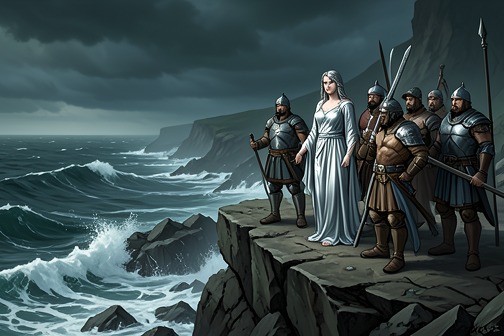
[Iphigenia at Aulis](entity:event-recall-event-iphigenia-at-aulis-0c7072cd7b4b) is the crisis in which [Artemis](entity:character-recall-character-artemis-6f7e6f87eefa)’s demand for a human sacrifice threatens [Agamemnon](entity:character-recall-character-agamemnon-dafde3175964)’s daughter and halts the Greek expedition to [Troy](entity:location-recall-location-troy-3f2543b3876b). The episode turns on a reversal: Artemis first insists that Agamemnon repay the life he took from her sacred grove with a life of his own, but then recognizes that [Iphigenia](entity:character-recall-character-iphigenia-6cf12886535c) is not responsible for her father’s offense and rescues her at the altar. Her survival permits the fleet to depart, though it does not restore her former life as a princess.
## Causes and the demand
The conflict begins when [Callisto](entity:character-recall-character-callisto-99fc814dceb7) reports that Agamemnon, king of the [Achaeans](entity:organization-recall-organization-8bf57fe9d12b), has killed a stag in one of Artemis’s sacred groves and tried to conceal the act by skinning the deer and dressing a goat to pass as the victim. Artemis reacts with anger at the violation of her sacred animals. She orders her nymphs to summon the [Oceanides](entity:character-recall-character-oceanides-b78a1fd43ef5), whose song will make the winds chaotic and the sea difficult to cross, preventing the Achaeans from reaching Troy.
Artemis makes the condition explicit: Agamemnon must sacrifice his eldest daughter. In her judgment, the king has taken a life, so she will take one in return. The demand therefore connects the fleet’s military goal to a punishment for sacrilege, making the expedition’s passage dependent on the fate of a girl who had no part in the killing.
## Agamemnon chooses the sacrifice
Agamemnon initially refuses to yield, declaring that Artemis may destroy ships or take his own life, but not his daughter’s. [Menelaus](entity:character-recall-character-menelaus-55477129f3a6) presses him with a different obligation: the oath by which Agamemnon had rallied Greece to help recover Helen and punish Paris. If they cannot reach Troy, Menelaus argues, Paris will escape and Agamemnon will have broken his sworn commitment to the Greek alliance.
Under these competing pressures, Agamemnon orders that birds carry a message to his wife, [Clytemnestra](entity:character-recall-character-clytemnestra-d98dc7f32184): Iphigenia is to be brought to the altar as a sacrifice to appease Artemis. He then withdraws into the depths of his ship and weeps. At [Aulis](entity:location-recall-location-aulis-b27e4da039b2), Clytemnestra leads her daughter toward the sacrificial place on a hill, where a marble table stands above the others. Iphigenia accepts that her father made an oath and regards her own life as a small price for keeping his plan intact; her mother, however, weeps as she leads her onward.
## Artemis reconsiders
As the sacrifice approaches, Callisto asks Artemis to distinguish the daughter from the father: Iphigenia is not to blame for Agamemnon’s wrongdoing. The appeal recalls Artemis’s duty to protect young maidens. Watching Iphigenia approach the altar without apparent fear, Artemis recognizes her courage and decides that the girl’s worth has been demonstrated without the shedding of her blood. Although another attendant argues that Iphigenia’s death would make Artemis’s wrath unmistakable, the goddess rejects that outcome and resolves to rescue her herself.
The reversal changes the meaning of Artemis’s demand. She does not withdraw because Agamemnon’s offense is forgiven; instead, she separates the punishment of the king from the fate of the innocent girl. Callisto’s intervention is pivotal: her reminder helps Artemis bring her protective duty to bear in a crisis she herself created.
## Rescue and consequences
At the altar, as a priest raises a dagger and brings it down, an arrow trailing ethereal light strikes the blade away before it can harm Iphigenia. Artemis appears at the base of the hill with her bow. Before anyone can respond, Iphigenia is removed from the altar and taken to Artemis’s temple that same night.
Artemis tells Iphigenia that her life has been spared and that she will let the choir halt its song, allowing Agamemnon’s fleet to sail. The Greeks can then join Menelaus and carry their army to Troy. The rescue thus resolves both immediate stakes: Iphigenia lives, and the winds no longer block the expedition.
The outcome is not a return to Iphigenia’s household. Artemis says she will send her to [Tauris](entity:location-recall-location-tauris-8796ca34bc06), where she will become a priestess in the goddess’s temple. Iphigenia will no longer live as a princess; her life will instead be devoted to the gods. The episode therefore concludes with preservation joined to separation: Artemis prevents the sacrifice, but the rescued girl is assigned a new life away from her mother and former status.
## Significance
The event is shaped by a sequence of obligations imposed on women and enforced through the choices of powerful figures. Artemis’s sacred claim and Menelaus’s appeal to Agamemnon’s oath both place Iphigenia’s life at stake, although she did not cause either conflict. The episode’s decisive ethical turn comes when Callisto names that disparity and Artemis acts on her responsibility to protect maidens.
The altar scene also reverses the expected course of sacrifice. A blade is raised, but the intervention strikes the weapon aside; the fleet’s passage is secured not by Iphigenia’s death but by Artemis’s change of decision. Her rescue preserves the military expedition while transforming Iphigenia’s future into service at Tauris, leaving the resolution protective but costly.
Event 9
Artemis and Callisto’s Love Affair
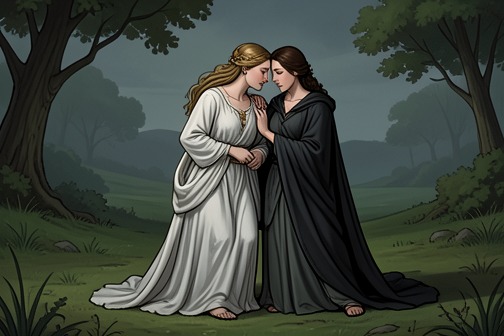
[Artemis and Callisto’s Love Affair](entity:event-recall-event-artemis-and-callisto-s-0bc43120d6d7) transforms the bond between a goddess and her sworn companion into a love relationship, testing whether intimacy can coexist with [Artemis’s vow of chastity](entity:rule-recall-rule-aa5af0578fce). Its emotional turn is mutual recognition: [Artemis](entity:character-recall-character-artemis-6f7e6f87eefa) acknowledges her loneliness and longing, and [Callisto](entity:character-recall-character-callisto-99fc814dceb7) becomes her lover. But that intimacy is shadowed by their unequal positions, their oath, and Callisto’s later pregnancy, which Artemis interprets as proof of betrayal rather than as a mystery they can face together.
## From Companionship to Confession
Callisto’s devotion first appears as care for Artemis’s loneliness. When Artemis says she has no desire for men or for passion of the flesh, Callisto wishes she could ease her mistress’s isolation. She reaches out and embraces Artemis, who accepts the comfort and leans against her. The moment remains framed as companionship: Callisto is relieved that she has not crossed a boundary, and understands that Artemis regards her as an eternal friend.
The relationship’s earlier terms are made explicit when Artemis asks whether Callisto regrets taking the oath of chastity with her. Callisto answers that she has never regretted leaving with Artemis and chose purity so she could remain her companion forever. Artemis then asks whether a virgin can fall in love and remain pure. The question unsettles the distinction the oath appears to establish: Callisto has chosen chastity as the condition of lifelong closeness, while Artemis is beginning to ask whether love need not cancel that commitment.
## The Turn Toward Mutual Love
The shift becomes unmistakable when Artemis confesses that she wants Callisto to show her she is not alone, and that she can be loved while still keeping her solemn vow. This is not simply Callisto’s private longing answered by the goddess; Artemis names her own need and invites a change in their relationship. Callisto understands the request, and the two go together to a cave, where Artemis initiates their kiss. Their movement from silence and handholding to a shared romantic encounter makes the cave the setting for the vow’s reinterpretation: chastity remains central to Artemis’s stated identity, even as she chooses intimacy with Callisto.
Their inexperience also matters to how the relationship is presented. Artemis admits that she does not know how to make love, and both women are described as virgins and unfamiliar with the art of love-making. Callisto responds by helping them proceed. The narrative depicts their intimacy as a discovery undertaken together, rather than as a relationship already governed by experience or settled expectations.
## Unequal Roles and Uncertain Consent
The love affair takes place within a relationship that is not socially equal. Callisto is Artemis’s maiden and companion; Artemis is her goddess and mistress, whose anger Callisto fears. This imbalance complicates the story’s language of mutual attachment. Callisto’s earlier embrace is offered out of pity and affection, and Artemis accepts it. Later, Callisto confesses her desire and makes the first advance; the narrative describes Artemis as remaining still and silent before the kiss. That silence is not itself an explicit declaration of consent, even though subsequent scenes show Artemis voicing desire and initiating intimacy.
Artemis’s later request that Callisto prove she can be loved without breaking her vow gives the relationship a further tension: the goddess seeks reassurance, while the companion is asked to help embody an answer to a question about Artemis’s own identity. The story does not resolve the tension between affection and rank. Callisto’s devotion is freely expressed in her words, but her fear of Artemis’s wrath and her place in Artemis’s following remain part of the circumstances in which she responds.
## Pregnancy, Recognition, and Rupture
The affair’s later consequence changes how Artemis understands their intimacy. Callisto reports that, months earlier, she was gathering olives in the woods when she saw what she believed to be Artemis approach and make love to her. She says she felt sudden pain that became pleasure, and only afterward realized that her purity had been broken. The account is presented as Callisto’s explanation, not as a confirmed account of who appeared to her or how the pregnancy occurred. The evidence establishes neither that Artemis caused the pregnancy nor that Callisto knowingly chose the encounter she describes.
When [Callisto’s pregnancy](entity:state-recall-state-fbfbe457a29d) becomes visible, Artemis recognizes that Callisto is with child and reacts with horror and anger. She accuses her companion of breaking their oath, betraying her favor, and lying about their relationship. Callisto insists that Artemis was the one with whom she lay; Artemis rejects this and denies that she could have made Callisto pregnant. The revelation therefore does not simply expose a breach of chastity. It produces a crisis of recognition: Callisto’s account conflicts with Artemis’s understanding of herself, while the pregnancy makes the conflict impossible to leave unaddressed.
The love affair thus turns on a painful contrast between the intimacy the two women openly share and the unexplained encounter Callisto recalls. Artemis had sought proof that love could coexist with her vow; when pregnancy appears, she treats it as evidence that the vow has been violated and that Callisto has deceived her. The relationship’s central promise of companionship is overwhelmed by anger and mistrust, setting the affair on a path toward separation rather than affirming a settled reconciliation.
Event 10
Callisto’s Pregnancy and Banishment
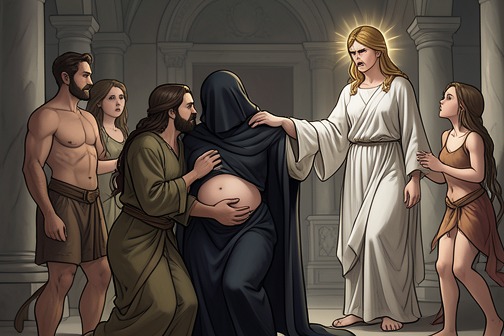
[Callisto’s Pregnancy and Banishment](entity:event-recall-event-callisto-s-pregnancy-an-45fc9c97ba9c) is the crisis in which [Artemis](entity:character-recall-character-artemis-6f7e6f87eefa) discovers that [Callisto](entity:character-recall-character-callisto-99fc814dceb7) is pregnant, expels her from the retinue, and drives her into the forest, where [Hera](entity:character-recall-character-hera-9e0748a93486) transforms her into a bear. The episode turns intimacy into accusation: Callisto describes a past encounter with Artemis, but Artemis rejects her account and treats the pregnancy as proof that Callisto broke her vow. Hera, watching the confrontation, understands that [Zeus](entity:character-recall-character-zeus-27d69a7a6c1b) was responsible, leaving Callisto to suffer the consequences of a divine act she says she did not choose.
## Discovery and Accusation
During a morning gathering, Artemis is bathing with her nymphs while her [Oceanides](entity:character-recall-character-oceanides-b78a1fd43ef5) practise their verses. Callisto’s cry interrupts the scene: the music stops, and Artemis rises, frightened by the sound of her beloved in pain. The companions bring Callisto forward, with Opis and Loxo holding her as she tries to cover herself with cloth. Artemis sees that Callisto does not appear injured, but notices her swollen belly and realizes that she is pregnant.
The recognition quickly becomes a crisis of trust. Artemis calls Callisto a traitor, saying she had favored her and accusing her of breaking the vow and deceiving her. Callisto answers that the encounter was with Artemis, not another lover. Her account reaches back several months, to a time when she was gathering olives in the woods: she says Artemis came to her in a glade, and that she did not understand what had happened to her until after the encounter. Callisto presents the pregnancy and the broken vow not as a deliberate betrayal but as the result of an experience she did not intend.
Artemis refuses this explanation. She insists that she did not cause the pregnancy and demands to know whom Callisto lay with. Her refusal to accept Callisto’s account makes the scene’s central injustice plain: Callisto is required to answer for a pregnancy while the truth of the encounter remains unknown to Artemis. The accusation hardens into punishment before the women can resolve that contradiction.
## Expulsion from the Retinue
Artemis declares that Callisto must leave the retinue and never return. Though tears flow from her eyes, she does not withdraw the order; she frames it as punishment for breaking her vow and betraying her trust. Callisto pleads for forgiveness, but Artemis instead demands her bow and arrows. The request turns a personal expulsion into a threat of force.
When the nymphs do not move, Artemis whistles for her hounds. Their growls frighten Callisto, who has no choice but to flee. She runs naked and frightened through the forest, weeping and keeping her hands over her pregnant belly. The hounds’ arrival ends her place among Artemis’s companions and converts the retinue, once her community, into the force before which she must escape.
## Hera’s [Transformation](entity:concept-recall-concept-679f97586a45)
Hera has observed the argument and identifies Zeus as the one responsible for [Callisto’s pregnancy](entity:state-recall-state-fbfbe457a29d). Her response is not to reveal that truth to Artemis or protect Callisto. Instead, anger and old grievances against Artemis lead her to cast an enchantment that changes Callisto into a large brown bear. The transformation takes place as Callisto is already fleeing the threat of Artemis and her hounds; it adds another divine punishment to the consequences of the hidden encounter.
Callisto remains out of sight, but the roars of her bear form carry across the land. The change makes her exclusion physical as well as social: she has been ordered from the retinue, driven into the forest, and transformed into a beast by Hera. Her pregnancy and vulnerability remain part of the circumstances of the flight, while the immediate cause of the transformation is Hera’s intervention.
## Causes and Consequences
The episode belongs to a wider pattern of divine power shaping women’s reproductive lives. Earlier, Hera’s jealousy of Zeus’s relationship with [Leto](entity:character-recall-character-leto-5c55121e2e71) led her to curse Leto’s pregnancy, forbidding her to give birth anywhere the sun shines. When Leto later labors on [Delos](entity:location-recall-location-delos-0a14d1915116), Hera restrains her own daughter [Eileithyia](entity:character-recall-character-eileithyia-8d1f7a3c7a62) from assisting and confines her for thirty days, leaving Leto to face childbirth without the goddess of midwifery. These earlier events do not make Callisto’s experience identical to Leto’s, but they establish a recurring conflict in which divine rivalries place the burden on pregnant women.
The narrative also recalls Artemis’s own stated connection to childbirth. In asking Zeus for authority to aid women suffering the pains of labor, she explains that the Fates ordained her as a helper because Leto suffered no pain when Artemis was born. Against that stated role, Artemis’s response to Callisto’s pregnancy is striking: she does not offer aid, but expels Callisto from her company. The story sharpens the contrast between a divine promise to help women in childbirth and the personal anger that leaves Callisto without support.
A related episode at [Aulis](entity:location-recall-location-aulis-b27e4da039b2) shows another way a woman’s body becomes the price of a conflict among powerful figures. [Menelaus](entity:character-recall-character-menelaus-55477129f3a6) reminds [Agamemnon](entity:character-recall-character-agamemnon-dafde3175964) of his oath and the Greek alliance against the [Trojans](entity:organization-recall-organization-b01a7327ec96); Agamemnon then orders that his daughter [Iphigenia](entity:character-recall-character-iphigenia-6cf12886535c) be taken to the altar as a sacrifice to appease Artemis. [Clytemnestra](entity:character-recall-character-clytemnestra-d98dc7f32184) leads Iphigenia toward the altar, and Iphigenia accepts her father’s decision as the cost of preserving his plan. Callisto’s banishment is a different event, but both episodes place women at the point where male obligations, divine demands, and family power meet.
Callisto’s flight ends neither in reconciliation nor in a just recognition of what happened. Hera knows Zeus was responsible, but Callisto remains transformed and separated from Artemis. Only later, as Callisto is dying, does Artemis learn the truth and call on Zeus to redeem his deed; Zeus then permits Callisto to ascend among the stars. The later resolution underscores what the banishment leaves unresolved: the woman punished for the pregnancy is not the one who caused it, and the truth arrives only after her separation and suffering.
Event 11
Callisto’s Death and Apotheosis

[Callisto’s Death and Apotheosis](entity:event-recall-event-callisto-s-death-and-ap-7aa46dd5e8b0) closes the story of [Artemis](entity:character-recall-character-artemis-6f7e6f87eefa) and [Callisto](entity:character-recall-character-callisto-99fc814dceb7) with a double transformation: Artemis’s mistaken shot ends Callisto’s life, and [Zeus](entity:character-recall-character-zeus-27d69a7a6c1b) raises her bear form into the heavens. Her new constellation becomes a lasting guide for travelers and hunters, but the celestial honor cannot restore the life and intimacy they shared. The event therefore turns a private loss into a public sign in the night sky while leaving Artemis to face the solitude that follows.
## Background and Circumstances
The fatal encounter begins as a hunt Artemis had not intended to undertake. She stands on her chariot beside a lake, watching a large bear run along the bank. The girls traveling with her have spotted it, and Artemis takes up her bow. Her response is shaped by what she cannot see: the bear is Callisto, transformed and frightened, rather than game to be hunted. [Hera](entity:character-recall-character-hera-9e0748a93486), whose hostility toward Callisto is longstanding, adds pressure by urging Artemis to aim as the bear tries to escape through the foliage.
The circumstances make the hunt a collision between Artemis’s role as huntress and her attachment to Callisto. The bear is pursued by Artemis’s party and another group approaching from the far side of the lake, leaving her with nowhere to go. Hera’s words continue to urge the goddess to shoot. Artemis’s hand trembles, an unfamiliar response that signals the uncertainty of the moment without revealing its cause to her. She does not recognize the animal as her beloved, and Callisto cannot make herself known before the pursuit closes around her.
## The Fatal Shot and Recognition
As Callisto resists the hounds and escapes the maidens’ arrows, Artemis grows frustrated and confused that the bear will not run away. She tells it to flee, but it remains and looks back at her. Under Hera’s continued influence, Artemis releases her arrow. It pierces Callisto’s heart, killing her quickly; the pain that follows, however, is experienced by Artemis as well.
Recognition comes only after the shot. Artemis sees the bear fall and understands what she has done. She drops her bow, rushes to the dying animal, kneels beside her, and calls her by name. With a trembling hand on Callisto’s snout, Artemis weeps as the other maidens gather and then stand back in silence. Callisto wishes she could wipe away Artemis’s tears, but she is losing strength and cannot do so. As Callisto closes her eyes, Artemis embraces her bear form. The scene makes the reversal unmistakable: the hunter who had pursued the animal reaches her at last not as a victor, but as the person who has killed the one she loved.
## Zeus and the Apotheosis
In her grief, Artemis calls to her father, Zeus, and asks him to redeem his deed. Her appeal links Callisto’s fate to the earlier harm that Zeus’s actions set in motion. Zeus considers the request from his throne. The story establishes a limit on elevation among the stars: only heroes who have performed great deeds and achieved the impossible are ordinarily granted that place. Yet, seeking to atone for his mistake, Zeus slowly inclines his head and grants Artemis’s appeal.
Light forms around the slain bear and carries her upward into the celestial sky. Callisto’s apotheosis changes her condition from a dead animal on earth to a presence among the stars, where she is given eternal life in peace and solitude. The transformation answers Artemis’s request, but it does not undo the loss. The narration stresses that Artemis feels the distance between them: Callisto’s new existence means that the pair will never again belong to the world they once knew together.
## The [North Star](entity:expression-recall-expression-north-star-a4716bb04b9c) and Its Significance
Artemis looks upward and sees a new constellation among the brightest stars. The North Star is its brightest point, and the story gives it a practical role: wherever people face or travel, it guides sailors, wanderers, builders, and hunters. Callisto’s changed form thus becomes more than a memorial visible to Artemis. It offers direction to people across different journeys, carrying the consequences of her transformation beyond the intimate tragedy that occasioned it.
The guiding star also contrasts with the emotional outcome for Artemis. The lights above bring her some comfort, and she sits for a long time looking at Callisto’s new form. Yet the final emphasis is on what remains absent: Artemis has possessed the gods’ gifts, overcome monsters, and influenced the course of war, but after Callisto’s death she is alone. The ending gives Callisto permanence in the sky while refusing an easy restoration of their relationship. Apotheosis preserves her presence as a guide, but Artemis’s grief marks the cost of that consolation.