Kami no Ouyaku
ArtemisDivine revenge is the narrative’s recurrent answer to injury, but it is never a simple restoration of what was lost. A mother’s suffering prompts her daughter’s vengeance against Hera’s favored serpent; a sacred animal’s death brings a storm and a demand for human sacrifice; and, at the story’s tragic limit, anger turns Artemis against the beloved she fails to recognize. Retaliation displays divine power while spreading its costs among kin, followers, and mortals who may not be responsible for the original wrong.
Injury and the logic of retaliation
The pattern begins in the danger surrounding Zeus and Leto. Zeus knows that his presence puts Leto at risk because Hera is jealous of the women who attract her husband. When Hera discovers the pair despite Zeus’s transformation of them into quails, she curses Leto to carry children but never bear them where the sun shines. Her later imprisonment of Eileithyia makes that curse an immediate threat: Hera says she will let humanity burn in Hades rather than allow the goddess of childbirth to help Leto. The grievance is bound up with Zeus’s marriage and Leto’s relationship with him, but its punishment is directed at Leto’s body and even threatens the mothers in labor whom Eileithyia invokes.
During Leto’s labor, Rhea tells her that the pain will bind her to her divine children and that they will punish those who rejected her and avenge what was done to her. Leto takes those words to heart even as pain occupies her mind, refusing to surrender the struggle. Revenge thus enters the children’s story before they can act: it is presented as a prospective answer to their mother’s suffering, joined to the bonds created by her childbirth.
When Artemis later asks Zeus about the hardship Leto endured, she declares that she must avenge her mother and restore her honor. Zeus forbids her to oppose Hera, who remains Queen of the Gods, but offers gifts within his power to grant. Artemis accepts that she cannot openly rebel against the queen and resolves to find another way to make Hera pay. Her response establishes revenge as both a personal objective and a contest constrained by rank: she cannot strike directly at Hera, so she chooses an enemy whose defeat will wound Hera’s power and end a threat to Leto.
Python: vengeance claimed as protection
Artemis prepares for the confrontation by testing her silver bow four times. She splits a pine tree and an olive tree, shoots a wild boar, and then sends an arrow into a city whose people denied Leto shelter, killing them. The sequence places vengeance against human offenders beside the huntress’s practice with her weapon, and makes clear that refusal to shelter her mother can itself draw lethal punishment.
She summons Apollo and tells him they have an enemy to slay: Python, the dragon that hunted their mother and a beloved pet of Hera. Artemis asks that their plan remain secret and offers Apollo the glory if they succeed. The twins travel over the seas for several days with her hounds; when they find the serpent’s tracks, she sends the dogs to search. Apollo recalls that their mother has never left Delos since giving birth to them because of the creature. Artemis answers that once it is dead, Hera will know her reign of terror is over. Revenge here carries a protective claim: killing Hera’s favored monster is meant to free Leto from the danger that has confined her.
After the serpent falls, Artemis tells Apollo that their mother can rest in her home in peace and that Hera will no longer dare disrespect them. Apollo warns that Hera’s hatred will persist and offers to take all the blame if Zeus summons them, shielding Artemis from the queen’s wrath. Artemis accepts the arrangement by promising that mortals will know Apollo alone as Python’s slayer. The episode therefore ends not with Hera’s defeat but with a victory that protects Artemis from immediate punishment and gives Apollo public credit, while leaving the underlying enmity intact.
Sacred animals and the price imposed on mortals
The same retaliatory logic governs Artemis’s response to Agamemnon. Callisto reports that the king has killed a stag in one of Artemis’s sacred groves and tried to conceal the deed by skinning it and dressing a goat in its place. Artemis’s anger is especially fierce when someone violates the animals sacred to her. She orders her nymphs to summon the Oceanides and have her choir sing chaos into the winds, making it difficult for the Achaeans to cross the water toward Troy.
Artemis demands that Agamemnon sacrifice his eldest daughter, Iphigenia, in exchange for the life he took. She frames the demand as reciprocal punishment: he stole a life, so she will take one of his. She also makes the threat collective, declaring that if he refuses, he and his army will drown at sea. The Oceanides’ song carries her anger into the weather; the seas roar and the waves disrupt the Achaean fleet. Divine revenge becomes visible not only in the demanded sacrifice but in the natural force used to compel it.
Agamemnon initially refuses, insisting that Artemis may wreck a thousand ships or take his own life but not his daughter’s. Menelaus reminds him that without the fleet reaching Troy, Paris will escape punishment for taking Helen, and that Agamemnon swore an oath under Zeus’s name to lead Greece in support of Menelaus. The choice is therefore shaped by competing claims: a father’s resistance to sacrificing his child confronts his sworn obligation to the alliance and the threat to his soldiers. Agamemnon finally orders that birds carry the news to Clytemnestra that Iphigenia is to be brought to the altar to appease Artemis, then goes below deck and weeps.
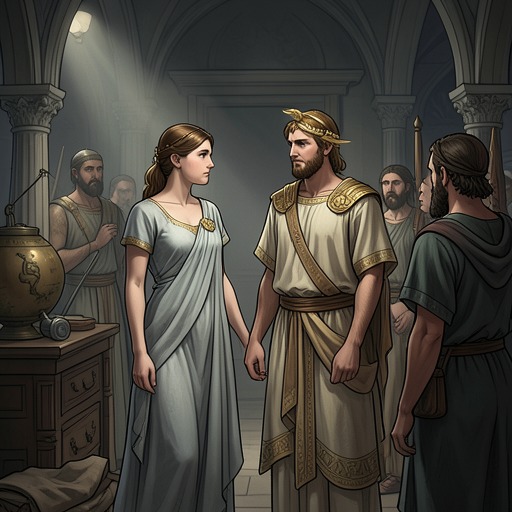
Clytemnestra follows the order and leads Iphigenia up the hills of Aulis to a marble table on the highest hill. Iphigenia accepts that her father swore an oath and regards her life as a small bargain for preserving his plan, while her mother weeps as she guides her toward the altar. Artemis is watching when she is informed that Agamemnon has fulfilled her demand. The episode makes the cost of divine retaliation concrete: the man responsible for the original offense is not the person led to the altar; the burden falls on his daughter and the mother who must escort her.
Anger, mistaken judgment, and belated atonement
The final reversal turns Artemis’s retaliatory power against someone she loves. When Callisto is accused of breaking her vow, Artemis rejects her explanation that she lay with Artemis in the glade and insists that she did not make Callisto pregnant. Callisto’s claim goes unheard in the moment of accusation. Later, while Artemis is hunting, she does not recognize the bear as Callisto. The animal will not flee and keeps staring at her; with Hera’s words in the winds and her own annoyance, Artemis releases an arrow that pierces the bear’s heart.
Recognition comes only after the shot. Artemis sees the dying animal, drops her bow, kneels beside it, and calls Callisto by name. Her grief overtakes her as the other maidens gather and then stand back in silence. Callisto is unable to wipe away Artemis’s tears; as her strength ebbs, Artemis throws her arms around the bear’s body. The huntress who had punished threats to her mother and sacred animals has now killed the beloved whose identity she failed to perceive. The reversal exposes the danger in revenge governed by anger and incomplete knowledge: the act meant to end a threat becomes an irreversible injury to the person nearest to her.
In her sorrow, Artemis calls on Zeus to redeem what he has done. Zeus considers her suggestion against the rule that only heroes who performed great deeds and the impossible may be placed among the stars, then slowly inclines his head as atonement for his mistake. Light pours from the slain bear and lifts Callisto into the heavens, where she receives eternal life in peace and solitude. Artemis sees a new constellation, with the North Star as its brightest point, a guide for sailors, wanderers, builders, and hunters. The transformation grants Callisto a lasting place and gives Artemis some comfort, but it does not restore their shared life: the stars also mark that they will never again truly belong to the world they knew. Revenge in this final movement yields to a form of compensation, yet the narrative leaves its limits in view—recognition arrives after death, and divine repair cannot undo the loss.