Naiads
ArtemisNaiads are water nymphs associated with springs and streams, shown in this book both as lovers and as figures who challenge the chastity expected of Artemis’s retinue. Their encounters bring two sharply different consequences: one Naiad escapes Pan’s pursuit when Artemis transforms her into water, while Euneica and Nycheia invite Callisto to question whether lifelong abstinence is a reward or a source of loneliness.
Identity and Setting
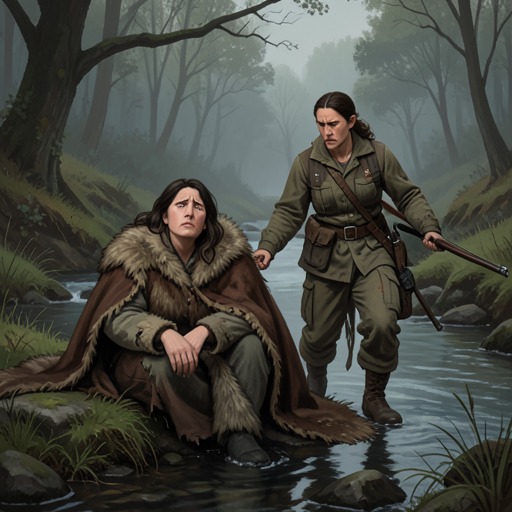
The Naiads are presented as maidens of the water, encountered at a lake and at a spring. In the earlier episode, one frail Naiad is caught in a struggle with Pan; Artemis’s thrown arrow touches the maiden’s left hand, and her white body and clothing dissolve into water that flows into the lake. The transformation allows her to escape, making water both the Naiad’s natural element and the means by which she eludes the god pursuing her.
Later, two Naiads appear beside a grove where Callisto has gone to gather figs and olives. The women are identified by name as Euneica and Nycheia, Mysian Naiads of the spring of Pegae. Their setting is not merely a backdrop: when Callisto leaves, they go into their stream and vanish, returning to the water from which their identity and refuge arise.
Love, Desire, and the Chastity Vow
Callisto first sees Euneica and Nycheia entwined in passionate intimacy. The scene surprises her: as a former princess of Arcadia and now a nymph of Artemis, she has never seen two women together in such an explicitly physical way. Startled, she steps away; the movement alerts the pair, who separate and ask what she is doing at their stream. Her flushed, hesitant explanation that she is gathering fruit marks the distance between her inexperience and their ease with desire.
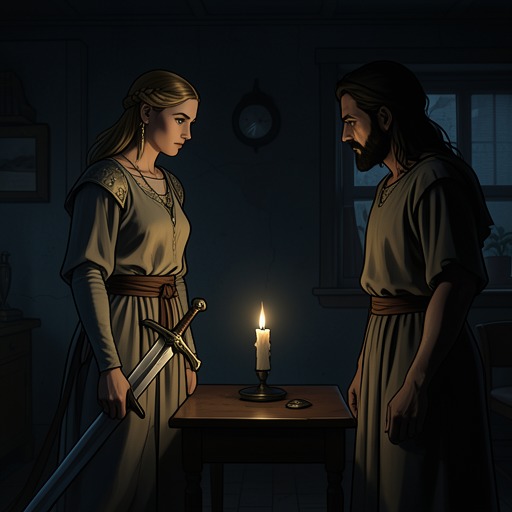
The Naiads recognize Callisto as one of Artemis’s nymphs and pity her. Euneica brushes a strand of hair from her face and asks whether all the goddess’s nymphs are condemned to live without a partner. Callisto has understood her service to Artemis only as a reward, not as deprivation. The Naiads’ question reframes that commitment: the vow may protect a bond with the goddess, but it also appears to exclude the intimate companionship the water maidens share.
Euneica makes the distinction explicit. Callisto is bound by a sacred oath to remain a pure maiden and never sleep with a man, but, Euneica says, other means of satisfying desire are available, and the Naiads are willing to show her. Their proposal does not immediately change Callisto’s conduct. It leaves her confused; she says she must return because her lady will wake and need her assistance. Yet on the walk back to camp, she continues thinking about what she has heard, so the conversation opens a question that follows her beyond the spring.
Character and Reputation
The book describes Naiads as famous for vengeance and jealousy. Their beauty, accounts say, has made them alluring to gods and mortal men alike, and stories of their sexual encounters with both groups contribute to their reputation. Euneica and Nycheia present themselves as promiscuous by nature, in contrast with the abstinence required of Artemis’s followers. Their words are teasing and inviting, but they also identify the cost of Callisto’s chosen life as they see it: solitude without a partner.
The pair’s departure supplies a further glimpse of their desires. Before vanishing into the stream, Euneica says that the Argo is expected to sail there with Hylas, a handsome, curly-haired young man whom the Naiads intend to kidnap and share their passion with. The announcement ties their erotic boldness to action and to the danger their beauty and appetites may pose for others. It also contrasts with their offer to Callisto: they invite her into intimacy while revealing that their own pursuit of desire may involve taking someone against his will.
Artemis’s Intervention and the Naiads’ Narrative Role
The earlier encounter with Pan gives the Naiads’ sexuality a different context from the later conversation at Pegae. When Artemis sees Pan struggling with the frail Naiad, she calls for her quiver but does not use her silver bow. Instead, she flings a short arrow by hand. Its feathers touch the Naiad’s left hand, and the woman becomes flowing water. Artemis laughs at Pan’s disappointment and takes the episode as the beginning of her duty to protect virgins from predatory gods and mortals.
Together, the episodes place Naiads at the boundary between desire and danger. The nameless Naiad’s transformation is an escape enabled by Artemis’s intervention; Euneica and Nycheia, by contrast, approach Callisto as experienced tempters and speak of kidnapping Hylas. Their varied appearances keep them from serving as a single moral type. They embody freedom from the huntress’s rule as Callisto imagines it, but the proposed freedom is shadowed by the possibility of coercion. Through that contrast, the Naiads’ scenes test the meaning of Artemis’s chastity vow: it can be experienced as devotion, while those outside the retinue cast it as enforced loneliness.