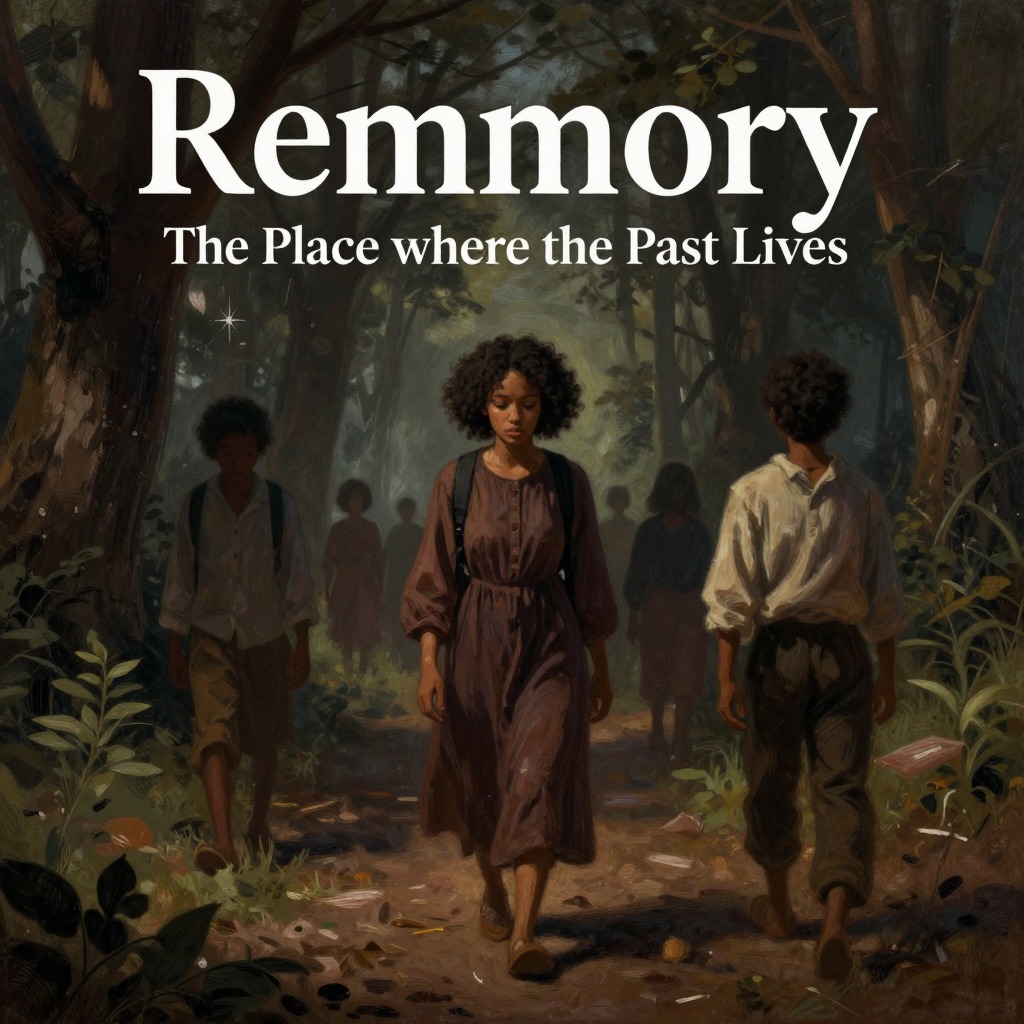
rememory
BelovedRememory is Sethe's term for a memory that is not merely a mental image but a physical, external presence that continues to exist in the world, independent of the person who remembers it. She introduces this concept to her daughter Denver in a conversation in the keeping room of 124, explaining that certain places hold the pictures of what happened there, and that these pictures can be encountered by anyone who goes to that place, even if they were not present when the event occurred. This idea is central to Sethe's worldview, as it justifies her desperate actions to protect her children from the horrors of Sweet Home and shapes her belief that the past is never truly over.
The Definition of Rememory
Sethe explains rememory to Denver as a kind of memory that is not just in one's head but exists "out there, in the world." She says, "What I remember is a picture floating around out there outside my head. I mean, even if I don't think it, even if I die, the picture of what I did, or knew, or saw is still out there. Right in the place where it happened." This definition distinguishes rememory from ordinary recollection: it is not subject to forgetting or death, but persists as a tangible reality. Sethe elaborates that if a house burns down, the place—the picture of it—stays, and if someone goes there, "it will happen again; it will be there for you, waiting for you." This is why she warns Denver, "you can't never go there. Never." The concept is rooted in Sethe's own experience of being haunted by the past, particularly the trauma of Sweet Home, which she cannot escape even in her new life.
The Origin and Function of Rememory
Sethe's belief in rememory stems from her personal history of slavery and the horrors she endured. She tells Denver that the place where she was before—Sweet Home—is "real" and "never going away," even if the farm itself dies. This conviction is a product of her trauma: she cannot forget the boys hanging from sycamore trees, the stolen milk, or the beating that left a chokecherry tree on her back. Rememory serves as a way for Sethe to make sense of her persistent suffering—it is not that she chooses to remember, but that the past is an active, external force that she must constantly fight against. She describes her brain as "devious," snatching up every painful memory, and she works "to remember as close to nothing as was safe." Rememory, therefore, is both a curse and a justification: it explains why she cannot move on and why she must protect her children at all costs.
Rememory and the Supernatural
Rememory is closely linked to the supernatural elements of the novel, particularly the ghost of Sethe's dead baby and the later arrival of Beloved. Sethe's belief that "nothing ever dies"—that the pictures of events remain in the world—parallels the haunting of 124, where the baby's spirit is a constant presence. When Denver asks, "If it's still there, waiting, that must mean that nothing ever dies," Sethe replies, "Nothing ever does." This connection suggests that rememory is not just a psychological concept but a metaphysical one, where the past can manifest physically. Beloved's arrival can be seen as a literal embodiment of rememory: she is the return of Sethe's dead daughter, a physical manifestation of the past that Sethe cannot forget. The concept thus bridges the gap between memory and reality, making the past an active participant in the present.
Rememory in the Narrative Structure
The novel itself is structured around the idea of rememory, as the narrative frequently shifts between past and present, revisiting key events from different perspectives. Sethe's memories of Sweet Home, the escape, and the infanticide are not presented as linear recollections but as fragmented, recurring images that intrude on the present. This narrative technique mirrors the way rememory works: the past is not confined to a chronological past but is always "out there," waiting to be encountered. The final section of the novel, which describes Beloved's disappearance and the community's forgetting, echoes the concept: "They forgot her like a bad dream," but the footprints by the stream remain, "come and go, come and go," suggesting that even what is forgotten leaves a trace in the world. Rememory, then, is not only a character's belief but a principle that governs the novel's structure and its meditation on history, trauma, and the persistence of the past.