Robbers Head
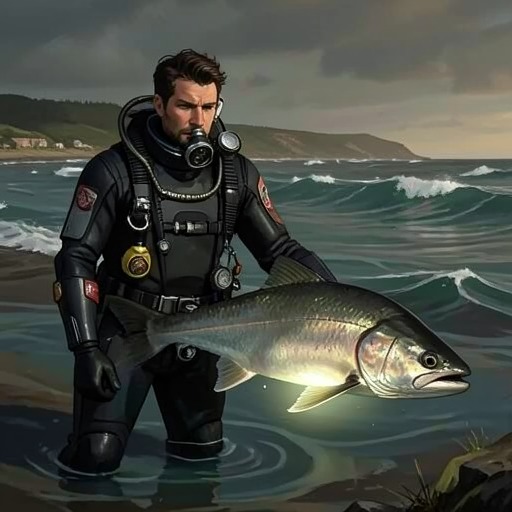
BluebackRobbers Head is the headland and underwater reef at the heart of Abel Jackson’s life in Longboat Bay: a working ground where he dives with his mother, the setting of his first encounter with Blueback, and a landmark within the marine sanctuary they help secure. Its significance changes over the course of the story. The reef begins as a place of intimate knowledge and subsistence, becomes vulnerable to commercial pressure, and ends as a protected habitat where marine life can recover and flourish.
Setting and Underwater Life
Robbers Head is reached from the water. On Abel’s first dives there, his mother steers their boat around its front and anchors over dark, clear water. Below the surface, great rounded boulders and deep cracks give way to sloping rock, seaweed, coral, starfish, and schools of small fish. The landscape is not scenery observed from a distance: Abel experiences it by entering the water, descending breath by breath, and learning to read its inhabitants alongside his mother.
The reef is also a place of work. Abel and his mother collect abalone from seams in smooth granite, using a screwdriver to prise each shellfish from the rock. They take only a few from each clump, leaving the rest to breed and grow. As they disturb the bottom, reef fish emerge to feed on scraps and sediment. The repeated movement between seabed and surface, where Abel pauses to catch his breath before diving again, makes the reef’s abundance inseparable from physical limits and careful harvesting.
Robbers Head remains part of the family’s everyday life as Abel grows. After returning home from school inland, he dives there again with his mother, and Blueback circles them insistently as they work. The familiarity of the place is renewed through such visits: Abel recognizes the water and its creatures, while the old fish’s return confirms that their relationship has endured his absence.
Abel’s Encounter with Blueback
The reef is the setting of Abel’s first, frightening meeting with the great blue fish. On a deep dive, nearly out of breath, Abel feels a rush behind him and turns to see a huge shadow blocking the sun. A mouth full of large teeth comes at him; the fish catches his hand, tearing away the abalone he is holding. Abel shoots to the surface terrified, with a small scratch and a thread of blood in the water.
His mother asks him to look again rather than flee. Near the seabed, in the lingering haze from their gathering, the shadow resolves into the largest fish Abel has ever seen, not a shark. The shift from apparent attack to recognition gives Robbers Head an enduring place in his imagination: danger here is real, but what lies beneath the surface cannot be understood from a glimpse alone. His mother treats the encounter as a rare privilege, and Abel names the fish Blueback after the deep blue he sees in him.
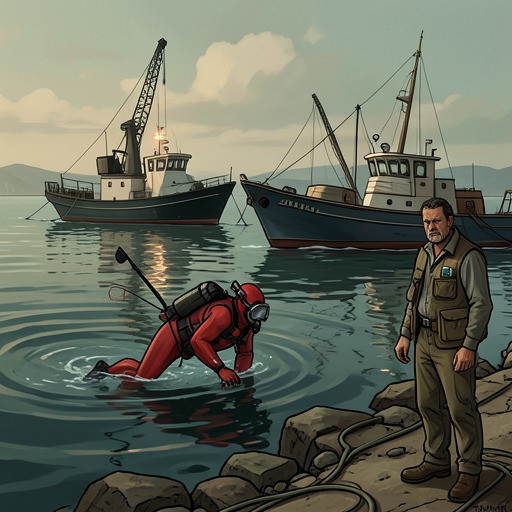
Later, the reef becomes the site of a more direct threat. Divers working from a commercial boat leave abalone scattered behind them, drawing smaller fish and then Blueback to feed. A spear flashes past the groper’s head and strikes rock. Abel understands that the food he has tipped into the water has helped lure Blueback into danger; the fish’s appetite keeps him near the divers, and Abel fears another shot may hit him. The episode makes the reef’s ecological connections consequential: disturbance to one part of the seabed can place its largest resident at risk.
Family History and the Changing Coast
Robbers Head belongs to a landscape shaped by generations of human use. The Jackson family has lived at Longboat Bay for more than a century, and its land dates from the whaling era. Abel’s mother recalls that his father’s family watched for passing whales from a ridge, then rowed out in longboats to hunt them. When Abel and his mother later see Right whales around their boat, they stop fishing to watch. Their conversation connects the living animals offshore to the family’s past without erasing the harm of that history.
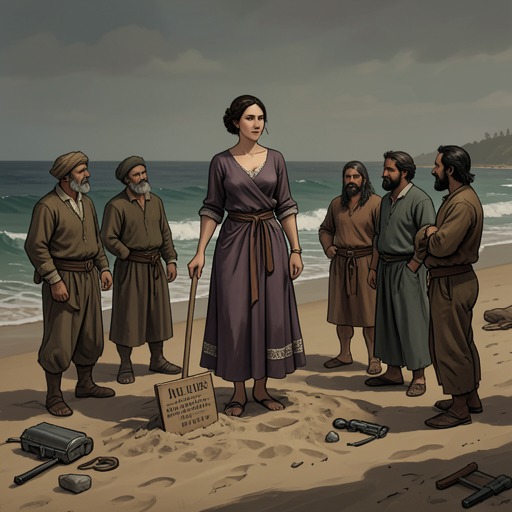
A storm later exposes thousands of whale bones along Longboat Bay, remnants of the Jacksons’ whaling past that had lain beneath the sand for generations. The bones are not said to be confined to Robbers Head, but they change the meaning of the headland and coast that the family knows. Dora Jackson recognizes that the family has long lived from the sea and decides that it is now time to help the sea live. Her campaign for protection grows from this reckoning with what earlier generations took and what the coast may still lose.
The threat is not only historical. While Abel is away, an oil tanker breaks apart off the coast of Longboat Bay. The slick burns and disperses before reaching shore, but the near-disaster shows how exposed the whole coastline remains. Elsewhere, Dora sees erratic weather, missing salmon, a seal far from its usual range, and dead dolphins at Robbers Head. These changes make the reef’s apparent abundance precarious rather than guaranteed.
Sanctuary and Lasting Significance
Dora’s sustained campaign results in Longboat Bay being declared a marine sanctuary. When officials later mark its boundaries with buoys, the protected area extends all the way out to Robbers Head. The boundary turns a familiar place into part of a legally protected refuge, answering the threat posed by visitors and divers who come in boats to see Blueback. It also gives practical force to Dora’s conviction that the bay should be protected for the future.
The effects become visible in the renewed life of the bay. Fish enter the sanctuary to breed, helping replenish stocks beyond its boundaries; seagrass, coral, and sponges thrive; abalone multiply; and dolphins, sharks, and sea lions return. Robbers Head is thus more than the site of Abel’s childhood encounter. It anchors the story’s contrast between taking from the sea and making room for it to recover, while the return of wildlife offers evidence of what protection can accomplish.
In the closing image, three divers descend through clear water off Robbers Head on Little Dora Jackson’s third birthday, the smallest suspended between the adults. The scene returns the headland to the family’s next generation, but in a changed form: diving and inheritance continue in waters now protected as a haven. Robbers Head gathers the novel’s central relationships between place, memory, work, and stewardship into one reef, without suggesting that protection has made the sea fully knowable or finished.