Cultivating one's own garden
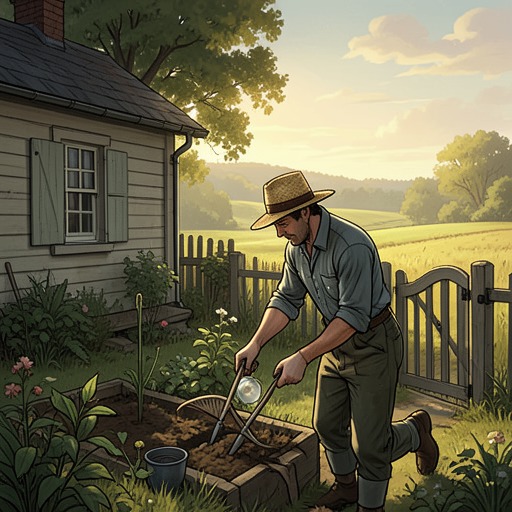
CandideCultivating one's own garden is the practical principle at the heart of Candide’s conclusion: faced with suffering and endless philosophical explanation, Candide and his companions make useful work their common task. The garden is literal—a small plot that produces plentiful crops—and also a measure of value. It redirects attention from claims about how the world must be to what people can do together within it.
From Optimistic Explanation to Practical Work
The principle answers a dispute that has accompanied Candide from the beginning. Pangloss teaches that everything has a cause and that the world is the best of all possible worlds; he treats ordinary arrangements, from spectacles to the Baron’s castle and the pork people eat, as proof that things are designed for the best. Candide initially believes him. Yet the young man’s experience repeatedly exposes a distance between this neat account and the harms he encounters. The book’s original satirical target is the notion that this world is already the best possible one, and the closing turn does not supply a new comprehensive theory in its place.
The conclusion instead draws a distinction between explaining events and undertaking useful work. Earlier, when Candide and his companion encounter a country whose customs seem unlike those of Westphalia, they wonder whether it might be the place where all is well, since their own experience has shown that things often go badly. That search for a perfectly ordered place gives way, at the end, to a smaller question: how can people make their actual circumstances more bearable? Cultivating the garden offers an answer in action rather than a proof that suffering was necessary or good.
The Turk’s Example
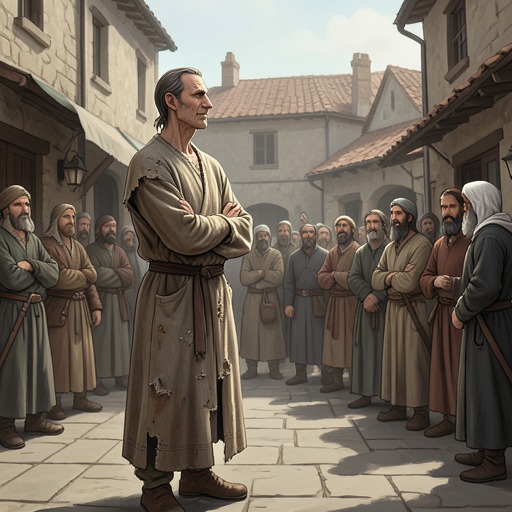
The immediate model is an old Turk who says that he and his children cultivate twenty acres. Their labor, he explains, preserves them from three evils: “weariness, vice, and want.” The particulars matter. The household is not presented as wealthy or grand; its land is limited, and its security rests on the work its members perform. The claim is modest and practical: labor gives them a livelihood and occupies their lives.
On the way home, Candide reflects on this conversation and judges the Turk’s situation preferable to that of the six kings with whom the travelers have dined. The comparison reverses the usual signs of success. Kings possess titles and grandeur, but the Turk’s small holding offers a more desirable condition. Pangloss responds by listing rulers who were assassinated, killed, or taken captive, extending his habitual argument about the dangers of greatness. Candide does not answer with a rival catalogue. He draws the practical conclusion that they must cultivate their garden.
A Shared Household of Work
Pangloss interprets the garden through the story of Eden: humanity, he says, was placed there to work and was not born to be idle. Martin’s response shifts the emphasis from theological precedent to daily life. He urges the group to work without disputing, describing this as the only way to render life tolerable. Their positions are not identical: Pangloss attaches labor to an inherited explanation of human purpose, while Martin stresses its immediate usefulness. The group nevertheless acts on the shared conclusion.
Each member contributes according to ability. The little plot yields plentiful crops; Cunegonde, now very ugly, becomes an excellent pastry cook; Paquette takes up embroidery; the Old Woman looks after the linen; and Friar Giroflée becomes a capable joiner and an honest man. The ending thus makes the garden more than a solitary image of self-reliance. It belongs to a small society whose members’ distinct work helps sustain a common life. Their usefulness is shown through particular occupations and through the harvest, not through a return to rank or wealth.
The Ending’s Unresolved Argument
Pangloss continues to explain the group’s present by arranging their past misfortunes into a chain of causes. He argues that without Candide’s expulsion from the castle, punishment by the Inquisition, travels across America, attack on the Baron, and loss of the sheep from Eldorado, they would not now be eating preserved citrons and pistachio-nuts. His reasoning preserves the language of the best possible world, turning calamities into necessary steps toward this meal. But the tangible outcome the ending has emphasized is not the elegance of that explanation: it is that the group works, the plot produces crops, and its members make themselves useful.
The book therefore closes without having Pangloss abandon his philosophy or settle every question about suffering. Instead, Candide’s practical decision and Martin’s counsel set a limit on the value of further disputation. The garden does not prove that everything happens for the best; it supplies a local, shared response to need. In the movement from grand claims about the whole world to twenty acres, specific trades, and a productive plot, the conclusion makes practical labor the group’s means of sustaining life and making it tolerable.