Event 1
Candide's expulsion from Thunder-ten-Tronckh Castle
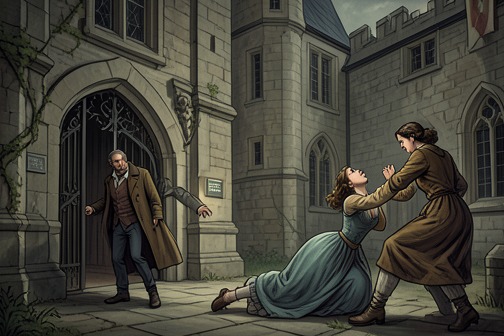
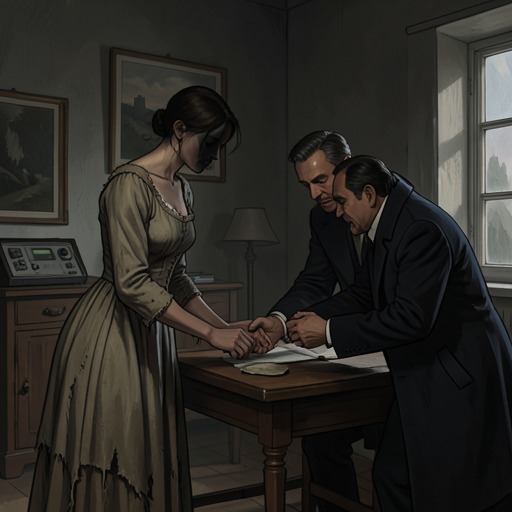
[Candide's expulsion from Thunder-ten-Tronckh Castle](entity:event-recall-event-candide-s-expulsion-fro-7eb54438fbdf) is the sudden end of [Candide](entity:character-recall-character-candide-543f04561cb3)'s protected childhood and the first great reversal in his story. After he and [Cunegonde](entity:character-recall-character-cunegonde-50f496a25b8b) kiss, the [Baron of Thunder-ten-Tronckh](entity:character-recall-character-thunder-ten-tronckh-06f0a38c50af) kicks Candide out of the castle; Cunegonde faints and, when she recovers, the [Baroness of Thunder-ten-Tronckh](entity:character-recall-character-thunder-ten-tronckh-3a516df7fed5) boxes her ears. In a few brisk gestures, the episode turns the household's polished order and [Pangloss](entity:character-recall-character-pangloss-8b8593ec7d02)'s easy certainty into a scene of force, separation, and consequence.
## The Castle and Its Philosophy
At the start, the castle seems to confirm its own importance through a comically narrow measure of grandeur. [The Baron](entity:character-recall-character-the-baron-9f443c8f42bf) of Thunder-ten-Tronckh is powerful because his castle has a gate and windows; its hall is hung with tapestry, farm dogs can become a pack of hounds, and the village curate serves as grand almoner. The household treats these modest signs as proof of distinction, while Pangloss serves as its philosophical oracle.
Pangloss teaches that every effect has a cause and that everything is arranged for the best. His examples make the doctrine feel concrete: noses exist to bear spectacles, legs to wear stockings, stones to build castles, and pigs to be eaten. He even reasons that the castle must be the finest because its lord is the greatest baron in the province. The expulsion exposes the gap between this tidy chain of explanations and the arbitrary authority exercised within the very household held up as a model of the best possible order.
## The Discovery and the Kiss
The incident begins when Cunegonde, walking near the castle in a little wood called a park, sees Pangloss giving a lesson in experimental natural philosophy to her mother's chambermaid. Cunegonde has an inclination for science; she watches the repeated experiments, attends to their causes and effects, and returns to the castle flurried and pensive, with a new desire to learn. Her observation also gives her a way to imagine herself in relation to Candide: she dreams that she might be a sufficient reason for him, and he for her.
When the two meet, both blush. The following day, after dinner, they find themselves behind a screen. Cunegonde drops her handkerchief; Candide picks it up; she takes him by the hand, and he kisses it. The innocent exchange gathers force: their lips meet, their eyes sparkle, their knees tremble, and their hands stray. The scene moves from shy recognition to physical intimacy without either declaring their feelings aloud.
## The Expulsion
The Baron of Thunder-ten-Tronckh passes the screen and sees the pair. He responds at once, chasing Candide out of the castle with great kicks on the backside. The physicality punctures the decorum of the household: the authority that had appeared through titles, servants, and ceremonies now acts directly on Candide's body, removing him from the home in which he has grown up.
Cunegonde's fate in the same moment is different but no less immediate. She faints; after she comes to, the Baroness of Thunder-ten-Tronckh boxes her ears. The lovers are separated, and the punishment falls on each in turn, with Candide expelled and Cunegonde struck. The narration closes the episode by calling the castle magnificent and agreeable, an ironic counterpoint to the disorder and violence inside it.
## Narrative and Thematic Significance
The expulsion makes private desire the trigger for a public break with the household's hierarchy. Candide's admiration for Cunegonde had belonged to his idealized picture of life at the castle; the kiss brings that attachment into conflict with the Baron's control. The result is not a negotiation but an abrupt dismissal, establishing how little protection Candide's apparent place in the family affords him when he crosses its rules.
The scene also sets Pangloss's optimism against events rather than answering it with a separate philosophical argument. Candide has listened to the claim that all is for the best, but the castle's supposed perfection does not prevent a sudden separation or a beating. The episode's compact chain—from Cunegonde's observation of Pangloss, to the couple's kiss, to the Baron's kicks—fits the swift, economical storytelling associated with Voltaire's [1759](entity:time-recall-time-1759-41ea714e9277) tale. Its ending sends Candide out of the sheltered world where he learned to believe in the best, beginning the journey through which that belief will be tested.
Event 2
Battle of the Bulgarians and Abares
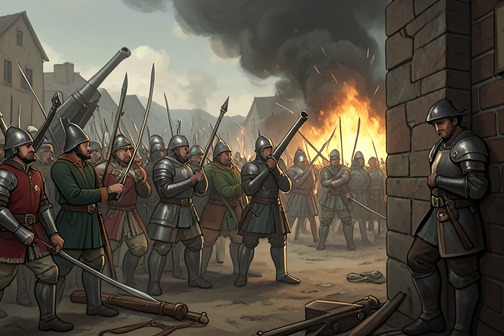
The [Battle of the Bulgarians and Abares](entity:event-recall-event-battle-of-the-bulgarian-a0e1379ec15b) turns the pageantry of war into a measure of its human cost. As two armies make music and their kings order thanksgiving hymns, [Candide](entity:character-recall-character-candide-543f04561cb3) hides from a battle that kills tens of thousands; when he flees, the destruction extends beyond the battlefield into villages burned by each side in turn.
## The Battle and Its Toll
The opposing armies are introduced through a deliberately splendid inventory: trumpets, fifes, hautboys, drums, and cannon accompany troops described as polished and gallant. That ceremonial brightness is immediately contradicted by the toll. Cannon fire kills about six thousand men on each side; muskets kill another nine or ten thousand, and bayonets account for several thousand more. The narrator estimates the total at roughly thirty thousand people.
Candide does not join the fighting. He trembles and hides as best he can, while the account’s contrast between military display and mass death makes the battle’s supposed heroism an object of irony rather than admiration.
## From the Camps to the Villages
The battle’s ritual does not end with the killing. Each king has a Te Deum sung in his own camp, and Candide chooses that moment to leave, seeking elsewhere to consider causes and effects. His route passes over the dead and dying before he reaches a neighboring village, which the Bulgarians have burned.
The village’s inhabitants have suffered the consequences of the army’s passage, and the settlement lies in ruins. Candide then hurries to another village, this one Bulgarian, which the [Abares](entity:organization-recall-organization-81ec5acf30d3) have treated in the same way. The reciprocal destruction shows that the civilian cost is not confined to one side: the armies’ violence reaches communities beyond their immediate confrontation.
## Candide’s Flight and the Event’s Meaning
Candide continues across ruined ground until he is beyond the seat of war. He has only a few provisions in his knapsack, and [Cunegonde](entity:character-recall-character-cunegonde-50f496a25b8b) remains in his thoughts. When his food runs out in [Holland](entity:location-recall-location-a89070caa9e5), he expects that a Christian country whose people are said to be rich will treat him as he was treated before his expulsion from the Baron’s castle. Instead, several grave-looking people threaten to send him to a house of correction if he persists in begging.
The episode thus connects the battle’s spectacular violence to the hardship that follows for a displaced survivor. The kings’ hymns and the armies’ music cannot reconcile the claims of ceremony with the destruction of people and homes; Candide’s passage from the battlefield to the burned villages makes that contradiction the event’s defining judgment.
Event 3
Sack of Thunder-ten-Tronckh Castle
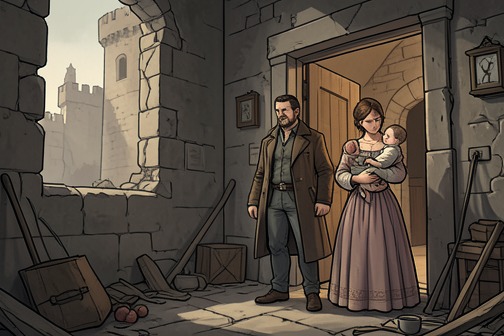
The sack of the [Castle of Thunder-ten-Tronckh](entity:location-recall-location-thunder-ten-tronckh-fb48abca8a93) destroys the family and home at the center of [Candide](entity:character-recall-character-candide-543f04561cb3)’s early life, turning the war’s abstract violence into personal loss. [Pangloss](entity:character-recall-character-pangloss-8b8593ec7d02) initially tells Candide that [Cunegonde](entity:character-recall-character-cunegonde-50f496a25b8b) has died along with her family; Cunegonde’s later account overturns that report, making the attack both a catastrophe and the event from which her survival story proceeds.
## The Attack and the Household’s Destruction
Cunegonde recalls being asleep when the Bulgarians arrived at the Castle of Thunder-ten-Tronckh. She says that they killed her father and brother and cut her mother to pieces. Her account places the assault within a broader attack on the household: she describes seeing her family harmed before a soldier attacked her, and says that the episode left a mark on her side. The violence is presented as part of the wartime destruction of the castle, not as an isolated encounter.
Pangloss’s earlier report to Candide gives the event a wider scale. He says that Cunegonde was believed dead, that the Baron had been killed while trying to defend her, and that the Baroness and their son had also been killed. He describes the castle as so thoroughly destroyed that not a stone, barn, sheep, duck, or tree remained. The domestic world Candide had known is thus erased along with its inhabitants—or, as Cunegonde’s later testimony establishes, nearly all of them.
## Conflicting Reports and Survival
The attack reaches Candide first as news of total loss. On hearing that Cunegonde is dead, he faints; when he recovers, he asks Pangloss about the causes and sufficient reasons behind the philosopher’s own miserable condition. Pangloss’s account joins the deaths at the castle to the attack on himself, while Candide’s distress shows the immediate personal consequence of believing that Cunegonde has been killed.
Cunegonde’s later narration corrects that understanding. She survived the assault and can describe its beginning from inside the castle, including her initial unconsciousness and her struggle to resist the soldier who attacked her. Her recollection changes the meaning of Pangloss’s report: the sack did devastate her family, but it did not end her life. The difference between the two accounts also makes survival itself a fact Candide cannot know from the first report.
## Retaliation and the War’s Logic
Pangloss frames the destruction as part of reciprocal devastation. After recounting the castle’s ruin, he claims that the [Abares](entity:organization-recall-organization-81ec5acf30d3) have done the same to a neighboring barony belonging to a Bulgarian lord, presenting that parallel destruction as revenge. The symmetry does not restore the people or property lost at the Castle of Thunder-ten-Tronckh; it extends the pattern of destruction to another community.
The sack therefore supplies a concrete counterweight to Pangloss’s confidence that private misfortunes contribute to a general good. The attack kills members of Cunegonde’s family, destroys the estate, and leaves Candide to understand the world through a report of irreparable loss. Its later retelling does not undo those consequences, but it exposes the gap between the catastrophe as first reported and the surviving witness’s account.
Event 4
Shipwreck of James the Anabaptist
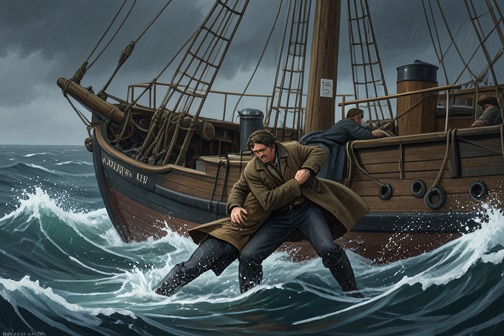
The [Shipwreck of James the Anabaptist](entity:event-recall-event-shipwreck-of-james-the-65a19b93ae86) is the disaster in which James dies after saving a sailor who had struck him. The episode makes the difference between practical compassion and abstract philosophical explanation stark: James acts to preserve another life, while [Pangloss](entity:character-recall-character-pangloss-8b8593ec7d02) describes the drowning as part of a necessary order and prevents [Candide](entity:character-recall-character-candide-543f04561cb3) from trying to intervene.
## Storm and Wreck
As the passengers reasoned during their voyage, the sky darkened and a tempest arose within sight of [Lisbon](entity:location-recall-location-b6651f2dd904). The ship was badly damaged: its sheets were torn, its masts broken, and the vessel began to founder. Some passengers, overcome by the ship’s motion, were scarcely aware of the danger; others cried out and prayed. Amid the confusion, no one could establish effective command.
## James’s Rescue and Death
James was on deck and tried to help during the crisis. When a sailor struck him and fell overboard, James hauled the man back up; the effort sent James into the sea. Candide saw his benefactor surface and disappear beneath the water. He moved to jump in after him, but Pangloss stopped him, arguing that the Bay of Lisbon had been made for James to drown in. The sailor whom James had saved made no attempt to help him.
## Survivors and Immediate Aftermath
The ship foundered, and everyone aboard died except Pangloss, Candide, and the sailor. The sailor reached shore by swimming, while Pangloss and Candide came ashore on a plank. Once they had recovered enough to walk, they headed toward Lisbon with some money left, hoping to avoid starvation after surviving the wreck. They lamented James’s death as they entered the city.
The shipwreck is followed almost immediately by the Lisbon earthquake. The earth shook, the harbour waters rose and damaged anchored vessels, and collapsing buildings killed thirty thousand inhabitants, according to the narrative. Pangloss sought a physical explanation, proposing a subterranean sulphur connection between Lima and Lisbon; Candide found the idea plausible but asked instead for practical help. The earthquake is a distinct catastrophe, but its placement carries forward the wreck’s contrast between suffering and explanations that do not relieve it.
## Narrative Significance
James’s death gives concrete force to the disagreement about whether private misfortunes serve a general good. The sailor’s conduct reverses the expected moral order: the person James saves survives, while the rescuer dies and the sailor shows no concern for him. Pangloss’s claim that the drowning was necessary turns that reversal into a test of his optimism, while Candide’s attempted response registers the human cost that the argument cannot undo. The later Lisbon earthquake extends the episode’s pattern of catastrophe followed by confident explanations and institutional responses.
Event 5
1755 Lisbon earthquake
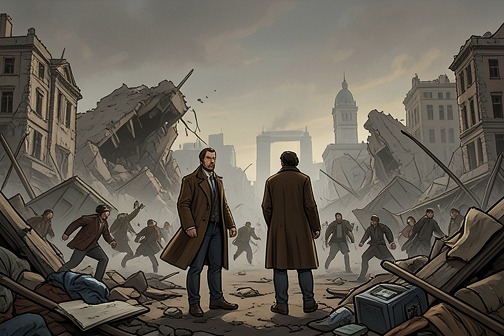
The [1755 Lisbon earthquake](entity:event-recall-event-1755-lisbon-earthquake-cf356ce1d395) is a catastrophic event in [Candide](entity:character-recall-character-candide-543f04561cb3) that turns abstract arguments about cause, providence, and the best possible world into an immediate test of survival. It kills about 30,000 inhabitants, devastates [Lisbon](entity:location-recall-location-b6651f2dd904), and leaves Candide injured amid the ruins. The responses that follow—from neighbors’ relief efforts to an auto-da-fé intended to stop further earthquakes—make the disaster both a human calamity and a satirical examination of how people explain and govern suffering.
## Setting and the Earthquake
The earthquake strikes after Candide and [Pangloss](entity:character-recall-character-pangloss-8b8593ec7d02) have reached Lisbon, following a storm and shipwreck in which [James the Anabaptist](entity:character-recall-character-12285eec9d00), their benefactor, drowned. The preceding disaster and the city’s destruction are separate calamities, but their closeness leaves little time for the survivors to recover: Candide and Pangloss arrive lamenting James’s death, with some money remaining to keep them from starvation, and then the earth begins to shake beneath them.
The narrative describes a city transformed by the quake. The sea rises and foams in the harbor, breaking vessels at anchor; fire and ash sweep through streets and public spaces; houses collapse, roofs fall onto the pavements, and the pavements themselves are scattered. About 30,000 people of different ages and sexes are crushed beneath the ruins. Elsewhere, the scale of the destruction is described as three-fourths of Lisbon. A footnote identifies the historical disaster as having occurred on [November 1, 1755](entity:time-recall-time-november-1-1755-26f2292d0707), anchoring the episode’s fictional events in a specific date.
Candide is among the injured. Struck by falling stones, he lies in the street beneath debris and asks Pangloss for wine and oil because he believes he is dying. His urgent need for care contrasts with Pangloss’s impulse to explain the disaster: when Candide asks for help, the philosopher instead argues that an underground line of sulphur connects Lima in [America](entity:location-recall-location-america-c751899c385c) to Lisbon and accounts for both cities’ earthquakes. Candide accepts that explanation as plausible but again asks for immediate aid; Pangloss insists that the theory can be demonstrated. The exchange sets physical need against a system of reasoning that can keep proceeding while the person beside its advocate is hurt.
## Responses to Suffering
The catastrophe briefly produces practical cooperation. After Candide faints, Pangloss fetches water from a nearby fountain. The next day, the two search among the ruins, find provisions, and regain enough strength to join others in helping survivors. People they have assisted offer them what dinner they can. The meal is marked by grief: those gathered moisten their bread with tears. Pangloss, however, comforts them by insisting that events could not have happened otherwise and that everything is for the best.
The narrative places that reassurance beside the visible consequences of the earthquake rather than allowing it to stand alone. The survivors’ loss and their efforts to aid one another are concrete; Pangloss’s account turns destruction into a necessary part of a complete order. A Familiar of the [Inquisition](entity:organization-recall-organization-inquisition-f246941bf255) challenges the implication of this reasoning, asking whether a world in which everything is for the best leaves any place for original sin or punishment. The exchange brings theological questions into the disaster’s aftermath without resolving the divide between a system’s explanations and the lives those explanations are meant to account for.
Not everyone responds to the ruins with assistance or grief. The sailor who survived the shipwreck searches the damaged city for money, drinks after finding it, and disregards Pangloss’s rebuke. His conduct supplies a sharply different response to the same emergency: where Candide and Pangloss later join relief efforts, the sailor treats the disorder as an opportunity for personal gain. The contrast makes the earthquake a setting in which conduct, not merely philosophical assertion, is exposed.
## The Auto-da-fé and the Recurring Shock
Lisbon’s authorities respond to the earthquake with an auto-da-fé, presenting religious punishment as a way to prevent another disaster. The decision follows a decree by the University of Coimbra, whose sages declare that burning people alive slowly and ceremonially is an infallible means of stopping the earth from shaking. The ceremony therefore converts a natural catastrophe into a rationale for punishing people accused of religious or social offenses. Its asserted preventive purpose is especially consequential: the prescribed ritual does not avert another tremor.
Candide and Pangloss are among those seized. Pangloss is arrested for speaking his mind, while Candide is taken for having listened with apparent approval. After eight days in separate, cold rooms, they are dressed in san-benitos and paper mitres and led in procession. Candide is publicly whipped; Pangloss is hanged, though hanging is not the customary punishment. Others are burned. On the same day, the earth shakes violently again. The sequence undercuts the authorities’ claim to have discovered a remedy: the ceremony imposes suffering but fails on its own stated terms.
A footnote adds that the auto-da-fé took place on June 20, 1756, some months after the earthquake. That historical detail distinguishes the disaster from the later ceremony while confirming that the punitive response is tied to an actual Lisbon event. In the novel’s account, the renewed tremor following the ceremony further sharpens the gap between institutional certainty and what happens.
## Narrative and Philosophical Significance
The earthquake subjects Pangloss’s teaching to a crisis more immediate than debate. Earlier, he had presented causal necessity as evidence that this is the best of all possible worlds. In Lisbon, he continues to affirm that everything is right even as the city lies devastated, Candide needs help, and survivors grieve over their meal. The episode does not merely place a counterexample before Pangloss; it shows his explanations recurring under pressure, including when practical assistance is needed and when a proposed religious remedy fails.
Candide’s responses register the strain between inherited optimism and witnessed disaster. During the quake he cries that it is the [Last Day](entity:time-recall-time-ce4818a16f84); after the later ceremony and renewed shock, the remembered deaths of Pangloss, James the Anabaptist, and [Cunegonde](entity:character-recall-character-cunegonde-50f496a25b8b)’s apparent fate weigh against the proposition that the world’s arrangements are best. The earthquake is thus a decisive stage in his exposure to suffering, though the novel does not make the event a simple conversion to a settled opposing doctrine. It remains one episode in a sequence of disasters that repeatedly confront philosophical explanations with human consequences.
The earthquake also links natural catastrophe to human choices about blame and remedy. The ground’s convulsions destroy homes and lives; the attempted response turns fear into organized punishment; and survivors’ efforts to share food and help the injured offer a smaller, practical answer to immediate need. By setting these responses side by side, the episode makes the disaster central not only for its scale but for the competing ways its survivors explain it, exploit it, endure it, and respond to one another.
Event 6
Lisbon auto-da-fé
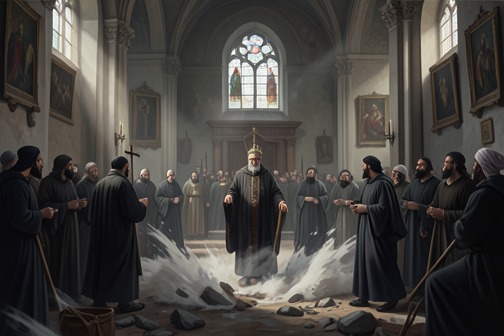
The [Lisbon auto-da-fé](entity:event-recall-event-lisbon-auto-da-f-384757a16ff0) follows the earthquake that destroyed three-fourths of [Lisbon](entity:location-recall-location-b6651f2dd904) and exposes the violence and absurdity of treating persecution as a practical remedy for disaster. Authorities stage the ceremony to prevent further earthquakes; instead, the ground shakes violently again the same day. For [Candide](entity:character-recall-character-candide-543f04561cb3), who has learned to accept [Pangloss](entity:character-recall-character-pangloss-8b8593ec7d02)’s doctrine that everything serves the best possible order, the event makes that doctrine newly difficult to sustain.
## Causes and Rationale
After the earthquake, the country’s learned authorities seek a way to avert further destruction. The [Coimbra University’s Anti-Earthquake Auto-da-fé Decree](entity:rule-recall-rule-coimbra-university-s-ant-e78b87674921) supplies their answer: a highly ceremonial punishment of a few people is treated as an infallible means of stopping the earth from shaking. The episode’s causal logic is deliberately inverted. Rather than address the disaster, the authorities turn it into a pretext for punishment, and their supposed remedy rests on a claim the subsequent tremor immediately discredits.
The ceremony also collides with the philosophical teaching Candide has received from Pangloss. Pangloss’s metaphysical system argues that effects follow causes and that things could not be otherwise; he presents the existing world as the best possible one. At the auto-da-fé, official certainty takes a similarly self-assured form, but its proposed intervention cannot control the natural event it purports to prevent.
## Arrests and Ceremony
The authorities seize a Biscayan convicted of marrying his godmother and two Portuguese men who had rejected the bacon in a chicken. Pangloss is arrested after dinner for speaking his mind, while Candide is taken for listening with an approving air. The distinct charges place alleged religious and personal offenses beside the less clearly specified act of voicing an opinion, making the proceedings appear less like a coherent response to the earthquake than a mechanism for imposing conformity.
Pangloss and Candide are kept in separate, cold apartments. Eight days later, they are dressed for the procession in San-benitos and paper mitres. The designs distinguish their supposed offenses: Candide’s garments bear reversed flames and devils without tails or claws, while Pangloss’s show upright flames and devils with tails and claws. A sermon and church music accompany the procession. Candide is publicly whipped in time with the singing; the Biscayan and the two men who refused the bacon are burned, and Pangloss is hanged, a punishment the narrative notes was not customary.
## Failure and Immediate Consequences
The ceremony’s stated purpose is defeated on the very day it is performed: the earth undergoes another violent concussion. The ritual has imposed punishment without preventing the disaster that supposedly justified it. Its elaborate order—official charges, prescribed clothing, procession, sermon, music—stands in sharp contrast to the failure of its central claim.
Candide emerges terrified and desperate, still suffering the consequences of his punishment and unable to understand why Pangloss has been hanged. In his response, he recalls other losses as well, including the drowning of [James the Anabaptist](entity:character-recall-character-12285eec9d00) and the reported death of [Cunegonde](entity:character-recall-character-cunegonde-50f496a25b8b). The Lisbon ceremony thus arrives within a sequence of calamities, but it gives Candide a particularly direct reason to question Pangloss’s assurances: the authorities’ confident attempt to make suffering serve a purpose produces more suffering and no protection from the earthquake.
## Narrative and Philosophical Significance
The episode turns Pangloss’s abstract optimism into a test against specific events. Earlier, his examples make the doctrine seem orderly by deriving familiar objects and social arrangements from supposed purposes. In Lisbon, the proposed purpose of the ceremony is equally explicit and equally untenable: punishment is meant to stop earthquakes, yet the earthquake returns. Pangloss himself becomes one of the victims of the practice, while Candide is punished merely for appearing to approve of him.
The episode’s swift reversal is characteristic of the tale’s compressed satirical method. A disaster is followed by a supposed remedy, the remedy becomes another source of harm, and nature supplies an immediate contradiction. Later, the novel’s conclusion gives precedence to practical work over further disputation: Candide says that they must cultivate their garden, and [Martin](entity:character-recall-character-martin-f5cb6653498c) urges the group to work rather than argue. That ending does not erase the auto-da-fé, but it contrasts its futile attempt to control disaster through ceremony with a modest form of action grounded in what people can actually do.
Event 7
Candide's killings in Lisbon
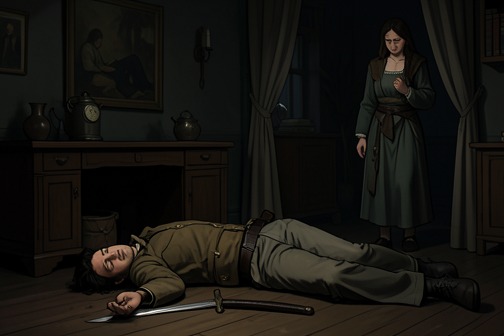
[Candide's killings in Lisbon](entity:event-recall-event-candide-s-killings-in-l-f1c925ee5bde) mark a sudden passage from vulnerability to lethal action: after being whipped under the authority of the [Inquisition](entity:organization-recall-organization-inquisition-f246941bf255), he kills Don Issachar and then the [Grand Inquisitor of Portugal](entity:character-recall-character-6e5b40621908). The immediate result is not safety but flight. With [Cunegonde](entity:character-recall-character-cunegonde-50f496a25b8b) and the [Old Woman](entity:character-recall-character-81f1ad2a5d37), he leaves the city by night, and the episode converts the danger surrounding their relationship into a new stage of their journey.
## Causes and Circumstances
The first confrontation takes place in Cunegonde’s apartment. Don Issachar arrives carrying a poniard and objects to sharing her with the Inquisitor. [Candide](entity:character-recall-character-candide-543f04561cb3), who has received a sword from the Old Woman along with a change of clothes, is armed when Don Issachar attacks. Though characterized as gentle, Candide draws the sword and kills him. The confrontation is driven by the rivalry over Cunegonde, but it also follows the violence and danger that have already shaped the characters’ lives in [Lisbon](entity:location-recall-location-b6651f2dd904).
The scene’s second crisis arrives shortly afterward. It is past midnight, at the beginning of [Sunday](entity:time-recall-time-95868a7bbce2), and the Grand Inquisitor enters the apartment on the day assigned to him. He finds Candide holding a sword, Don Issachar dead, Cunegonde terrified, and the Old Woman offering counsel. The Inquisitor’s arrival makes the consequences of the first killing immediate: the person with authority to punish Candide is now present, and Cunegonde may also be exposed to punishment.
Candide’s reasoning is presented as rapid and practical rather than as a considered change in principle. He believes the Inquisitor will have him burned if he summons help, fears Cunegonde may suffer the same fate, and recognizes the Inquisitor as his rival and as the cause of his whipping. Having already killed once, he decides that hesitation will not help him. He then kills the Inquisitor before the latter can recover from his surprise. The sequence places a threatened act of punishment, a personal rivalry, and Candide’s newly demonstrated capacity for violence in the same instant.
## The Two Killings and Their Contrast
The deaths occur in succession, but the circumstances of each are distinct. Don Issachar initiates the first confrontation with a weapon, while Candide’s response to the Inquisitor follows his fear of renewed punishment and his judgment that the danger is immediate. The episode thus does not present the second killing as a simple continuation of the first: Candide interprets the Inquisitor’s authority, prior treatment of him, and connection to Cunegonde as reasons not to wait.
Cunegonde reacts with alarm at the paired deaths and at the peril they create for the three fugitives. Her response emphasizes the reversal in Candide’s conduct: the gentle young man she knows has killed two men within minutes. Candide explains his actions through the combined pressures of love, jealousy, and having been whipped by the Inquisition. The explanation makes his conduct legible within the scene without turning it into a general defense of violence.
## Escape and Immediate Aftermath
The Old Woman converts the crisis into an escape plan. She points to three Andalusian horses in the stable, notes that Cunegonde has money and jewels, and proposes that they set out for [Cadiz](entity:location-recall-location-c6bb8c3d04e6) during the cool of the night. Candide saddles all three horses, and he, Cunegonde, and the Old Woman travel thirty miles at a stretch. Their departure is therefore organized quickly around available transport and resources rather than around any attempt to remain and answer for the killings.
After they leave, the Holy Brotherhood enters the house. The two dead men receive sharply different treatment: the Grand Inquisitor is buried in a handsome church, while Don Issachar’s body is thrown on a dunghill. The contrast gives the aftermath a social and institutional dimension; the same event produces an official burial for one victim and disgrace for the other. Meanwhile, the fugitives reach Avacena, a small town in the mountains of the Sierra Morena, where the narrative resumes with them speaking at a public inn.
## Narrative and Thematic Significance
The episode subjects claims of order and justice to the same satirical pressure that shapes the larger work. The Grand Inquisitor is not encountered as an abstract office: he enters the apartment after Candide has been whipped, and Candide sees him as both a source of that punishment and a rival. The ensuing danger is concrete, while the escape is equally practical—horses, money, jewels, and a rapid journey. The scene’s reversals are compressed into a chain of arrival, killing, counsel, and departure.
That compression belongs to a book whose attack on optimism depends on testing philosophical explanations against abrupt events. [Pangloss](entity:character-recall-character-pangloss-8b8593ec7d02)’s teaching presents the world as ordered for the best, but Candide’s experience in Lisbon includes whipping, fear of execution, two killings, and flight. The killings do not settle the philosophical argument or restore security; they lead directly to another precarious journey. In this way, the episode makes the violence of the surrounding institutions and the consequences of Candide’s own actions part of the same unsettled world.
Event 8
Discovery of El Dorado

The discovery of [Eldorado](entity:location-recall-location-6505137ac4e0) is both the most vivid encounter with an apparently just society in [Candide](entity:character-recall-character-candide-543f04561cb3) and a turning point that exposes the limits of its appeal. Candide and [Cacambo](entity:character-recall-character-cacambo-a055ef77b437) reach a country where gold and jewels are treated as road pebbles, public hospitality costs nothing, and the institutions Candide expects to find—courts and prisons—are absent. Yet after a month of welcome and wonder, they decide to leave. Their departure makes Eldorado more than a satirical contrast with the societies they have endured: it tests whether an ideal place can hold people whose deepest hopes still point beyond it.
## Arrival Through the Mountains
Candide and Cacambo entrust themselves to a river whose banks alternate between flowered and barren stretches, smooth water and rugged ground. The stream widens, then plunges beneath an arch of immense rocks. After twenty-four hours in the darkness and noise of the passage, their canoe is smashed against the rocks. They scramble from rock to rock for a league before reaching a plain enclosed by inaccessible mountains. The approach makes entry into Eldorado a physical ordeal, but the country beyond reverses the desolation of the passage: its land is cultivated for pleasure as well as necessity, and the useful is also beautiful.
On the roads, glittering carriages carry strikingly beautiful people, drawn by large red sheep faster than the finest coursers known to the travelers. Candide immediately judges the country superior to [Westphalia](entity:location-recall-location-westphalia-7b3c88c72cfa). At the edge of a village, he and Cacambo watch children playing quoits with large, brightly colored disks. The disks gleam because they are gold, emeralds, and rubies; even the smallest would be an ornament worthy of the Mogul’s throne. The children’s indifference to such riches overturns the travelers’ assumptions about value before they have even entered a house.
## A Society That Reverses Their Expectations
Cacambo can speak with the inhabitants because he understands their language, which is also his mother tongue. He was born in a village where it was the only language spoken, and the knowledge makes him the travelers’ interpreter. At the village house, they are welcomed to a table with an elaborate meal: soups garnished with young parrots, a boiled condor weighing two hundred pounds, roasted monkeys, hundreds of hummingbirds and fly-birds, pastries, and drinks distilled from sugar cane. The abundance is striking, but the more consequential surprise comes when they try to pay.
The landlord explains that the shining stones the travelers offer are merely pebbles from the roads. They need no local money: the government pays for inns established to serve commerce. He calls the village poor, adding that they will receive an even better welcome elsewhere. Cacambo translates the explanation, leaving both travelers astonished. Their encounter gives their suspicion a name: this may be the country where all is well, the place that [Pangloss](entity:character-recall-character-pangloss-8b8593ec7d02)’s doctrine seemed to require, though Candide recalls that life in Westphalia often went badly.
The capital expands the contrast. Its public buildings rise to great heights; market places are lined with columns, and fountains dispense spring water, rose water, and sugar-cane liqueurs into spacious squares paved with fragrant precious stone. When Candide asks for a court of justice and a parliament, he is told there are none because the people are strangers to lawsuits. He asks about prisons and learns that there are none. The palace of sciences, with a gallery two thousand feet long filled with instruments for mathematics and physics, surprises and delights him more than the city’s other marvels. At the royal table, the King’s wit also survives translation: Cacambo explains his remarks, and Candide finds them witty even at second hand.
## Welcome, Choice, and Departure
Candide and Cacambo spend a month in this hospitable country. The stay does not extinguish their attachment to the lives and ambitions they left behind. Candide compares the castle where he was born unfavorably with Eldorado, but points out that [Cunegonde](entity:character-recall-character-cunegonde-50f496a25b8b) is not there; he also supposes that Cacambo has a beloved in Europe. He imagines that remaining would leave them merely on an equal footing with everyone else, whereas returning with twelve sheep loaded with Eldorado’s stones would make them richer than Europe’s kings. He also hopes that such wealth will help him recover Cunegonde and free him from fear of inquisitors. Cacambo agrees, and the travelers ask the King for permission to depart.
The King laughs at their desire for what he regards as yellow clay and lets them take as much as they like. He then orders engineers to build a machine to lift them out of the kingdom. Three thousand mathematicians complete it in fifteen days, at a cost of twenty million sterling in Eldorado’s currency. The preparations provide a concrete measure of the country’s resources: the travelers are supplied with two red sheep to ride beyond the mountains, twenty pack-sheep carrying provisions, thirty carrying curiosities as gifts, and fifty carrying gold, diamonds, and precious stones. The King embraces them tenderly before they leave.
Their passage over the mountains, with the travelers and their sheep raised by the ingenious machine, is described as a splendid spectacle. The mathematicians accompany them to a place of safety and take their leave. Once outside Eldorado, Candide’s aim is to present his sheep to Cunegonde. He and Cacambo plan to journey toward Cayenne and embark, while Candide expects the wealth to let them pay the Governor of Buenos Ayres if Cunegonde can be ransomed. The country they have found is not simply lost; they actively exchange its welcome and security for the possibility of recovering someone absent from it.
## Narrative and Thematic Significance
Eldorado turns the argument first embodied by Pangloss into a place with observable customs and institutions. In Westphalia, Pangloss reasons that things must be arranged for the best: noses were made for spectacles, stones for castles, and pigs for eating. In Eldorado, the travelers instead encounter a society whose apparent order is conveyed through free public inns, the absence of prisons and lawsuits, scientific instruments, and a population that does not prize the stones scattered on its roads. Candide’s recognition that his earlier world had gone badly gives the discovery force as a contrast, not proof that his former teacher’s explanations were sound.
The contrast does not resolve into a simple lesson that the travelers are foolish to leave. Candide has specific attachments and purposes: Cunegonde is elsewhere, and he hopes that wealth will help him reach her. Yet his expectation that conspicuous riches will make him superior in Europe sits uneasily beside a country where the same riches are dismissed as yellow clay. The discovery thus reveals a conflict between a society that appears to have escaped scarcity and rivalry over precious objects and travelers who still imagine happiness through reunion, wealth, and status.
The episode also fits the book’s rapid philosophical travel. The introduction describes Candide as a short work written in three days in [1759](entity:time-recall-time-1759-41ea714e9277) to ridicule the claim that this is the best of all possible worlds; Eldorado gives that claim a striking, temporary counter-image before the plot carries its travelers onward. At the conclusion, Candide’s answer to the question of how to live is practical work: he says they must cultivate the garden. That ending does not restore Eldorado or explain away the choice to leave it. Instead, the discovery remains a brilliant alternative the travelers encounter and relinquish, while the novel’s final emphasis falls on the more limited task of making life tolerable through work.
Event 9
Candide kills the Baron of Thunder-ten-Tronckh
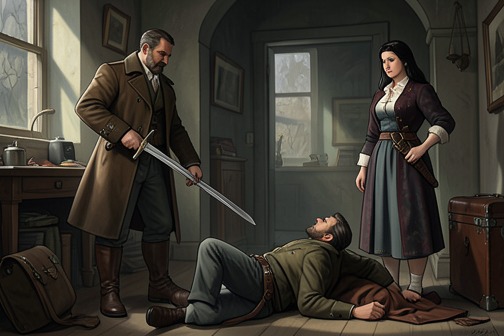
[Candide kills the Baron of Thunder-ten-Tronckh](entity:event-recall-event-candide-kills-the-baron-b7508b90e94b) in a sudden reversal: the man who has just embraced him as a brother and savior becomes his opponent when [Candide](entity:character-recall-character-candide-543f04561cb3) declares his intention to marry [Cunegonde](entity:character-recall-character-cunegonde-50f496a25b8b). [The Baron](entity:character-recall-character-the-baron-9f443c8f42bf) rejects the match because of her seventy-two quarterings and strikes Candide; Candide answers with a fatal-seeming sword thrust. The episode turns a dispute over rank into an act of violence, then immediately into a flight made possible by [Cacambo](entity:character-recall-character-cacambo-a055ef77b437)’s quick thinking. Its apparent finality is later undone when the Baron returns alive, so the scene’s consequences extend beyond the moment of the stabbing.
## The Reunion and the Marriage Dispute
The confrontation follows Candide’s rescue of the Baron, who embraces him and calls him his brother and savior. The Baron imagines that they might enter the town as conquerors and recover his sister, Cunegonde. Candide makes clear that marriage is his purpose: he had intended to marry her and still hopes to do so. The exchange begins in the language of gratitude and shared purpose, but the Baron’s welcome has a limit. Candide’s rescue of Cunegonde does not, in the Baron’s view, give him a claim to marry her.
The Baron’s objection rests on lineage. He invokes Cunegonde’s seventy-two quarterings and treats Candide’s proposal as an intolerable presumption. Candide counters that ancestry cannot outweigh the fact that he rescued her, that she wishes to marry him, and that [Pangloss](entity:character-recall-character-pangloss-8b8593ec7d02) had taught that all men are equal. The dispute therefore sets Candide’s appeal to obligation and equality against the Baron’s defense of inherited rank. The quarrel is not a misunderstanding: each man states the principle governing his position, and the Baron answers Candide’s claim with a blow.
## The Stabbing and Immediate Escape
After the Baron strikes him across the face with the flat of his sword, Candide draws his rapier and stabs him. Candide’s response is immediate, but his reaction afterward is grief and shock rather than celebration. He laments that he has killed someone he regarded as his old master, friend, and brother-in-law, and recalls that he has already killed three men, two of them priests. His distress complicates any simple reading of the act as triumph: he has asserted his intention to marry Cunegonde, but has done so through another killing that he himself finds appalling.
Cacambo is standing guard at the arbour door and takes charge before Candide can act on his expectation that they will have to sell their lives dearly. Drawing on his experience in dangerous situations, Cacambo puts the Baron’s Jesuit habit and square cap on Candide, then mounts him on horseback. The disguise gives their escape its method: pursuers are expected to mistake Candide for a Jesuit going to direct his men. Cacambo urges speed so they can cross the frontiers before anyone catches them, and announces in Spanish that the Reverend Father Colonel is coming through. Candide’s survival now depends not on defending his claim but on being mistaken for the very kind of authority whose clothing he wears.
## What the Scene Puts at Stake
The killing makes the conflict between Candide and the Baron concrete. Candide’s appeal to equality and to Cunegonde’s own wish meets a rigid defense of hereditary distinction; the Baron’s physical blow converts that dispute into an immediate life-and-death encounter. The scene also links Candide’s stated desire to marry with the accumulating violence of his journey. He wants to recover Cunegonde and make their marriage possible, yet his pursuit repeatedly places him in situations where force and escape displace any peaceful resolution.
The reversal is sharpened by Candide’s earlier formation. In the Baron’s household, Pangloss taught that everything was for the best and treated the castle and its social order as exemplary. Here, the family’s claim to superiority is defended not by philosophical argument but by a sword. Candide invokes Pangloss’s teaching about equality against the Baron’s rank-conscious refusal, only for the argument to collapse into violence. The episode thus tests abstract maxims against a particular relationship and a particular act, without giving Candide an uncomplicated victory: he escapes, but in tears over what he believes he has done.
## Survival and Later Consequences
The Baron’s apparent death is not the end of his role. Near the conclusion, he is alive and again refuses to permit Candide to marry his sister while he lives. Candide himself has, by then, lost his desire to marry Cunegonde, but the Baron’s impertinence renews his determination to complete the match, while Cunegonde presses him to keep his word. The earlier stabbing has therefore failed to remove the obstacle permanently; the Baron survives to resume the conflict.
Candide consults Pangloss, [Martin](entity:character-recall-character-martin-f5cb6653498c), and Cacambo. Pangloss prepares an argument that the Baron has no authority over his sister’s marriage and that she may marry Candide despite the difference in rank. Martin proposes throwing the Baron into the sea; Cacambo advises handing him back to the galley captain and arranging for him to be sent to the head of the order in [Rome](entity:location-recall-location-f3877a21016f). The group chooses Cacambo’s plan, with the [Old Woman](entity:character-recall-character-81f1ad2a5d37)’s approval, keeps it from Cunegonde, and carries it out for a little money. The outcome turns the earlier escape into a continuing contest over the Baron’s authority: the conclusion punishes his pride and entraps him, but does not resolve the marriage through his death.
Event 10
Candide's encounter with the enslaved man in Surinam

[Candide's encounter with the enslaved man in Surinam](entity:event-recall-event-candide-s-encounter-wit-f44737b99d1b) is the moment when suffering ceases to be an abstract objection to optimism and becomes a testimony about an economic system. The man’s missing left leg and right hand, his explanation of how he lost them, and his connection between forced labor and European sugar force [Candide](entity:character-recall-character-candide-543f04561cb3) to name as madness the belief that everything is right when it is wrong.
## Arrival at [Surinam](entity:location-recall-location-301f213b57d9)
Candide and [Cacambo](entity:character-recall-character-cacambo-a055ef77b437) come toward Surinam with two sheep still remaining, carrying treasure that Cacambo believes exceeds the King of Spain’s wealth. Their approach seems to promise an end to their troubles; Cacambo imagines happiness ahead. Instead, they see a man lying on the ground, wearing only half his clothing: blue linen drawers. He has lost his left leg and right hand. The contrast is immediate: the travelers’ wealth and expectation of relief meet a body that bears the cost of labor and punishment.
Candide addresses him in Dutch and asks what has happened. The man says he is waiting for his master, [Mynheer Vanderdendur](entity:character-recall-character-mynheer-vanderdendu-048583e32ed8), whom he identifies as a famous merchant. Candide asks whether this master treated him so. The answer begins with an apparent confirmation, but the man explains the injuries through customs and practices: the mill takes a finger while he works at the sugar cane, and the hand is cut off; when a person tries to escape, the leg is cut off. Both events, he says, have happened to him. His account makes clear that the violence is not simply a single encounter between master and worker: it is enforced through a routine that mutilates workers and punishes flight.
## The Cost of Sugar
The man gives the injuries an economic destination in one stark sentence: this, he says, is the price at which sugar is eaten in Europe. His body connects the distant consumer to the violence of production. Sugar, usually encountered as a commodity, becomes inseparable from the hand lost at the mill and the leg lost in an attempted escape. The scene does not describe the travelers buying or consuming sugar; instead, the man’s testimony supplies the human cost behind its European use.
He also recounts the circumstances of his sale. His mother sold him on the coast of Guinea for ten patagons. She told him to bless and adore their fetishes, promising that they would make him live happily, and presented enslavement to white masters as an honor that would make his parents’ fortune. He now doubts that his labor made their fortune, and knows that it did not make his own. The distance between the promise and the outcome is measured not only in money but in the injuries and deprivation he describes.
The man compares his condition with that of dogs, monkeys, and parrots, judging them a thousand times less wretched than himself. The comparison is not a claim that he possesses less humanity; it exposes the extremity of the treatment to which he is subjected. His own account places clothing, bodily integrity, freedom of movement, and material benefit under the pressure of a system that extracts labor while offering neither the promised happiness nor protection from violence.
## Kinship and Religious Hypocrisy
The man sets the practices of enslavement against the religious teaching he hears on Sundays. Dutch preachers who have converted him declare that everyone is a child of Adam, black and white alike. He says he is no genealogist, but draws the implication: if the preachers speak truth, the enslaved and the enslavers are cousins. The reasoning is plain and deliberately difficult to evade. A shared religious ancestry cannot be reconciled with the barbarous treatment of one’s relations.
His testimony brings doctrine and practice into the same scene without allowing the doctrine to excuse the violence. The [Sunday](entity:time-recall-time-95868a7bbce2) declaration of common descent stands beside the routine amputation of a worker’s hand and the cutting off of a fugitive’s leg. The contradiction is not presented as an abstract theological puzzle: it is embodied by the speaker, whose injuries make the distance between proclaimed kinship and lived treatment visible. The man’s words turn the language of shared humanity against a society that professes it while maintaining enslavement.
## Candide’s Renunciation
Candide responds by invoking [Pangloss](entity:character-recall-character-pangloss-8b8593ec7d02) and calling the encounter an abomination that Pangloss had not foreseen. He says that this is the end: at last he must renounce the teacher’s optimism. Cacambo asks what optimism means, and Candide defines it as the madness of maintaining that everything is right when it is wrong. The exchange gives the scene its decisive intellectual consequence. Candide does not answer the man’s account with another general argument about the order of the world; he identifies the doctrine that would make such suffering appear acceptable and rejects it.
The encounter also changes the scale of Candide’s judgment. Before hearing the man, the travelers’ talk concerns the perishability of worldly riches, virtue, and the happiness of seeing [Cunegonde](entity:character-recall-character-cunegonde-50f496a25b8b) again. The suffering before them is not an illustration that Candide can leave at the level of philosophical debate: he looks at the injured man, sheds tears, and enters Surinam weeping. His response is compassion, but it is also a break in his previous insistence that apparent wrong must somehow be right.
The scene does not end with a rescue or a remedy. Once inside Surinam, Candide and Cacambo first ask whether a vessel in the harbor can be sent to Buenos Ayres. They approach a Spanish sea-captain, who offers reasonable terms and arranges to meet them at a public-house; the travelers go there with their two remaining sheep. Their departure plans resume, but the encounter has already marked a turning point: the wealth carried toward the town cannot answer the man’s testimony, and Candide’s tears accompany an explicit renunciation of optimism.
Event 11
Execution of Admiral Byng
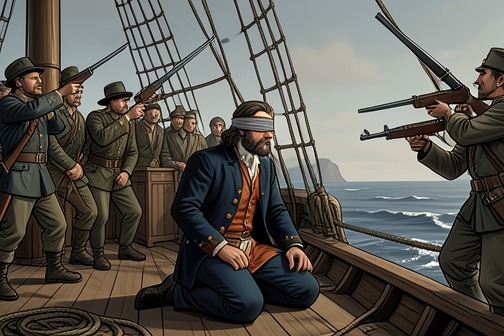
The [Execution of Admiral Byng](entity:event-recall-event-execution-of-admiral-by-7ca150983e7f) is a public killing witnessed by [Candide](entity:character-recall-character-candide-543f04561cb3) in [Portsmouth](entity:location-recall-location-4588ea10f306), where an admiral is executed for failing to inflict enough damage on an opposing fleet. Its stark justification—that one admiral is killed to encourage others—reduces a military judgment to an example made through punishment. The episode makes the machinery of war visible not only on the battlefield but also in the state’s treatment of its own commanders.
## The Scene at Portsmouth
As Candide and [Martin](entity:character-recall-character-martin-f5cb6653498c) reach Portsmouth, they find the coast lined with spectators watching a man kneel, blindfolded, aboard a warship in the harbor. Four soldiers fire at him, and the crowd disperses, apparently satisfied. The execution is conducted in public and with ceremony; the people gathered to observe it leave as though the punishment has settled the matter.
Candide asks who the man was and why he had been killed. He learns that the dead man was an admiral, punished because he had fought a French admiral but had not come close enough to him. Candide points out that the French admiral had been just as far away. The answer he receives does not resolve that asymmetry: the execution is said to be considered useful from time to time as a warning to other admirals.
## Military Judgment and Public Example
The account presents the admiral’s alleged failure as a question of proximity in battle, then shows that the corresponding judgment is not applied equally to both commanders. Candide’s objection exposes the imbalance, while the explanation he receives makes deterrence—not a balanced comparison of the two admirals’ conduct—the stated purpose of the execution. The punishment is thus represented as a calculated public example, not as a conclusion that satisfies Candide’s demand for consistency.
The scene follows Martin’s remark that [England](entity:location-recall-location-edbf4fdebc64) and [France](entity:location-recall-location-4f282e1af8a7) are fighting over a few acres of snow in Canada, at a cost greater than the territory is worth. That context links the execution to the absurdities of war: a conflict Martin portrays as disproportionate in its stakes is followed by the killing of a commander for not having pursued it aggressively enough. The episode does not supply a fuller account of the admiral’s military decisions; instead, it gives Candide the official rationale and lets his challenge reveal its contradiction.
## Candide’s Response and the Episode’s Function
Candide is shocked and bewildered by what he sees and hears. He refuses to set foot on shore and bargains with a Dutch skipper to take him promptly to [Venice](entity:location-recall-location-519cfa9fe115), even though he recognizes the possibility that the skipper might rob him as the [Surinam](entity:location-recall-location-301f213b57d9) captain had. The execution therefore has an immediate consequence for his journey: rather than enter England, he leaves by sea.
The scene also sharpens the contrast between abstract explanations and human consequences that recurs throughout Candide’s travels. [Pangloss](entity:character-recall-character-pangloss-8b8593ec7d02)’s teaching that effects follow causes and that events belong to the best possible arrangement is tested against violence on a massive scale in the Bulgarian-Abarian battle; Martin, by contrast, describes a world shaped by organized killing and the powerful preying on the weak. At Portsmouth, the admiral’s death is given a neat institutional explanation, but Candide’s bewildered response registers the gap between the explanation and the act it is meant to justify. The episode carries that tension from the battlefield into public authority, where violence is framed as a lesson for those who remain.
Event 12
Cultivating the garden
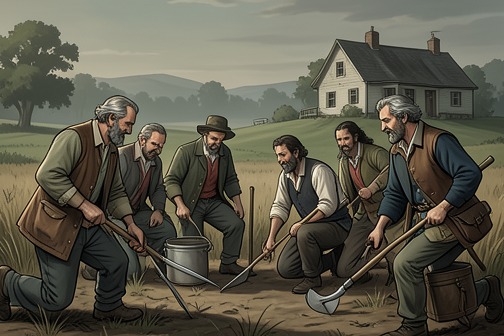
[Cultivating the garden](entity:event-recall-event-cultivating-the-garden-d12974f969c0) is the closing collective action of [Candide](entity:character-recall-character-candide-543f04561cb3) and its decisive alternative to endless philosophical explanation. After a Turkish farmer describes how work sustains his household, Candide and his companions adopt practical labor as a common undertaking. Their plot produces plentiful crops, and the conclusion places the value of work not in a proof about the universe but in the tangible means by which this small society makes life more bearable.
## Background and Recognition
The garden’s importance emerges from the contrast between [Pangloss](entity:character-recall-character-pangloss-8b8593ec7d02)’s early teaching and the experience accumulated across the narrative. Pangloss had argued that everything is arranged for the best, using such examples as noses made to bear spectacles and stones made to build castles. His confidence in universal design gave Candide a ready-made explanation for the world; the travels and misfortunes that follow repeatedly put that explanation under pressure.
Near the end, Candide visits a Turkish farmer whose household cultivates twenty acres. The farmer says that their labor preserves them from weariness, vice, and want. On the way home, Candide reflects on this account and judges the farmer’s situation preferable to that of the six kings with whom the travelers had supped. The comparison shifts attention from rank and grandeur to the conditions of ordinary life: the farmer’s small holding is valuable not for its size or status, but because work there provides a practical defense against several forms of misery.
This recognition does not arrive as a new abstract system. Candide does not offer a comprehensive account of why suffering exists or claim that cultivation removes every hardship. Instead, the farmer’s example gives him a concrete standard by which to assess a life. The concluding choice grows out of what the travelers have seen and out of a contrast between speculative assurance and a household’s daily means of subsistence.
## Decision and Disagreement
Returning from the farmer, Candide states, "I know also," said Candide, "that we must cultivate our garden." The remark answers the problem of how to live without resolving every disagreement about why the world is as it is. [Martin](entity:character-recall-character-martin-f5cb6653498c) makes the practical emphasis still clearer: "Let us work," said Martin, "without disputing; it is the only way to render life tolerable." His formulation does not promise perfect happiness. It proposes work as a way to make life tolerable, and it turns the group away from argument as an end in itself.
Pangloss, however, continues to interpret their circumstances through a chain of causes. He connects Candide’s expulsion from a castle for love of [Cunegonde](entity:character-recall-character-cunegonde-50f496a25b8b), his punishment by the [Inquisition](entity:organization-recall-organization-inquisition-f246941bf255), his journey across [America](entity:location-recall-location-america-c751899c385c), his stabbing of [The Baron](entity:character-recall-character-the-baron-9f443c8f42bf), and the loss of his sheep from [Eldorado](entity:location-recall-location-6505137ac4e0) to the present moment of eating preserved citrons and pistachio-nuts. In Pangloss’s account, every reversal belongs to a sequence that has ultimately brought them to their current meal. The list is pointedly specific: even the pleasant food at hand becomes evidence in a retrospective argument that the whole sequence was necessary.
Candide does not try to disprove each link in that chain. His answer—"All that is very well," answered Candide, "but let us cultivate our garden."—recognizes Pangloss’s explanation without allowing it to displace the group’s chosen task. The repeated call to cultivate is therefore both a practical decision and a limit placed on speculation. The event’s turn is not from suffering to a claim that suffering never mattered, but from interpreting every event to doing useful work in the present.
## The Work and Its Results
The entire little society joins the undertaking according to its different abilities. Their small plot yields plentiful crops, giving the decision a visible material consequence rather than leaving it as a maxim. The ending specifies several contributions: Cunegonde, though very ugly, becomes an excellent pastry cook; [Paquette](entity:character-recall-character-5e36a9d25360) works at embroidery; and the [Old Woman](entity:character-recall-character-81f1ad2a5d37) looks after the linen. [Friar Giroflée](entity:character-recall-character-girofl-e-e26a2ee7c2bf) also proves useful, becoming a good joiner and an honest man.
These roles are not interchangeable, and the conclusion makes their variety part of the household’s practical arrangement. The garden’s harvest is one result of the group’s labor; cooking, embroidery, care of linen, and joinery show how service extends beyond tending the plot itself. The account does not present a single heroic worker or a return to the status distinctions that once organized life in the Baron’s household. It describes a small community in which each person contributes through a different capacity, and in which usefulness is demonstrated by work actually done.
The farmer’s example is thus taken up collectively rather than copied as a claim that the travelers possess his exact circumstances. His household cultivates twenty acres; their own plot is described as little, yet it produces plentiful crops. The contrast keeps the ending grounded in scale: the group does not acquire a grand estate or a new position of power. Its improvement consists in making its limited land productive and organizing its members’ abilities around shared work.
## Ending and Significance
The conclusion brings the novel’s recurring philosophical dispute to a practical close without giving Pangloss the last word. He still reads the past as a concatenation of events culminating in the present. Candide’s repeated answer does not erase the history he names; it redirects attention from the supposed necessity of every misfortune to an action the group can undertake together. The narrative ends not with a final demonstration about providence, but with a cultivated plot, crops, and a household whose members have found distinct forms of useful labor.
That ending also gives the phrase about cultivating the garden a meaning larger than gardening alone while keeping it attached to the concrete work described. The group’s labor protects against idleness and want in a way that resembles the Turkish farmer’s account, and Martin explicitly associates working with making life tolerable. Yet the text does not claim that their arrangement settles the philosophical problem or makes the world just. Its resolution is narrower and more immediate: rather than continue disputing the total meaning of events, the companions cultivate what is theirs and sustain one another through their different abilities.
The action therefore closes the story’s movement from Pangloss’s early confidence in universal design to Candide’s insistence on practical responsibility. The opening doctrine tried to make every feature of the world confirm that all was for the best; the conclusion leaves the grand explanation in circulation but gives the group a different priority. Their garden is productive, their labor is shared, and the final refrain returns Candide from Pangloss’s expansive causal account to the limited, continuing task before them.
Event 13
Candide's expulsion from the Baron's castle
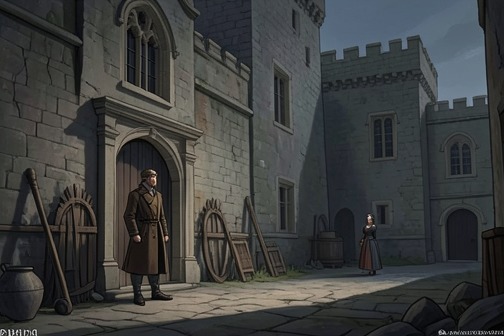
[Candide's expulsion from the Baron's castle](entity:event-recall-event-candide-s-expulsion-fro-df81b81f3b78) for love of [Cunegonde](entity:character-recall-character-cunegonde-50f496a25b8b) breaks the sheltered routine in which [Pangloss](entity:character-recall-character-pangloss-8b8593ec7d02)'s optimism has seemed plausible and starts the sequence of departures and reversals that tests it. The novel does not stage the expulsion in the supplied account; instead, Pangloss recalls it near the conclusion as the first circumstance in a chain that eventually brings the company to its garden. That retrospective framing makes the event both a personal separation and the opening link in the tale's ironic account of cause and consequence.
## Setting and Background
The castle belongs to one of the most powerful lords in [Westphalia](entity:location-recall-location-westphalia-7b3c88c72cfa). Its status is conveyed through details that are both grand and comic: it has a gate and windows, its great hall is hung with tapestry, and the Baron's household can turn its farm dogs into a pack of hounds and its grooms into huntsmen. The curate serves as grand almoner, while those around the Baron call him “My Lord” and laugh at his stories. The setting is a small, self-satisfied social world, complete with its own hierarchy and ceremonial respect.
The family context gives the expulsion its personal cause. [The Baron](entity:character-recall-character-the-baron-9f443c8f42bf)’s daughter, Cunegonde, is seventeen, and [Candide](entity:character-recall-character-candide-543f04561cb3) finds her extremely beautiful, though he lacks the courage to tell her so. Candide is also a pupil of Pangloss, the family’s philosophical oracle. Pangloss teaches that the world is ordered toward the best end, illustrating his doctrine with the castle itself: stones exist to be hewn, he argues, and so the greatest baron in the province has a magnificent residence. Candide’s attachment to Cunegonde takes shape inside this protected household, but it will take him beyond the household’s boundaries.
## Cause and Recollection
The surviving account identifies love for Cunegonde as the reason Candide is kicked out of the castle. It supplies no further description of the act that precipitates his expulsion, the Baron’s precise decision, or the departure itself. The event is presented retrospectively, in Pangloss’s concluding explanation to Candide, rather than as a fully narrated scene. This distinction matters: the expulsion is firmly established as a turning point, but its immediate mechanics are not elaborated in the account.
Pangloss later places it first in a sequence of counterfactual conditions. Had Candide not been expelled for love of Cunegonde, Pangloss says, he would not have undergone the other reversals he lists, including punishment by the [Inquisition](entity:organization-recall-organization-inquisition-f246941bf255), travel across [America](entity:location-recall-location-america-c751899c385c), stabbing the Baron, and losing the sheep from El Dorado. The list turns the expulsion into the initiating circumstance of a long, improbable itinerary. It also exposes Pangloss’s habitual way of interpreting experience: rather than dwelling on the harm or contingency of each event, he arranges adversity into a chain that appears to justify its eventual outcome.
## Consequences and Ending
The expulsion removes Candide from the castle and from the intimate, ordered life that had joined his admiration of Cunegonde to his confidence in Pangloss’s teaching. In the concluding retrospective, that departure stands alongside later violence, punishment, travel, and loss. Pangloss treats the chain as proof that every earlier misfortune was necessary: without those events, the company would not now be eating preserved citrons and pistachio nuts together.
Candide does not accept that explanation as a sufficient account of what has happened. He answers Pangloss by returning to the practical decision that governs the ending: they must cultivate the garden. The expulsion therefore has a double place in the tale. It begins Candide’s passage out of the Baron's enclosed world, and, in Pangloss’s final recitation, it becomes an example of how philosophical optimism can convert painful events into a tidy causal scheme. The ending redirects attention from that scheme toward shared labor, without erasing the chain of experience that began with Candide’s departure.
Event 14
Lisbon earthquake in Candide
The [Lisbon earthquake in Candide](entity:event-recall-event-lisbon-earthquake-in-ca-ad511b7c32d1) is a catastrophe that tests the characters’ explanations of suffering against a city in ruins. The narrative sets the disaster amid a shipwreck and the death of [James the Anabaptist](entity:character-recall-character-12285eec9d00), then follows it with an officially sanctioned ceremony meant to prevent further earthquakes—a response the earth immediately contradicts.
Event 15
Lisbon auto-da-fé in Candide
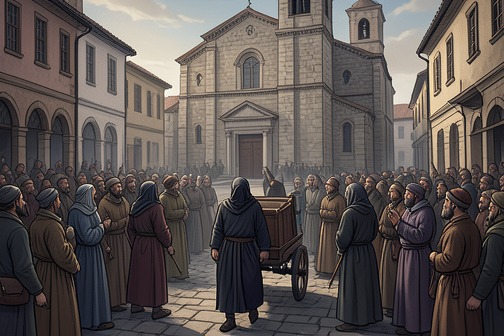
The [Lisbon auto-da-fé in Candide](entity:event-recall-event-lisbon-auto-da-f-in-can-8ab10ea1470b) is a public religious punishment whose place in the story brings institutional authority into the same world as catastrophe and philosophical explanation. The accompanying notes distinguish the ceremony from the [Lisbon](entity:location-recall-location-b6651f2dd904) earthquake by dating it to June 20, 1756, months after the disaster; the description of the [San-benito](entity:object-recall-object-san-benito-f2d63c8e0a00), meanwhile, shows how the condemned were visibly marked before their punishment.
## Place in the Story
[Candide](entity:character-recall-character-candide-543f04561cb3) later counts being put into the [Inquisition](entity:organization-recall-organization-inquisition-f246941bf255) among the reversals that brought him to his final life of work. In [Pangloss](entity:character-recall-character-pangloss-8b8593ec7d02)’s account, that punishment forms one link in a chain that also includes Candide’s expulsion from the Baron's castle, his travels across [America](entity:location-recall-location-america-c751899c385c), his attack on the Baron, and the loss of his sheep from El Dorado. The list treats the Inquisition as a concrete ordeal in Candide’s history, not merely as an abstract example in a philosophical debate.
The auto-da-fé belongs to a narrative that repeatedly tests Pangloss’s claim that events fit into the best possible order. The contrast is pointed: a formal religious ceremony offers a public rationale for punishment, while the sequence of disasters and reversals in Candide’s life resists any easy assurance that suffering is justified. The work’s brisk, compressed form makes the institution one episode among many, but Pangloss’s later recollection keeps its consequence in view.
## Date and Historical Context
An accompanying note identifies the auto-da-fé as an actual ceremony held on June 20, 1756, some months after the Lisbon earthquake of [November 1, 1755](entity:time-recall-time-november-1-1755-26f2292d0707). The dates separate the disaster from the religious punishment that follows it in the narrative’s Lisbon sequence. Rather than presenting the ceremony as part of the earthquake itself, the note anchors it to a later historical occasion.
That chronology sharpens the episode’s satirical setting: catastrophe and institutional response occupy distinct moments, even as the story places them within the same broader trial of explanations for human suffering. The available account establishes the date and its relation to the earthquake, but does not specify the full proceedings or identify every person punished at the ceremony.
## The San-benito
The San-benito was a loose outer garment worn by people condemned by the Inquisition when they went to the stake at an auto-da-fé. Its painted imagery could include flames, devils, and a portrait of the victim. The garment made the condemned person’s status visible, turning clothing into part of the public ritual of punishment.
Its variations also signaled distinctions among the condemned. Those who repented wore a similar garment with flames pointing downward; garments for Jews, sorcerers, and renegades bore a cross of Saint Andrew on both the front and back. The account therefore presents the San-benito not as a single uniform costume but as a marked system of signs associated with different judgments.
## Narrative and Thematic Significance
The ceremony is one of the institutional ordeals invoked when Pangloss reconstructs the supposed concatenation of events that brought Candide to his present circumstances. Candide acknowledges the sequence but turns away from its abstract explanation toward the practical decision to cultivate the garden. The auto-da-fé thus remains part of the history that Pangloss uses to defend cosmic order, even as Candide’s closing response shifts attention from justification to labor.
The episode’s compressed treatment accords with the work’s broader satirical method: it places suffering and formal systems of explanation in close proximity without granting the institution’s ceremony the power to settle the philosophical question. Its documented date and the sharply described markings of the San-benito give the event concrete historical and material features, while its later recurrence in Pangloss’s argument reveals how an ordeal can be absorbed into a theory that claims every event belongs to the best possible world.
Event 16
Candide's journey through the Americas
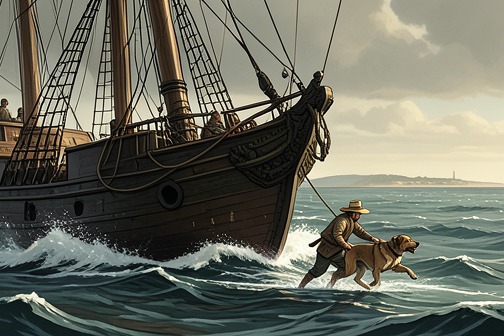
[Candide's journey through the Americas](entity:event-recall-event-candide-s-journey-throu-49c7147ed22b) carries the book’s philosophical argument across a vast geography: doctrines first learned in [Westphalia](entity:location-recall-location-westphalia-7b3c88c72cfa) are tested against a world far beyond the Baron's castle. The surviving references frame the American passage as part of a swift, episodic itinerary, and the conclusion later names having walked across [America](entity:location-recall-location-america-c751899c385c) among the experiences that brought [Candide](entity:character-recall-character-candide-543f04561cb3) to his final commitment to practical work.
## Place in the Journey
The travel narrative reaches across the Atlantic from [Cadiz](entity:location-recall-location-c6bb8c3d04e6) toward [Buenos Aires](entity:location-recall-location-caf56b79d5c4). An introduction to the book emphasizes that Candide and [Martin](entity:character-recall-character-martin-f5cb6653498c) also sail along the Mediterranean, sketching the scale of a route that moves between continents and seas. Its imagined modern alternative dwells on coastlines and distant horizons; the actual tale, by contrast, is characterized by speed and concision rather than extended scenic description.
The American journey belongs to a larger succession of displacements, not an isolated expedition with a single documented objective. In the conclusion, [Pangloss](entity:character-recall-character-pangloss-8b8593ec7d02) recalls that Candide had walked across America alongside other turning points in his life: his expulsion from a magnificent castle for love of [Cunegonde](entity:character-recall-character-cunegonde-50f496a25b8b), his punishment by the [Inquisition](entity:organization-recall-organization-inquisition-f246941bf255), his stabbing of the Baron, and the loss of his sheep from [Eldorado](entity:location-recall-location-6505137ac4e0). That retrospective list establishes the American passage as one element in a life repeatedly redirected by events, without detailing its route or assigning it a separate outcome.
## The Journey Against Pangloss's Philosophy
The journey begins in the shadow of Pangloss's teaching. At the Baron's household, he argues that everything has been created for an end and that the existing order must therefore be for the best. His examples make the argument concrete and circular: noses supposedly exist to bear spectacles, stones to build castles, and pigs to be eaten. Candide listens and believes him, taking the household and its hierarchy as evidence for the doctrine.
The American passage changes the scale on which that doctrine is tested. Candide and [Cacambo](entity:character-recall-character-cacambo-a055ef77b437) encounter a country so unfamiliar that, after learning its customs, they wonder whether it may be the place where all is well; Candide adds that things often went badly in Westphalia, whatever Pangloss might say. This contrast does not establish that the Americas supply a single answer to the philosophical problem. Instead, it makes travel a means of comparison: claims learned at home meet customs and conditions that the travelers did not know existed.
## Retrospective Meaning and Narrative Form
The book does not preserve this event in the supplied evidence as a continuous account of American scenes. Its later mention—Candide had “walked over America”—compresses a continent-spanning experience into a few words. That compression suits the larger narrative, which the introduction describes as exceptionally concise yet full of incident and astonishingly rapid in movement. The journey is consequential in the itinerary, but its brief retrospective naming also prevents it from becoming a self-contained philosophical resolution.
At the conclusion, Pangloss folds the American passage into a chain of causes that supposedly led the companions to their present circumstances. Candide answers that argument by insisting on work rather than disputing it: “we must cultivate our garden.” The journey thus remains part of the history Pangloss interprets as proof of a necessary order, while the ending directs attention away from that grand explanation and toward the companions’ practical life together.
Event 17
Candide stabs the Baron
[Candide](entity:character-recall-character-candide-543f04561cb3)'s stabbing of [The Baron](entity:character-recall-character-the-baron-9f443c8f42bf) enters the narrative here not as a staged confrontation but as a past event [Pangloss](entity:character-recall-character-pangloss-8b8593ec7d02) folds into his explanation of how the company reached its present circumstances. The brief reference confirms the attack and gives it a place in Pangloss's causal chain, while leaving its immediate circumstances and consequences unstated.
## Retrospective Reference
Pangloss tells Candide that, had Candide not stabbed The Baron, the company would not now be eating preserved citrons and pistachio-nuts. The stabbing is one item in a sequence of conditional past hardships: Candide's expulsion from a castle for love of [Cunegonde](entity:character-recall-character-cunegonde-50f496a25b8b), his punishment by the [Inquisition](entity:organization-recall-organization-inquisition-f246941bf255), his journey across [America](entity:location-recall-location-america-c751899c385c), and the loss of his sheep from El Dorado. Pangloss treats these episodes as connected steps leading to the present meal.
## Place in the Conversation
The event is recalled during the companions' settled life of work, not reenacted. Pangloss's reasoning makes the stabbing part of a providential account in which even violence contributes to the circumstances of the present. Candide answers by turning away from that explanation and urging the company to cultivate its garden, setting practical labor against Pangloss's retrospective chain of causes.
## What the Reference Establishes
The passage establishes that Candide stabbed The Baron and that Pangloss regards the act as one of the events that led to their current situation. It does not say when or how the stabbing occurred, what prompted it beyond its place in Pangloss's list, whether The Baron died, or what immediate consequences followed. The event's significance in this passage lies in its role within the argument: Pangloss absorbs it into his account of necessary events, while Candide redirects attention to the work at hand.
Event 18
Candide's loss of the Eldorado sheep
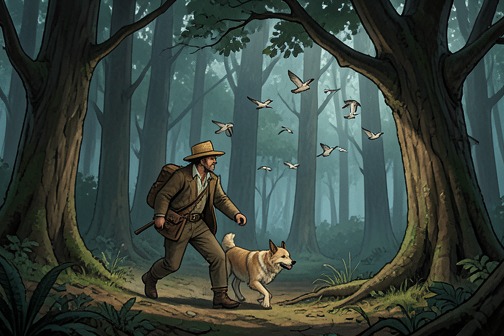
[Candide's loss of the Eldorado sheep](entity:event-recall-event-candide-s-loss-of-the-e-1d58302355b9) is presented not through a scene of the loss but through its place in a retrospective chain of reversals. In the conclusion, [Pangloss](entity:character-recall-character-pangloss-8b8593ec7d02) makes it one of several events that, in his account, led [Candide](entity:character-recall-character-candide-543f04561cb3) and his companions to their present circumstances; Candide redirects the discussion from that grand explanation to the practical work before them.
## Place in the Journey and What Is Known
The surviving account identifies the sheep as coming from [Eldorado](entity:location-recall-location-6505137ac4e0) and states that Candide lost all of them. It gives no scene of how the loss occurred, when it happened, or what became of the animals. The event is therefore sharply defined in outcome but left without particulars: the flock is gone, and the narrative later treats that loss as part of Candide's accumulated experience.
The loss belongs to a journey that has already carried Candide through [Westphalia](entity:location-recall-location-westphalia-7b3c88c72cfa) and the [Inquisition](entity:organization-recall-organization-inquisition-f246941bf255) and across [America](entity:location-recall-location-america-c751899c385c). Eldorado had seemed to offer a country where all was well, a possibility Candide and [Cacambo](entity:character-recall-character-cacambo-a055ef77b437) considered after finding their own experience elsewhere so harsh. The later reference to the sheep marks the departure from that exceptional country as one more turn in a story where apparent good fortune does not secure a lasting escape from loss.
## The Conclusion's Chain of Events
Near the end, Pangloss lists Candide's expulsion from a magnificent castle, his punishment by the Inquisition, his travels across America, his stabbing of the Baron, and the loss of the Eldorado sheep. He then connects those events, by counterfactual reasoning, to the companions' present meal of preserved citrons and pistachio nuts. The sheep's loss thus enters a sequence of distinct hardships and reversals, rather than receiving a separate account of its own.
Pangloss uses the chain to preserve his claim that events belong to the best possible order: without each earlier misfortune, Candide would not be in the present situation. The form of the argument turns a concrete loss into evidence for a sweeping philosophical explanation. Candide does not dispute the list point by point; he answers by insisting on the immediate task of cultivating the garden. The contrast makes the episode's final significance less a solved question of providence than a reason to attend to work in the present.
## Narrative and Thematic Significance
The sheep's disappearance is one item in a deliberately compressed philosophical tale. Voltaire's work ridicules the notion that this is the best of all possible worlds, while Pangloss's conclusion repeatedly gathers painful events into a supposedly harmonious chain. Here the loss matters both as a stated consequence of Candide's journey and as material for that recurring dispute over how suffering should be interpreted.
The ending does not restore the flock or explain its fate. Instead, the reference places the loss among the experiences that precede the companions' shared labor: [Cunegonde](entity:character-recall-character-cunegonde-50f496a25b8b) becomes a pastry cook, [Paquette](entity:character-recall-character-5e36a9d25360) works at embroidery, the [Old Woman](entity:character-recall-character-81f1ad2a5d37) tends the linen, and [Friar Giroflée](entity:character-recall-character-girofl-e-e26a2ee7c2bf) becomes a joiner. Against Pangloss's elaborate retrospective reasoning, Candide's response gives the final emphasis to cultivating the garden.
Event 19
The meeting of the six deposed kings
[The meeting of the six deposed kings](entity:event-recall-event-the-meeting-of-the-six-599ef0325d5a) gathers displaced rulers around a supper in [Candide](entity:character-recall-character-candide-543f04561cb3), transforming historical chronology into comic material. Its impossibility is part of its point: a note identifies the monarchs and observes that five could have met without an anachronism, but all six could not. The episode makes political grandeur look less like a secure condition than a temporary station from which even kings can be expelled.
## The Gathering and Its Historical Frame
The narrative refers to the rulers as the six kings with whom Candide and his companions had supped. A note identifies them as [Achmet III](entity:character-recall-character-achmet-iii-180d0b678f78), [Ivan](entity:character-recall-character-ivan-462384841865) VI, [Charles Edward](entity:character-recall-character-charles-edward-322060d51e37) Stuart, Auguste III, Stanislaus, and [Theodore of Corsica](entity:character-recall-character-theodore-of-corsica-329b1b10c432). They are not presented as an historically possible assembly: the note explicitly says it would have been impossible for all six to meet, although five could have been brought together without anachronism.
The dates make the discrepancy concrete. Achmet III, born in 1673 and dead in 1739, was dethroned in 1730; Ivan VI, born in 1740 and dead in 1762, was dethroned in 1741. Charles Edward Stuart lived from 1720 to 1788, Auguste III from 1696 to 1763, Stanislaus from 1682 to 1766, and Theodore of Corsica from 1690 to 1755. The note supplies these particulars not to reconcile the gathering, but to expose its deliberate compression of political history.
## Displacement and the Meaning of Grandeur
The kings’ shared condition is dispossession. Their titles recall the authority they once held, while their appearance together makes that authority look precarious: a throne does not protect its occupant from being dethroned, nor does royal rank guarantee lasting security. The episode turns a collection of distinct historical careers into a single, pointed image of fortune’s reversals.
Later, Candide contrasts an honest Turk’s situation favorably with that of the six kings. [Pangloss](entity:character-recall-character-pangloss-8b8593ec7d02) answers by listing rulers whose fates include assassination, hanging, killing, and captivity, arguing through historical examples that grandeur is dangerous. The exchange extends the supper’s contrast between rank and security: the kings’ former elevation is less persuasive than the ordinary man’s comparatively stable life.
## Place in the Satirical Design
The gathering belongs to the rapid, philosophic tale Voltaire wrote in [1759](entity:time-recall-time-1759-41ea714e9277). Rather than pause to construct a historically plausible summit, the narrative brings improbable figures into contact and lets their accumulated reversals test claims about the world. The meeting’s chronological impossibility is therefore not a defect to be repaired; it sharpens the satire by making the instability of political power visible at a glance.
The episode also sits within a larger movement away from abstract defenses of the world and toward practical life. After Pangloss turns the kings’ histories into an argument about dangerous grandeur, Candide insists that they must cultivate the garden, and [Martin](entity:character-recall-character-martin-f5cb6653498c) urges work without disputation as the way to make life tolerable. The royal supper does not itself resolve the book’s philosophical questions, but its parade of fallen rulers helps establish why inherited rank and grand theories offer no dependable refuge.
Event 20
Candide's decision to cultivate the garden
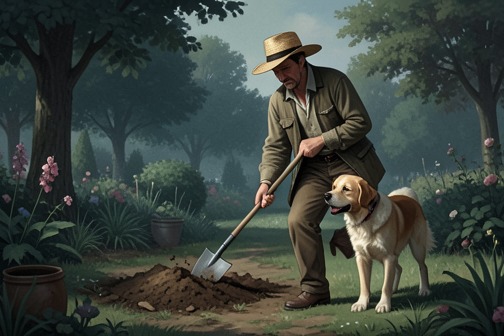
[Candide](entity:character-recall-character-candide-543f04561cb3)’s decision to cultivate the garden is the final exchange’s decisive turn: faced with [Pangloss](entity:character-recall-character-pangloss-8b8593ec7d02)’s explanation of their misfortunes as links in an inevitable chain, Candide proposes practical work instead of extending the argument. The statement is a decision about how to respond, not evidence in itself that the proposed work has already begun.
## Background
Pangloss sometimes tells Candide that their present circumstances follow from a concatenation of events. His chain runs through Candide’s expulsion from a castle for love of [Cunegonde](entity:character-recall-character-cunegonde-50f496a25b8b), his punishment by the [Inquisition](entity:organization-recall-organization-inquisition-f246941bf255), his travels across [America](entity:location-recall-location-america-c751899c385c), his stabbing of the Baron, and the loss of his sheep from [Eldorado](entity:location-recall-location-6505137ac4e0). Pangloss connects those reversals to the pair’s present supper of preserved citrons and pistachio-nuts, treating the meal as the outcome that makes the whole sequence intelligible.
## The Decision
Candide acknowledges Pangloss’s account, then redirects the exchange: “All that is very well,” answered Candide, “but let us cultivate our garden.” The contrast is immediate. Pangloss looks backward, gathering disasters into a philosophical explanation; Candide turns toward an activity the companions can undertake. His answer does not refute the chain point by point. It declines to make further argument the necessary next step.
## Significance and Limits
The garden proposal shifts the emphasis from explaining why events occurred to choosing what to do. In the closing exchange, the many adventures Pangloss enumerates become a counterpoint to Candide’s compact imperative: the past may be arranged into a theory, but the response he endorses is practical labor. The passage presents cultivation as a chosen course of action; it does not, in this exchange alone, narrate the companions carrying it out.