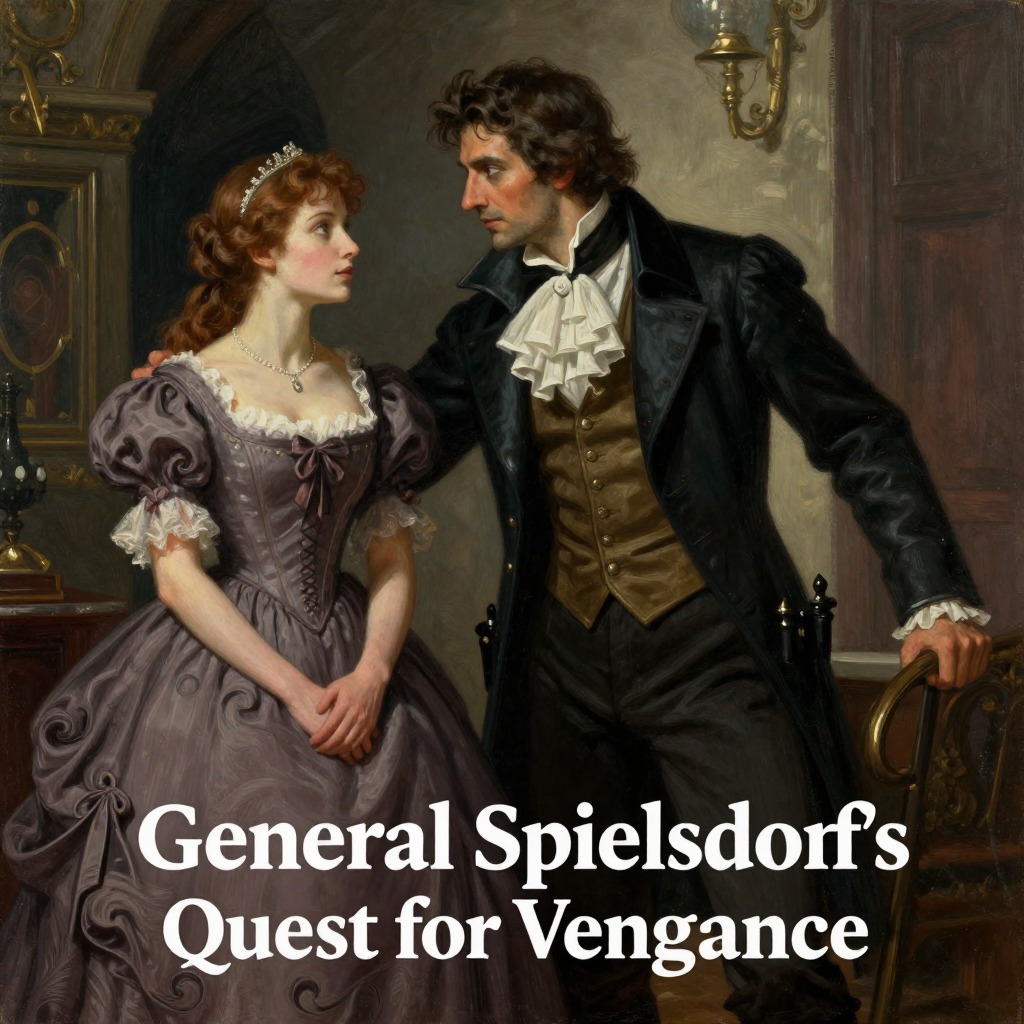
Letter from General Spielsdorf
CarmillaThe Letter from General Spielsdorf arrives on a tranquil summer evening, shattering the peaceful solitude of Laura's schloss in Styria. It is the first concrete sign that a monstrous evil is at work in the region, and it transforms the distant tragedy of a girl Laura never met into a direct, ominous prelude to her own ordeal. The letter is not merely a piece of bad news; it is a document of rage, grief, and supernatural accusation, written by a man whose mind has been cracked open by horror.
Contents and Tone
The letter, which Laura reads twice over—once silently and then aloud to her father—is described as "so extraordinary, so vehement, and in some places so self-contradictory" that Laura can only account for it by supposing that grief has unsettled the General's mind. It begins with a stark declaration: "I have lost my darling daughter, for as such I loved her." The General confesses that during the last days of Bertha's illness he was unable to write, and that he had no idea of her danger until it was too late. He then erupts into a furious denunciation: "The fiend who betrayed our infatuated hospitality has done it all. I thought I was receiving into my house innocence, gaiety, a charming companion for my lost Bertha. Heavens! what a fool have I been!" He thanks God that his child died without suspecting the cause of her sufferings or "the accursed passion of the agent of all this misery." The letter closes with a vow: "I devote my remaining days to tracking and extinguishing a monster." He curses his own "conceited incredulity, my despicable affectation of superiority, my blindness, my obstinacy—all—too late." He writes that he is distracted and cannot write collectedly, but promises to visit Laura's father in the autumn to tell him all that he scarce dares put on paper.
Context and Delivery
The letter is handed to Laura by her father as they walk along a beautiful forest vista on a sweet summer evening. He explains that General Spielsdorf cannot come to them as soon as hoped because the poor young lady is dead. Laura is profoundly shocked and disappointed; she had been looking forward to the visit and the new acquaintance for many weeks. The letter is read as they sit on a rude bench under a group of magnificent lime trees, with the sun setting in melancholy splendor. The serene beauty of the scene contrasts sharply with the violent and incoherent sentences of the letter, and Laura's father, after a silence, quotes Shakespeare, saying he feels as if some great misfortune were hanging over them. The letter thus casts a shadow of dread over the evening, and it is immediately after this that the carriage carrying Carmilla and her mother crashes at the drawbridge, bringing the very embodiment of the General's warning into Laura's home.
Significance
The Letter from General Spielsdorf functions as a herald of the vampire's presence and a template for the story that will unfold. It establishes the key elements of the vampire's modus operandi: the creature is received into a home under the guise of a charming, innocent companion; it preys upon a young woman; and it leaves the guardian consumed with guilt and a thirst for vengeance. The General's self-reproach—his cursing of his own incredulity and blindness—foreshadows the danger that Laura's own father will face when he too fails to recognize the threat living under his roof. The letter also introduces the theme of the vampire's "accursed passion," a predatory love that is both seductive and deadly, which will become the central dynamic between Carmilla and Laura. Finally, the letter's promise of a future revelation—the General's intention to tell all when he visits—creates a narrative suspense that is only resolved when he finally arrives and recounts his full story at the ruins of Karnstein.