Three in the morning, during the opening night
The Casino at Three
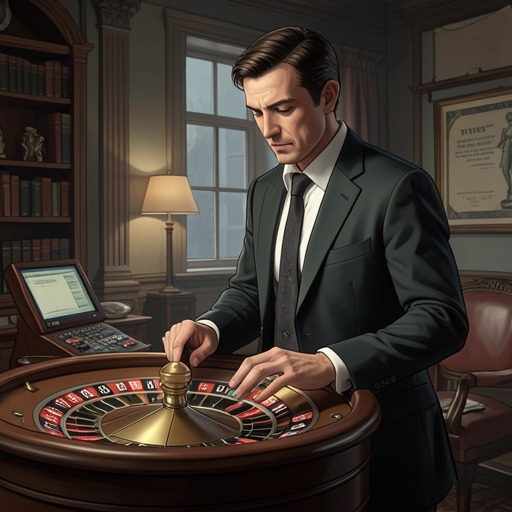
At the gaming tables of the [Casino Royale](entity:location-recall-location-casino-royale-f98a541ada30), [James Bond](entity:character-recall-character-james-bond-1156b307a36f) recognizes that exhaustion has dulled his senses and steps away to take stock. [Le Chiffre](entity:character-recall-character-50080c1e9e84) is still winning at the high table, while Bond collects his own winnings and reflects on the casino’s machinery, its guarded cashier’s cage, and the dangers that surround a major gambling operation.
Bond has accumulated three million francs over two days of play. The scene establishes his methodical habits and the high-stakes contest already taking shape around Le Chiffre.
That same early morning
The Jamaican Cable
Back at the [Hôtel Splendide](entity:location-recall-location-h-tel-splendide-31bcf832ecc9), Bond receives a cable relayed from [Jamaica](entity:location-recall-location-3c8c28b6255d) through [Fawcett](entity:character-recall-character-fawcett-b0ff6d89fa79), a quiet intelligence contact in [Kingston](entity:location-recall-location-c8100b5b1883). It reports that ten million francs are on the way, answering Bond’s request for additional funds from [London](entity:location-recall-location-1bfd335cdd1b).
Bond replies that the amount should suffice, then considers how vulnerable every link in his communications chain might be. The cable and his reply reinforce his cover as a Jamaican millionaire while reminding him that even seemingly indirect channels can be watched.
After Bond returns from the casino that morning
The Room Inspection
Bond enters his room prepared for an intruder, then checks the tiny signs he has left as alarms: a hair in a desk drawer, talcum powder on a cupboard handle, and the water level in the lavatory cistern. Nothing indicates that the room has been searched.
The ritual is not vanity but professional discipline. Bond’s survival depends on treating small details as evidence, a habit that will later matter when the enemy proves to be close and resourceful.
Two weeks before Bond’s opening-night play
The Assignment Dossier
A memorandum from the head of the Soviet section explains why [Le Chiffre](entity:character-recall-character-50080c1e9e84) has become vulnerable. He diverted fifty million francs entrusted to him for the Alsace workers’ union into the Cordon Jaune, a chain of brothels, hoping to profit from the investment and its private indulgences.
The French law closing brothels destroys the enterprise, and police raids leave Le Chiffre facing a massive deficit. Intelligence believes he intends to recover the money by gambling at [Royale](entity:location-recall-location-royale-cb62da8c0555), before Moscow discovers the shortfall and SMERSH acts against him.
In the same memorandum, two weeks before the game
The SMERSH Briefing
The dossier describes SMERSH as a feared Soviet organization charged with eliminating treachery and disloyalty. Its account of the group emphasizes its reputation for pursuing agents who fail their handlers, a threat that makes [Le Chiffre](entity:character-recall-character-50080c1e9e84)’s financial crisis potentially fatal.
This background gives the gambling operation a political purpose beyond winning money: Le Chiffre’s defeat could discredit his union and disrupt a strategically important network in northern France. The danger, however, is not limited to the tables; the same intelligence apparatus may be watching Bond.
After the dossier reaches M, before Bond travels to Royale
M Approves the Gamble
The head of the Soviet section personally brings his proposal to [M](entity:character-recall-character-m-cb343759bf4d). M objects to language he considers political subversion and blackmail, but approves the operation after weighing its aims and the Treasury’s willingness to risk the funds.
M chooses Bond, one of the Service’s Double-O agents, for the baccarat challenge. Bond accepts while warning that even a skilled player can be ruined by a bad run; M authorizes substantial capital and arranges French liaison support, including the possibility of [Mathis](entity:character-recall-character-mathis-ea10c3e70c09).
During Bond’s briefing with M
Bond’s Double-O Record
Bond’s suitability rests partly on his earlier record: before the war, he watched a Romanian cheating team at Monte Carlo and helped expose its methods. He had also returned a large sum won at cards, demonstrating both gambling skill and professional restraint.
[M](entity:character-recall-character-m-cb343759bf4d) warns Bond that the assignment may be more dangerous than its entertaining surface suggests. Bond leaves prepared to work with [Mathis](entity:character-recall-character-mathis-ea10c3e70c09) and aware that the stakes include not only the Service’s money but his own survival.
Several days before the high game
The Jamaican Cover
Bond arrives in [Royale-les-Eaux](entity:location-recall-location-royale-les-eaux-0e42d3d3f869) under the name [James Bond](entity:character-recall-character-james-bond-1156b307a36f) of Port Maria, [Jamaica](entity:location-recall-location-3c8c28b6255d), presenting himself as a wealthy Jamaican whose attorney can verify his background. He has asked to be controlled through Jamaica, where his cover can be supported without an obvious connection to [London](entity:location-recall-location-1bfd335cdd1b).
He spends his first sessions at roulette and chemin-de-fer, testing his nerves and learning the casino’s layout. His winnings rise to three million francs, but his observations of [Le Chiffre](entity:character-recall-character-50080c1e9e84) are sobering: the adversary appears both skilled and fortunate.
The morning after Bond’s first casino sessions
The Hidden Microphone
[Mathis](entity:character-recall-character-mathis-ea10c3e70c09) arrives at the [Hôtel Splendide](entity:location-recall-location-h-tel-splendide-31bcf832ecc9) disguised as a radio salesman and uses a burst of static to reveal that the room above Bond’s is wired for listening. A concealed pickup runs through the old chimney to an amplifier and recorder in the Muntzes’ room.
The surveillance began before Bond arrived, and his cover has already been exposed. Mathis reassures him that [London](entity:location-recall-location-1bfd335cdd1b) has been warned and its codes changed, but the discovery confirms that the opposing side is operating at [Royale](entity:location-recall-location-royale-cb62da8c0555) with professional preparation.
During the same morning meeting
Vesper’s Assignment
[Mathis](entity:character-recall-character-mathis-ea10c3e70c09) tells Bond that his assistant will be [Vesper Lynd](entity:character-recall-character-vesper-lynd-fd8d6cefe2a5), a wireless expert sent from the Soviet section’s office. Bond resents being assigned a woman, fearing that attraction and emotional entanglements will interfere with the operation.
Mathis insists that [Vesper](entity:character-recall-character-14e76dfa3fb8) is competent, disciplined, and ideally placed to fit Bond’s cover. He also reports that [Le Chiffre](entity:character-recall-character-50080c1e9e84) is staying at a villa nearby with armed guards, while suspicious Bulgarians may form part of the opposing team.
Late morning, after Mathis leaves
The Bombing
Bond leaves the hotel and notices two oddly matched men in straw hats carrying a bright red and a bright blue camera case. One case detonates in a tremendous blast near the Hermitage, shattering its window and killing the men in the street.
[Mathis](entity:character-recall-character-mathis-ea10c3e70c09) rushes to the scene and then shields Bond from immediate police questioning, directing the authorities to present the explosion as a Bulgarian vendetta. The attempt makes clear that Bond is already a target, and that the operation has become a violent contest before the baccarat game begins.
That afternoon, before the high-stakes game
The Bombers’ Double-Cross
[Vesper](entity:character-recall-character-14e76dfa3fb8) tells Bond that the surviving Bulgarian has been caught on the road to [Paris](entity:location-recall-location-657453741ed3). The attackers believed one camera case contained a smoke bomb and the other an explosive, but both cases held identical charges; the supposed escape plan was designed to kill the bombers along with Bond.
The men had been misled by an intermediary who wanted them destroyed, and the evidence does not directly connect [Le Chiffre](entity:character-recall-character-50080c1e9e84) to the plot. Bond recognizes the ingenuity of the scheme and learns that the enemy is willing to sacrifice its own operatives to eliminate him.
That evening, before the baccarat session
The Allies Meet
At roulette, Bond meets [Felix Leiter](entity:character-recall-character-632ae321574e), the American intelligence officer stationed in France. They recognize one another as partners in the broader operation, and [Leiter](entity:character-recall-character-leiter-b4049a7e7a1e) offers to help watch the casino and [Le Chiffre](entity:character-recall-character-50080c1e9e84)’s gunmen.
Bond asks Leiter to keep [Vesper](entity:character-recall-character-14e76dfa3fb8) company once the baccarat game begins and to observe the guards. The cooperation brings American support into the operation, though Bond remains the player who must confront Le Chiffre directly.
That evening, at the casino bar
The Vesper Martini
Bond orders an unusually strong martini made with gin, vodka, and Kina Lillet, specifying how cold and carefully prepared it must be. He jokes that it needs a name; [Leiter](entity:character-recall-character-leiter-b4049a7e7a1e) suggests the Molotov Cocktail, recalling the bombing, but Bond leaves the drink unnamed for the moment.
The exchange reveals Bond’s appetite for exacting pleasures even under pressure. His attention to drink, food, and ritual offers a controlled counterweight to the violence and uncertainty surrounding the assignment.
Later that evening, before dinner
The Night’s Preparations
Bond rests, reviews possible outcomes of his contest with [Le Chiffre](entity:character-recall-character-50080c1e9e84), and prepares his clothing and concealed weapons. He chooses a small Beretta and checks it with the same care he gives his cigarettes, lighter, and cash.
The preparation is a deliberate transition from private calculation to public performance. Bond intends to appear as a rich, composed gambler while remaining ready for an attack that the earlier bombing has made impossible to dismiss.
That evening, shortly before the baccarat game
Dinner with Vesper
[Vesper](entity:character-recall-character-14e76dfa3fb8) wears a black velvet dress and joins Bond for dinner. They talk about her name, drink vodka and champagne, and feel at ease in each other's company. Bond names the cocktail he intends to make with her name, calling it Vesper, and agrees to taste it together after the operation
During dinner, before the game begins
Bond Explains Baccarat
Bond explains the slight advantage of the dealer, the layout of the table, and the choice of whether to draw or stand. He plans to take the dealer's position as soon as possible, forcing both sides to face each other directly until one of them runs out of money. This explanation turns the upcoming
Late that night, as the baccarat bank opens
The High Table
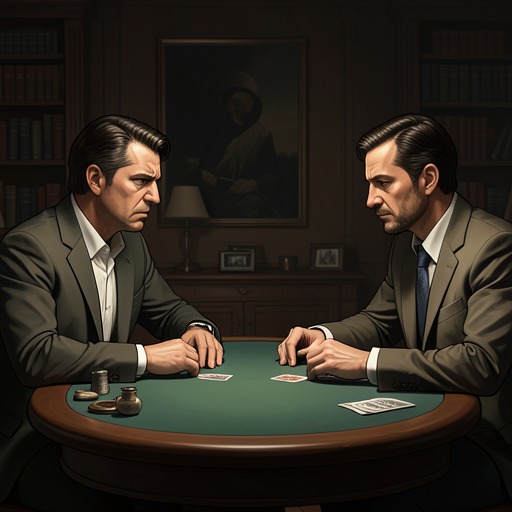
Bond sat at the high-stakes table, observing other players, assessing who might have both the money and the composure to stay in the game. Lechiffre arrived and took the dealer's seat across from Bond, opening the game with half a million francs. The first few hands established
Early in the baccarat session
Bond Takes the Bank
greek player lost several hands in a row, after the dealer raised the bet to two million francs, bond shouted "all in". he got a natural nine, beat lechiffre's worthless cards, won the hand, becoming the player directly opposing the dealer. this early victory drew the
Over the next two hours
The Long Drain
The game was slowly proceeding, and Lechiffre's funds were gradually disappearing. By around 1 a.m., Bond had won four million francs, and had two hundred and eight million francs in chips, while Lechiffre's funds were far less than Bond had initially anticipated
Around one in the morning
The Twelve-Million Loss
A series of natural hands turned the situation. Bond took a bet of four million francs, but lost; then he took another bet of eight million francs, and lost again. Between the two hands, a total of twelve million francs were lost, and he was left with only enough money
Shortly after the twelve-million loss
The Final Stake
Bond followed a 1.6 million franc stake, drew five points, making his total six. Lechiffre had five points, drew the needed card: a four, making nine points. Bond lost everything. This defeat seemed certain. Crowded casino spectators waited to see if anyone would challenge
Immediately after Bond is cleaned out
The American Envelope
The casino dealer quietly passed to Bond a thick anonymous envelope from under the table. The money inside was enough to cover a bet of 32 million francs, and the letter explained it was an American aid payment, with a note of respect from the American government
A few minutes after the envelope arrives
Bond Follows Thirty-Two Million
[Le Chiffre](entity:character-recall-character-50080c1e9e84) announced he would open the casino with 32 million francs, obviously needing only to win a small amount more to reach his financial goal. Bond shouted "call the bet," betting all his additional funds on the table, forcing the dealer into the most unwanted direct confrontation with Le
During the thirty-two-million-franc challenge
The Cane-Gun Threat
A weapon hidden in a stick from Malacca is pressed against Bond's back. The shooter warned that the weapon could silently break his spine and ordered him to withdraw his bet before the dealer announced the closing of the game. Bond noticed Lechiffre was watching him and understood that the threat was
Seconds before the cards are dealt
The Broken Chair
As the assassin counted, Bond pressed against the table and suddenly pulled back with a sudden force. The chair collided with the hidden weapon, breaking with a loud sound, and the weapon fell from the attacker's hand, and Bond also fell among the crowd. Bond pretended to fall suddenly from dizziness to
Around two in the morning
The Nine of Hearts
The poker game resumes, with all 32 million francs bet on the table. Bond is dealt two queens, starting with a poor hand, but then draws the nine of hearts. Lechiffre has three points, draws a five, seemingly making eight points, enough to win the bet
Immediately after Bond wins the thirty-two-million-franc hand
Le Chiffre’s Last Bank
[Le Chiffre](entity:character-recall-character-50080c1e9e84) deposited the remaining 10 million francs at the table. Bond accepted the challenge. Bond won again with a natural nine. Le Chiffre's two kings counted as zero in baccarat. The dealer lost the last money needed to replace the missing union funds. Le
After the game, around half past two
The Winnings and the Bullet
Bond took the winnings and returned Wright's money. Wright explained that the gunman with the cane had fled, but the weapon was loaded with a dambullet, likely causing catastrophic damage. The attacker acted with organization, escaping immediate pursuit. Bond took a large check, intending to hide it before the celebration
After Bond returns briefly to his room
The Hidden Cheque
Bond hid a check worth 40 million francs under the door number on the corridor beside the bedroom door. He chose this inconspicuous small space because the enemy might search the room, but it is unlikely they would remove the device outside. This concealment protected the most valuable part of
Around three in the morning
The Nightclub Celebration
Bond and [Vesper](entity:character-recall-character-14e76dfa3fb8) enter the Roi Galant, where a small band plays [La Vie en Rose](entity:expression-recall-expression-la-vie-en-rose-985c783dbe44). Bond believes the job is finished and hopes to share the relief of victory with Vesper, but she remains tense and emotionally distant.
They talk little, and her reserve frustrates him. When a note arrives asking Vesper to meet [Mathis](entity:character-recall-character-mathis-ea10c3e70c09) in the entrance hall, she leaves the table, while Bond stays behind to pay the bill.
A few minutes later, before dawn
Vesper Is Taken
Bond realizes that the message attributed to [Mathis](entity:character-recall-character-mathis-ea10c3e70c09) feels wrong and hurries from the nightclub. [Vesper](entity:character-recall-character-14e76dfa3fb8) has vanished. Outside, he hears a cry and sees a Citroën race away; a small black bag has been thrown into a flower bed.
The note in the bag is a crude forgery, confirming that Vesper has been abducted. Bond finds no time to summon help and immediately turns to pursuit.
Before dawn, immediately after the kidnapping
Bond Chooses the Chase
Bond races after the Citroën in his Bentley, furious at [Vesper](entity:character-recall-character-14e76dfa3fb8) for falling into the trap and at himself for being drawn into the crisis. He initially tells himself that the money and the mission matter more than her, but the decision to pursue her exposes the limits of that hard calculation.
He takes a concealed .45 revolver and closes on the car along the coast road. His rage gives way to focused resolve as he prepares to force the kidnappers to stop.
Before dawn, on the coast road
The Spike Trap
[Le Chiffre](entity:character-recall-character-50080c1e9e84) drives the Citroën with [Vesper](entity:character-recall-character-14e76dfa3fb8) and two gunmen aboard. The kidnappers release a carpet of steel spikes across the road, then turn down a side lane and wait for Bond’s car to hit it.
Bond spots the obstacle too late. His tires are shredded, the Bentley skids into the bank and overturns, leaving him unconscious and trapped in the wreckage.
Minutes after the crash
Bond Is Captured
[Le Chiffre](entity:character-recall-character-50080c1e9e84)’s men pull Bond from the wreck, bind his wrists, take his weapons, and force him into the Citroën. [Vesper](entity:character-recall-character-14e76dfa3fb8) is alive but bound and unable to answer Bond when he speaks to her.
Bond is injured, disarmed, and demoralized. He realizes that the kidnappers used Vesper as bait to draw him out and that he has no clear way to alert [Mathis](entity:character-recall-character-mathis-ea10c3e70c09) or [Leiter](entity:character-recall-character-leiter-b4049a7e7a1e).
At dawn, after the coast-road ambush
Arrival at Les Noctambules
The Citroën reaches [Les Noctambules](entity:location-recall-location-les-noctambules-d1204a2ef9c8), an isolated seaside villa where [Le Chiffre](entity:character-recall-character-50080c1e9e84) can hold Bond and [Vesper](entity:character-recall-character-14e76dfa3fb8) without interruption. Bond recognizes the isolation and understands that Le Chiffre intends to interrogate him over the missing money.
When Vesper is led away, Bond launches a desperate attempt to reach her, kicking at one guard. The Corsican easily throws him down, and the thin gunman strikes him with controlled precision.
Shortly after sunrise
Bond Is Stripped and Bound
[Le Chiffre](entity:character-recall-character-50080c1e9e84) orders Bond to undress and has him tied to a chair with its cane seat cut out. He places a carpet-beater and carving knife nearby, then begins questioning Bond about the forty-million-franc cheque.
Le Chiffre makes clear that he will torture Bond until he reveals where the money is hidden. Bond is naked, immobilized, and entirely in his captors’ power.
That morning, over roughly an hour
The Torture
[Le Chiffre](entity:character-recall-character-50080c1e9e84) uses the cane instrument to inflict repeated agony while demanding the cheque’s location. Bond refuses to speak, forcing himself to endure each assault and to use feigned weakness where possible to buy time.
Le Chiffre claims that his men have searched Bond’s hotel room and found papers but not the cheque. Bond realizes his hiding place has survived the search, yet he also understands that Le Chiffre intends to continue until Bond breaks or dies.
Near the end of the torture
The SMERSH Interruption
A stranger enters the room and orders [Le Chiffre](entity:character-recall-character-50080c1e9e84) to stop. He identifies himself as an agent of SMERSH, condemns Le Chiffre as a thief and traitor, and says he has been sent from the Soviet Union to eliminate him.
Le Chiffre’s fear replaces his earlier composure. His own organization has reached him, and his financial failure has become a death sentence.
Moments after the SMERSH agent confronts him
Le Chiffre Is Executed
[Le Chiffre](entity:character-recall-character-50080c1e9e84) admits guilt and is shot between the eyes with a suppressed weapon. The agent then turns to Bond, explaining that Bond has been spared by chance and mistake rather than by mercy.
Before leaving, the agent cuts a Soviet mark into the back of Bond’s hand as a warning that he is a spy. Bond loses consciousness from pain, while the execution leaves the immediate threat of Le Chiffre’s torture behind but exposes Bond to a larger enemy.
Later that morning
Rescue at the Villa
Bond remains unconscious for about two days. A farmer finds his wrecked car, and [Mathis](entity:character-recall-character-mathis-ea10c3e70c09) follows the trail to [Les Noctambules](entity:location-recall-location-les-noctambules-d1204a2ef9c8) with French officers and a doctor.
They find Bond alive, [Le Chiffre](entity:character-recall-character-50080c1e9e84) dead, and [Vesper](entity:character-recall-character-14e76dfa3fb8) unharmed. The two gunmen have also been killed, apparently by the SMERSH agent, who has vanished without leaving a trace.
The third day after the torture
Bond Wakes in Recovery
Bond wakes in a nursing home at [Royale](entity:location-recall-location-royale-cb62da8c0555), badly injured and strapped beneath a white medical tent. A nurse and a French doctor explain that his life is not in danger, though he has lost blood and will remain in pain while his body heals.
[Mathis](entity:character-recall-character-mathis-ea10c3e70c09) visits, bringing word that [Vesper](entity:character-recall-character-14e76dfa3fb8) is safe and that [London](entity:location-recall-location-1bfd335cdd1b) has sent support. Bond learns that the official account will portray [Le Chiffre](entity:character-recall-character-50080c1e9e84) as having killed his accomplices and then died by suicide over the missing union money.
During Mathis’s first visit to Bond in the nursing home
The Cheque’s Hiding Place
[Mathis](entity:character-recall-character-mathis-ea10c3e70c09) asks where Bond hid the cheque, since the hotel room search found nothing. Bond reveals that he unscrewed the room-number plate and placed the folded cheque beneath it.
The small trick has preserved the money despite the enemy’s thorough search. Mathis arranges to recover the cheque, and Bond takes quiet satisfaction in having outwitted the people who considered themselves more resourceful.
During Bond’s early recovery
The Political Fallout
[Mathis](entity:character-recall-character-mathis-ea10c3e70c09) explains that the story of [Le Chiffre](entity:character-recall-character-50080c1e9e84)’s brothels, gambling, and financial collapse has spread through the region. The French Communist organization is in disarray, and its leaders struggle to explain the scandal and the death of a figure once regarded as a hero.
The operation has therefore succeeded beyond the casino. Le Chiffre’s ruin has damaged the union network that the British and French services meant to weaken, even as the true circumstances of his death remain concealed.
Several days into his recovery
Bond’s Moral Crisis
As [Mathis](entity:character-recall-character-mathis-ea10c3e70c09) visits again, Bond says he intends to resign. The torture has made him newly conscious of his desire to live, while also disturbing his old certainty that he can distinguish heroes from villains.
He recounts the killings that earned him [Double-O status](entity:concept-recall-concept-double-o-status-894e38727a97) and reflects that national causes can change with history. The experience of being treated as an enemy has made the moral categories that once supported his work feel unstable.
During the same hospital conversation
Mathis Challenges Bond
Matisses rejects Bond's attempt to turn his doubts into a reason to resign. He believes that personal experience is more effective than abstract arguments in recognizing evil: Bond has seen what Lechiffre is capable of, and would recognize danger when similar people threaten those he cares about. Matisses advises Bond
About a week after Bond wakes
The First Visit to Vesper
Bond finally asks to see [Vesper](entity:character-recall-character-14e76dfa3fb8), after delaying the meeting out of fear that his body and desire have been permanently damaged. He is surprised to find her sunburned and apparently well; she has spent her days on a beach near the road to the villa.
When she offers to take him there once he can walk, Bond responds bitterly, then immediately regrets hurting her. Her tears soften him, and he begins to acknowledge the affection that has grown between them.
During that first visit
Vesper Explains the Kidnapping
Bond asks what happened after [Vesper](entity:character-recall-character-14e76dfa3fb8) left the nightclub. She explains that she went outside looking for [Mathis](entity:character-recall-character-mathis-ea10c3e70c09), was directed toward a car, and was seized by [Le Chiffre](entity:character-recall-character-50080c1e9e84)’s men. She managed to throw her bag from the moving vehicle, hoping Bond would understand what had happened.
She recalls little from the journey and says the gunmen did not molest her while Bond was tortured. Bond accepts her account and comforts her, believing the ordeal has brought them closer rather than recognizing the full pattern of her evasions.
As Bond’s recovery accelerates
Bond’s Report to London
Bond writes his report to [M](entity:character-recall-character-m-cb343759bf4d), softening his criticism of [Vesper](entity:character-recall-character-14e76dfa3fb8)’s conduct and presenting her actions as more composed than they had been. He does not want his doubts to damage her career, and his growing affection influences how he records the operation.
Vesper visits him daily. Their conversations become easy and intimate, while the events at the villa remain largely unspoken between them.
About three weeks after Bond was captured
The Inn by the Sea
When the doctor declares Bond fit to leave, [Vesper](entity:character-recall-character-14e76dfa3fb8) takes him away from the hotels in [Royale](entity:location-recall-location-royale-cb62da8c0555) to a modest seaside inn, L’Auberge du Fruit Défendu. Bond loves the quiet bay and the prospect of a week with her.
The inn is run by a former Free French fighter and his wife, whose warm welcome makes the retreat feel removed from the political violence of the past month. Bond believes he and Vesper have reached a safer, private chapter.
The first evening at the inn
A Sudden Declaration
At [Vesper](entity:character-recall-character-14e76dfa3fb8)’s doorway, Bond kisses her and calls her his darling. Their attraction becomes unmistakable, but she soon asks him to wait while she gets ready for dinner and turns away from him at the window.
Bond accepts the pause, though he does not understand it. He swims alone and reflects on how his feelings have changed from a plan for a brief affair into a desire for a lasting bond.
That evening, after swimming
Bond Chooses Marriage
On the beach, Bond recognizes that [Vesper](entity:character-recall-character-14e76dfa3fb8) has become more than a convenient lover. He had intended to test his recovering body and then end the affair, but her independence and intimacy have altered his intentions.
By the time he returns to the inn, he has decided to ask her to marry him. His confidence rests on the belief that their recent closeness is genuine and that the future is finally open to them.
The following morning
The Morning Phone Call
Bond unexpectedly sees [Vesper](entity:character-recall-character-14e76dfa3fb8) leaving the telephone booth and hears her claim that she called [Mathis](entity:character-recall-character-mathis-ea10c3e70c09) to arrange a new dress. She speaks quickly, avoids his embrace, and keeps patching up the explanation until Bond senses that something is wrong.
He chooses not to press her immediately. The moment marks the first visible fracture in the intimacy they have just begun to build, though Bond does not yet know what the call concealed.
Later that day, at lunch
The Watchman Appears
[Vesper](entity:character-recall-character-14e76dfa3fb8) sees a man dining on the terrace and turns pale, identifying him as the driver who had followed them on the coast road. Bond sees an ordinary visitor with a black patch over one eye and tries to dismiss her alarm.
The man leaves after lunch. The innkeeper says he is a Swiss watch salesman named [Adolph Gettler](entity:character-recall-character-adolph-gettler-48f790e95439), while also recalling that a telephone call to [Paris](entity:location-recall-location-657453741ed3) had been placed that morning but received no answer.
After the first sighting
Gettler’s Identity
Bond asks [Mathis](entity:character-recall-character-mathis-ea10c3e70c09) to check the Peugeot and its driver. The car was hired through a reputable firm, and the Swiss traveler’s papers identify him as [Adolph Gettler](entity:character-recall-character-adolph-gettler-48f790e95439), with a Zurich bank address and a plausible connection to the watch trade.
The information does not satisfy Bond, but it gives no immediate grounds for arrest. [Vesper](entity:character-recall-character-14e76dfa3fb8) continues to react to the man with a fear that Bond cannot explain, and the unanswered [Paris](entity:location-recall-location-657453741ed3) call deepens his suspicion.
Two days after the first sighting
The Watchman Returns
Gettler returns to the inn, and [Vesper](entity:character-recall-character-14e76dfa3fb8) leaves the table before she can face him. Bond follows her to her room and demands an end to the silence that is poisoning their relationship.
He tells her that he had intended to ask her to marry him before the mystery began. The revelation breaks through her composure: she clings to him, asks whether he truly would have married her, and pleads for time to decide what to do.
That evening
A Night of Reconciliation
[Vesper](entity:character-recall-character-14e76dfa3fb8) asks Bond not to discuss the mystery until morning and makes an effort to restore their earlier happiness. They drink champagne and spend the night together in a tenderness that seems to erase their mistrust.
Before Bond leaves her room, she asks him to look at her and studies his face closely. Her farewell is loving but carries the weight of a decision she has not yet disclosed.
The next morning
Vesper’s Death
The innkeeper brings Bond an urgent letter, and Bond finds [Vesper](entity:character-recall-character-14e76dfa3fb8) motionless in bed beside an empty bottle of sleeping pills. She has died by suicide, leaving a note addressed to him.
Bond initially confronts the scene as a personal loss, then reads her confession. Her death transforms the mystery of the phone calls and Gettler’s presence into an explanation of the betrayal that has been unfolding around them.
Immediately after Bond finds her body
Vesper’s Confession
In her letter, [Vesper](entity:character-recall-character-14e76dfa3fb8) reveals that she had worked for the [MWD](entity:character-recall-character-mwd-9f79effba3f6) as a coerced double agent. Soviet handlers threatened the life of a Polish lover captured after returning to [Poland](entity:location-recall-location-8e143713a3f3) for British intelligence, using his monthly letters to keep Vesper obedient.
She admits that she disclosed Bond’s assignment and cover, explaining how the enemy knew to wire his hotel room. She also confesses that she helped arrange the kidnapping and obstructed protection at the baccarat table, then refused further cooperation after learning what [Le Chiffre](entity:character-recall-character-50080c1e9e84) had done to Bond.
In Vesper’s letter, explaining the final days
Gettler’s Pursuit
[Vesper](entity:character-recall-character-14e76dfa3fb8) says that she saw the one-eyed man at the [Hôtel Splendide](entity:location-recall-location-h-tel-splendide-31bcf832ecc9) and learned that he had been making inquiries about her movements. She hoped to escape with Bond to South America and start a new life, but Gettler followed them to the inn.
She describes her choice as a desperate one: she could wait for SMERSH to kill her and possibly Bond, or end her own life. Her letter identifies the [Paris](entity:location-recall-location-657453741ed3) contact number and a [London](entity:location-recall-location-1bfd335cdd1b) accommodation address, giving the Service leads even as her confession confirms the damage already done.
Immediately after reading the letter
Bond Reports the Betrayal
Bond’s grief is pushed aside by the professional implications of [Vesper](entity:character-recall-character-14e76dfa3fb8)’s confession. He recognizes that the clues he had dismissed—the phone calls, her fear of Gettler, and her unexplained behavior—had all pointed toward a hidden intelligence operation.
He enters the telephone booth and contacts [London](entity:location-recall-location-1bfd335cdd1b) on an emergency line, reporting that a member of the section had been a double agent. His language is cold and brutal, turning Vesper’s death into the final confirmation of the betrayal.
At the novel’s close
Bond Turns Against SMERSH
As Bond reports, he recalls [Mathis](entity:character-recall-character-mathis-ea10c3e70c09)’s argument that there are truly evil targets worth fighting. He now sees SMERSH as the force that made [Vesper](entity:character-recall-character-14e76dfa3fb8) betray the Service and then drove her toward death, and he resolves to pursue the organization rather than remain a conventional intelligence operative.
Bond’s private loss hardens into a new professional purpose. He ends the story committed to hunting SMERSH, while the final words he sends to [London](entity:location-recall-location-1bfd335cdd1b) reduce his grief to a bitter declaration that the woman he loved is dead.