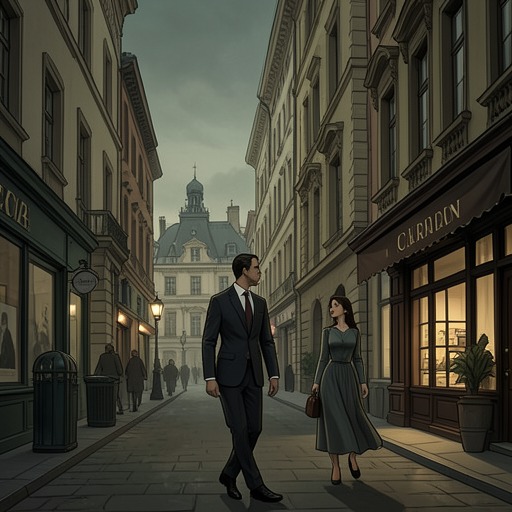
Sutherland's letter to Shankar
ChowringheeSutherland's letter to Shankar turns a departure that seemed final into a belated confession: it apologizes for Sutherland's conduct, discloses his origins, and explains why he chose the Hotel Shahjahan for his last night in Calcutta. Its private corrections also revise the meaning of his anger, linking his own rescued childhood to his gratitude toward a woman who helped spare other girls the life of a barmaid.
A belated apology
A few days after Sutherland left Calcutta, Shankar received the letter. Sutherland writes because he cannot be at peace without addressing how badly he behaved before leaving the Shahjahan. He also confesses that withholding the truth from Shankar and Hobbs was, in his own understanding, a sin before God. He had intended to apologize in person the next time they met, but says that his connections with India have ended. His new assignment is in Tahiti for the World Health Organization, and he expects to spend there the few days he has left.
The letter specifically asks forgiveness for Sutherland's behavior on the night in question. He had read and heard many terrible things about Calcutta, he explains, but being with Shankar and the others had been different. He admits that he should have told them the truth that night but could not. This explanation does not erase the earlier concealment: instead, the letter makes the delay part of its subject, acknowledging both the hurtful conduct and the truth that Sutherland withheld.
The identity disclosed
Sutherland identifies himself as a child of Williams Lane and names his parents as Robert Adam and Jane Grey. He then clarifies the connection between that child and the man writing to Shankar: the child whose life was saved through the generosity of the boys of Williams Lane was taken back to England by the clergyman Sutherland, and was legally entitled to use the clergyman's surname as his own. The disclosure joins a name the recipient knows to the childhood and family history that had remained hidden from him.
The letter presents this information not as a detached account of the past but as part of Sutherland's effort to explain himself. His earlier silence had left Shankar and Hobbs without the truth; the written confession supplies the missing identity only after Sutherland has left and cannot make the apology face to face. The form therefore shapes the revelation: a letter can reach Shankar after departure, but cannot restore the chance for an immediate conversation.
The Shahjahan and the barmaids
Sutherland explains that he wanted to spend his final night in Calcutta at the Hotel Shahjahan, and thanks Shankar for making that wish possible. The hotel is thus more than the place from which he departed: in the letter, it becomes the setting of a last visit made possible by Shankar's kindness. That gratitude sits alongside the apology, giving the recipient's hospitality a role in the memory Sutherland carries away.
He also expresses relief that the hotel's bar no longer has barmaids. In his heart, he gives thanks to Mrs. Brockway of Union Chapel, saying that she spared many girls a life of misery as barmaids. Mrs. Brockway is dead, so he could not visit her; instead, he wrote to her beloved son, Frenner Brockway. Sutherland imagines blessings from many unknown women resting on her. This passage broadens his explanation beyond his own history: his response to the bar is bound to his belief that Mrs. Brockway's actions changed the prospects of women whose names may never be known.
The letter closes by asking Shankar to understand why Sutherland lost his composure and to forgive him. Its movement from apology, to disclosed parentage, to thanks for Shankar and Mrs. Brockway makes the confession also an account of indebtedness. Sutherland cannot undo his silence or return for a personal reconciliation, but he leaves Shankar a written explanation of the concealed past and the final night that prompted him to write.