late 18th century and 19th century
The Hotel Takes Shape
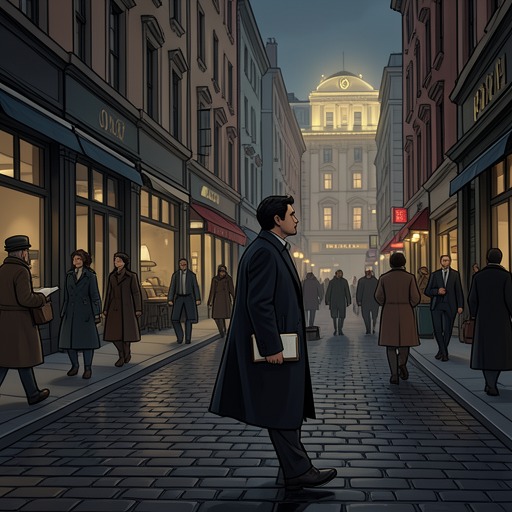
Long before the narrator entered its service, the [Hotel Shahjahan](entity:location-recall-location-hotel-shahjahan-49f70a17ec18) grew out of the colonial city’s changing traffic. Job Charnock arrived at the [Hooghly River](entity:location-recall-location-2db20c3c1c24) to find no hotel for travelers, while [Simpson](entity:character-recall-character-d9be5136cf7d) later imagined an establishment that would serve generations of visitors near Fort [William](entity:character-recall-character-828bc8a92766).
The hotel outlasted its founder and the people who built its reputation. Its rooms, meals, and nightly entertainments became a vessel for [Calcutta](entity:location-recall-location-cbd6ea8a2d10)’s successive eras, though the workers who sustained it would usually vanish from memory.
1762
A Tavern for the City
[William](entity:character-recall-character-828bc8a92766) Parker opened a bar in [Calcutta](entity:location-recall-location-cbd6ea8a2d10) for the entertainment of gentlemen, with a license that restricted its hours. Other drinking places followed, generally staffed by male servants rather than women behind the bar.
The city’s hotel and bar culture expanded dramatically after the [Suez Canal](entity:location-recall-location-8a0b62664515) opened in [1869](entity:time-recall-time-1869-4ebb21639851), making travel between Europe and [India](entity:location-recall-location-600eec71fa3c) easier. The new traffic brought European barmaids to Calcutta, along with a harsh social order that treated their work as a mark of disgrace.
late 19th century
The Barmaid Advertisement
The [Hotel Shahjahan](entity:location-recall-location-hotel-shahjahan-49f70a17ec18) advertised the arrival of [Marian Booth](entity:character-recall-character-marian-booth-0f085bd0530d) and [Jane Grey](entity:character-recall-character-jane-grey-4859c72d02bf), promising that the women would serve guests and be locked away during the day and after work. The boast revealed how the hotel turned women’s confinement into part of its commercial appeal.
Marian arrived older than the hotel expected, while Jane was young, modest, and frightened by the life ahead of her. [Silverton](entity:character-recall-character-silverton-5ab3a6ccec37) concealed the mistake from the customers, but Jane’s story would become inseparable from the hotel’s history.
after the barmaid advertisement
Marian’s Deception
When the advertised barmaids failed to appear, the customers demanded to know why. [Silverton](entity:character-recall-character-silverton-5ab3a6ccec37) placated them with liquor while [Marian Booth](entity:character-recall-character-marian-booth-0f085bd0530d), who had been substituted for the younger woman originally selected, remained out of sight.
The substitution threatened the hotel’s reputation and left [Jane Grey](entity:character-recall-character-jane-grey-4859c72d02bf) to work alone. Marian eventually disappeared into [Kidderpore](entity:location-recall-location-kidderpore-6a64c50b816d), while Jane began serving the men who crowded the Shahjahan bar.
during Jane Grey’s Shahjahan employment
Jane Meets Robbie
[Robert Adam](entity:character-recall-character-robert-adam-60e16844e64a) began visiting the bar and fell in love with [Jane Grey](entity:character-recall-character-jane-grey-4859c72d02bf). Their relationship grew quietly amid the drinking, harassment, and late-night crowds, with the bar’s attendant helping pass messages between them.
Jane wanted to escape the restrictions imposed on her by the hotel and its customers. Though [Hobbs](entity:character-recall-character-hobbs-58f330d6dc1e) warned Robbie that [Calcutta](entity:location-recall-location-cbd6ea8a2d10) would punish a man for marrying a barmaid, the couple chose one another.
after Jane and Robbie’s courtship
A Marriage Against Convention
Jane refused to renew her contract and married [Robert Adam](entity:character-recall-character-robert-adam-60e16844e64a) in a small church ceremony. The wedding drew little company: the hotel’s customers avoided it, and Jane’s only close friend at work remained confined to her room.
The marriage gave Jane the freedom she had wanted, but it also triggered the social stigma [Silverton](entity:character-recall-character-silverton-5ab3a6ccec37) had predicted. Robbie’s employer dismissed him because he had married a former barmaid, and other firms refused to hire him.
soon after Jane and Robbie’s marriage
The Adams Lose Their Livelihood
After Robbie lost his position, the couple’s savings dwindled. [Hobbs](entity:character-recall-character-hobbs-58f330d6dc1e) found him commission work selling textiles, but the earnings were meager, and the couple moved into a deteriorating flat in [Williams Lane](entity:location-recall-location-williams-lane-55a6f38938a9).
Jane was pregnant and unable to find work. She secretly asked [Silverton](entity:character-recall-character-silverton-5ab3a6ccec37) to let her return to the bar temporarily, but he refused to employ a married woman and told her that [Kidderpore](entity:location-recall-location-kidderpore-6a64c50b816d) was her only alternative.
late in Jane’s pregnancy
The Smallpox Outbreak
[Robert Adam](entity:character-recall-character-robert-adam-60e16844e64a) contracted smallpox while the family was living in poverty. Jane refused to abandon him, even as the disease worsened and the neighbors feared infection.
The boys of [Williams Lane](entity:location-recall-location-williams-lane-55a6f38938a9) helped care for the couple, brought supplies, and visited Robbie in hospital. Their loyalty crossed the social barriers that had separated Jane from the respectable world she had hoped to enter.
during the smallpox crisis
Jane’s Death
The boys misunderstood a hospital report and believed Robbie had lost both eyes. Jane, already exhausted and near childbirth, collapsed when they tried to tell her. She gave birth prematurely and died soon afterward.
Robbie recovered enough to ask for his wife, but he could not bear the news of her death. His grief overwhelmed him, and he died soon afterward, leaving their newborn in the care of a priest.
after Jane and Robbie’s deaths
The Orphan Survives
The priest took the newborn son of [Jane Grey](entity:character-recall-character-jane-grey-4859c72d02bf) and [Robert Adam](entity:character-recall-character-robert-adam-60e16844e64a) into his care. That child grew up with the surname of the clergyman who raised him and became the doctor later known as [Sutherland](entity:character-recall-character-sutherland-24cf5fdb1baf).
The loss of his parents and the kindness of the [Williams Lane](entity:location-recall-location-williams-lane-55a6f38938a9) community shaped his life. Years later, he returned to [Calcutta](entity:location-recall-location-cbd6ea8a2d10) as a physician and epidemiologist, carrying an attachment to the city he had left as an infant.
early 20th century
Marco Polo’s Orphaned Childhood
[Marco Polo](entity:character-recall-character-marco-polo-2a4f8475c664) was born to a Greek innkeeper in the Middle East. A devastating earthquake killed his parents, but Italian priests searching the ruins found him alive and took him to [Italy](entity:location-recall-location-125be658b0d0), where he grew up in an orphanage.
The priests named him after the wandering explorer and arranged for him to study hotel management. He entered the profession with gratitude and ambition, determined to build a life through skill and discipline.
before the Japanese invasion of Burma
Marco Meets Susan
While working in [Calcutta](entity:location-recall-location-cbd6ea8a2d10), [Marco Polo](entity:character-recall-character-marco-polo-2a4f8475c664) went to a small [Park Street](entity:location-recall-location-1e8f0765b761) restaurant and heard [Susan Munro](entity:character-recall-character-susan-munro-3abc22a7bde8) sing. He believed her voice deserved a larger stage, but she was struggling to survive on a tiny salary and had little chance of being heard beyond the restaurant.
Susan had grown up without parents and longed for popularity as well as artistic recognition. Marco became captivated by her and eventually married her, taking her away from Calcutta so that her past would not obstruct her ambitions.
during World War II
The Marriage Unravels
Marco and Susan moved to [Rangoon](entity:location-recall-location-e229722ada52), where he managed a hotel and she pursued singing. The Japanese invasion of Burma forced them back to [Calcutta](entity:location-recall-location-cbd6ea8a2d10), where Marco struggled to find work and Susan’s wartime performances became increasingly lucrative.
Susan embraced the money, car, and attention that came with her success, while Marco believed she was abandoning her artistic purpose and their marriage. Their values separated them even as they remained legally bound to one another.
after Marco and Susan’s separation
A Fabricated Divorce Plan
Marco sought a divorce but learned that the legal process would be lengthy and costly. He and Susan agreed that she would accuse him of adultery, using [Lisa](entity:character-recall-character-lisa-f8f8fe21b70f) as the supposed partner so that the case could proceed while he was away.
Lisa agreed to help, but demanded payment. Marco wrote letters and arranged evidence, unaware that the plan would collapse before the divorce could be completed.
during World War II
Marco’s Wartime Detention
Marco was arrested because of his Italian background and held until the end of the war. His Greek passport spared him the worst suspicions, but he lost contact with Susan and [Lisa](entity:character-recall-character-lisa-f8f8fe21b70f) and could not finish the divorce proceedings.
After the war, he went to [Italy](entity:location-recall-location-125be658b0d0) and worked in small hotels. He later returned to [Rangoon](entity:location-recall-location-e229722ada52) and then accepted the management position at the [Hotel Shahjahan](entity:location-recall-location-hotel-shahjahan-49f70a17ec18), still carrying the unresolved marriage and the losses of his earlier life.
before Shankar’s arrival
The Hotel’s Old Traditions
The [Hotel Shahjahan](entity:location-recall-location-hotel-shahjahan-49f70a17ec18) accumulated stories of barmaids, old managers, drinking, and changing customs. [Hobbs](entity:character-recall-character-hobbs-58f330d6dc1e) preserved newspaper cuttings and memories, including the advertisement that promised women would be locked away when their shifts ended.
The hotel’s past was not merely a backdrop: it governed the present through its rules and inherited habits. Its employees repeated routines that had survived owners, political change, and the disappearance of the people who first established them.
early in the novel
Shankar Loses His First Job
[Shankar](entity:character-recall-character-shankar-ac3b0a0ad4b0) had worked as a clerk for a British lawyer on [Old Post Office Street](entity:location-recall-location-1f0247525fd2), where Chhoka-da and the other court clerks had helped him feel at home. When his employer died, Shankar lost his livelihood and had to leave the legal quarter.
He had no savings and no dependable prospects. The loss forced him back into the job market as a young man who had tasted security only briefly and now had to begin again.
after losing the law-firm job
Selling Wastepaper Baskets
Unable to find office work, [Shankar](entity:character-recall-character-shankar-ac3b0a0ad4b0) took a commission job selling wicker wastepaper baskets for [Magpil & Clerk](entity:organization-recall-organization-magpil-clerk-a732367aa90a). He went from office to office, inspecting baskets and trying to persuade clerks to replace them, but his early attempts brought little income.
A Bengali customer demanded a share of the sale and took all of Shankar’s commission. The experience taught him that survival in the city required cunning as well as honesty, though he remained uneasy about the compromises the job demanded.
during Shankar’s basket-selling period
The Clive Building Doorman
At a [Clive Building](entity:location-recall-location-96bb24c3ec97) office, a woman rejected [Shankar](entity:character-recall-character-shankar-ac3b0a0ad4b0)’s baskets, but a doorman recognized his need and persuaded the staff to buy several. When Shankar offered the doorman a cut of his commission, the man angrily refused, explaining that his help had not been for personal gain.
The doorman’s generosity restored Shankar’s belief that kindness still existed in the city. He remembered the encounter as a moral beacon, even as he worried that he had misrepresented his commission to the man.
after Shankar begins selling baskets
Byron’s First Visit
[B. Byron](entity:character-recall-character-1532c7f4826d) introduced himself to [Shankar](entity:character-recall-character-shankar-ac3b0a0ad4b0) as a private detective looking for cases. He carried a blank telephone number on his business card and spoke confidently of future success, though his circumstances suggested an uncertain livelihood.
Shankar had read detective stories all his life and was delighted to meet a real investigator. [Byron](entity:character-recall-character-byron-ad5306cf5fcb) returned to the lawyer’s offices in different disguises, but Shankar had no case to offer him.
during a hot May evening
Byron Secures Shankar’s Job
After finding [Shankar](entity:character-recall-character-shankar-ac3b0a0ad4b0) exhausted in [Curzon Park](entity:location-recall-location-546c6b376fea), [Byron](entity:character-recall-character-byron-ad5306cf5fcb) took him to the [Hotel Shahjahan](entity:location-recall-location-hotel-shahjahan-49f70a17ec18) and asked manager [Marco Polo](entity:character-recall-character-marco-polo-2a4f8475c664) to give him a job. Marco initially denied that any vacancy existed, but Byron revealed that [Rosie](entity:character-recall-character-rosie-b6d2214cda6c) had left the hotel with the husband of a client and that her position might be open.
Marco hired Shankar as a temporary secretary. The appointment rescued him from unemployment and brought him into the hotel’s enclosed world, where he would encounter the people whose stories came to define his education.
the morning after Byron’s intervention
Shankar Enters the Shahjahan
[Shankar](entity:character-recall-character-shankar-ac3b0a0ad4b0) arrived at the [Hotel Shahjahan](entity:location-recall-location-hotel-shahjahan-49f70a17ec18) and met [Sata Bose](entity:character-recall-character-sata-bose-a87cb6b3f31c), the senior receptionist who welcomed him and explained the hotel’s exhausting rhythms. Bose taught him to listen, memorize room numbers, and keep his mind alert as the hotel awoke.
Shankar’s first day brought a torrent of unfamiliar work, from the breakfast menu to the demands of guests and staff. Bose’s humor softened the shock, but the hotel immediately made clear that its work did not fit an ordinary schedule.
Shankar’s first days at the hotel
The Hotel’s Night Shift
[Shankar](entity:character-recall-character-shankar-ac3b0a0ad4b0) learned that the hotel never truly closed. The staff served guests through breakfast, lunch, tea, dinner, and the hours beyond, while the bar and cabaret continued late into the night.
Bose warned that workers could become trapped in the hotel’s artificial world even when an exit stood open. Shankar began to see the building as both workplace and school, a place that exposed the contradictions of the society outside its doors.
within Shankar’s first week
The Hotel’s Hidden Quarters
[Shankar](entity:character-recall-character-shankar-ac3b0a0ad4b0) moved from [Howrah](entity:location-recall-location-a07b5830c27d) into the staff quarters on the hotel roof, taking the room [Rosie](entity:character-recall-character-rosie-b6d2214cda6c) had left behind. The transition severed another link to his former home and placed him among employees whose lives were governed by the hotel’s shifts.
His room remained full of Rosie’s possessions, and a stormy night made the building feel haunted by its history. [Gurberiya](entity:character-recall-character-b4ab808f1ddb) warned him that [Simpson](entity:character-recall-character-d9be5136cf7d)’s ghost patrolled the hotel and punished sleeping workers, a legend that expressed the severity of the old discipline.
the morning after Shankar’s first night on the roof
Shankar Meets Gómez
Unable to sleep after hearing a mother and daughter quarrel in the neighboring room, [Shankar](entity:character-recall-character-shankar-ac3b0a0ad4b0) met [Prabhat Chandra Gómez](entity:character-recall-character-prabhat-chandra-g-m-6cbe04eed7eb) at dawn. [Gómez](entity:character-recall-character-g-mez-846b4ada92bd) made him strong coffee and spoke about Brahms, music, and the way suffering could become beauty.
The encounter revealed an inward life that Shankar had not expected from the hotel’s working musicians. Gómez’s devotion to music became a recurring counterpoint to the commercial noise of the Shahjahan.
after Shankar joins the hotel staff
Sutherland Returns to Calcutta
[Dr. Sutherland](entity:character-recall-character-dr-sutherland-3afe47081df2) returned to [Calcutta](entity:location-recall-location-cbd6ea8a2d10) and insisted on staying at the [Hotel Shahjahan](entity:location-recall-location-hotel-shahjahan-49f70a17ec18) despite the lack of a guest room. Bose found him a bare room on the roof, where the doctor watched the dawn and spoke with [Shankar](entity:character-recall-character-shankar-ac3b0a0ad4b0) about illness and the city.
[Sutherland](entity:character-recall-character-sutherland-24cf5fdb1baf) asked whether the hotel bar had once employed women. His interest in the old arrangement led Shankar and Bose to seek out [Hobbs](entity:character-recall-character-hobbs-58f330d6dc1e), whose memories connected the bar’s history to the lives of women like [Jane Grey](entity:character-recall-character-jane-grey-4859c72d02bf).
during Sutherland’s visit
Hobbs Recalls the Barmaids
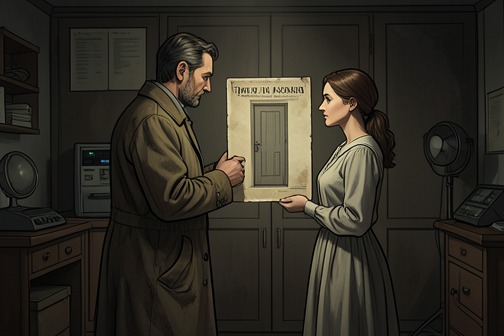
[Hobbs](entity:character-recall-character-hobbs-58f330d6dc1e) explained that barmaids had come to [Calcutta](entity:location-recall-location-cbd6ea8a2d10) after the [Suez Canal](entity:location-recall-location-8a0b62664515) opened, and he showed the men the Shahjahan’s old advertisement promising that its barmaids would be kept under lock and key. He recounted how [Marian Booth](entity:character-recall-character-marian-booth-0f085bd0530d)’s age had embarrassed the hotel and how [Jane Grey](entity:character-recall-character-jane-grey-4859c72d02bf) was left to serve the bar alone.
His history made the hotel’s entertainment look less like harmless glamour and more like a system built on confinement and vulnerability. [Sutherland](entity:character-recall-character-sutherland-24cf5fdb1baf) listened with growing emotional intensity, while [Shankar](entity:character-recall-character-shankar-ac3b0a0ad4b0) began to understand that the hotel’s past had never truly passed.
at the end of Sutherland’s Calcutta visit
Sutherland Reveals His Birth
After hearing the story of Jane and Robbie, [Sutherland](entity:character-recall-character-sutherland-24cf5fdb1baf) visited [Williams Lane](entity:location-recall-location-williams-lane-55a6f38938a9) and [Lower Circular Road Cemetery](entity:location-recall-location-lower-circular-road-443ae9faaa9c). He embraced a poor child in the street, then left flowers at a grave he believed belonged to his mother.
In a letter to [Shankar](entity:character-recall-character-shankar-ac3b0a0ad4b0), he revealed that he was the infant son of [Jane Grey](entity:character-recall-character-jane-grey-4859c72d02bf) and [Robert Adam](entity:character-recall-character-robert-adam-60e16844e64a), rescued after their deaths and raised by a priest. His seemingly distant questions about the barmaids had been a son’s final attempt to understand his parents’ suffering.
soon after Sutherland’s departure
Bose Secures a Reception Post
When news arrived that [Rosie](entity:character-recall-character-rosie-b6d2214cda6c) might return, [Shankar](entity:character-recall-character-shankar-ac3b0a0ad4b0) feared losing his temporary secretarial job. [Byron](entity:character-recall-character-byron-ad5306cf5fcb) and [Sata Bose](entity:character-recall-character-sata-bose-a87cb6b3f31c) argued that reception needed another worker, and Marco agreed to keep Shankar on as a receptionist.
The change expanded Shankar’s view of the hotel. From behind the counter he could watch guests, employees, and business dealings converge, learning that the desk offered a privileged view of the world while also demanding strict professional distance.
several days after Shankar becomes a receptionist
Rosie Returns
[Rosie](entity:character-recall-character-rosie-b6d2214cda6c) returned to the hotel and found [Shankar](entity:character-recall-character-shankar-ac3b0a0ad4b0) at the typewriter. Bose confronted her with the truth of her absence, and her fear that she had permanently lost her place gave way to relief when he arranged for her to resume work.
Rosie was angry that Shankar had been presented as a relative of Banerjee, and she locked him inside her room to defend herself against the rumors. She explained her family’s poverty, her racial isolation, and her decision not to run away with a married man once she learned the truth.
after Rosie’s return
Shankar Takes the Reception Desk
When [Rosie](entity:character-recall-character-rosie-b6d2214cda6c) reclaimed her post, Bose moved [Shankar](entity:character-recall-character-shankar-ac3b0a0ad4b0) out of her room and into another vacancy on the roof. He began teaching Shankar the practical work of reception, while Rosie continued typing and the hotel’s established routines resumed.
Shankar’s new position brought him into contact with guests whose private lives were concealed behind room numbers and polite exchanges. He learned to treat the counter as a boundary: information could be heard there, but it could not be carelessly passed on.
during Shankar’s early reception work
The Pakrashi Suite
[Shankar](entity:character-recall-character-shankar-ac3b0a0ad4b0) learned that suite number two was reserved for [Agarwalla](entity:character-recall-character-agarwalla-ee8cbed951f8)’s business and that [Karabi Guha](entity:character-recall-character-karabi-guha-60d53ca7fdac) served as its hostess. Her work involved arranging flowers, linens, and hospitality for clients whose transactions were conducted behind closed doors.
Bose explained that Karabi’s room could influence the futures of businessmen and hotel staff alike. Shankar’s first view of her suggested poise and control, but the suite’s atmosphere hinted at the unequal bargains beneath its elegant surface.
a few weeks after Shankar joins reception
The Banquet for Charity
The Shahjahan prepared a lavish banquet for the [Sociedad Filantrópica](entity:organization-recall-organization-sociedad-filantr-3774c00d78ae), where prominent citizens praised humanity and the need for sacrifice. The speeches promised moral reform, but the guests demanded rich food and private entertainment, exposing the gap between public virtue and private appetite.
At the same event, [Phokla Chatterjee](entity:character-recall-character-phokla-chatterjee-c1d25e229ab3) tried to secure alcohol and later took his nephew Anindo away from the cabaret. [Shankar](entity:character-recall-character-shankar-ac3b0a0ad4b0) saw how easily a public performance of service coexisted with indulgence and exploitation.
during the charity banquet
Karabi’s Night with the VIP
After the banquet, Karabi was expected to receive a powerful guest in suite number two. The visitor left before midnight, and [Shankar](entity:character-recall-character-shankar-ac3b0a0ad4b0) saw the fatigue and hurt in Karabi’s face when she returned to the desk.
The encounter revealed how a hostess’s polished role concealed coercion. Karabi had no meaningful power to refuse the expectations attached to her position, and Shankar’s silence left him ashamed of his own good fortune beside her vulnerability.
after the charity banquet
Connie Arrives
[Marco Polo](entity:character-recall-character-marco-polo-2a4f8475c664) showed [Shankar](entity:character-recall-character-shankar-ac3b0a0ad4b0) a photograph of [Connie](entity:character-recall-character-connie-0e956e68d55c), the cabaret performer arriving from Persia, and ordered publicity for her appearance. The hotel circulated the announcement “Connie, the Woman,” and reservations filled rapidly.
Bose explained the economics of cabaret contracts, where youth and appearance determined an entertainer’s price. Shankar began to see the performers as both the hotel’s most profitable attraction and its most exposed workers.
Connie’s opening night at the Mumtaz
Connie’s First Performance
[Connie](entity:character-recall-character-connie-0e956e68d55c)’s first show opened with a comic act in which the small performer [Lambreta](entity:character-recall-character-lambreta-75438fb94988) appeared as the advertised star before the real Connie emerged. The audience laughed, drank, and demanded more as the performance played with the spectators’ expectations.
Connie’s dance turned her body into the center of a hungry crowd’s attention. [Shankar](entity:character-recall-character-shankar-ac3b0a0ad4b0) acted as announcer and watched the entertainment reveal the gulf between stage spectacle and private dignity.
after Connie’s opening performance
Phokla’s Proposition
Phokla tried to pay [Shankar](entity:character-recall-character-shankar-ac3b0a0ad4b0) to arrange a private meeting between [Connie](entity:character-recall-character-connie-0e956e68d55c) and [Ranganathan](entity:character-recall-character-ranganathan-0edc5f1615f6). Shankar rejected the implication that Connie could be bought for a client’s pleasure, and Phokla mocked him as inexperienced before withdrawing the offer.
The incident made explicit the transaction hidden beneath the cabaret’s respectable hotel setting. Shankar left the hotel shaken and walked through the sleeping city, where he encountered employees forced to sleep outside and a waiter suffering from varicose veins.
after Connie’s first show
Lambreta’s Drunken Outburst
[Lambreta](entity:character-recall-character-lambreta-75438fb94988) burst into [Shankar](entity:character-recall-character-shankar-ac3b0a0ad4b0)’s room drunk, furious that the audience had treated [Connie](entity:character-recall-character-connie-0e956e68d55c) as an object and that Shankar had invited her to intervene. Connie came up from her room and calmed him, revealing a tenderness that the audience never saw.
When Lambreta complained that a spectator had called him a chimpanzee, Connie comforted him and stayed with him. Shankar began to understand that the entertainer’s comic stage persona concealed a painful dependence between the siblings.
the morning after his drunken outburst
Lambreta Joins the Prayer Song
[Lambreta](entity:character-recall-character-lambreta-75438fb94988) went for an early walk and encountered men singing a devotional song near the [Ganges](entity:location-recall-location-a917a2182c51). They welcomed him into their circle, gave him flowers, and escorted him back to the hotel because they feared he might get lost.
He returned delighted by the experience and wanted to teach [Connie](entity:character-recall-character-connie-0e956e68d55c) the song for their next performance. The episode offered a brief, unguarded connection between a hotel entertainer and the city’s ordinary residents.
during Connie’s first weeks at the hotel
Connie’s Plea for Harry
[Connie](entity:character-recall-character-connie-0e956e68d55c) took [Shankar](entity:character-recall-character-shankar-ac3b0a0ad4b0) to visit [Shibdas Debsharma](entity:character-recall-character-shibdas-debsharma-137ec3135dee), hoping he could make [Harry](entity:character-recall-character-harry-51d33e4b3663) taller and spare him the humiliation of being called a dwarf. Shibdas offered a costly ritual but warned that Harry might die; Connie refused to risk her brother’s life and accepted an amulet instead.
The visit made clear that her deepest concern was not her career but Harry’s dignity and safety. When the hotel later decided to remove [Lambreta](entity:character-recall-character-lambreta-75438fb94988) from the act, Connie refused to continue without him and left the Shahjahan with her brother.
after Connie’s departure
The German Delegation Arrives
[Madhab Pakrashi](entity:character-recall-character-madhab-pakrashi-18412994583b)’s firm hosted German visitors [Kurt](entity:character-recall-character-kurt-b84b708304e8) and [Reiter](entity:character-recall-character-reiter-6e9fce1d1c3c) at the [Hotel Shahjahan](entity:location-recall-location-hotel-shahjahan-49f70a17ec18). On a dry day, when alcohol could not be served, Karabi eased the awkwardness by introducing them to tender coconuts and welcoming them with a traditional alpana design.
[Anindo Pakrashi](entity:character-recall-character-anindo-pakrashi-9a9db2ebe612) took responsibility for the visitors, while Karabi helped him manage the meetings and hospitality. Their shared work brought them closer and began to transform their professional connection into affection.
during the German delegation’s stay
Agarwalla’s Rival Bid
Karabi discovered that [Agarwalla](entity:character-recall-character-agarwalla-ee8cbed951f8) was trying to meet the German visitors privately and divert their proposed industrial partnership from the Pakrashi family. Phokla was helping him by arranging distractions to keep Anindo away from the hotel.
Karabi called Anindo back when she realized the threat. Her intervention prevented the rival deal from being made in secret and placed her own loyalty at odds with the business interests that employed her.
after Karabi alerts Anindo
The German Agreement
Anindo returned to the hotel and confronted the situation before [Agarwalla](entity:character-recall-character-agarwalla-ee8cbed951f8) could secure the German partnership. The visitors remained with the Pakrashi party, and the agreement was ultimately signed by [Madhab Pakrashi](entity:character-recall-character-madhab-pakrashi-18412994583b).
The newspapers celebrated the new industrial collaboration, while Karabi’s discreet action went unacknowledged by the family. Her attachment to Anindo deepened, but the class and reputation barriers surrounding her remained in place.
after the agreement is signed
Mrs. Pakrashi Confronts Karabi
[Mrs. Pakrashi](entity:character-recall-character-mrs-pakrashi-4f2b2dbb6101) learned that Anindo had fallen in love with Karabi and accused the hostess of manipulating her son for money. She threatened Karabi and offered payment to make her abandon the relationship.
Karabi was wounded not only by the accusation but by the assumption that her feelings were purchasable. She initially kept the confrontation from Anindo, fearing that disclosure would hurt him and expose the unequal power governing their lives.
after the confrontation
Karabi Uses the Negatives
Karabi told [Mrs. Pakrashi](entity:character-recall-character-mrs-pakrashi-4f2b2dbb6101) that she possessed photographic negatives taken inside suite number one, evidence of the older woman’s secret relationship with [Robertson](entity:character-recall-character-robertson-f969b94e9527). Mrs. Pakrashi, fearing public exposure, agreed not to oppose Karabi and Anindo’s relationship.
Karabi appeared to have won the right to choose her future, but the victory rested on blackmail and left her morally distressed. She could not accept marriage to Anindo if it meant coercing his mother into consent.
the night after Mrs. Pakrashi’s agreement
Karabi Destroys the Evidence
Karabi told [Shankar](entity:character-recall-character-shankar-ac3b0a0ad4b0) that she could not enter the Pakrashi family by exploiting [Mrs. Pakrashi](entity:character-recall-character-mrs-pakrashi-4f2b2dbb6101)’s fear. She tore up the envelope containing the negatives and destroyed the evidence, choosing not to make the relationship begin with blackmail.
The decision left her overwhelmed and alone. By morning, the police had broken into suite number two and found Karabi dead after she had taken an overdose of sleeping pills.
later, after Karabi’s death
Anindo Marries Shyamali
Anindo eventually married Shyamali, and [Mrs. Pakrashi](entity:character-recall-character-mrs-pakrashi-4f2b2dbb6101) held a prestigious reception at the Shahjahan to celebrate the match. [Shankar](entity:character-recall-character-shankar-ac3b0a0ad4b0) stayed away from the earlier wedding service, while Bose took his place at the Pakrashi residence.
At the reception, Mrs. Pakrashi publicly presented herself as a devoted wife and social reformer. The polished speeches and charitable image stood in painful contrast to Karabi’s death and the private coercion that had preceded it.
during Shankar’s first year at the hotel
The History of Sohrabji
[Hobbs](entity:character-recall-character-hobbs-58f330d6dc1e) told [Shankar](entity:character-recall-character-shankar-ac3b0a0ad4b0) how [Sohrabji](entity:character-recall-character-sohrabji-f8aeee850ed8) had entered bar work as a poor boy, accompanying a woman named Cynthia because the law required women to have male companions in bars. He later became a bar owner and tried to run his business honestly, but unruly drinkers made the work difficult.
Sohrabji’s story exposed the gender restrictions and moral contradictions built into the bar trade. Though he never drank himself, he profited from alcohol and struggled to understand whether he bore responsibility for the damage it caused.
before Sohrabji joins the Shahjahan
Sohrabji’s Daughter Challenges Him
[Sohrabji](entity:character-recall-character-sohrabji-f8aeee850ed8)’s educated daughter wanted to visit his bar before leaving to study abroad. When she saw the intoxicated men and the disorder there, she asked whether their wives and daughters would ever forgive the people who served them drink.
Her question haunted Sohrabji. He sold the bar, but the bank failed after he deposited the proceeds, forcing him back into bar work as an employee to support his family and his daughter’s education.
during Shankar’s later months at the hotel
Sreelekha Leaves Home
[Sreelekha Devi](entity:character-recall-character-sreelekha-devi-ab015151929a) arrived at the hotel late at night, frightened that her husband might harm her. She asked for a sari, and [Shankar](entity:character-recall-character-shankar-ac3b0a0ad4b0) arranged one from a closed shop before helping her take refuge in a room.
Her husband waited outside, refusing to enter until she came down. After she met him at the entrance, they left together in his car, apparently reconciled; Shankar was left worrying about the unpaid room bill until Bose assured him that she would settle it.
after his earlier bar failed
Sohrabji Returns to Bar Work
At the Shahjahan, [Sohrabji](entity:character-recall-character-sohrabji-f8aeee850ed8) worked behind the bar and watched customers drink beyond their limits. He tried to keep the bar orderly, but customers threatened to boycott him when he challenged drunken behavior.
Sohrabji eventually confessed his inner conflict to [Shankar](entity:character-recall-character-shankar-ac3b0a0ad4b0): he feared that the families of his customers might curse him for enabling their drinking. Though he believed he was only earning a living, his daughter’s question continued to trouble him.
after Anindo’s marriage
The Cocktail Reception
[Mrs. Pakrashi](entity:character-recall-character-mrs-pakrashi-4f2b2dbb6101)’s cocktail reception moved through the four acts [Sohrabji](entity:character-recall-character-sohrabji-f8aeee850ed8) described: polite greetings, growing ease, loosened tongues, and drunken disorder. Guests praised the family, gossiped about women, and drank while the staff managed the consequences.
The event brought [Shankar](entity:character-recall-character-shankar-ac3b0a0ad4b0) face to face with the polished social world that had helped exclude Karabi. The hotel profited handsomely, while the public celebration concealed private grief and the gap between reputation and conduct.
during the cabaret’s run
Shankar Witnesses Workers’ Hardship
After a cabaret night, [Shankar](entity:character-recall-character-shankar-ac3b0a0ad4b0) walked through the sleeping city and found hotel workers sleeping near statues because the staff quarters and kitchen offered them no adequate space. One waiter’s painful varicose veins threatened his ability to keep working.
The scene revealed the physical cost of service behind the Shahjahan’s polished public image. Shankar understood that the hotel’s comforts depended on workers who had little rest, limited housing, and no room to care for their own health.
in the months after Shankar’s arrival
Bose and Sujata Grow Close
[Sujata Mitra](entity:character-recall-character-sujata-mitra-852332eeac97), a flight attendant, began visiting the Shahjahan and grew close to Bose. She challenged his assumption that the hotel was the whole world and urged him to imagine a life beyond its walls.
Bose, who had never built a home or family of his own, found himself drawn to her. [Shankar](entity:character-recall-character-shankar-ac3b0a0ad4b0) witnessed his mentor’s composure give way to uncertainty as love made the familiar hotel life feel both precious and insufficient.
after their relationship deepens
Sujata Gives Bose a Motorcycle
After Bose wistfully admired a motorcycle, Sujata bought one for him and presented the papers. Bose was angry at first, wary of the gift’s implications and the hotel’s gossip, but he eventually accepted the gesture.
The motorcycle offered the pair a glimpse of freedom beyond the hotel’s routines. Their outings and conversations made Bose’s attachment to Sujata harder to deny, even as he remained uncertain whether he could leave the Shahjahan.
after the motorcycle gift
Bose Chooses the Airline Job
Bose faced a choice between the [Hotel Shahjahan](entity:location-recall-location-hotel-shahjahan-49f70a17ec18) and a possible job with the airline, arranged through Sujata’s contacts. He loved the hotel and feared losing its people, freedom, and daily excitement, but he also understood that Sujata could not build a future with him while he remained absorbed in the hotel.
[Shankar](entity:character-recall-character-shankar-ac3b0a0ad4b0) advised him not to delay an opportunity that might not return. Bose submitted his resignation, and [Marco Polo](entity:character-recall-character-marco-polo-2a4f8475c664) accepted it, telling him he was free to leave or join him later in Africa.
near the end of Bose’s Shahjahan service
Bose’s Farewell Banquet
The hotel employees pooled small contributions to give Bose a farewell meal at the [Little Shahjahan](entity:location-recall-location-f4cda782b8b2). They used their own money for proper dishes and served him with ceremony, honoring the man who had defended them and helped many of them privately.
[Gómez](entity:character-recall-character-g-mez-846b4ada92bd) arrived uninvited and performed a special violin piece composed for Bose’s departure. The modest gathering became an intimate counterpoint to the Shahjahan’s lavish banquets, giving Bose a farewell grounded in affection rather than status.
after Bose leaves Calcutta
Bose’s Letter from Santa Cruz
Bose wrote to [Shankar](entity:character-recall-character-shankar-ac3b0a0ad4b0) from [Santa Cruz](entity:location-recall-location-a49558aa33e4), describing himself as a prince who still longed to play at washing clothes. Though he had escaped the hotel, he remained emotionally tied to its people and wondered whether a home and family might become possible.
The letter showed that leaving the Shahjahan had not instantly made him happy. His new life began with homesickness and uncertainty, while Sujata’s visits and their shared future remained unresolved.
after Byron investigates Chhatawala Lane
Marco and Lisa Reunite
[Byron](entity:character-recall-character-byron-ad5306cf5fcb) and [Marco Polo](entity:character-recall-character-marco-polo-2a4f8475c664) searched for the woman from Marco’s past in [Chhatawala Lane](entity:location-recall-location-chhatawala-lane-9186f2571ccc), where Byron recognized a former singer named [Elizabeth](entity:character-recall-character-a482017201f4) as [Lisa](entity:character-recall-character-lisa-f8f8fe21b70f). [Shankar](entity:character-recall-character-shankar-ac3b0a0ad4b0) had known her from his basket-selling days, and his recognition finally gave Byron the lead he needed.
Marco visited Lisa and arranged medical care for her damaged leg. He fell in love with her again, not because she could offer him money or beauty, but because their shared past and her remaining spirit mattered to him.
after Lisa’s identity is confirmed
Marco Chooses a New Life
Marco and [Lisa](entity:character-recall-character-lisa-f8f8fe21b70f) decided to live together, but the law prevented them from marrying in [India](entity:location-recall-location-600eec71fa3c). Marco accepted a hotel position in Africa, where they hoped to begin again as husband and wife.
His departure would end his long tenure at the Shahjahan and release him from the unresolved past that had shadowed his career. [Byron](entity:character-recall-character-byron-ad5306cf5fcb), having completed the investigation, also prepared to leave [Calcutta](entity:location-recall-location-cbd6ea8a2d10) for work in [Australia](entity:location-recall-location-29432536e761).
before Marco Polo’s departure
William and Rosie’s Impasse
[William Ghosh](entity:character-recall-character-william-ghosh-7f5a8f2b844c) told [Shankar](entity:character-recall-character-shankar-ac3b0a0ad4b0) that he loved [Rosie](entity:character-recall-character-rosie-b6d2214cda6c) and had hoped the hotel might provide him with both work and a wife. Rosie asked him to wait five years, until her sick parents were gone and her sister was settled.
[William](entity:character-recall-character-828bc8a92766) had seen the poverty of Rosie’s family and understood that her refusal was tied to responsibility, not indifference. He could not promise to wait so long, and their future together remained uncertain.
after Marco’s departure is arranged
Agarwalla Takes Control
[Agarwalla](entity:character-recall-character-agarwalla-ee8cbed951f8) bought most of the [Hotel Shahjahan](entity:location-recall-location-hotel-shahjahan-49f70a17ec18)’s shares, and [Jimmy](entity:character-recall-character-jimmy-7097cd16d51d) began reshaping its management. He promised a more modern hotel and brought in a young woman to replace Bose at reception, while [William](entity:character-recall-character-828bc8a92766) was assigned more bookkeeping.
The new leadership wanted women at the desk and a more commercial entertainment program. The hotel’s old community began to fracture as Jimmy’s ambitions displaced the routines and loyalties that had sustained it.
during Jimmy’s management transition
Gómez Is Forced Out
[Jimmy](entity:character-recall-character-jimmy-7097cd16d51d) and Phokla told [Gómez](entity:character-recall-character-g-mez-846b4ada92bd) that his music was not lively enough for the hotel’s new image. They demanded cheerful entertainment or his resignation, leaving him little choice but to accept a position arranging music at a small church on the southern coast.
For his final Shahjahan performance, Gómez played music designed to stir the cabaret crowd. Beneath the lively rhythms, [Shankar](entity:character-recall-character-shankar-ac3b0a0ad4b0) saw the farewell of a serious musician forced to serve an audience that could not recognize his deepest art.
the night of Gómez’s final performance
Shankar Is Dismissed
After the show, [Jimmy](entity:character-recall-character-jimmy-7097cd16d51d) and Phokla summoned [Shankar](entity:character-recall-character-shankar-ac3b0a0ad4b0) and told him that the new management no longer needed his services. They gave him a month’s extra pay despite the temporary terms of his contract, then dismissed him without allowing him a real chance to respond.
[Rosie](entity:character-recall-character-rosie-b6d2214cda6c) told Shankar that she had tried to intervene, but Jimmy had already presented his plan. Shankar left the hotel’s service as its old community was being dismantled around him.
after Shankar’s dismissal
Sujata Dies in a Crash
Bose’s letter reached [Shankar](entity:character-recall-character-shankar-ac3b0a0ad4b0) with the news that [Sujata Mitra](entity:character-recall-character-sujata-mitra-852332eeac97) had died in a car accident while traveling to the airport in [Delhi](entity:location-recall-location-7242cbb9d528). Bose had been listed as her closest person, and the airline arranged for her body to be sent to him.
He had postponed marriage while thinking about his career, but Sujata had already chosen him as her family. Bose took her ashes to the Arabian Sea and decided he could no longer remain alone in [Santa Cruz](entity:location-recall-location-a49558aa33e4).
the night he reads Bose’s letter
Shankar’s Night of Despair
After learning that he had been fired and reading Bose’s account of Sujata’s death, [Shankar](entity:character-recall-character-shankar-ac3b0a0ad4b0) fled into the sleeping city. The Shahjahan’s lights and the streets seemed to mock him, and he felt that everyone he loved had been taken away.
Near the future site of the Birla Planetarium, he looked toward the stars and imagined them offering a different answer from the despairing voices of the city. He chose not to curse the world and instead resolved to share the grief of others who had been wounded by life.
near the ending
The Story’s Closing Hope
[Shankar](entity:character-recall-character-shankar-ac3b0a0ad4b0) returned toward the [Hotel Shahjahan](entity:location-recall-location-hotel-shahjahan-49f70a17ec18) with a changed understanding of the city. He remembered Kipling’s bleak judgment of [Calcutta](entity:location-recall-location-cbd6ea8a2d10) at night, but could not accept the finality of its despair.
The stars gave him strength to believe that goodness might one day heal the sinful city. He looked once more at the hotel that had shaped and consumed his life, then continued on his way, carrying its stories beyond its doors.