June 10
CurtainJune 10 is the date on which Hercule Poirot saw Barbara Franklin emerge from the laboratory holding a small bottle, an observation that helped shape the inquest into her death. The date anchors a pivotal piece of testimony: it supported the jury’s conclusion that she had taken poison herself, while the novel’s wider pattern of disputed deaths makes that official conclusion part of a larger uncertainty.
The Laboratory Sighting
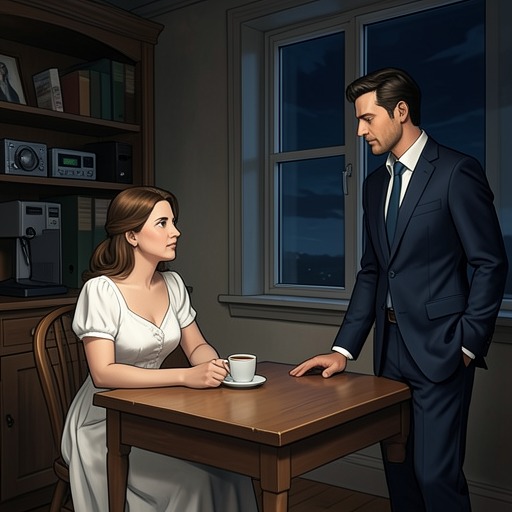
At the inquest, Poirot was asked whether he had been sitting outside the laboratory door on the morning of June 10. He confirmed that he had, and that he saw Barbara come out. Asked whether she carried anything, he said she had a small bottle clasped in her right hand. He was certain of what he had seen; Barbara, he added, had looked startled when she noticed him.
The account gave the date a precise evidentiary role. Poirot did not claim to have seen Barbara take poison or establish what the bottle contained. His testimony placed her outside the laboratory with a bottle, leaving the coroner and jury to decide what that sighting meant alongside the medical and circumstantial evidence.
The Inquest and Verdict
The coroner stated that the medical evidence identified the cause of death as poisoning by physostigmine sulphate. The unresolved question was whether Barbara had taken it accidentally, taken it intentionally, or received it from someone else. The jury also heard that she had suffered episodes of deep melancholy, was in poor health, and was in a poor nervous condition, although she had no organic disease.
The coroner treated Poirot’s account of the June 10 sighting as significant support for suicide. He suggested that Barbara might have taken poison from the laboratory intending to end her life, and described her belief that she was obstructing her husband’s career as an idea originating with her rather than a complaint made by Dr John Franklin. He also noted that the time and means by which the poison was taken were not established and that the original bottle had not been found. The possibility that Barbara had washed and put it away in the bathroom cupboard had been raised, but remained an explanation rather than a proven fact.
After a short deliberation, the jury found that Barbara had taken her own life while temporarily of unsound mind. The June 10 observation thus helped support a formal verdict, but it did not resolve every uncertainty about the bottle, the poison’s use, or the circumstances of her death.
A Date under Suspicion
The verdict did not silence suspicion within the story. After the inquest, a local woman recalled the earlier death of Mrs Inglethorp at Styles and remarked that another murder might have occurred there. She questioned whether the coroner could be wrong and speculated about Dr Franklin, despite the suicide verdict. Her remarks are rumor, not evidence that he caused Barbara’s death; their significance lies in the gap they expose between a legal conclusion and persistent local doubt.
That gap widens later when Arthur Hastings reflects on the deaths of Stephen Norton, Barbara, and Poirot. Norton’s death, too, had received a suicide verdict, supported by a locked room and a pistol apparently belonging to him, though the surgeon considered the precise position of the wound unusual. Hastings regards the apparent clarity of such cases with suspicion. In that retrospective frame, June 10 remains both a specific, consequential sighting and an example of how testimony can contribute to a verdict without finally settling the truth.