Rats
CurtainRats are laboratory animals in the novel whose appearances connect scientific research with two contrasting responses: Barbara Franklin’s visceral revulsion and Dr John Franklin’s experimental investigation. They remain objects of human attention, but the difference between those responses gives them a small, revealing role in the novel’s treatment of knowledge and feeling.
In the Laboratory
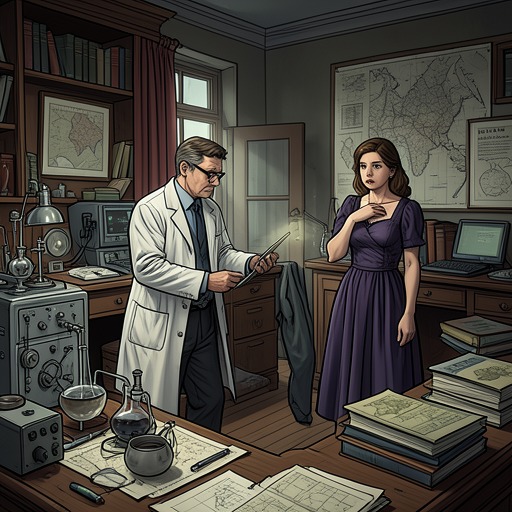
When Arthur Hastings visits John Franklin’s laboratory, he looks at slides through a microscope, studies photographs of West African people, and notices a rat in a cage whose eyes seem soporific. The sight does not sustain his interest: he hurries back outside. The rat is part of the scientific setting, but Hastings’s brief, sensory impression gives the animal a presence distinct from Franklin’s abstract research.
Barbara Franklin’s Revulsion
Barbara Franklin associates laboratory animals with the work that distresses her. She mentions guinea pigs and rats together, shudders, and says that thinking about them makes her feel sick. Against that image she longs for birds, flowers, and children playing: a contrast between experimental life and the happy, gentle world she wishes to contemplate. Boyd Carrington responds tenderly, taking her outstretched hand and recalling her childhood; the exchange frames the rats not as evidence about an experiment, but as part of Barbara’s emotional burden.
Research and the Ordeal Bean
John Franklin explains that his work concerns two similar-looking kinds of West African bean, both containing substances including physostigmine and geneserine. He believes an additional alkaloid in one kind can counteract their effects and describes the bean’s connection to an ordeal intended to establish guilt or innocence. The rat in the cage belongs to the laboratory world in which such claims are investigated; the account does not specify that it is used in a particular experiment or state what happened to it.
The juxtaposition matters. For Franklin, laboratory inquiry is a route toward knowledge about a rare disease and the bean’s effects; for Barbara, the animals associated with such inquiry intensify her discouragement and distress. The rat’s appearances thus connect scientific work to its human costs without giving the animal a narrated perspective of its own.