Paris, 1640, before the performance
The Crowded Theater
At the [Hotel de Bourgogne](entity:location-recall-location-hotel-de-bourgogne-a190af89fff3), spectators fill the hall amid gambling, flirting, petty theft, and noisy anticipation. [Christian de Neuvillette](entity:character-recall-character-christian-de-neuvil-31f0b91d721b), newly arrived from Touraine, waits with [Ligniere](entity:character-recall-character-ligniere-34e02d54981a), hoping to see [Roxane](entity:character-recall-character-roxane-ef18596da2e2) and unsure how to approach her.
The crowded, disorderly theater establishes a world of public spectacle and social performance. [Christian](entity:character-recall-character-christian-6a6d4942e976)’s anxious attention to the boxes already sets his private longing against the bustle of Parisian life.
That evening, before the play begins
Roxane and De Guiche
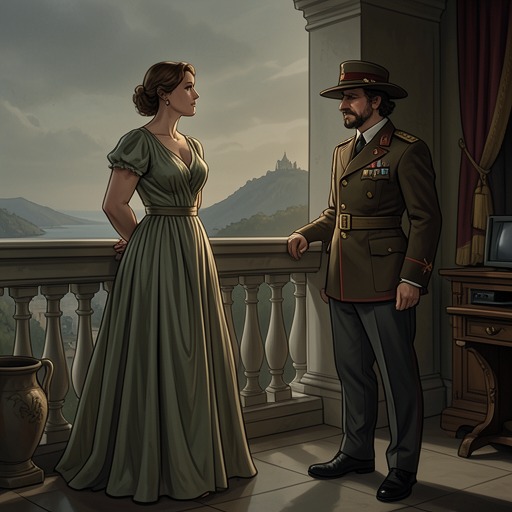
[Roxane](entity:character-recall-character-roxane-ef18596da2e2) takes her place in a box, and [Christian](entity:character-recall-character-christian-6a6d4942e976) at last recognizes the woman he loves. [Ligniere](entity:character-recall-character-ligniere-34e02d54981a) explains that she is an orphan, a cousin of [Cyrano de Bergerac](entity:character-recall-character-cyrano-de-bergerac-81ba871084aa), and the object of [Count de Guiche](entity:character-recall-character-count-de-guiche-74ea192f40a2)’s attention; De Guiche hopes to marry her to [Viscount de Valvert](entity:character-recall-character-viscount-de-valvert-cc1f98f6a549) despite her resistance.
The revelation makes Christian’s attraction more perilous: Roxane is entangled in a powerful man’s plans, while Christian has neither influence nor confidence. He nevertheless fixes on De Valvert as a rival he might confront.
That evening, shortly before the performance
The Threat Against Ligniere
As [Christian](entity:character-recall-character-christian-6a6d4942e976) watches [Roxane](entity:character-recall-character-roxane-ef18596da2e2), a pickpocket tells him that [Ligniere](entity:character-recall-character-ligniere-34e02d54981a) is marked for death. A hundred men have been placed at the [Porte de Nesle](entity:location-recall-location-porte-de-nesle-c56cf81b4361) to ambush the songwriter because one of his songs offended someone powerful.
Christian must choose between remaining near Roxane and helping his friend. He leaves the theater to warn Ligniere, postponing his confrontation with De Valvert and revealing a courage that contrasts with his uncertainty in love.
That evening, during the performance
Cyrano Stops the Play
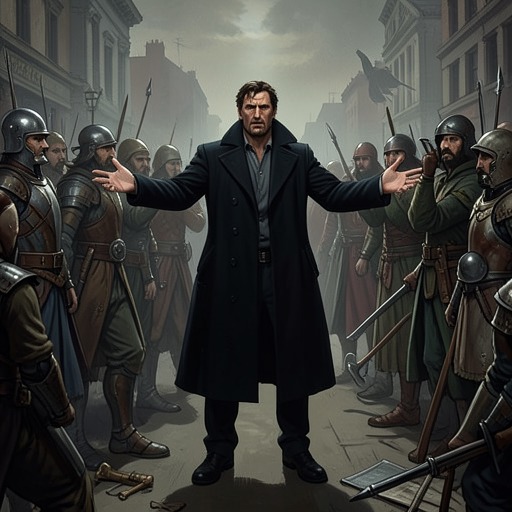
[Montfleury](entity:character-recall-character-montfleury-2ecd73fe385b) begins to perform, but a voice from the pit orders him off the stage. Cyrano appears and insists that Montfleury obey a ban he had imposed, threatening the actor and daring the audience to challenge him.
Cyrano’s intervention turns a theatrical performance into a public test of nerve. His authority rests not on a patron’s protection but on his willingness to face a hostile crowd himself.
That evening, immediately after the play is stopped
The Nose and the Duel
Cyrano answers a man who stares at his nose with a furious comic catalogue of what the man might have said, then strikes him for calling it small. When [Viscount de Valvert](entity:character-recall-character-viscount-de-valvert-cc1f98f6a549) makes a brief insult about the nose, Cyrano demonstrates how wit could have furnished a hundred better ones.
Cyrano then composes a ballade while fighting De Valvert, matching the poem’s verses to his sword-work and striking his opponent on the promised final line. The triumph makes him a sensation, but it also sharpens his enemies’ resentment and displays the inseparable force of his verbal and physical bravado.
That evening, after the duel
The Cost of Independence
Cyrano gives the theater company money to compensate its audience, then admits to [Le Bret](entity:character-recall-character-le-bret-b0625c8790e8) that he has spent his remaining funds. He refuses to seek a patron, describing a life of independence in which he would rather work alone than bend his words or conduct to powerful protectors.
His refusal is not simply pride in the abstract: it commits him to hardship and isolation. Le Bret warns that Cyrano’s habit of making enemies may leave him vulnerable, but Cyrano values an unbent conscience more than advancement.
That evening, after the crowd disperses
Cyrano’s Hidden Love
Alone with [Le Bret](entity:character-recall-character-le-bret-b0625c8790e8), Cyrano admits that he loves [Roxane](entity:character-recall-character-roxane-ef18596da2e2). He believes his appearance, especially his nose, makes it impossible for her to love him in return, and he describes how the sight of his own shadow can extinguish his hopes of romantic happiness.
A message from Roxane’s duenna interrupts his confession: Roxane wants a private meeting the following morning. The invitation brings him sudden joy, though he does not yet know that she intends to speak about another man.
That night, after Cyrano’s rendezvous is arranged
Cyrano Rescues Ligniere
[Ligniere](entity:character-recall-character-ligniere-34e02d54981a) arrives at the theater drunk and frightened, carrying confirmation that a hundred men are waiting to kill him at the [Porte de Nesle](entity:location-recall-location-porte-de-nesle-c56cf81b4361). Cyrano refuses to let him hide and sets out to escort him home, ordering the curious officers to witness what happens rather than intervene.
Cyrano leads a procession of actors, musicians, and companions into the night, then meets the attackers alone and defeats them. The rescue turns his reputation for audacity into a real deed, while his choice to act for a friend shows the loyalty beneath his theatrical swagger.
The next morning, at Ragueneau’s pastry shop
Roxane’s Confession
Cyrano waits anxiously at [Ragueneau](entity:character-recall-character-ragueneau-0d57fe5c1255)’s pastry shop for his meeting with [Roxane](entity:character-recall-character-roxane-ef18596da2e2). When she arrives, she recalls their childhood in [Bergerac](entity:location-recall-location-bergerac-7fb2d057b131) and tends the small wound he received in the night’s fighting.
Roxane tells him she loves [Christian](entity:character-recall-character-christian-6a6d4942e976), a handsome young man who has joined the Guards. She asks Cyrano to protect Christian from the [Gascon cadets](entity:character-recall-character-5fd6e240745b) and keep him from dueling. Cyrano conceals his heartbreak and promises to help.
The next morning, during Roxane’s visit
Cyrano’s Promise
[Roxane](entity:character-recall-character-roxane-ef18596da2e2) explains that she has admired [Christian](entity:character-recall-character-christian-6a6d4942e976) from afar and believes his beauty and bearing must be matched by eloquence. Cyrano cautiously warns that Christian may not possess the wit she imagines, but she refuses to entertain the possibility.
Cyrano nevertheless promises to be Christian’s friend and to shield him from the cadets. His promise binds him to protect the man who has won Roxane’s affection, converting private anguish into a self-sacrificing duty.
The next morning, after Roxane leaves
The Cadets’ Hero
Cyrano’s friends and the [Gascon cadets](entity:character-recall-character-5fd6e240745b) arrive to celebrate his fight at the [Porte de Nesle](entity:location-recall-location-porte-de-nesle-c56cf81b4361). [Count de Guiche](entity:character-recall-character-count-de-guiche-74ea192f40a2) offers to use his influence with his uncle, Cardinal Richelieu, to advance Cyrano’s play, but Cyrano refuses to submit his work to another man’s corrections.
When De Guiche reveals that he commanded the ambush against [Ligniere](entity:character-recall-character-ligniere-34e02d54981a), Cyrano returns the captured hats of De Guiche’s men with deliberate contempt. He rejects both patronage and reconciliation, choosing to preserve his independence even when it costs him opportunity and protection.
The next morning, after De Guiche departs
Christian’s Provocation
[Christian](entity:character-recall-character-christian-6a6d4942e976) joins the cadets, who warn him that Cyrano will attack anyone who mentions his nose. During Cyrano’s account of the previous night’s fight, Christian repeatedly interrupts with nose jokes, each one bringing him closer to a dangerous confrontation.
Cyrano recognizes [Roxane](entity:character-recall-character-roxane-ef18596da2e2)’s beloved in the new recruit and masters his fury. Instead of striking Christian, he dismisses the other cadets and reveals that Roxane has told him everything, transforming the apparent insult into the beginning of an alliance.
The next morning, after Cyrano and Christian are alone
The Borrowed Voice
[Christian](entity:character-recall-character-christian-6a6d4942e976) confesses that he cannot speak well to women and fears disappointing [Roxane](entity:character-recall-character-roxane-ef18596da2e2), who expects fine words. Cyrano, who has already written a love letter in his own voice, offers to supply the eloquence while Christian supplies the handsome face.
Christian accepts the partnership, and Cyrano gives him the unsigned letter. Their arrangement makes Christian the apparent author of feelings Cyrano has long carried in secret; it also begins a deception that will shape Roxane’s understanding of both men.
Some time later, in the Marais
Roxane’s Admiration
Cyrano visits [Roxane](entity:character-recall-character-roxane-ef18596da2e2) as she praises [Christian](entity:character-recall-character-christian-6a6d4942e976)’s letters and repeats their lines from memory. She believes Christian to be both beautiful and brilliant, while Cyrano recognizes his own language in the words she treasures and hides his reaction.
Roxane says she wants Christian to speak freely and splendidly when they next meet. Her expectation threatens to expose the difference between Christian’s appearance and his command of language, forcing Cyrano to continue supplying the voice she attributes to his rival.
That day, before the siege of Arras
De Guiche’s Departure
[Count de Guiche](entity:character-recall-character-count-de-guiche-74ea192f40a2) tells [Roxane](entity:character-recall-character-roxane-ef18596da2e2) that he is leaving to command the Guards in the campaign against [Arras](entity:location-recall-location-arras-2d45121c7703). He threatens to take revenge on Cyrano by sending him and the cadets into danger, but Roxane persuades De Guiche that a worse punishment would be to leave them behind in [Paris](entity:location-recall-location-paris-c02b439ce220).
Roxane pretends to sympathize with De Guiche and encourages him to go to war, while secretly aiming to keep [Christian](entity:character-recall-character-christian-6a6d4942e976) from the battlefield. De Guiche withholds the cadets’ marching order, but his desire to return to Roxane soon reverses the reprieve.
That evening, outside Roxane’s house
Christian Rejects Rehearsal
[Roxane](entity:character-recall-character-roxane-ef18596da2e2) asks Cyrano to let [Christian](entity:character-recall-character-christian-6a6d4942e976) speak spontaneously rather than prepare another set of polished lines. When Christian arrives, Cyrano offers to coach him, but Christian says he is tired of borrowed letters and wants to speak in his own voice.
Roxane comes out expecting eloquence, and Christian can manage only blunt declarations of love and desire. She is disappointed and withdraws into the house, leaving Christian to recognize that his appearance alone cannot sustain the courtship.
That evening, shortly after Christian is rejected
The Balcony Declaration
[Christian](entity:character-recall-character-christian-6a6d4942e976) begs Cyrano to help him recover [Roxane](entity:character-recall-character-roxane-ef18596da2e2)’s favor. From beneath her balcony, Cyrano prompts Christian at first, then takes his place in the darkness and speaks directly from his own heart, confessing a love that has been disguised as Christian’s.
Roxane responds to the sincerity and beauty of the speech, believing it comes from Christian. When Christian asks for a kiss, Cyrano pushes him up to the balcony, and Christian receives the kiss that Cyrano’s words have won. Cyrano is left outside, both the source of the intimacy and its excluded witness.
That night, after the balcony scene
A Marriage in the Night
A Capuchin arrives with a letter from De Guiche. [Roxane](entity:character-recall-character-roxane-ef18596da2e2) reads aloud a message that appears to be from Cardinal Richelieu, ordering the friar to marry her and [Christian](entity:character-recall-character-christian-6a6d4942e976) immediately; she conceals the letter’s true message, which was intended to arrange De Guiche’s private visit.
Cyrano climbs to the balcony and delays De Guiche with an elaborate story that he has fallen from the moon. While De Guiche is kept outside, Roxane and Christian marry. De Guiche discovers the deception only after the ceremony and sends Christian to the front with the Guards.
That night, immediately after the wedding
Roxane’s Failed Reprieve
[Roxane](entity:character-recall-character-roxane-ef18596da2e2) begs De Guiche not to send [Christian](entity:character-recall-character-christian-6a6d4942e976) away, but De Guiche produces the marching order he had withheld earlier and orders Christian to join the campaign. The sudden reversal defeats Roxane’s effort to keep her new husband from the war.
As the regiment prepares to depart, Roxane asks Cyrano to protect Christian, keep him from danger, and ensure that he writes often. Cyrano cannot promise safety, but he does promise the letters, undertaking to maintain the connection that the war will soon make essential.
During the siege of Arras, before Roxane arrives
The Starving Camp
The [Gascon cadets](entity:character-recall-character-5fd6e240745b) endure hunger as [French forces](entity:organization-recall-organization-e29e13998a85) are trapped by the Spanish at [Arras](entity:location-recall-location-arras-2d45121c7703). Cyrano repeatedly risks crossing enemy lines at dawn to carry letters to [Roxane](entity:character-recall-character-roxane-ef18596da2e2), honoring his promise to [Christian](entity:character-recall-character-christian-6a6d4942e976) even as the crossings expose him to gunfire.
The letters keep Roxane’s love alive and give Christian a claim to words Cyrano writes. Cyrano’s daily danger becomes a private continuation of the courtship, hidden inside the public ordeal of the siege.
During the siege, one hungry morning
Cyrano Sustains the Cadets
The cadets wake hungry and complain that they have nothing to eat. Cyrano answers with jokes, then asks the old fifer to play the airs of their homeland, drawing the soldiers into memories of [Gascony](entity:location-recall-location-gascony-52bedd4aba10) and temporarily replacing bodily hunger with homesickness.
When Cyrano has the drum sound, the cadets snap back into military readiness. His performance shows how he uses language, music, and command to preserve their courage when food and comfort have failed them.
During the siege, later that morning
De Guiche’s Costly Ruse
De Guiche arrives at the cadets’ post and recounts how he escaped danger by dropping the white scarf that identified his rank. Cyrano reveals that he recovered the scarf from enemy territory and offers to wear it into an assault, openly condemning De Guiche’s expedient retreat.
De Guiche then admits that he has used a false Spanish spy to direct the enemy’s attack toward the cadets’ position. He intends the company to hold the post long enough for the Marshal to return with provisions, making the Gascons a deliberate delaying force.
During the siege of Arras, after De Guiche’s warning
Roxane Crosses the Lines
A carriage arrives through the Spanish lines carrying [Roxane](entity:character-recall-character-roxane-ef18596da2e2). She explains that she passed the enemy by declaring she was going to see her lover, and that the Spanish officers let her through rather than deny her journey.
Her arrival astonishes the starving camp and alarms the officers, who know the cadets are about to face a major attack. Roxane has crossed into a battlefield to reach [Christian](entity:character-recall-character-christian-6a6d4942e976), turning the letters’ emotional pull into a physical act of devotion.
During Roxane’s arrival at the Arras camp
Roxane Refuses to Leave
De Guiche and the others urge [Roxane](entity:character-recall-character-roxane-ef18596da2e2) to leave before the attack begins, but she refuses. She declares that [Christian](entity:character-recall-character-christian-6a6d4942e976) is her husband and insists on staying beside him, accepting the danger rather than retreating to safety.
Roxane’s choice overturns the expectation that she is merely a refined admirer protected from war. The cadets rally around her, and even De Guiche is forced to reckon with the courage of the woman he had hoped to control.
During the siege, before the Spanish attack
The Feast in the Camp
[Roxane](entity:character-recall-character-roxane-ef18596da2e2) reveals that her carriage contains a feast, with [Ragueneau](entity:character-recall-character-ragueneau-0d57fe5c1255) disguised as the coachman. The cadets uncover the food hidden in the carriage and eat while Roxane serves them, briefly transforming their depleted camp into a lively table.
The meal restores the company’s strength and morale, but its abundance also exposes their vulnerability: they have been close to starvation while facing an imminent assault. Roxane’s generosity gives the cadets a moment of human warmth before the fighting resumes.
During the siege, after the feast
De Guiche Stays
De Guiche returns and finds the cadets disguising their meal. He tells [Roxane](entity:character-recall-character-roxane-ef18596da2e2) to flee, but when she refuses, he decides to remain as well rather than leave a woman in danger.
The cadets recognize a change in the courtier they had despised, and De Guiche accepts their food and their company. His decision does not erase his earlier manipulation, but it places him beside the soldiers when the danger he arranged becomes immediate.
During the siege, as the attack approaches
Christian Learns the Truth
[Christian](entity:character-recall-character-christian-6a6d4942e976) learns that Cyrano has written far more letters than he knew, sometimes sending them twice a day and risking his life to carry them across the lines. He recognizes how much of [Roxane](entity:character-recall-character-roxane-ef18596da2e2)’s love may belong to Cyrano’s words rather than his own.
When Roxane tells him that the letters brought her to the camp, Christian understands that she now loves him for the soul expressed in them. He concludes that the soul is Cyrano’s and urges Cyrano to tell Roxane the truth, even though doing so could cost Christian the love he has enjoyed.
During the siege, immediately before the attack
Roxane’s Love Beyond Beauty
[Roxane](entity:character-recall-character-roxane-ef18596da2e2) tells [Christian](entity:character-recall-character-christian-6a6d4942e976) that her feelings have changed: she first loved his beauty, but the letters taught her to love his soul. She insists that she would continue to love him even if he became ugly, and Christian realizes the depth of the mismatch between the face she sees and the mind she has heard.
Christian sends Roxane away to comfort the cadets and tells Cyrano to disclose the truth. Cyrano begins to hope that Roxane’s declaration might make a life with her possible, but he still cannot bring himself to claim the letters as his own.
During the Spanish assault on Arras
Christian’s Death
Before Cyrano can confess, the enemy’s first shot strikes [Christian](entity:character-recall-character-christian-6a6d4942e976). [Roxane](entity:character-recall-character-roxane-ef18596da2e2) kneels beside her dying husband, and Cyrano tells Christian that she still loves him, allowing him to die believing that he remains the object of her devotion.
Roxane finds the letter Cyrano had written and treats it as Christian’s final message. Christian’s death closes the possibility that the three might openly resolve the deception together, leaving Cyrano’s authorship and love concealed once more.
Immediately after Christian’s death
The Cadets’ Last Stand
As the Spanish attack presses toward the post, De Guiche helps carry the unconscious [Roxane](entity:character-recall-character-roxane-ef18596da2e2) away while Cyrano returns to the fighting. The cadets rally beneath Roxane’s lace handkerchief, which they have raised as their company’s flag.
The Gascons resist the enemy despite their wounds and dwindling numbers. Cyrano calls them by name and charges with the survivors, but the overwhelming assault breaks the company’s position and ends the cadets’ stand at [Arras](entity:location-recall-location-arras-2d45121c7703).
Fifteen years later, autumn 1655
Roxane’s Long Mourning
[Roxane](entity:character-recall-character-roxane-ef18596da2e2) has lived as a widow at the [Convent of the Sisters of the Holy Cross](entity:organization-recall-organization-convent-of-the-s-7f70d791650b), still carrying [Christian](entity:character-recall-character-christian-6a6d4942e976)’s last letter close to her heart. For years Cyrano has visited her every Saturday, bringing news and teasing her gently while keeping his own feelings hidden.
[Count de Guiche](entity:character-recall-character-count-de-guiche-74ea192f40a2), now the Duke de Grammont, speaks with Roxane about Christian and acknowledges that he never fully understood the man. Roxane remains faithful to Christian’s memory, while Cyrano’s regular visits have become an unobtrusive part of her life.
Autumn 1655, before the Saturday visit
Cyrano’s Poverty
[Le Bret](entity:character-recall-character-le-bret-b0625c8790e8) tells De Guiche that Cyrano is increasingly isolated and poor. His outspoken writings have made fresh enemies, and hunger and cold threaten him more than any opponent’s sword; he has refused help and lives in a single worn suit.
De Guiche admits that, despite possessing worldly success, he envies Cyrano’s freedom and integrity. The warning that someone has spoken of killing Cyrano by accident foreshadows that his old enemies may at last reach him through an ignoble attack.
Autumn 1655, shortly before Cyrano’s visit
The Ambush
[Ragueneau](entity:character-recall-character-ragueneau-0d57fe5c1255) tells [Le Bret](entity:character-recall-character-le-bret-b0625c8790e8) that a lackey dropped a large piece of wood from a window as Cyrano passed beneath it. Cyrano was struck in the head and carried to his room unconscious, badly wounded and without anyone at his bedside.
Le Bret and Ragueneau hurry to reach him, fearing that the injury may prove fatal. They decide not to tell [Roxane](entity:character-recall-character-roxane-ef18596da2e2) at once, but the attack has already set in motion the final meeting at which Cyrano’s concealment will end.
Saturday, autumn 1655, at the convent garden
Cyrano’s Final Visit
Despite his wound, Cyrano arrives late for his customary visit to [Roxane](entity:character-recall-character-roxane-ef18596da2e2). He jokes about a creditor who delayed him and performs his usual role as her news-giving friend, concealing his weakness even as he grows pale and briefly loses consciousness.
Roxane gives him [Christian](entity:character-recall-character-christian-6a6d4942e976)’s old letter, which she has kept for years. Cyrano reads it aloud from memory in the voice that once spoke beneath her balcony, and Roxane recognizes that the words and the voice belong to him.
Saturday, autumn 1655, as evening falls
Roxane Discovers the Author
[Roxane](entity:character-recall-character-roxane-ef18596da2e2) realizes that Cyrano wrote the letters, supplied the balcony speech, and gave [Christian](entity:character-recall-character-christian-6a6d4942e976) the eloquence she had loved. Cyrano denies it, even as his faltering words and intimate knowledge of the letter betray the truth.
Roxane asks why he kept silent for fourteen years. [Le Bret](entity:character-recall-character-le-bret-b0625c8790e8) and [Ragueneau](entity:character-recall-character-ragueneau-0d57fe5c1255) return and reveal that Cyrano has been attacked and is dying, bringing the cost of his long concealment into the open at the moment he can no longer escape it.
Saturday, autumn 1655, during Cyrano’s final moments
The Unclaimed Triumph
Cyrano learns that Moliere has used a scene from his work, and he refuses to resent the theft because the audience laughed. He describes his life as that of a forgotten prompter at the foot of a ladder, while others climb toward love and fame.
[Roxane](entity:character-recall-character-roxane-ef18596da2e2) tells him she loves him, but Cyrano does not let her confession alter the life he has lived. He asks her to mourn him alongside [Christian](entity:character-recall-character-christian-6a6d4942e976), acknowledging the affection she gave him while insisting that her earlier love remains sacred.
Saturday, autumn 1655, at the end
Cyrano’s Last Stand
As death overtakes him, Cyrano imagines his old enemies gathering around him and fights them with his sword: falsehood, compromise, prejudice, and treachery. He refuses to surrender his honor even when he knows he cannot win.
Cyrano falls into the arms of [Le Bret](entity:character-recall-character-le-bret-b0625c8790e8) and [Ragueneau](entity:character-recall-character-ragueneau-0d57fe5c1255), then looks at [Roxane](entity:character-recall-character-roxane-ef18596da2e2) and names the one thing he has kept untouched: his panache. He dies still standing in spirit, faithful to the independence and fearless style that have defined his life.