Devdas’s terminal liver disease
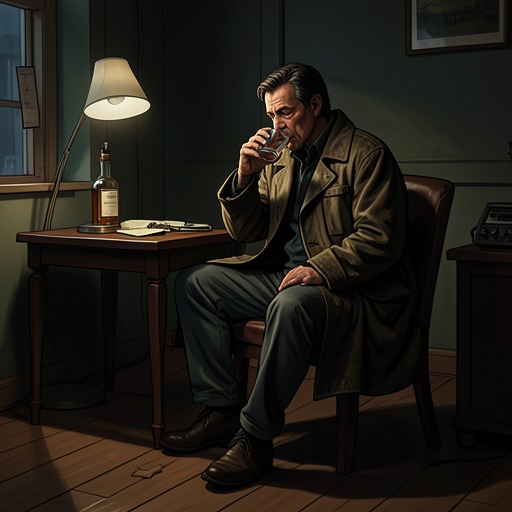
DevdasDevdas Mukherjee’s terminal liver disease makes the cost of his self-destructive drinking physically undeniable, while driving the final separation that defines his story. First suggested by recurring abdominal pain and then identified by a doctor as a potentially fatal illness, it progressively limits Devdas’s ability to travel, speak, and accept care. The disease ends not in recovery or reconciliation but in his death before he can meet Parvati Chakravarty.
Signs of Illness and Diagnosis
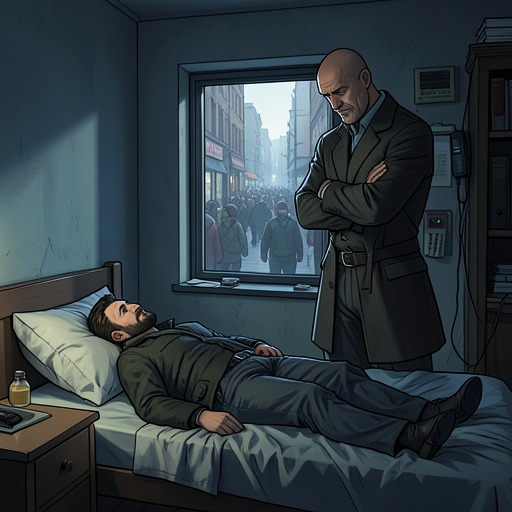
The illness becomes explicit when Chandramukhi notices that Devdas has tied flannel around his stomach. He explains that he sometimes has an ache there, treating the symptom lightly; she responds with alarm and wonders whether his liver is infected. His casual manner does not settle the question. A doctor examines him at length that same day, is seriously concerned, prescribes medicine, and stresses that he will need the utmost care to avoid a fatal outcome. Devdas and Chandramukhi both understand the gravity of the warning. The scene marks a change from illness as something privately endured to a danger recognized by others and requiring attention.
News is sent to his family, and Dharmadas arrives. Money is drawn from the bank for treatment, and the next two days pass without incident. On the third day, however, Devdas develops a fever. The short interval between the doctor’s warning and this new symptom gives the prognosis immediate force: the threat is no longer hypothetical, even though the text does not describe a sustained course of treatment or any improvement. Devdas tells Chandramukhi that she came at the right moment, acknowledging how close he may have been to dying without seeing her again.
Recurrence and Decline
The illness is not confined to that first crisis. Devdas’s drinking pattern makes his absences part of the danger surrounding his declining health: he usually drinks away from home, returns late, and sometimes does not come back at all. After two days with no sign of him, Dharmadas is so distressed that he refuses food and drink. Devdas returns on the third day with a high fever and cannot get up. Several doctors attend him. When Dharmadas proposes writing to Devdas’s mother in Varanasi, Devdas hastily objects, saying he cannot face her in his present condition. His illness has therefore become both a physical emergency and a source of shame that distances him from family support.
Later, the narration states directly that his liver is badly infected. He is weakened by recurring fever and coughing, and his body has become severely emaciated. His sunken eyes, rough, thinned hair, and sores on his fingers make the deterioration visible without suggesting that the earlier medical intervention reversed it. The changes matter to the plot as well as to the description: Devdas’s capacity to choose a destination or complete a journey narrows as his body fails. At a station, when Dharmadas asks where to buy tickets, Devdas first decides that they should go home and postpone any further decision. Even this limited plan places immediate shelter ahead of a larger destination.
The Final Journey and Death
Devdas’s condition worsens during his last journey. At midday he declines food but asks for water, which the coachman fetches from a wayside pond. By evening Devdas has a fever, struggles to breathe, and experiences bleeding from his nose and gums. He asks how much farther remains; the coachman estimates two miles and says they should arrive around ten that night. The exchange reduces the journey to a measure of distance and remaining time, while showing how little strength Devdas has left to endure it.
At the destination, the coachman lays hay on the stone platform around a peepul tree and helps Devdas from the cart. No one is outside; the zamindar’s household is asleep. Devdas manages to hand the coachman a hundred-rupee note but cannot speak. At dawn, household members find him there, and Bhuvan Babu summons a doctor and comes in person. Devdas looks at the people around him, but his voice is gone; tears are the only response the narration records. Someone gives him a drop of water, and he dies after a few more labored breaths. The doctor identifies the moment as imminent, but care arrives too late to change the outcome.
Diagnosis, Social Response, and Significance
After Devdas dies, uncertainty over who may touch or cremate him turns his body into the focus of disputes about caste and responsibility. Bhuvan Babu sends for the police. The inspector records cirrhosis of the liver as the cause of death and finds two letters in Devdas’s pocket: one from Dwijodas Mukherjee saying that no more money can be sent, and another from Harimati Devi inquiring after him. These details identify the dead man and place his isolation beside traces of family connection. A tattoo of the first letter of his name on his wrist provides a further means of identification when he can no longer speak for himself.
The novel’s treatment of the disease joins bodily decline to a larger pattern of failed connection, but it does not make illness a substitute for the relationships that the ending leaves unresolved. Devdas’s last journey is an attempt to see Parvati Chakravarty once more; his arrival while unconscious and his death before they meet make the medical crisis the immediate condition of a final missed encounter. The closing appeal asks readers to pity Devdas and imagines the care absent from his death: a loving touch, a caring face, and someone to remember him. His cirrhosis is thus not merely a diagnosis attached to the ending. It gives concrete form to the novel’s concern with a lonely, uncared-for death, while the surviving traces of family and the crowd gathered around him expose the difference between being observed and being truly accompanied.