When Devdas and Parvati are about eight
The Lime-Stack Escape
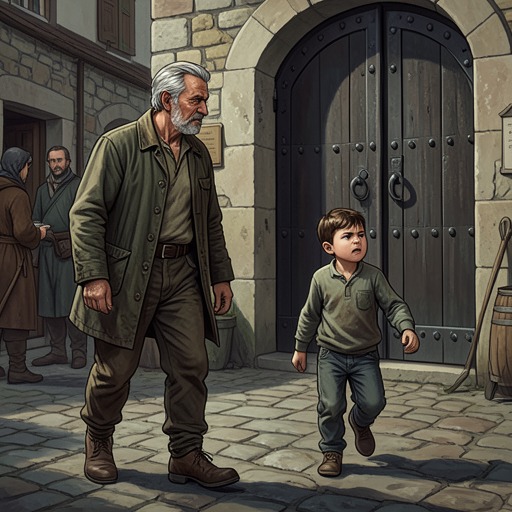
On a scorching afternoon, [Devdas Mukherjee](entity:character-recall-character-devdas-mukherjee-dee5c3efb30c) feigns difficulty with arithmetic to draw the class monitor, Bhulo, close. He shoves Bhulo into a stack of lime and escapes while [Parvati Chakravarty](entity:character-recall-character-937a77318c20) laughs at the chaos and the teacher wakes to find the schoolroom in uproar.
The incident establishes the children’s unruly intimacy and Devdas Mukherjee’s gift for evading consequences. When the teacher threatens to complain to [Narayan Mukherjee](entity:character-recall-character-5419b54dee11), Parvati Chakravarty learns that Devdas Mukherjee may not be allowed back to school.
Later that same afternoon
Food in the Bamboo Grove
On her way home, [Parvati Chakravarty](entity:character-recall-character-937a77318c20) tells [Dharmadas](entity:character-recall-character-36497ead0778) that [Devdas Mukherjee](entity:character-recall-character-devdas-mukherjee-dee5c3efb30c) has run away but refuses to reveal his hiding place. She insists on taking him food herself, knowing he is likely hungry and may be afraid to return home.
She finds him smoking a hookah in a bamboo clump and brings him puffed rice. Devdas Mukherjee demands water, then strikes her when she refuses to fetch it; Parvati Chakravarty, angry and hurt, tells [Narayan Mukherjee](entity:character-recall-character-5419b54dee11) about the hidden hookah.
The following day
Parvati Leaves School
[Devdas Mukherjee](entity:character-recall-character-devdas-mukherjee-dee5c3efb30c) is locked up and punished for his mischief. The next day, after he accuses [Parvati Chakravarty](entity:character-recall-character-937a77318c20) of revealing his smoking, the two quarrel again while cutting fishing rods; he beats her with a stick after she accidentally lets go of a bamboo branch.
Parvati Chakravarty tells her family that the schoolmaster beat her rather than expose Devdas Mukherjee. Her grandmother uses the bruises to keep her from returning to school, and Devdas Mukherjee is delighted when he learns Parvati Chakravarty will be his companion again.
The months after Parvati leaves school
Childhood Days Together
Freed from school, [Devdas Mukherjee](entity:character-recall-character-devdas-mukherjee-dee5c3efb30c) and [Parvati Chakravarty](entity:character-recall-character-937a77318c20) spend their days roaming fields, fishing, and getting into trouble. Their closeness becomes the center of both their lives, though their affection is expressed through teasing, quarrels, and physical roughness.
When Parvati Chakravarty gives away three rupees entrusted to her by Devdas Mukherjee to three Vaishnavi singers, he scolds her for not dividing the money differently but ultimately accepts her reasoning. Their easy childhood bond appears unbreakable, even as their differences in judgment begin to show.
About a year after the childhood games begin
Devdas Sent to Calcutta
Concerned that [Devdas Mukherjee](entity:character-recall-character-devdas-mukherjee-dee5c3efb30c) is growing up without an education, his parents decide to send him to [Calcutta](entity:location-recall-location-calcutta-db42bfe5a389) to study with his maternal uncle. [Parvati Chakravarty](entity:character-recall-character-937a77318c20) is distressed and makes him promise not to go, but his father eventually sends him away with [Dharmadas](entity:character-recall-character-36497ead0778).
Devdas Mukherjee leaves reluctantly, while Parvati Chakravarty weeps and waits for his return. His letters initially brighten her days, but their correspondence dwindles as he becomes absorbed in his life away from the village.
Four years after Devdas Mukherjee leaves
The Changed Young Man
[Devdas Mukherjee](entity:character-recall-character-devdas-mukherjee-dee5c3efb30c) returns to the village during a summer holiday looking and behaving like a city-bred young man. Foreign clothes, a walking stick, hunting, and new interests have replaced much of the rustic boyhood he shared with [Parvati Chakravarty](entity:character-recall-character-937a77318c20).
When he visits her, Parvati Chakravarty greets him with a respectful touch of his feet. The formality leaves both of them shy, and Devdas Mukherjee soon goes away without a real conversation, revealing how separation has begun to alter their relationship.
When Parvati Chakravarty is about thirteen
Marriage Becomes Urgent
[Parvati Chakravarty](entity:character-recall-character-937a77318c20)’s family recognizes that she has grown into a young woman and begins discussing marriage. Her father, [Nilkantha Chakravarty](entity:character-recall-character-b2510167e377), refuses to profit from the customary bride-price, but her mother still hopes that she might marry [Devdas Mukherjee](entity:character-recall-character-devdas-mukherjee-dee5c3efb30c).
Parvati Chakravarty’s grandmother hints at the match to Devdas Mukherjee’s mother. The proposal is rejected because the Chakravartys are a trading family of lower status and live next door, exposing how family rank and respectability govern the marriage decision.
Soon after the proposed match is rejected
Parvati Claims Devdas
When [Manorama](entity:character-recall-character-bb9bc7ab7aac) asks what [Parvati Chakravarty](entity:character-recall-character-937a77318c20) will do about her impending marriage, Parvati Chakravarty speaks as if [Devdas Mukherjee](entity:character-recall-character-devdas-mukherjee-dee5c3efb30c) is already her husband. She explains that she intends to ask him herself whether he will marry her.
Manorama is astonished by Parvati Chakravarty’s resolve to approach a man directly. Parvati Chakravarty sees their childhood bond as a claim strong enough to overcome embarrassment, and even says she would accept humiliation rather than let fear stop her.
A few nights before Parvati Chakravarty’s marriage is arranged
The Midnight Plea
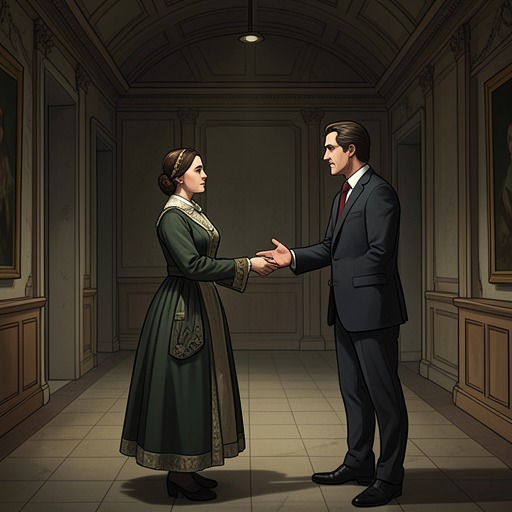
Wrapped in bedsheets, [Parvati Chakravarty](entity:character-recall-character-937a77318c20) slips into the Mukherjee house at night and sits at [Devdas Mukherjee](entity:character-recall-character-devdas-mukherjee-dee5c3efb30c)’s feet. She tells him she has come alone and is willing to bear the shame because she believes he will protect her.
Parvati Chakravarty begs to remain with him, but Devdas Mukherjee hesitates before the opposition of his parents and asks where they would live. Though he finally walks her home, his uncertainty leaves the future of their relationship unresolved.
The morning after the midnight visit
Devdas Leaves for Calcutta
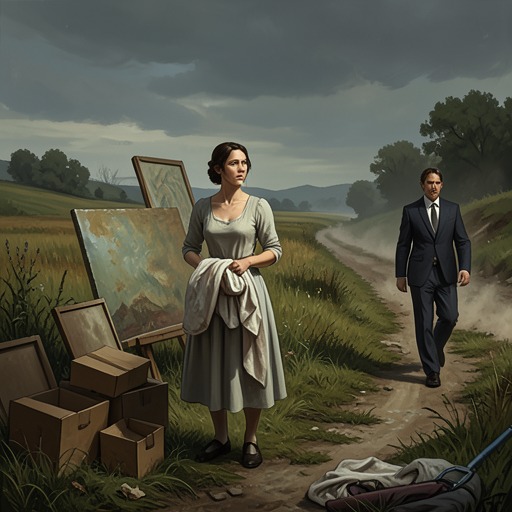
[Devdas Mukherjee](entity:character-recall-character-devdas-mukherjee-dee5c3efb30c) speaks with his father, who refuses to take part in a marriage against his wishes. Rather than press the matter, Devdas Mukherjee packs his belongings and leaves for [Calcutta](entity:location-recall-location-calcutta-db42bfe5a389) the same day.
[Parvati Chakravarty](entity:character-recall-character-937a77318c20) keeps their nocturnal meeting secret and tries to believe that Devdas Mukherjee will return to claim her. His departure leaves her suspended between hope and fear, with no clear promise to rely on.
A few days after Devdas Mukherjee returns to Calcutta
The Rejection Letter
[Devdas Mukherjee](entity:character-recall-character-devdas-mukherjee-dee5c3efb30c) writes that his parents oppose the match and that he cannot wound them by disobeying. He also invokes [Parvati Chakravarty](entity:character-recall-character-937a77318c20)’s family status and admits that he cannot feel the deep sorrow he thinks love should bring.
After posting the letter, Devdas Mukherjee is shaken by the thought of the pain it may cause. He worries that Parvati Chakravarty might harm herself and begins to recognize that his decision may have been driven by weakness rather than certainty.
The night after Devdas Mukherjee posts the letter
Chunilal’s Invitation
In his [Calcutta](entity:location-recall-location-calcutta-db42bfe5a389) lodging, [Devdas Mukherjee](entity:character-recall-character-devdas-mukherjee-dee5c3efb30c) talks with his neighbor [Chunilal](entity:character-recall-character-f9d16d1dbc5a), who describes the late-night world he visits. Devdas Mukherjee asks whether that world can banish sadness and agrees to go with him.
The next evening, Devdas Mukherjee begins packing as though he means to leave Calcutta for good. He gives Chunilal money to settle his debts and says that study and success have cost him something precious, though he does not yet explain what he has lost.
The following morning
Return to Talshonapur
[Devdas Mukherjee](entity:character-recall-character-devdas-mukherjee-dee5c3efb30c) returns home without telling his family why he has abandoned his studies. He spends several restless days there, unable to find a private moment with [Parvati Chakravarty](entity:character-recall-character-937a77318c20).
When Parvati Chakravarty’s mother invites him to remain for the wedding, Devdas Mukherjee agrees. At the riverbank he finally summons Parvati Chakravarty, but his hesitation and her guarded silence make clear that the old childhood ease has vanished.
Days before Parvati Chakravarty’s wedding
The Wound at the River
[Devdas Mukherjee](entity:character-recall-character-devdas-mukherjee-dee5c3efb30c) tells [Parvati Chakravarty](entity:character-recall-character-937a77318c20) that he has returned and intends to secure his parents’ consent. Parvati Chakravarty rejects his assumption that her own parents have agreed, and accuses him of being reckless and capable of dishonoring her.
Wounded by her distrust and furious at the suggestion that he would expose her secret visit, Devdas Mukherjee strikes her brow with a fishing rod. He binds the cut with strips from his shirt and says the scar will remain as a mark of their last meeting; Parvati Chakravarty hides the truth from her family.
About ten days after the riverbank encounter
Parvati’s Marriage
[Parvati Chakravarty](entity:character-recall-character-937a77318c20) marries the wealthy, widowed [Bhuvan Chowdhury](entity:character-recall-character-406ce994c2ba), who is more than forty years old. At the ceremony she looks at him with a faint smile, while the village women’s amusement underscores the gulf between her youth and his age.
Before leaving for her husband’s household, Parvati Chakravarty tells [Manorama](entity:character-recall-character-bb9bc7ab7aac) that she has met her ruin and wishes to see [Devdas Mukherjee](entity:character-recall-character-devdas-mukherjee-dee5c3efb30c) once more. She departs knowing that the marriage has closed one path while her attachment to Devdas Mukherjee remains alive.
The night Parvati Chakravarty marries
A Night in Eden Gardens
In [Calcutta](entity:location-recall-location-calcutta-db42bfe5a389), [Devdas Mukherjee](entity:character-recall-character-devdas-mukherjee-dee5c3efb30c) spends the night alone on a bench in [Eden Gardens](entity:location-recall-location-eden-gardens-31472abcd5c1). He feels the loss of [Parvati Chakravarty](entity:character-recall-character-937a77318c20) as something irreversible, realizing that he can no longer regard her as a right that belongs to him.
After wandering for a day, hungry and exhausted, he reaches [Chunilal](entity:character-recall-character-f9d16d1dbc5a)’s lodging. Chunilal takes him in, feeds him, and lets him sleep, while Devdas Mukherjee remains unable to explain what has happened.
A few days after Parvati Chakravarty’s wedding
The First Visit to Chandramukhi
At [Chunilal](entity:character-recall-character-f9d16d1dbc5a)’s urging, [Devdas Mukherjee](entity:character-recall-character-devdas-mukherjee-dee5c3efb30c) visits [Chandramukhi](entity:character-recall-character-27cefa1af4b6)’s house in [Chitpore](entity:location-recall-location-chitpore-542b0d2b86ba). He is repelled by the place and insults her, then presses money into her hand and leaves without looking at the amount.
Chandramukhi is wounded by his genuine disgust but also intrigued by the man who refuses to conceal his contempt. She asks Chunilal to bring Devdas Mukherjee again, beginning a connection neither of them understands yet.
Soon after the first visit to Chandramukhi
Devdas Begins Drinking
[Devdas Mukherjee](entity:character-recall-character-devdas-mukherjee-dee5c3efb30c) returns to [Chandramukhi](entity:character-recall-character-27cefa1af4b6)’s house with [Chunilal](entity:character-recall-character-f9d16d1dbc5a) and begins drinking there. He says he drinks because he is at the house, insists that he hates Chandramukhi, and nevertheless keeps coming back to sit and speak with her.
His drinking becomes a means of intensifying rather than escaping his misery. Chandramukhi watches him deteriorate and tries to restrain him, while Devdas Mukherjee turns his rejection of intimacy into part of his self-destruction.
The first months of Parvati Chakravarty’s marriage
Parvati Takes Charge
At [Bhuvan Chowdhury](entity:character-recall-character-406ce994c2ba)’s mansion, [Parvati Chakravarty](entity:character-recall-character-937a77318c20) becomes mistress of a vast but lonely household. She welcomes her stepson [Mahendra](entity:character-recall-character-89d326931627) and learns that her stepdaughter [Yashoda](entity:character-recall-character-ea76c9b19a2a) is estranged from the family.
Parvati Chakravarty uses patience and generosity to bring Yashoda home, giving her own jewelry to her stepdaughter and easing her resentment. The episode shows Parvati Chakravarty’s ability to make a family through care, even as her own emotional life remains bound to [Devdas Mukherjee](entity:character-recall-character-devdas-mukherjee-dee5c3efb30c).
About five years into Parvati Chakravarty’s marriage
Parvati’s Charitable Household
[Parvati Chakravarty](entity:character-recall-character-937a77318c20) devotes herself to worship, care for the sick and elderly, and support for poor families. She also opens guest rooms for homeless people and quietly spends her personal allowance on those in need.
When her daughter-in-law [Jaladbala](entity:character-recall-character-ca0ebcc4dbaf) warns [Mahendra](entity:character-recall-character-89d326931627) that the household’s generosity threatens the family’s finances, Parvati Chakravarty accepts the criticism and curbs her spending. With fewer duties, she has more time to think about her old village and the past she left behind.
Two years after Parvati Chakravarty’s charitable life becomes established
Manorama’s Letter
A letter from [Manorama](entity:character-recall-character-bb9bc7ab7aac) reports that [Devdas Mukherjee](entity:character-recall-character-devdas-mukherjee-dee5c3efb30c) has become gaunt and dissolute, drinks, consorts with courtesans, and visits his family only to obtain money. Manorama describes seeing him by the river and fearing his appearance, while admitting that she feels pity for him.
[Parvati Chakravarty](entity:character-recall-character-937a77318c20) is shaken by the news. She summons two palanquins and takes her stepson [Mahendra](entity:character-recall-character-89d326931627) with her, saying that she intends to return to [Talshonapur](entity:location-recall-location-talshonapur-ea97f5343e41) and bring Devdas Mukherjee home because no one is caring for him.
The evening after receiving Manorama’s letter
Parvati Returns to Talshonapur
[Parvati Chakravarty](entity:character-recall-character-937a77318c20) reaches [Talshonapur](entity:location-recall-location-talshonapur-ea97f5343e41) after dusk, but [Devdas Mukherjee](entity:character-recall-character-devdas-mukherjee-dee5c3efb30c) has already left for [Calcutta](entity:location-recall-location-calcutta-db42bfe5a389). She tells [Manorama](entity:character-recall-character-bb9bc7ab7aac) that she did not come merely to see him; she came to take him home, because she believes she has a claim to him.
The next morning she visits her parents and returns to [Hatipota](entity:location-recall-location-hatipota-fdeb251d7449) without finding Devdas Mukherjee. Her attempt to act on the promise between them fails because his restless life has once again placed him beyond her reach.
After two years in Ashathjhuri and months without a reply
Chandramukhi Seeks News
[Chandramukhi](entity:character-recall-character-27cefa1af4b6)’s letters to [Devdas Mukherjee](entity:character-recall-character-devdas-mukherjee-dee5c3efb30c) go unanswered, and registered letters return undelivered. She learns from a villager that Devdas Mukherjee’s family estate lies near [Talshonapur](entity:location-recall-location-talshonapur-ea97f5343e41) and decides to seek news there.
At the mansion, she persuades [Dwijodas](entity:character-recall-character-2c95c6ec1cef)’s wife to remit a small tax debt. In conversation she hears that Devdas Mukherjee has borrowed heavily, is gravely ill, and appears to be living wherever he can find shelter in [Calcutta](entity:location-recall-location-calcutta-db42bfe5a389). Chandramukhi immediately resolves to find him.
The weeks after Chandramukhi returns to Calcutta
The Vigil in Calcutta
[Chandramukhi](entity:character-recall-character-27cefa1af4b6) returns to [Calcutta](entity:location-recall-location-calcutta-db42bfe5a389) and arranges a furnished room, colorful clothes, and imitation jewelry. She presents herself once more as a courtesan, hoping that [Devdas Mukherjee](entity:character-recall-character-devdas-mukherjee-dee5c3efb30c) might recognize the familiar kind of place and find his way to her.
She sits by the window, questions old acquaintances, and searches the streets at night, but no one knows where he is. After a month and a half of waiting, she finds him lying drunk by a roadside, singing and unable to stand without support.
The night she finds him in Calcutta
Chandramukhi Nurses Devdas
[Chandramukhi](entity:character-recall-character-27cefa1af4b6) brings the unconscious [Devdas Mukherjee](entity:character-recall-character-devdas-mukherjee-dee5c3efb30c) to her room and cares for him through the night. When he wakes, he does not remember how he arrived, but recognizes the tenderness of the person who brought him there.
She calls a doctor after noticing his pain and weakness. Devdas Mukherjee develops a fever and spends nearly a month bedridden; Chandramukhi tends to him and prays that he will recover.
After Devdas Mukherjee begins recovering
The Name Bou
As he improves, [Devdas Mukherjee](entity:character-recall-character-devdas-mukherjee-dee5c3efb30c) tells [Chandramukhi](entity:character-recall-character-27cefa1af4b6) that he will call her [Bou](entity:character-recall-character-882e329b7b03), meaning wife. When she asks why, he refuses to explain, but the intimate name acknowledges a closeness he has long denied.
He asks what he means to her, and Chandramukhi answers that he is everything to her. Devdas Mukherjee says he loves her, yet fears that she too will suffer as [Parvati Chakravarty](entity:character-recall-character-937a77318c20) did; he recognizes the likeness between the two women despite their different social positions and temperaments.
A few months after his recovery
Devdas Leaves Chandramukhi
Although [Chandramukhi](entity:character-recall-character-27cefa1af4b6) begs to travel with him as his attendant, [Devdas Mukherjee](entity:character-recall-character-devdas-mukherjee-dee5c3efb30c) refuses because he cannot bear the public shame of taking her openly. He gives her two thousand rupees and promises to send for her if he becomes ill.
Chandramukhi accepts that she may nurse him and love him but cannot receive respectable recognition as his companion. Devdas Mukherjee leaves with [Dharmadas](entity:character-recall-character-36497ead0778), while Chandramukhi asks only to be remembered and to see him again.
During Devdas Mukherjee’s stay in Allahabad
Two Women in His Thoughts
In [Allahabad](entity:location-recall-location-cd1c86db30a0), [Devdas Mukherjee](entity:character-recall-character-devdas-mukherjee-dee5c3efb30c) writes to [Chandramukhi](entity:character-recall-character-27cefa1af4b6) that he had resolved never to love again because love brings pain and loving again would be folly. Yet as the days pass, he wishes she were beside him and then worries about what [Parvati Chakravarty](entity:character-recall-character-937a77318c20) might think.
Parvati Chakravarty and Chandramukhi begin to occupy his thoughts together, sometimes appearing side by side in his imagination. His feelings for them remain divided between longing, guilt, and fear, and neither woman can be reached through the life he has chosen.
After Devdas Mukherjee leaves Allahabad
Chunilal Reappears in Lahore
[Devdas Mukherjee](entity:character-recall-character-devdas-mukherjee-dee5c3efb30c) travels to [Lahore](entity:location-recall-location-lahore-1140992b38f2), where he encounters [Chunilal](entity:character-recall-character-f9d16d1dbc5a) again. In Chunilal’s company he tastes liquor after a period without drinking, despite remembering [Chandramukhi](entity:character-recall-character-27cefa1af4b6)’s plea that he stop.
His health continues to worsen: the climate does not suit him, his stomach aches, and he often falls ill. When he disappears for two days and returns with a high fever, [Dharmadas](entity:character-recall-character-36497ead0778) urges him to seek help and go to [Varanasi](entity:location-recall-location-varanasi-e00828223a49) to see his mother.
After Devdas Mukherjee’s fever in Lahore
Illness and the Road Home
[Devdas Mukherjee](entity:character-recall-character-devdas-mukherjee-dee5c3efb30c) refuses to let [Dharmadas](entity:character-recall-character-36497ead0778) inform his mother, saying he cannot face her in his condition. Once he recovers enough to travel, he leaves [Lahore](entity:location-recall-location-lahore-1140992b38f2) with Dharmadas, returns to [Allahabad](entity:location-recall-location-cd1c86db30a0), and later decides to go to [Bombay](entity:location-recall-location-b98a733ce570) for a change of air.
A year passes before Devdas Mukherjee comes out of a Bombay hospital leaning on Dharmadas. He admits to himself that he has a mother, a brother, [Parvati Chakravarty](entity:character-recall-character-937a77318c20), and [Chandramukhi](entity:character-recall-character-27cefa1af4b6), yet no one truly has him; nevertheless, he refuses again to go to his mother in [Varanasi](entity:location-recall-location-varanasi-e00828223a49).
The August journey from Bombay toward home
The Train to Pandua
[Devdas Mukherjee](entity:character-recall-character-devdas-mukherjee-dee5c3efb30c) and [Dharmadas](entity:character-recall-character-36497ead0778) board a train intending to travel toward home, with Devdas Mukherjee’s health badly weakened by liver disease, fever, and coughing. As the fever rises during the journey, he fears that he will not live long enough to see his mother.
Near [Pandua](entity:location-recall-location-d06066bb3c4f), while Dharmadas sleeps, Devdas Mukherjee quietly leaves the train. He cannot bring himself to wake his faithful attendant and chooses instead to continue alone toward [Hatipota](entity:location-recall-location-hatipota-fdeb251d7449), determined to keep the promise he made to [Parvati Chakravarty](entity:character-recall-character-937a77318c20).
The night after Devdas Mukherjee leaves the train
The Final Journey to Hatipota
[Devdas Mukherjee](entity:character-recall-character-devdas-mukherjee-dee5c3efb30c) hires a bullock cart because the roads are too poor for a buggy and no palanquin is available. Feverish and weak, he urges the driver onward, offering a large tip because he believes he may not have another day to reach [Parvati Chakravarty](entity:character-recall-character-937a77318c20).
The journey crawls through rain-damaged roads. Devdas Mukherjee grows increasingly restless, asks repeatedly how much remains, and eventually loses consciousness before the cart reaches [Bhuvan Chowdhury](entity:character-recall-character-406ce994c2ba)’s house at midnight.
At midnight and dawn after the journey
Devdas Dies Beneath the Tree
The cart stops beneath a large tree outside [Bhuvan Chowdhury](entity:character-recall-character-406ce994c2ba)’s house. [Devdas Mukherjee](entity:character-recall-character-devdas-mukherjee-dee5c3efb30c) cannot speak or move, but manages to give the driver his hundred-rupee note; the driver lays him on a makeshift bed and stays beside him through the night.
At dawn the household finds Devdas Mukherjee dying. A doctor pronounces that his final moments have come, and Devdas Mukherjee dies without meeting [Parvati Chakravarty](entity:character-recall-character-937a77318c20). His last arrival fulfills the journey but not the reunion for which he endured it.
The morning of Devdas Mukherjee’s death
The Unclaimed Body
An inspector identifies the dead man through letters from his brother and mother, along with the initial tattooed on his wrist. The household recognizes that he is [Devdas Mukherjee](entity:character-recall-character-devdas-mukherjee-dee5c3efb30c), but arguments over caste and who may touch the corpse prevent the villagers from giving him a dignified funeral.
People of the lowest caste are summoned to cremate him, and the burning is carelessly done beside a neglected pond. The degradation of his body extends the novel’s account of social exclusion into death itself, even as onlookers lament his lonely fate.
The evening of Devdas Mukherjee’s death
Parvati Learns the Truth
At first [Parvati Chakravarty](entity:character-recall-character-937a77318c20) hears only that a stranger died beneath the tree and calls him unfortunate. When [Mahendra](entity:character-recall-character-89d326931627) tells her the dead man’s name and describes the letters, the tattoo, and the ring, she recognizes [Devdas Mukherjee](entity:character-recall-character-devdas-mukherjee-dee5c3efb30c).
Parvati Chakravarty rushes down the stairs, insisting that she must go to Devdas Mukherjee, but Mahendra tells her that the body has already been taken away. Her late attempt to reach him collapses into grief as [Bhuvan Chowdhury](entity:character-recall-character-406ce994c2ba) and the household restrain her.
The day after Devdas Mukherjee’s death
All Night Long
After fainting, [Parvati Chakravarty](entity:character-recall-character-937a77318c20) regains consciousness the next day but says nothing about what has happened. She asks a maid whether he came in the night and murmurs, “All night long,” recalling the arrival she had expected but never witnessed.
Her words leave the final meeting suspended between memory and loss. [Devdas Mukherjee](entity:character-recall-character-devdas-mukherjee-dee5c3efb30c) reached her house, but social circumstance, illness, and timing denied them even a last sight of one another.