One loving touch at the final moment
DevdasOne loving touch at the final moment is the novel’s closing expression of the care Devdas’s death lacks: not merely a witness to dying, but a tender farewell from someone who yearns for him. The appeal turns his lonely end into a measure of human compassion, asking readers to remember that even an unruly, self-destructive person should not die without kindness.
The expression and its context
At the end of the novel, the narrator reflects on the possibility of encountering someone like Devdas and asks that such a person be prayed for. The appeal culminates in an image of a touch on the brow, a caring face saying goodbye, and a tear shed in remembrance. These gestures make the expression concrete: care is physical presence at the final moment, while remembrance gives that presence meaning beyond death.
The plea follows a story in which Devdas’s love for Parvati remains unfulfilled. After rejecting her and later realizing that he loves her, he cannot undo the consequences; when her marriage is arranged elsewhere, he turns toward drinking and destitution. His final journey is an attempt to reach her once more, but he arrives unconscious and does not see her before he dies. The tenderness imagined at the close is therefore also the farewell the central relationship never achieves.
Witnesses, care, and absence
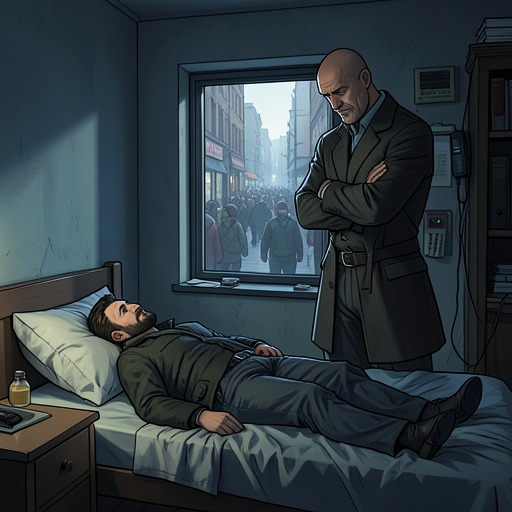
Devdas does not die entirely without human company. The coachman carries him from the cart and stays beside him through the night; by dawn, people from Bhuvan Chowdhury’s household have gathered, and a doctor is summoned. Devdas looks at those around him but has lost the ability to speak, and tears are his only response. The scene distinguishes practical assistance and public witnessing from the intimate, loving farewell invoked by the final appeal.
Parvati is not present when he dies. Chandramukhi, who loves Devdas, has been left alone as his health worsens and he departs from Calcutta. The people who gather can recognize his suffering, but the scene offers no reunion with either woman. His expensive shoes, shawl, and rings mark him as a gentleman, yet outward status cannot secure the personal attachment the ending says a dying person deserves.
Narrative significance
The appeal reshapes the reader’s judgment of Devdas without erasing his failures. Earlier, he wounds Parvati; later, his repeated inaction and destructive drinking deepen his isolation. Yet the closing narrator asks for pity rather than admiration, making compassion distinct from approval. Devdas’s suffering matters not because he is presented as a conventional hero, but because the novel insists that no one should be left to die without care.
This ending also gives a small gesture unusual weight. The novel’s early scenes between Devdas and Parvati are marked by the possibility of love and separation, while their last meeting is shadowed by the sound of a conch shell and a futile request to run away together. After Devdas’s death, Parvati’s brief, grief-stricken response cannot become a farewell exchanged between them. The final image of a loving touch supplies, for the reader, the tenderness their story withholds from him.