Dingo's Animal Attacks During His European Tour
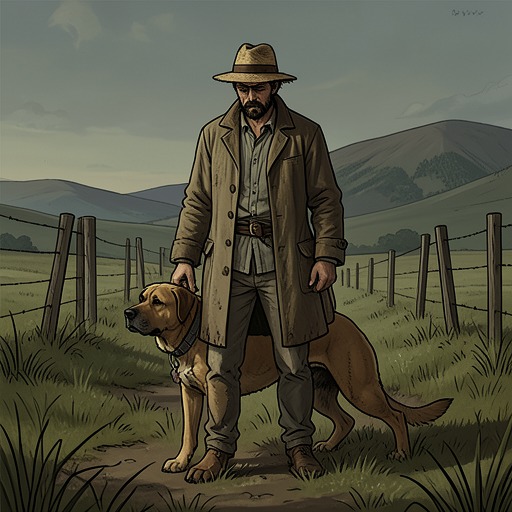
DingoDingo’s Animal Attacks During His European Tour is the turning point in an experiment meant to reconcile Dingo’s predatory instincts with human life. The narrator hopes that movement, novelty, and varied surroundings will ease Dingo’s violence and give his youth a better direction. Instead, travel reveals how readily Dingo can orient himself in unfamiliar cities—and how little urban settings can contain his drive to hunt. His repeated attacks cost the narrator money and public composure, and finally force him to abandon the tour to protect Dingo from capture and death.
Purpose and Early Promise
The journey begins after the narrator has reconsidered where responsibility lies for Dingo’s destructive behavior. He doubts that the dog alone is to blame: in Paris, he had left Dingo idle and neglected while attending to his own social life. Travel is therefore both an attempted remedy for Dingo’s restlessness and an acknowledgment of the narrator’s part in it. The narrator and Dingo set out through Suisse, Italie, and Allemagne, with the hope that incidents of the road and unfamiliar sights might temper Dingo’s instincts and shape his youth.
At first, Dingo seems to justify the plan. His appearance, composed manner, and gentleness with children attract attention wherever they go. The narrator receives visits from police officials, artists, scholars, showmen, photographers, and others; reporters seek interviews that sometimes appear in Paris newspapers. Their interest centers on Dingo, not the narrator or his books, yet the resulting publicity enhances the narrator’s reputation. The tour thus brings an unexpected social reward even as its deeper purpose remains uncertain: Dingo wins admiration as a spectacle before his hunting behavior again defines the journey.
A Dog Who Maps the City
Dingo’s conduct at hotels first suggests a way of being in cities that is alert rather than disruptive. While the narrator discusses a room with an innkeeper, Dingo slips away to explore. He begins slowly, pauses at major intersections to smell the air, and appears to memorize landmarks and routes. He then expands his circuits outward from the hotel, reaching toward the countryside before returning by a narrowing route. Within roughly two hours, he knows the city well enough to guide the narrator through it with the assurance of an experienced local.
This skill gives the narrator hope. He assumes that urban animals are rare and hidden, and that the distractions of a city will turn Dingo’s attention elsewhere. The assumption proves mistaken. Dingo’s capacity to navigate does not make him less a hunter; it makes him capable of moving confidently through new environments while following the same instincts. The apparent contrast between the quiet, observant city guide and the killer of animals is not a transformation but two aspects of the same alertness.
Attacks Across the Journey
The narrator declines to provide a complete catalogue, but recalls a succession of attacks, some startling and others marked by incongruous settings. In a dark lane near the castle at Nuremberg, Dingo kills two golden pheasants kept by an elderly shoemaker in his shop. In Francfort, he strangles a young gazelle in the back room of a secondhand dealer’s establishment. At Altona, he kills a kangaroo in a small restaurant. The places and animals vary, but the result is consistent: the journey’s ordinary stops become sites of sudden loss, and the narrator’s hope of keeping Dingo away from vulnerable animals repeatedly fails.
Other episodes widen the range of what Dingo attacks. He kills parrots in Dresde, two ospreys in Düsseldorf, and a boar in Munich. At Lucerne, a railway inspector tries to lead Dingo roughly to the dogs’ carriage; without the narrator’s forceful intervention, the man might have paid for that mistake with his life. This encounter exposes a further danger in the attempt to transport Dingo through human systems: people who treat him as an ordinary animal to be handled can provoke a violent response. The narrator’s intervention averts the immediate outcome, but does not make the journey safer.
The visit to the acclimatization garden in Cologne becomes the crisis that ends the tour. Dingo gets into an aviary full of pink flamingos and kills them; other rare birds escape and strike the wire mesh. The narrator presents this as one of the journey’s most devastating attacks, while also acknowledging that taking Dingo to the garden was his own foolish decision. The animals’ confinement and the narrator’s choice of destination form part of the circumstances, but Dingo’s actions produce consequences the narrator can no longer manage through hope alone.
Flight and Aftermath
After the Cologne disaster, the narrator offers to pay twice or three times the compensation demanded. Payment, however, cannot resolve the danger that Dingo will be sent to the pound and killed. To save him once more, the narrator flees that same evening, leaves the tour unfinished, and returns to Paris discouraged. The end of the journey is therefore not a successful cure or a settled reconciliation: it is a retreat under pressure, made to protect Dingo after the costs of traveling with him have become impossible to ignore.
The episodes also sharpen the narrator’s mixed understanding of Dingo. The dog’s independent route-finding and the narrator’s public acclaim offer moments of pleasure and pride; the attacks repeatedly overturn the expectation that novelty will redirect his instincts. By the time the narrator abandons the tour, the original hope of educating Dingo through travel has given way to a more immediate obligation: preventing his capture and death. The journey makes that obligation vivid without resolving the tension between Dingo’s freedom of movement and the dangers his predatory behavior poses to animals and people around him.