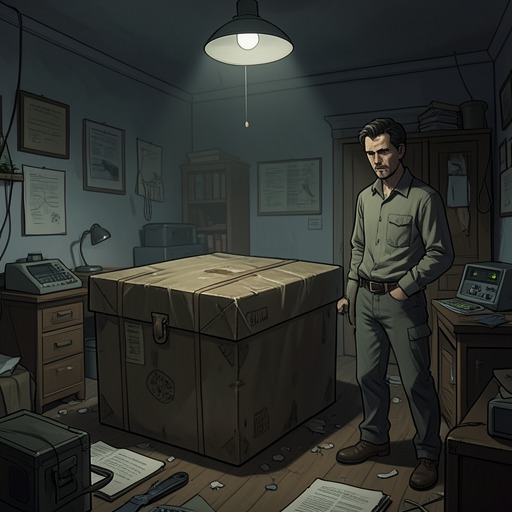
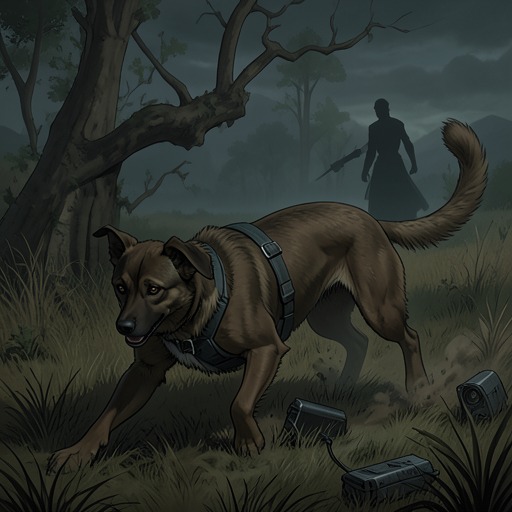
Tableau de chasse
DingoTableau de chasse is the idea of a hunting record or tally, but in the narrator’s account it becomes more than a count: Dingo’s hundred dead chickens are arranged in rows beneath the poultry shed, making the destruction itself impossible to overlook. The narrator links the discovery of the record’s origin to Dingo, or rather to Dingo’s mother, while the later scene at the chicken yard gives the phrase its bleakest force.
Meaning and Origin
The narrator introduces the origin of the Tableau de chasse as something discovered through Dingo—or, more precisely, through his mother. The evidence does not explain the discovery further, leaving the reference suggestive rather than fully accounted for. Its placement nevertheless ties the notion of a hunting tally to the animal history behind Dingo and to the predatory behavior that repeatedly unsettles the village.
The phrase usually suggests a record of what has been taken in a hunt. Here, the idea shifts from an abstract tally to a visible arrangement: the animals’ bodies themselves form a grim inventory. The change makes the record less a neutral accounting than a way of confronting the scale and order of animal killing.
Animals and the Village Setting
Dingo often watches the street from behind the narrator’s gate. Passing horses and cattle interest him, but sheep provoke a more intense response. When a flock moves through in close formation, with a shepherd ahead and dogs keeping it together, Dingo grows agitated behind the bars, making leaps and lunges as the flock passes. The scene sets his predatory excitement against the everyday movement of livestock through the village.
Dogs are part of the same crowded rural scene. The narrator describes a varied population of hunting dogs, working dogs, strays, and mixed breeds, while the strong, healthy Bas-Rouges are especially numerous. Their presence, along with the shepherd dogs controlling the sheep, places Dingo’s impulses among the animals and human practices that organize village life. The Tableau de chasse belongs to this shared environment of animals watched, driven, hunted, and killed.
The Chicken Yard Display
The meaning of the phrase becomes concrete after the narrator is shown the damaged poultry enclosure. One hundred chickens have been killed, and their bodies have been laid out methodically in rows according to size beneath the shed. The feed troughs, nesting boxes, and waterers have been displaced, and the enclosure is left in disarray. The ordered rows stand out against the disorder around them: the scene has the appearance of a deliberate inventory even though it records an act of destruction.
The narrator recognizes the tableau as Dingo’s work and understands that the damage has consequences beyond the immediate loss of the chickens. He foresees further trouble for Dingo, for the household, and for Ponteilles. In that moment, Tableau de chasse names both the display before him and the accumulating record of Dingo’s attacks; the phrase turns an episode of animal predation into a warning about what may follow.
Hunt, Habitat, and Contrast
The book also places animal pursuit against the possibility of animals living freely in their habitat. After Dingo becomes dispirited in Paris, the narrator rents a rustic house on the edge of Veneux-Nadon, with a garden opening directly onto the Forêt de Fontainebleau. Dingo becomes active and content there, and spends much of his time in the forest. This change of setting contrasts crowded streets and enclosed village spaces with a landscape in which he can run and range more freely.
A later recollection of deer and does feeding quietly in the forest sharpens the contrast between the animals as living creatures and as quarry. The narrator remembers watching them undisturbed the evening before a hunt, then thinks of the animal being pursued amid horns, dogs, riders, and arriving spectators. Against that scene, Tableau de chasse carries an unsettling double meaning: it can count the results of a hunt, but the narrative also restores the hunted animals to view as creatures whose lives precede that accounting.