Father Flynn's broken chalice
DublinersFather Flynn's broken chalice is the event Eliza identifies as the beginning of the mental decline that preceded the priest's death. Recalled in the family room after his funeral, the break turns a damaged sacred vessel into the hinge between a priest's unexplained nervousness and his later isolation and strange laughter in the chapel.
The Chalice and the Beginning of the Change
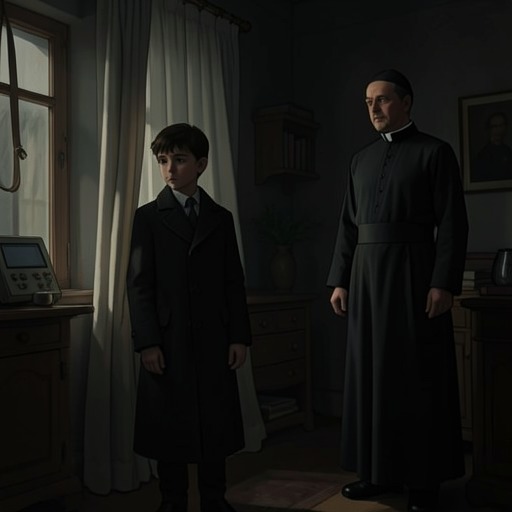
Eliza says that Father Flynn broke the chalice and that this was “the beginning of it.” She qualifies the account with what people said: the chalice contained nothing, and the boy was blamed. Yet the reassurance that it was empty does not settle the matter for her; her hesitant “But still....” preserves the break as a disturbing occurrence whose significance remains uncertain. She also remembers the priest as so nervous that she prays for mercy for him.
Withdrawal and Discovery in the Chapel
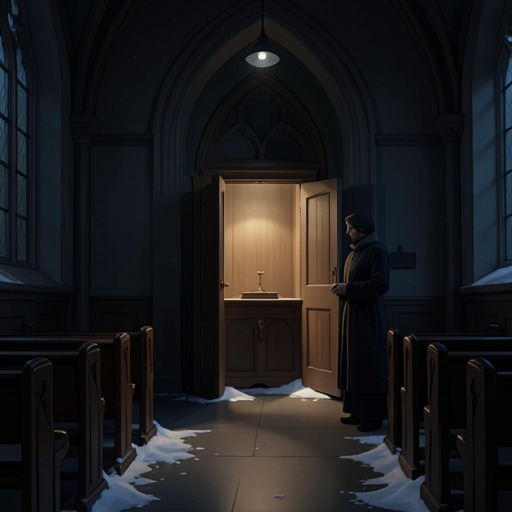
Eliza connects the incident to a change in Father Flynn's mind. Afterward, he moped alone, spoke to no one, and wandered by himself. One night, when he was needed to make a call, nobody could find him despite searching high and low. A clerk suggested looking in the chapel; the clerk, Father O'Rourke, and another priest took a light and opened it. They found Father Flynn awake in the dark, sitting by himself in his confession-box and laughing softly.
Recollection at the Funeral
The account is delivered as remembered family testimony, not as a witnessed explanation of what happened inside Father Flynn's mind. Eliza reports both the public explanations for the broken vessel and the later search, but offers no definitive cause for his behavior. The boy's supposed fault, the chalice's emptiness, and Eliza's association between the break and the priest's decline remain in tension.
The recollection also sits against the physical scene of the funeral: after Eliza describes finding him in the dark, the boy listens to the silent house and knows that Father Flynn lies still in his coffin, with an idle chalice on his breast. The object thus returns in altered form, from the broken vessel said to precede the priest's decline to the chalice placed beside his dead body. The narrative makes the connection vivid without resolving whether the break caused his mental change or what the laughing meant.