just before the opening
Father Flynn's Final Stroke
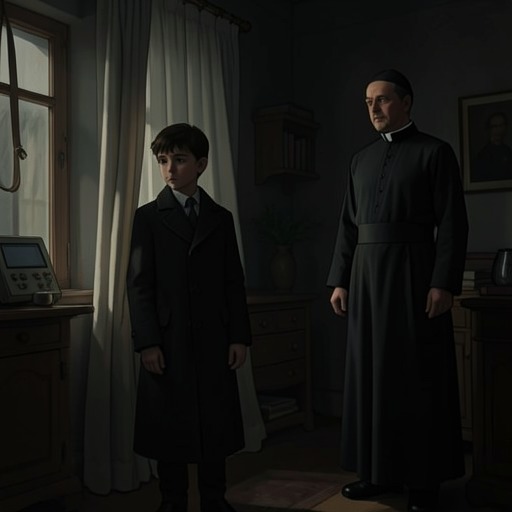
The boy learns that [Father James Flynn](entity:character-recall-character-father-james-flynn-659b47f5e128) has suffered a third stroke and is not expected to recover. Night after night, he watches the priest's window for the candles that would signal a death, while the word paralysis takes on a sinister, almost living force in his imagination.
The illness turns the boy's memories of his priestly mentor into a mixture of fascination, unease, and dread. His response is already divided: he fears what has happened to the priest yet feels drawn toward its mystery.
the evening before the funeral
Cotter's Warning
At supper, [Old Cotter](entity:character-recall-character-old-cotter-c1061e653e4c) hints that [Father James Flynn](entity:character-recall-character-father-james-flynn-659b47f5e128) was queer or uncanny and says that children should not spend too much time with a man like him. The boy resents being discussed as a child and silently condemns Cotter, while the adults try to draw out what he means.
Cotter's unfinished insinuations deepen the boy's unease without giving him a clear explanation. That night, the boy dreams of the dead priest's face murmuring as if it wants to confess, and wakes with the disturbing sense that his own soul has entered a forbidden region.
the morning after Father Flynn's death
The Death Notice
The boy visits the drapery shop in Great Britain Street and reads the notice announcing [Father James Flynn's death](entity:event-recall-event-father-james-flynn-s-de-9900fe18fe2e). He remembers bringing the priest snuff, emptying it into his box, and learning Latin, the ceremonies of the Mass, and difficult questions about sin and the Church.
Although he recognizes how much the priest taught him, the boy is surprised to feel free, even relieved. The mixed response keeps the relationship unresolved and makes the priest's death feel less like a simple bereavement than the lifting of an obscure burden.
the evening after the death notice
The Wake
The boy accompanies his aunt to the house of mourning, where [Nannie Flynn](entity:character-recall-character-nannie-flynn-5a10bfaffec3) leads them upstairs to the room containing the coffin. He kneels with the women but struggles to pray, distracted by Nannie's worn clothes and by the priest's solemn, grey face, his hands resting around an idle chalice.
Downstairs, [Eliza Flynn](entity:character-recall-character-eliza-flynn-87f278616ab1) recounts the sisters' work arranging the body, Mass, flowers, burial, and insurance. Her practical account makes the rituals of death tangible, while the boy's silence and close observation keep him at the edge of the adults' understanding.
during Father Flynn's final illness
The Broken Chalice
In the wake, [Eliza Flynn](entity:character-recall-character-eliza-flynn-87f278616ab1) reveals that [Father James Flynn](entity:character-recall-character-father-james-flynn-659b47f5e128) once broke a chalice. Though others said it was empty and blamed the boy, the accident began the priest's decline: afterward, he grew withdrawn, spoke to no one, and wandered alone.
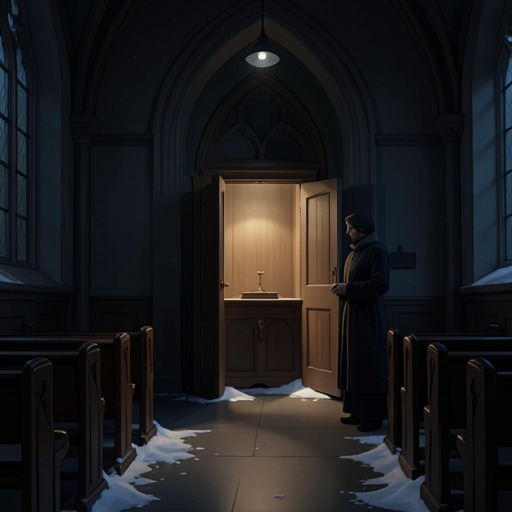
Eliza recalls that one night the priests searched for him and found him sitting awake in the dark confessional, laughing softly to himself. The unexplained scene joins a sacred object, a possible breach of priestly responsibility, and the priest's mental collapse, leaving both the boy and the visitors with more questions than answers.
during the narrator's boyhood
Wild West Games
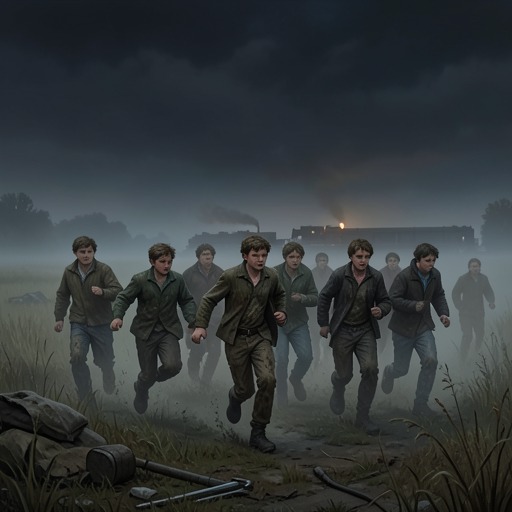
[Joe Dillon](entity:character-recall-character-joe-dillon-60f95a81c751) introduces a group of boys to Wild West stories and mock battles in his family's garden, where he plays the victorious Indian chief. The narrator joins reluctantly, more timid and bookish than the others, and prefers American detective stories to the rough play.
When Father Butler catches Leo Dillon reading [The Halfpenny Marvel](entity:object-recall-object-the-halfpenny-marvel-1f12b28cd4f4) instead of studying Roman history, he condemns the adventure paper as rubbish. The narrator's appetite for escape survives the rebuke, but the episode establishes the tension between respectable discipline and the imagined freedom of adventure.
near the end of the school year
The Truant Plan
Growing weary of school and home, the narrator decides that real adventures must be sought abroad. He, Leo Dillon, and [Mahony](entity:character-recall-character-mahony-157bc6099b0a) plan a day of truancy, pooling sixpence each and arranging to meet on the Canal Bridge before going toward the ships and the [Pigeon House](entity:location-recall-location-pigeon-house-2f06c9d8331f).
Leo fails to appear on the morning of the outing, forfeiting his money. The narrator and Mahony set off without him, and the abandoned plan begins as a small act of independence from the routines that had confined the boys.
the morning and midday of the truant outing
The Quayside Excursion
The narrator and [Mahony](entity:character-recall-character-mahony-157bc6099b0a) walk along the North Strand and Wharf Road, cross the Liffey by ferry, and watch a Norwegian sailing ship being unloaded. At the quays, the working ships and distant geography make the world beyond school seem suddenly concrete; the boys imagine running away to sea.
They wander through [Ringsend](entity:location-recall-location-ringsend-9ebcda92154f), eating biscuits and chocolate, but grow tired and abandon the trip to the [Pigeon House](entity:location-recall-location-pigeon-house-2f06c9d8331f). Their adventure has already begun to fade into fatigue when they lie on a bank overlooking the Dodder.
the afternoon of the truant outing
The Strange Man
An older, shabby man approaches the boys and talks about school, books, and his former sweethearts. His talk about girls becomes increasingly strange: he describes their hair and hands with obsessive relish, then leaves briefly while [Mahony](entity:character-recall-character-mahony-157bc6099b0a) notices his disturbing behavior.
When the man returns, he shifts to praising the whipping of rough boys and speaks with unusual intensity about punishing boys who have sweethearts. The narrator recognizes the danger in the man's fixation, pretends that he and Mahony have false names, and finally escapes, ashamed of his own frightened stratagem but relieved when Mahony runs to him.
during the narrator's adolescence
Mangan's Sister
The narrator becomes captivated by Mangan's sister, watching for her from a window and following her to school. Although he has barely spoken to her, her name and gestures occupy his thoughts, and ordinary city errands take on the coloring of a private religious devotion.
He imagines himself carrying his love through the noisy streets like a chalice through a crowd of enemies. The intensity is inward rather than mutual: the girl has not been told of his feelings, and his romantic ideal is built chiefly from observation and fantasy.
one evening before the bazaar
The Promise at the Railings
Mangan's sister asks the narrator whether he is going to the [Araby bazaar](entity:location-recall-location-araby-bazaar-c88333b4a57a) and says that she would love to go herself, but a convent retreat prevents her from attending. He promises to bring her something, and she turns a silver bracelet as they speak beneath the streetlamp.
Her casual request becomes a grand mission in the narrator's imagination. The word Araby casts an Eastern enchantment over the days that follow, and the boy treats the promised gift as proof of a love he has never openly declared.
the Saturday of the bazaar
The Delayed Fare
The narrator reminds his uncle that he wants to go to the bazaar, but his uncle forgets and returns late. The boy waits through a delayed dinner and growing frustration until his aunt presses the uncle to give him the money.
At last he leaves with a florin and takes the special train toward the bazaar. The delay has already narrowed the time for his romantic errand, making his journey depend on the adults whose indifference has repeatedly obstructed it.
late on the night of the bazaar
The Empty Bazaar
The narrator reaches the [Araby bazaar](entity:location-recall-location-araby-bazaar-c88333b4a57a) shortly before closing and finds much of the hall dark, with most stalls shut. At one open stall, a young woman talks flirtatiously with two young men and addresses him in a tone that makes clear he is not a valued customer.
He leaves without buying the promised gift. Looking into the darkness, he sees himself as a creature driven and derided by vanity; his imagined quest has collapsed into the ordinary facts of lateness, money, and indifference.
during Eveline's final evening at home
The Promise to Stay
Eveline sits by the window reviewing the home she has known all her life and the work that has shaped it. She remembers her mother's death, her brothers' departures, her father's threats, and the exhausting struggle to keep the household supplied and the younger children cared for.
Although a new life with [Frank](entity:character-recall-character-frank-aae9eaa69e27) in [Buenos Aires](entity:location-recall-location-buenos-aires-f4be140f43ae) promises marriage, respect, and escape, her familiar life also retains moments of affection and safety. The remembered promise to her mother to keep the home together presses against her desire to leave, making departure a conflict between fear, duty, and hope.
that night at North Wall
The Failed Escape
At [North Wall](entity:location-recall-location-north-wall-35af0e2e0b9f), Eveline stands with [Frank](entity:character-recall-character-frank-aae9eaa69e27) amid the crowd preparing to board the boat for [Buenos Aires](entity:location-recall-location-buenos-aires-f4be140f43ae). As he urges her to come, she prays for direction and imagines the sea as a force that will drown her; her hands tighten around the iron railing.
Frank passes beyond the barrier and calls to her, but Eveline does not follow. Her face remains passive and gives him no sign of love or farewell, and the escape she had imagined ends in paralysis at the point of departure.
the afternoon of the motor race
The Race Through Dublin
[Jimmy Doyle](entity:character-recall-character-jimmy-doyle-0059c89eeab7) rides into [Dublin](entity:location-recall-location-dublin-d76fcbad2c3f) with [Charles Ségouin](entity:character-recall-character-charles-s-gouin-f1242ba4538b), [André Rivière](entity:character-recall-character-andr-rivi-re-edcd72654dbd), and [Villona](entity:character-recall-character-villona-3ead8a182c06) after a motor race. The French cars have triumphed, and Jimmy thrills at the speed, the attention, and the company of wealthy Europeans, while imagining the Irish money he has invested in Ségouin's proposed motor business.
His excitement is shaped by social ambition and by the effort to translate wealth into status. Though he senses the seriousness of risking much of his money, the glamour of the car and his friends' apparent confidence drown out caution.
the evening after the race
The Foreign Dinner
Jimmy joins Ségouin, Rivière, [Villona](entity:character-recall-character-villona-3ead8a182c06), and the Englishman [Routh](entity:character-recall-character-routh-e333b96b90f8) for an elaborate dinner. Their talk moves from music and engineering to politics, and Jimmy tries to keep up with the quick conversation while basking in the sense that he has entered a cosmopolitan circle.
The dinner's performance of sophistication strengthens his belief that he belongs among these men. The gathering is less a meeting of equals than a display of cultural and financial power in which Jimmy's Irish money and eagerness are quietly on show.
late that night
The Yacht Celebration
The party grows when they meet the American [Farley](entity:character-recall-character-farley-6ac29bea4530) and travel to his yacht in [Kingstown](entity:location-recall-location-kingstown-5408854a53b4). [Villona](entity:character-recall-character-villona-3ead8a182c06) plays the piano, the men dance, drink to their countries, and Jimmy delivers a speech that receives enthusiastic applause.
The revelry gives Jimmy a vivid sense of having seen life, but the evening's warmth and theatrical camaraderie conceal the financial reckoning approaching at the card table. He is a guest in a world whose risks he does not fully understand.
the early hours after the yacht party
The Card-Game Loss
The men begin a high-stakes card game while [Villona](entity:character-recall-character-villona-3ead8a182c06) plays quietly at the piano. Jimmy mistakes cards and struggles to follow the account of what he owes; the decisive final game goes between [Routh](entity:character-recall-character-routh-e333b96b90f8) and Ségouin, and Routh wins.
Jimmy is among the heaviest losers, along with [Farley](entity:character-recall-character-farley-6ac29bea4530). As the party reaches daybreak, Jimmy leans over the table, already knowing he will regret the loss, and welcomes the approaching stupor that might cover his folly.
one Sunday evening
Corley's Scheme
[Corley](entity:character-recall-character-corley-0d160ece9b6e) tells [Lenehan](entity:character-recall-character-lenehan-92709c2828fc) how he has cultivated a young servant, pretending to have a job and presenting himself as a man of class. She has paid for their outings and supplied him with cigarettes and cigars, while he has made little commitment and concealed his real name.
Lenehan is both impressed and uneasy, asking whether Corley can bring off his plan. Their conversation exposes a relationship founded on manipulation and financial extraction, while Lenehan's dependence on Corley's company hints at his own precarious life.
later that Sunday evening
The Servant's Meeting
[Corley](entity:character-recall-character-corley-0d160ece9b6e) meets the young servant near Hume Street while [Lenehan](entity:character-recall-character-lenehan-92709c2828fc) watches from a distance. Corley walks with her through the city and eventually accompanies her to a house, leaving Lenehan to spend the intervening hours alone, hungry and short of money.
Lenehan eats peas and ginger beer at a refreshment bar and thinks about his aimless life, his age, and his wish for a secure home. His private disappointment contrasts with Corley's apparent success and makes the pair's unequal friendship more visible.
near half past ten that night
The Gold Coin
[Lenehan](entity:character-recall-character-lenehan-92709c2828fc) waits anxiously at the agreed corner and finally sees [Corley](entity:character-recall-character-corley-0d160ece9b6e) return from the house. Corley says nothing as they walk, leaving Lenehan unsure whether the plan succeeded.
At last Corley opens his hand to reveal a small gold coin. The silent display confirms that the servant has given him money, turning the evening's sexual pursuit into a transaction and completing the exploitative scheme Lenehan had been waiting to see.
before the main events of the story
The Mooney Household
After Mr Mooney's drinking and violence destroy their butcher's business, [Mrs Mooney](entity:character-recall-character-mrs-mooney-4d9f43513a8a) separates from him and establishes a boarding house. She governs the lodgers firmly, while her daughter Polly lives among the young male residents and attracts their attention.
Mrs Mooney watches the relationships in her house and judges that the young men are only passing time. When she sees Polly becoming involved with [Bob Doran](entity:character-recall-character-bob-doran-aa95ec228091), she waits for the moment when she can turn the situation to her advantage.
the night before the story's Sunday morning
The Affair Comes to Light
[Mrs Mooney](entity:character-recall-character-mrs-mooney-4d9f43513a8a) questions Polly about her involvement with [Bob Doran](entity:character-recall-character-bob-doran-aa95ec228091), and both speak frankly, though awkwardly. Doran, a middle-aged clerk, has been intimate with Polly and now fears the consequences: his confession has intensified his sense of sin, and he worries that scandal could cost him his job.
Mrs Mooney concludes that marriage is the only acceptable reparation for her daughter's lost honour. She summons Doran, confident that social pressure, his employer's expectations, and the threat of public exposure will force him to comply.
Sunday morning
Doran's Morning of Dread
[Bob Doran](entity:character-recall-character-bob-doran-aa95ec228091) tries and fails to shave steadily as he considers his options. He fears losing his position at the wine merchant's office and resents the prospect of marrying Polly, whom he judges socially beneath him, yet his conscience and fear of publicity leave him little room to resist.
Polly visits his room in distress, saying she has told her mother and asking what she should do. Doran comforts her weakly, then dresses and goes downstairs to face [Mrs Mooney](entity:character-recall-character-mrs-mooney-4d9f43513a8a), while [Jack Mooney](entity:character-recall-character-jack-mooney-657ef28be62a)'s presence on the stairs adds an unmistakable threat of force.
later that Sunday morning
Polly Awaits the Decision
After Doran leaves, Polly sits on the bed, dries her eyes, and looks into the mirror. Her distress gives way to reverie and hopeful visions of the future, as if the outcome of the encounter downstairs has already begun to settle into her imagination.
When her mother calls that Doran wants to speak with her, Polly remembers what she has been waiting for and runs to the banister. The story ends before the decision is disclosed, leaving the marriage crisis poised at its likely resolution rather than showing a wedding.
eight years after Gallaher left Dublin
Gallaher's Return
[Little Chandler](entity:character-recall-character-little-chandler-07496702c40b) looks forward to meeting [Ignatius Gallaher](entity:character-recall-character-ignatius-gallaher-4c2cf749bd81), now a successful journalist in [London](entity:location-recall-location-london-420923d4a60a). On his walk from the [King's Inns](entity:location-recall-location-king-s-inns-19f54233ef73), the prospect of his friend's worldly life encourages him to imagine that he might become a poet and escape the limits of [Dublin](entity:location-recall-location-dublin-d76fcbad2c3f).
He pictures reviews, a literary reputation, and a more distinguished version of his own name. The fantasies reveal how much he has invested in Gallaher's success as an alternative to his quiet, constrained existence.
that evening
The Reunion at Corless's
[Little Chandler](entity:character-recall-character-little-chandler-07496702c40b) meets Gallaher at [Corless's](entity:location-recall-location-corless-s-985d3b62c9d4), where Gallaher speaks confidently about the press, [London](entity:location-recall-location-london-420923d4a60a), [Paris](entity:location-recall-location-paris-c02b439ce220), and the continental life he has seen. Chandler listens with admiration but becomes unsettled by Gallaher's vulgar stories and his boast that he intends to marry money rather than settle for love.
Gallaher's apparent freedom sharpens Chandler's sense of what he has missed. Chandler invites him to spend an evening with [Annie](entity:character-recall-character-annie-a433aee3d6b7) and their child, but Gallaher declines, promising only a possible visit the following year.
later that evening
The Imagined Escape
Returning home, [Little Chandler](entity:character-recall-character-little-chandler-07496702c40b) looks at [Annie](entity:character-recall-character-annie-a433aee3d6b7)'s photograph and resents its restrained expression, the prim furniture, and the ordinary life they represent. Gallaher's talk of wealth and sexual freedom has made Chandler imagine that his marriage and responsibilities have trapped a more ambitious self.
He opens Byron's poetry and tries to write, but his attention falters when their baby wakes and cries. His imagined artistic escape collides with the immediate demands of fatherhood and the limits of his own patience.
that night
The Crying Baby
As the baby continues to cry, [Little Chandler](entity:character-recall-character-little-chandler-07496702c40b) becomes angry and shouts at him to stop. The child is frightened and screams harder; Chandler, suddenly alarmed that something might happen to him, clutches the baby to his chest.
[Annie](entity:character-recall-character-annie-a433aee3d6b7) rushes in and takes the child, glaring at her husband as she comforts their son. Chandler stands in shame and tears, confronted by the gap between his fantasies of escape and the tenderness and responsibility required by his actual life.
a February workday afternoon
Farrington's Rebuke
In the office, Falington was called by Mr. Allen for not writing the contract on time, and was reprimanded. Mr. Allen also reprimanded him for staying too long during lunch; Falington suppressed his anger, but felt increasingly thirsty and ashamed. He left to go
late afternoon that workday
The Office Retort
Falington struggled to copy documents, and Mr. Allen publicly accused him of losing two letters. In front of Miss Delacroix and several clerks, Falington replied that Mr. Allen's question was unfair, which surprised everyone in the office and briefly made Miss Delacroix smile
that evening
Drinks and the Strength Contest
Falington dropped his watch to raise money for a night of drinking with his friends. He told the story of his clever retorts at David Byrne's bar, earning praise; then the group moved from one bar to another, with Falington generously paying for drinks, while keeping an eye on
late that night
The Beating at Home
Haflington returned home angrily. He spent all his money and sold his watch, but failed to get drunk enough to forget everything. His wife, [Ada](entity:character-recall-character-ada-10673482132c), went to church, and his son [Tom](entity:character-recall-character-tom-268ddde4835d) lit the lamp and explained that dinner was not ready yet. Haflington saw the fire had gone
Hallow Eve evening
Maria's Hallow Eve Errand
[Maria](entity:character-recall-character-maria-de0c38967fe7), who was short and cautious working at the [Dublin](entity:location-recall-location-dublin-d76fcbad2c3f) Laundry, was allowed to go out after dinner to visit the Donnelly family. She had planned the route by train, bought some pastries, and even spent extra money on a special cherry cake to bring to the whole family
later on Hallow Eve
The Blindfolded Saucer
At [Joe Donnelly](entity:character-recall-character-joe-donnelly-91be97924c4e)'s house, [Maria](entity:character-recall-character-maria-de0c38967fe7) shared pastries with a family, trying to ease the distance between Joe and Alfie, but was angrily rejected by Joe. Subsequently, the family played a Halloween tradition game of fortune telling: they covered Maria's eyes and led her to feel a dish
the end of Hallow Eve evening
The Forgotten Verse
After the game, [Maria](entity:character-recall-character-maria-de0c38967fe7) sang "I Dream of Living in a Marble Palace" as requested by Joe. She accidentally repeated the first verse and did not continue to the second verse, yet no one corrected her
before meeting Mrs Sinico
Duffy's Ordered Life
James Duff lived in a simple, quiet house in Chapeletzod. His rooms and daily routine were meticulously arranged. He worked as a bank teller, ate alone, avoided friendships and religious groups, and considered his life a story with no adventure. His orderly solitude was not just a
one evening at a concert in the Rotunda
Duffy Meets Mrs Sinico
At a concert in the circular hall, James Duff sat next to Emily Sinecko; after she mentioned the sparse audience, they began to talk. She was sharp-minded and emotionally restrained, leaving a deep impression on Duff; they met again at another concert. A later chance encounter prompted D
over the following months
A Private Intellectual Bond
Daphne insisted that the Sinico invite him to her home so they could meet, rather than having to meet in the way he did not like, secretly. Captain Sinico thought that Daphne might be pursuing his daughter, so he did not suspect the real reason for his visit
one night during their relationship
The Broken Intimacy
As they were talking, Madame Sinico suddenly grasped Daffy's hand and pressed it passionately against her cheek. Daffy was surprised and interpreted this gesture as her misunderstanding his thoughts and their relationship. He avoided her for a week and then arranged their last meeting at a pastry shop. They
the four years after their separation
Four Years of Isolation
Daphne resumed her familiar daily life, avoiding concerts where he might meet Mrs. Siniakov. His room remained orderly, though he had added a book by Nietzsche and wrote little; a short note he wrote reduced love and friendship to a gloomy commentary on sexual relationships
one evening four years after the separation
Mrs Sinico's Death
James Duff read the news while having dinner, learning that Emily Sincero died at the Sydney Avenue station. The autopsy report stated that she was struck by a slowly moving train as she crossed the railway tracks; witness accounts also mentioned that she had been drinking recently, and her daughter had tried to
later that same evening
The News Reaches Duffy
After re-reading the report, Daffy walked through the cold night, trying to dismiss the woman as weak and corrupt. However, memories of their close relationship resurfaced, and he began to realize that after he had abandoned her, her life might have been how lonely. In a bar
after nine o'clock that night
Duffy's Night Walk
After nine that night, Daffy walked into [Phoenix Park](entity:location-recall-location-phoenix-park-a4ecb3323211), retracing the path he used to take with Madame Sinikoff. He imagined her beside him, questioning why he had once refused to let her live fully, and feeling his moral certainty beginning to crumble
Ivy Day, 6 October, in the election campaign
Tierney's Campaign Room
In a cold committee room, old Jack tended the fire, while Matt O'Conner waited for Richard J. Tyrone to return. The campaign workers complained that they did the work but got no pay, and [Hynes](entity:character-recall-character-hynes-bb32dcfc21db) questioned whether a bar owner like Tyrone could truly be considered a nationalist candidate
later on Ivy Day
Parnell's Political Shadow
Mr. Hengqi complained that Terni had not paid the campaign workers, and criticized his speculative behavior; the crowd debated whether they should welcome the king. Hengqi said that this visit could bring capital and jobs; [Hynes](entity:character-recall-character-hynes-bb32dcfc21db) insisted that paying homage to the monarch would betray nationalistic tradition
later on Ivy Day
Hynes Recites Parnell
Qiao Haines walked into the committee room and recited his poem "[The Death of Parnell](entity:expression-recall-expression-the-death-of-parne-1425edd3e415)" on October 6, 1891, at the urging of the crowd. The poem mourns Parnell, an uncoronated king, who was betrayed by
during the Irish Revival
The Concert Contract
Mrs. Cane helped the Erebub Association organize a series of concerts and secured a contract for her daughter Catherine, promising her eight guineas for accompanying in four performances. She helped plan the program and spent money on Catherine's performance clothes, fully expecting the agreement to be fulfilled
Saturday night of the final concert
The Payment Standoff
At the final concert held in the ancient music hall, Mrs. Carny repeatedly asked Katherine when she would receive her full payment. The organizers shifted the responsibility, and the committee was only willing to pay part of the promised amount, with the remaining payment postponed for future meetings
the interval of the final concert
The Kearneys Leave
The committee refused to pay the full amount before Katherine's next performance, and appointed a new accompanist. Mrs. Caine believed that changing the accompanist proved that the organizers preferred to humiliate her and her daughter rather than fulfill the contract. She took Katherine's cloak, and together with
one evening before the proposed retreat
Kernan's Fall
[Tom](entity:character-recall-character-tom-268ddde4835d) Kanan was found lying at the bottom of the bar stairs, weak and disheveled, his clothes stained and blood flowing from his mouth. A young man helped him clean up, and Mr. Bowler arrived and called a taxi to take him home
two nights after Kernan's fall
The Friends' Intervention
Mr. Bauer, [Martin Cunningham](entity:character-recall-character-martin-cunningham-97558cf79310), and Mr. MacOye visited the bedridden Kran. They knew that Kran had not participated in Catholic rituals for many years, so they decided to persuade him to attend a spiritual retreat, hoping to help him reform. Friends spoke to Kran about his
later during the same visit
The Retreat Is Proposed
Canning and others told Kanan that they intended to go together to the retreat and invited him to join. They praised the Jesuits, describing the retreat as a practical and friendly conversation suitable for businessmen, not a period of austerity. Kanan was initially uncertain, but finally convinced by the confidence of
the following Thursday
Kernan's Jesuit Retreat
The following Thursday, Canning and his friends arrived at the Jesuit Church on Gardner Street to participate in the retreat led by Father Pender. The congregation was mostly composed of merchants and familiar figures from [Dublin](entity:location-recall-location-dublin-d76fcbad2c3f) life; as Canning recognized people around him, he gradually relaxed
Christmas season
The Morkan Dance
During the [Christmas](entity:time-recall-time-christmas-a573265d0167) period, Kate Mokken, Julia Mokken, and Mary Jane Mokken held an annual ball on Esher Island, with guests arriving one by one through the snowy night of [Dublin](entity:location-recall-location-dublin-d76fcbad2c3f). Gabrielle Conroy came with Gretta, and Lily awkwardly made a few remarks
during the dance
Gabriel and Molly Ivors
[Gabriel Conroy](entity:character-recall-character-gabriel-conroy-c6c304fd28f2) danced with Molly Eaves. She questioned him as to why he wrote for the Daily Express and called him "pro-British." She advised him to go to the [Aran Islands](entity:location-recall-location-aran-islands-36f54611450b) to get closer to the Irish language and his homeland; Gabriel said he preferred to travel to France
later during the dance
Julia Sings for the Guests
Julia Mokken sings "The Wedding Dress", the audience claps for her performance. The song brings back her long-term service in the church choir; later, the church policy favored boys' voices, and Julia was replaced. Kate Mokken protests that Julia's years of dedication have been
late that night
Gabriel's Dinner Speech
At dinner, Gabrielle Conroy cut the goose and made a speech praising the [Irish hospitality](entity:concept-recall-concept-irish-hospitality-855fe9b2f835) tradition and the older generation. He praised his aunts' warmth and contrasted them with the over-educated younger generation; after Molly Eaves left, he subtly mocked her. The crowd warmly accepted his words
after the dance, near dawn
The Song on the Stairs
As the guests were preparing to leave, Gabrielle saw Gretta standing on the stairs, lost in thought, listening to Bartel Darcy sing "The Girl from Ogrem" from afar. Her still figure stirred him, and he imagined her as a mysterious figure in a painting. Gretta asked
after leaving the dance
Gabriel's Desire
On the journey to the hotel, Gabriel's thoughts turn to the private moments he and Gretta once shared. He feels renewed desire and imagines that they have escaped their ordinary duties for a new adventure together.
In their room, however, Gretta seems tired and distracted. Gabriel tries to draw her toward him by making conversation, but her attention remains fixed on the song she heard, and his anticipated intimacy gives way to uncertainty.
in the hotel room near dawn
Gretta Remembers Michael Furey
When Gabriel asks what is troubling her, Gretta says she is thinking of [The Lass of Aughrim](entity:expression-recall-expression-the-lass-of-aughri-160a41b17503) and of [Michael Furey](entity:character-recall-character-michael-furey-80ef10777d43), a delicate young man she knew in [Galway](entity:location-recall-location-galway-c48210148118). He sang the song and had once been in love with her.
Gretta explains that she was preparing to leave for [Dublin](entity:location-recall-location-dublin-d76fcbad2c3f) when the ill Michael came to her grandmother's garden in the rain. Though she begged him to go home, he said he did not want to live; he died a week after she entered the convent.
immediately after Gretta's account
Gabriel's Humiliation
Gretta's story leaves Gabriel feeling humiliated by the comparison he imagines between himself and [Michael Furey](entity:character-recall-character-michael-furey-80ef10777d43). He sees his own confident gestures, speech, and desire as shallow, while recognizing that a boy once risked his health and perhaps his life for Gretta.
Gretta falls asleep, and Gabriel's anger softens into pity and self-knowledge. He understands that she has carried a powerful past within her that he did not know, and that their shared life has not given him complete access to her inner world.
the ending, near dawn
Snow Over the Living and Dead
Gabriel lies beside Gretta and thinks of the Morkan family, the dead, and the people who have shaped their lives. He imagines the forms of the dead gathering in a world that is beginning to dissolve, and realizes that age and death will eventually claim everyone he knows.
Snow falls across [Ireland](entity:location-recall-location-ireland-3247a2c8bcbe), from [Dublin](entity:location-recall-location-dublin-d76fcbad2c3f) and the central plain to the churchyard where [Michael Furey](entity:character-recall-character-michael-furey-80ef10777d43) is buried. Gabriel's soul seems to fade into the quiet descent of the snow, which covers both the living and the dead and closes the story in an enlarged awareness of mortality, memory, and human connection.