The exposure of Polly Mooney and Bob Doran's affair
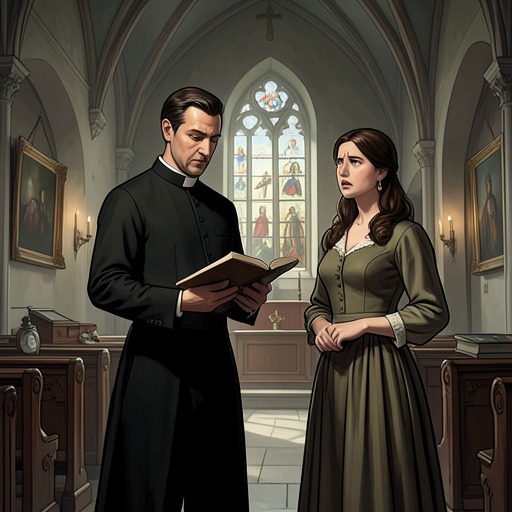
DublinersThe exposure of Polly Mooney and Bob Doran’s affair is the turning point in which a boarding-house relationship becomes a public and moral crisis. Mrs Mooney has allowed the liaison to unfold under her roof, then converts her knowledge of it into pressure on Doran: because she sees marriage as the sole reparation for Polly, she calls him to account and sends for her daughter when the confrontation is ready to begin.
Background and Discovery
Polly is nineteen, lively, and previously sent by her mother to work as a typist in a corn-factor’s office. Mrs Mooney brought her home after a sheriff’s man repeatedly came to the office seeking access to his daughter. She then set Polly to housework, intending to let her mix with the young men lodging in the boarding house. Polly flirted, but Mrs Mooney judged that the young men were merely passing time and did not mean business.
That arrangement changed when Mrs Mooney noticed that Polly and one lodger were involved. She watched them and kept silent. Polly understood that her mother was observing her, while the household began to talk about the affair; still, Mrs Mooney did not intervene at once. Polly’s manner grew strange, and the young man became visibly perturbed. Mrs Mooney waited until she judged the moment right, then acted with the decisiveness she brings to moral problems.
The Sunday-Morning Reckoning
On a bright early-summer Sunday, after breakfast, Mrs Mooney sits in the boarding house and reconstructs the frank but awkward conversation she had held with Polly the previous night. Mother and daughter have both spoken plainly, but neither wants the discussion to suggest that Mrs Mooney had knowingly connived in the affair or that Polly had understood the purpose of her mother’s earlier tolerance.
The church bells stop, and Mrs Mooney checks the gilt clock: it is seventeen minutes past eleven. She has time to confront Doran before catching the short twelve at Marlborough Street. She believes the balance of social opinion favours her as an outraged mother. Doran, aged thirty-four or thirty-five, cannot plausibly appeal to youth or ignorance, and she regards him as having taken advantage of Polly’s youth and inexperience.
Reparation and Leverage
Mrs Mooney rejects money as a sufficient settlement. She knows that some mothers accept a sum to patch up such an affair, but her own judgment is that only marriage can restore what Polly has lost. The demand makes the private relationship a matter of obligation, with Polly’s future and Doran’s conduct at stake.
She weighs the pressure available to her before sending Mary to Doran’s room. He is not, in her view, a rakish or loud-voiced man like Mr Sheridan, Mr Meade, or Bantam Lyons. He has been employed for thirteen years in a Catholic wine-merchant’s office, and exposure could cost him his job; the lodgers already know something of the affair, while some have invented details. Mrs Mooney also thinks he has a good salary and suspects he has savings. She is confident that publicity and social judgment will make him yield.
The Summons and Its Dramatic Pause
Once Mary has been sent upstairs, Mrs Mooney surveys herself in the pier-glass and approves the decisive expression on her face. The scene presents her intervention as calculated rather than impulsive: she has listened to Polly, assessed Doran’s vulnerabilities, settled on marriage as the remedy, and chosen when to make her claim.
The confrontation’s next step is delivered from below: Mrs Mooney calls Polly down because Doran wants to speak with her. Polly remembers what she has been waiting for. The summons makes the coming decision immediate, but this episode ends before Doran’s answer is given; it establishes the pressure and stakes of the marriage crisis rather than narrating its resolution.